
Which 50mm lens will finally make your Canon images sing? Choosing between pro-level glass, compact budget options, and high-resolution third-party designs can feel overwhelming. Whether you favor dreamy portraits or a lightweight walkaround, the right 50mm can transform your kit.
This guide compares five popular 50mm options for Canon shooters and distills their real-world pros and cons. We kept notes from portrait sessions, events, studio work, and street shooting. We stripped away marketing claims to focus on what matters in the frame.
You’ll find lenses prized for creamy background blur and flattering skin tones. You’ll also see compact, budget-friendly primes and third-party designs that chase razor-sharp detail. Expect honest notes on bokeh character, edge sharpness, and handling.
We evaluate optical performance, autofocus behavior, aperture-driven depth of field, and price versus performance. Our focus is honest field testing, not just lab results. Hands-on examples show how aperture choices change depth of field in real shoots.
You’ll learn how weight, handling, and autofocus feel during shoots matter more than numbers on paper. We’ll point out the trade-offs every photographer faces when choosing a 50mm.
If you shoot portraits, events, street, or everyday travel, this primer helps match a lens to your style. Read on for clear, practical guidance to pick the right 50mm for your Canon setup.
1. Canon RF 50mm f/1.2L USM Overview
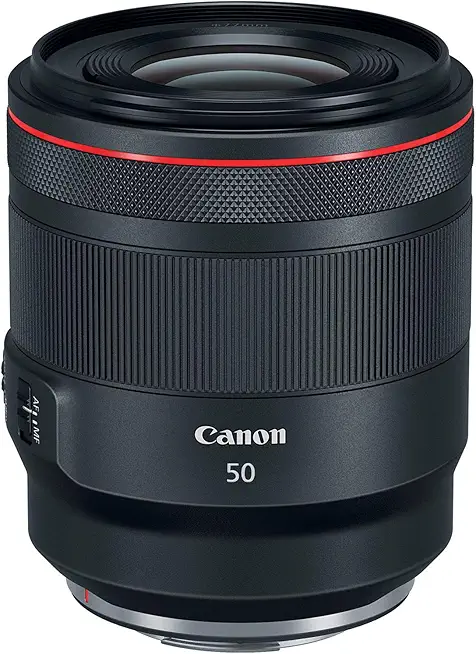
Canon RF 50mm f/1.2L USM
Ultra-fast professional prime delivering remarkable sharpness, creamy bokeh, and outstanding low-light performance for demanding portrait and creative shooters.
Check PriceAs a working photographer I reach for the Canon RF 50mm f/1.2L USM when I need ultimate subject isolation and the most pleasing skin tones. Its wide f/1.2 aperture gives a shallow depth of field that turns busy backgrounds into creamy strokes of bokeh, helping subjects pop in a way most lenses can’t match.
Optically the lens is outstanding — the center sharpness is exceptional even at f/1.2, which means you can shoot wide open for portraits and still retain fine detail where it matters. Color rendering is superb; faces have a natural, film-like tone that clients notice immediately.
Autofocus is fast and reliable in real-world shooting, so it keeps up during events and portrait sessions, though it isn’t the absolute quickest on the market. That dependable AF paired with the lens’ rendering makes it a true workhorse for professional portrait and event photographers.
There are trade-offs: the RF 50mm f/1.2L USM is heavier and bulkier than many 50mm options, so it’s less comfortable for long handheld days or travel. Also be aware that corner sharpness is softer wide open, so if you frequently need edge-to-edge sharpness or tight group environmental shots wide open, you’ll want to stop down.
If you prioritize creamy bokeh, skin-tones, and center sharpness for pro portraiture, this lens is hard to beat. If you need something ultra-light or demand perfect corner performance at f/1.2, consider those workflow limitations before you buy.
- Exceptional center sharpness, even at f/1.2
- Creamy, highly sought-after bokeh
- Excellent color rendering and skin tones
- Reliable autofocus in most situations
- Heavy and bulky for long sessions or travel
- Corner sharpness softer, especially wide open
2. Canon RF 50mm f/1.8 STM Overview

Canon RF 50mm f/1.8 STM
Compact, affordable standard prime offering sharp optics, quiet autofocus, and excellent everyday versatility for street, travel, and casual portrait photography.
Check PriceAs a working photographer I keep an RF 50mm f/1.8 STM in my bag for shoots where weight, price and versatility matter most. It’s extremely popular with beginners and enthusiasts because it feels like a real upgrade from a kit lens without breaking the bank.
The lens is lightweight and compact, which makes it ideal for everyday carry, street work, and travel; you barely notice it on a camera. Optically it delivers a sharp center that produces pleasing portraits and subject separation at f/1.8, but the edges are noticeably softer when you shoot wide open.
If you want cleaner edge-to-edge images, stopping down a stop or two quickly tightens overall sharpness, so it’s forgiving for learning depth-of-field control. You also get good low-light performance for its aperture and closer focusing capability that’s handy for tight close-ups and more intimate portraits.
Autofocus is fast and accurate for most uses, which makes the lens a reliable choice for run-and-gun work and casual event coverage. That said, it’s not as quick as higher-end optics and can struggle or be inconsistent in some low-light scenarios, so be mindful when you need pin‑point focus under challenging lighting.
Bottom line: this RF 50mm f/1.8 STM is a fantastic value-driven tool. If you’re learning, shooting handheld, traveling, or need a small portrait lens without a big investment, it’s one of the easiest lenses to recommend.
- Lightweight, compact design
- Fast and accurate autofocus for most uses
- Excellent value for money
- Good low-light performance for its aperture
- Softer edges/corners wide open
- AF can be inconsistent in some low-light scenarios
3. Canon EF 50mm f/1.8 STM Overview
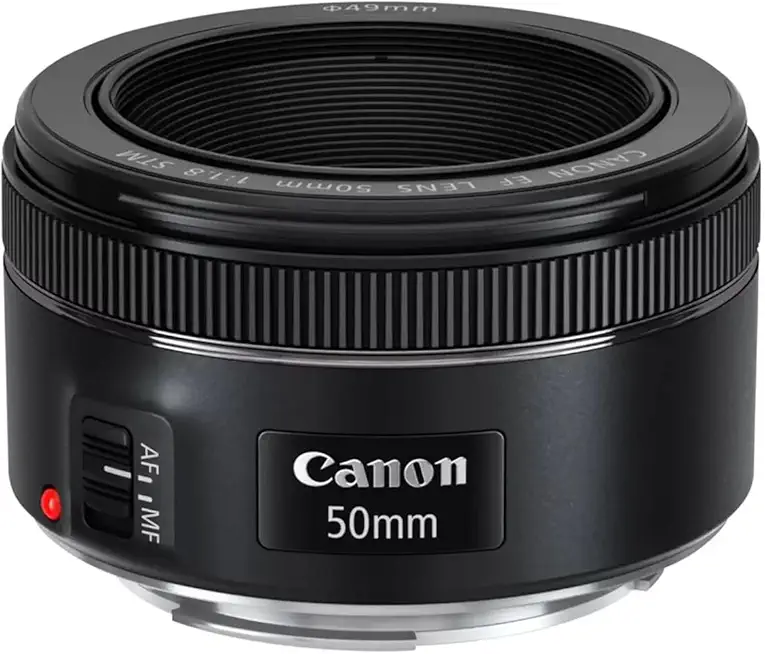
Canon EF 50mm f/1.8 STM
Lightweight, budget-friendly prime with pleasing bokeh, dependable autofocus, and strong value for hobbyists and beginners shooting portraits and low-light scenes.
Check PriceThe Canon EF 50mm f/1.8 STM is the classic “nifty fifty” — small, light, and incredibly approachable for photographers at every level. As a 50mm prime with an f/1.8 aperture it’s a superb tool for learning depth of field and for pushing into low‑light situations without breaking the bank.
In real-world use it excels as an everyday carry lens. The center image quality is strong, producing sharp results for portraits and street work, and stopping down quickly improves edge performance.
Autofocus on this lens is generally reliable and fast enough for most shooting scenarios, though some users report occasional consistency or accuracy issues on certain bodies. The build is lightweight and compact, which makes it comfortable for long shoots, but it isn’t as rugged as higher‑end glass.
If you want an inexpensive upgrade over a kit lens, this is one of the best value choices you can make. It gives you pleasing low‑light capability, good center sharpness, and a simple, effective way to practice subject isolation and bokeh without investing heavily in heavier, pricier optics.
Who is this lens for? Pick it if you need a budget-friendly portrait/street prime that’s easy to carry and teach yourself with. If you demand robust build quality, perfectly consistent AF across bodies, or edge‑to‑edge sharpness wide open, you might consider other options — but for value, portability, and straightforward image quality, it’s hard to beat.
- Lightweight and easy to carry
- Fast autofocus suitable for most situations
- Excellent value and upgrade over kit lenses
- Good low-light capability for the price
- Softer edges/corners wide open
- Build quality less robust than higher-end lenses
4. Canon EF 50mm f/1.4 USM Overview

Canon EF 50mm f/1.4 USM
Fast, characterful prime blending solid build, quick ultrasonic focusing, and attractive background blur for creative portraits and low-light artistry.
Check PriceThe Canon EF 50mm f/1.4 USM is a really sensible choice if you want a 50mm that sits between consumer and pro levels. It’s popular for offering a strong balance of image quality, handling, and price without feeling like a compromise.
Optically it delivers a strong center and maintains good edge sharpness even wide open, so you can shoot portraits and low-light scenes without constantly stopping down. The bokeh is pleasing and well-suited to subject isolation, even if it isn’t the creamiest you can get from the very top-tier optics.
Handling is friendly for day-long work — it’s lighter and more portable than heavier premium alternatives, and that makes it easier to carry at events or on location. Autofocus is fast and reliable in practical use, so you won’t be fighting the lens when capturing fleeting moments.
If you shoot portraits, street, or general-purpose low-light photography and want solid build and dependable results, this lens is an excellent all-rounder. It’s a smart buy for photographers who value image quality and usability without paying for the absolute widest aperture or the heaviest pro glass.
- Strong center and edge sharpness, even at wide apertures
- Lighter and more portable
- Fast, reliable autofocus
- Solid build quality
- Bokeh not as creamy as the very top-tier options
- Narrower aperture limits extreme low-light performance
5. Sigma 50mm f/1.4 DG HSM Art Overview

Sigma 50mm f/1.4 DG HSM Art for Canon EF
Premium Art-series optic delivering exceptional resolution, creamy bokeh, and robust build—designed for professionals demanding ultimate image quality.
Check PriceAs a working photographer I reach for this lens when ultimate sharpness matters. The Sigma 50mm f/1.4 DG HSM Art is extremely sharp even wide open, with excellent contrast and color rendering that makes files pop straight out of the camera.
It’s built like a tank and feels durable in hand. The robust construction gives confidence on demanding shoots, and the optical performance holds up across a range of lighting conditions and subjects.
Autofocus is fast and reliable, which makes it practical for portraits, weddings, and editorial work where you need to nail focus quickly. Be aware that the AF mechanism can be noisy, so it’s not ideal if you need whisper-quiet focusing for run-and-gun video work.
The lens produces excellent bokeh and subject separation at f/1.4, delivering pleasing background blur and strong subject isolation. It’s heavier than many comparable 50mm options, so factor that in if you shoot long handheld sessions or travel light.
Overall, this is a lens for photographers who prioritize optical performance and build quality over minimal weight. If you want razor-sharp images, robust construction, and dependable AF in stills, this lens is mostly a great fit; if silence and featherweight carry are your highest priorities, you may need to compromise.
- Exceptional sharpness and contrast, even wide open
- Excellent build quality and durability
- Fast, reliable autofocus
- Versatile for many photography styles
- Heavier than many comparable 50mm options
- Autofocus can be noisy (bad for video)
Aperture and Depth of Field at 50mm
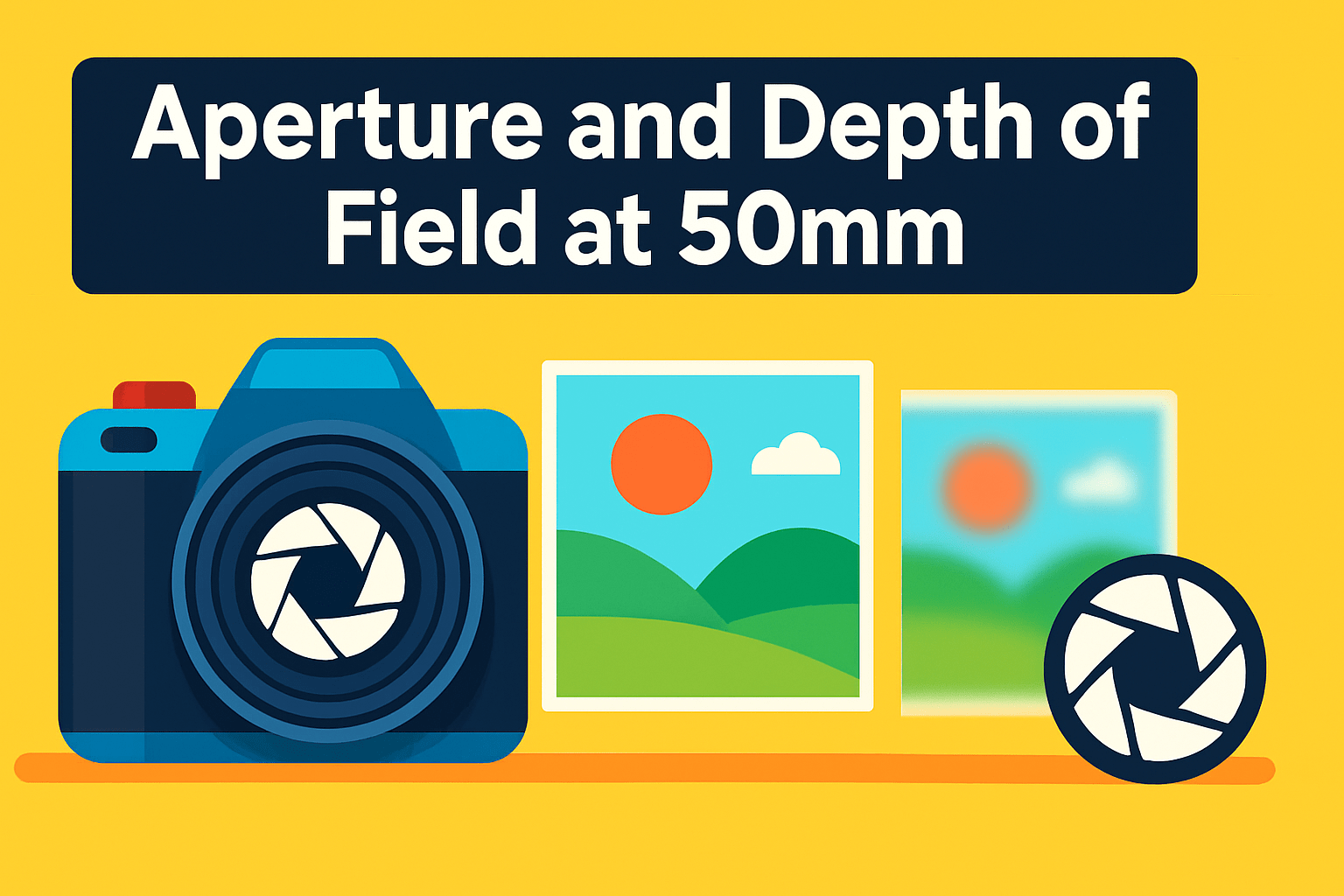
On a 50mm lens, aperture is the primary control for depth of field. How wide you open the iris will determine how much separation you get between subject and background.
Wide apertures, like f/1.2, f/1.4 and f/1.8, create very shallow DOF and strong subject isolation. That thin plane of focus is what gives portraits that dreamy, creamy look.
Stop down to f/5.6, f/8 or f/11 and the zone of focus grows. More of the scene becomes readable, which is useful for groups or environmental portraits.
In practical terms, f/1.8 produces extremely shallow DOF ideal for tight headshots with blurred backgrounds. f/2.8 offers a touch more depth while preserving pleasing blur. f/5.6 and smaller are the go‑to choices when you need several people in focus.
Remember that focus distance matters — getting closer to your subject shrinks DOF even at the same aperture. If you need a little more depth, step back or move your subject away from the background rather than relying only on stopping down.
Bokeh quality also varies by optic; higher-end designs at f/1.2 or f/1.4 generally yield smoother, more attractive blur than basic f/1.8 designs. Two lenses set to the same aperture can therefore produce very different background rendering.
My practical rule is simple: portraits between f/1.8 and f/2.8 for subject separation, and f/5.6–f/8 for groups or environmental work. Combine that with careful focus placement and background distance and you’ll control the scene predictably.
When shooting wide open, place the focus point on the nearest eye and check results on the camera. Small aperture changes change the mood considerably, so bracket a stop or two until you find the look you want.
Price vs Performance With 50mm Lenses
Price and performance with 50mm lenses come down to aperture, optical rendering, and build quality. What you pay for most often is how a lens looks wide open and how it feels all day.
For pros who deliver portraits or weddings, the extra cash usually pays off quickly. Wider, premium optics give creamier bokeh, tighter subject isolation, richer skin tones, and more consistent sharpness at f/1.2–f/1.4.
The RF 50mm f/1.2, for example, creates a signature look you can’t fake in post. But it’s heavy, costly, and tends to show softer corners when shot wide open.
The EF 50mm f/1.4 sits in the middle and is a favorite for good reason. It keeps many of the pro benefits without the weight and sticker shock of an f/1.2.
If budget and mobility matter, the f/1.8 models punch well above their price. Stopped down to f/2–f/2.8 they deliver surprisingly similar edge sharpness and usable bokeh for most client work. Remember that focusing distance affects how shallow your background appears.
Sigma’s 50mm Art lenses demand attention because of their raw optical performance and build. They are heavier and can be louder on the AF front, which matters for video or quiet settings, and for hybrid shooters it’s an important trade-off.
A few practical rules will save you money and hassle. Rent or borrow the premium lens for a shoot, test how it renders skin on your camera, and decide if the extra stop truly changes your final images. Also consider resale value; pro glass often holds its price better.
Finally, match investment to your shooting style and deliverables. If clients pay for the look or you need every stop of light, spend up; if you shoot for practice, travel, or social work, the f/1.8 is a brilliant, affordable choice.
What People Ask Most
What is the best 50mm lens for Canon cameras?
There is no single best option; the right lens depends on your priorities like bokeh, low-light performance, weight, and budget. Pro shooters often prefer the RF 50mm f/1.2L for portraits, while the RF/EF f/1.8 models are popular for value and portability and the EF f/1.4 or Sigma Art appeal to those prioritizing image quality.
Canon 50mm f/1.8 vs f/1.4: which is better for image quality?
The f/1.4 models generally favor image quality and build, while f/1.8 models prioritize cost and lightweight design. Stopping down the f/1.8 improves sharpness and makes it a strong value choice for many shooters.
Is a 50mm lens good for portraits on Canon full-frame and crop bodies?
Yes, 50mm lenses are widely used for portraits because wide apertures create subject isolation and pleasing background blur. For tighter framing or group shots you can stop down to increase depth of field.
How does the Canon RF 50mm lens compare to Canon EF 50mm lenses?
RF and EF 50mm options trade off rendering, weight, and price: RF pro models emphasize creamy bokeh and center sharpness while RF/EF f/1.8 lenses focus on affordability and compactness. EF variants like the f/1.4 offer a balance of image quality and build between those extremes.
Are third‑party 50mm lenses like the Sigma 50mm Art compatible with Canon?
Many third‑party lenses are available in Canon mounts and work well on Canon cameras. The Sigma Art series is noted for strong optical performance, though it can be heavier and may have different autofocus character compared with native Canon lenses.
Which 50mm lens offers the best autofocus performance for Canon cameras?
Autofocus performance varies by model and price tier, with higher‑end lenses typically offering faster and more consistent AF. Some Canon and Sigma options are praised for reliable AF in many situations, while lighter or budget models may be less consistent in challenging light.
Does a 50mm lens work well in low light for Canon cameras?
Wide‑aperture 50mm lenses generally perform well in low light, providing more light and shallower depth of field for subject separation. Lower‑cost or narrower aperture models still offer usable low‑light capability but with more limited extreme low‑light performance compared with the fastest options.
Conclusion for Best 50mm Lenses for Canon
In short, the five 50mm options explored here span the full spectrum from budget-friendly and lightweight to pro-grade optical performance, giving photographers clear trade-offs between price, handling, and rendering.
Let your shooting priorities steer the choice: prioritize creamy background separation and the smoothest rendering if image character matters most, favor portability and value when everyday carry and cost are important, or lean toward higher‑end optics if absolute sharpness and build quality are your focus.
If you want to turn that choice into better photos, take a few minutes to read more guides and tests on the site to sharpen your technique and get the most from whichever 50mm you pick.
Have a question or want to share your own 50mm experiences? Leave a comment below and we usually reply within a few hours.





0 Comments