
What is a slr camera and why do photographers still love it?
This article answers what is a slr camera in plain English. You will learn how its mirror, pentaprism, and shutter work together.
We also cover the main parts, the pros and cons, and how SLRs differ from DSLRs and mirrorless cameras. You’ll get quick tips for shooting, maintenance, and buying new or used gear.
Read on for simple examples and clear diagrams to help you decide. By the end you will know if an SLR is right for you.
What is a single-lens reflex (SLR) camera?
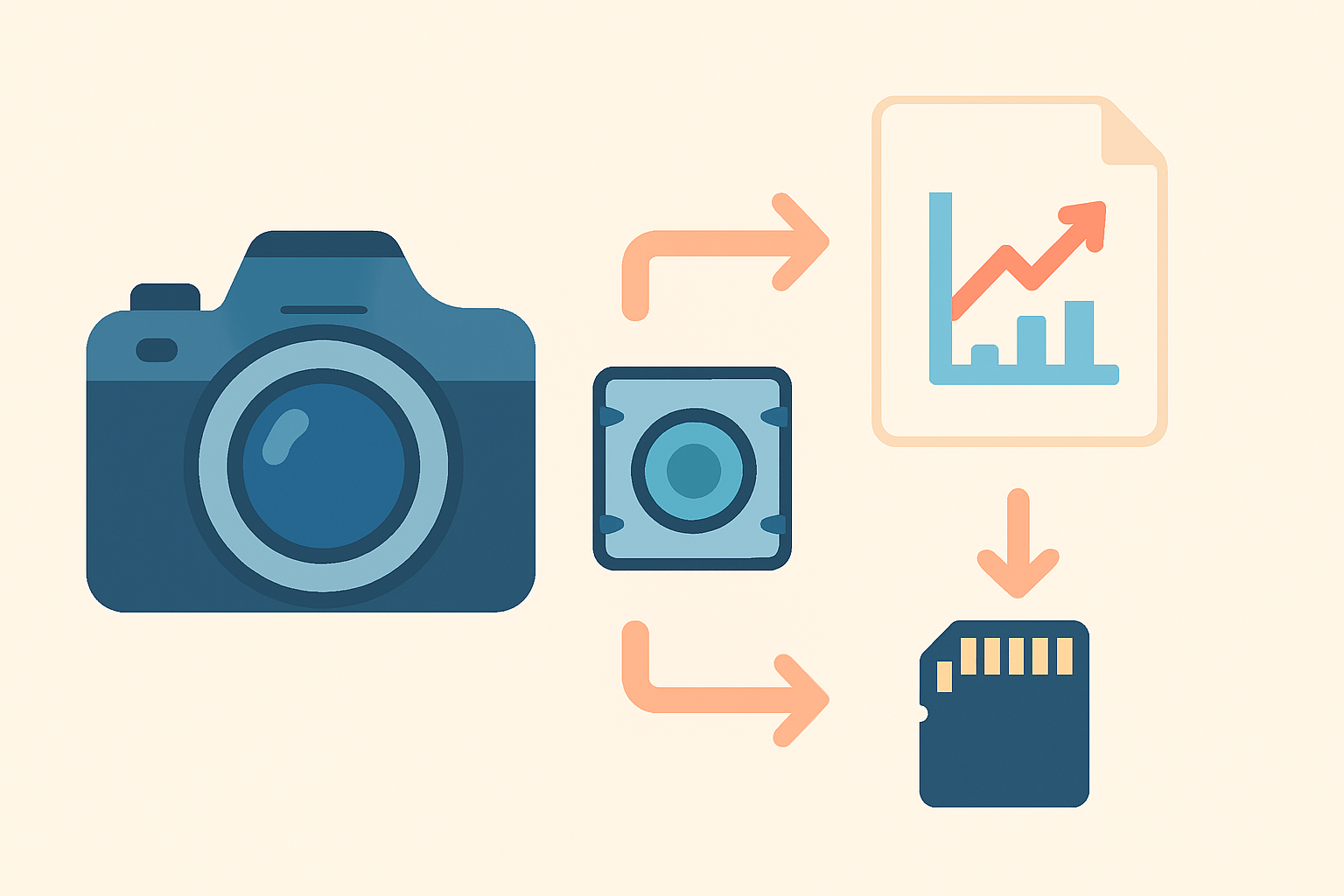
If you are asking “what is a slr camera,” here is the quick answer. A single-lens reflex (SLR) camera uses the same lens for composing and taking the photo. A 45-degree mirror reflects the scene up into an optical viewfinder, then swings out of the way when you press the shutter so the film or sensor is exposed.
The phrase “single-lens” means you look through the very same lens that makes the picture. “Reflex” refers to the mirror’s reflex action as it flips up and down during exposure. Because you view through the taking lens, there is no parallax error, which is the misalignment you can get when the viewing window is separate from the lens.
Think of it like peeking through a window that is actually the camera’s eye. You are not guessing what the lens sees; you are seeing through it. This is why SLR framing and focus are accurate even at close distances, where separate viewfinders can be tricky.
Compared with other types, SLRs differ from rangefinders and twin-lens reflex cameras because those use a separate viewing path. They also differ from mirrorless cameras, which remove the mirror entirely and give you an electronic view through the sensor using a screen or electronic viewfinder.
For beginners who want an SLR camera definition that sticks, remember this line. You look through the lens, a mirror makes the view bright and natural, and the mirror briefly lifts so the image can be captured. That is the essence of what is an SLR in plain terms.
If you want a deeper historical overview, the concise SLR camera article is a helpful companion to this guide. It illustrates why the mirror-and-prism path became the classic choice for photographers across decades.
Visual suggestion for this section: a labeled cross-section diagram showing the path of light from lens to mirror, focusing screen, pentaprism, and the eyepiece. Suggested alt text: “SLR cross-section showing mirror and pentaprism path for optical viewfinder.”
How an SLR works: mirror, pentaprism and shutter
An SLR has two modes of being: the viewing path and the exposure path. When you compose, light passes through the lens, reflects off a mirror at roughly 45 degrees, hits the focusing screen, then travels through a pentaprism or pentamirror that corrects orientation and delivers a right-side-up image to your eye.
The moment you press the shutter, that mirror flips up to clear the light path. The shutter opens, the film or sensor receives light, the shutter closes, and the mirror returns to its original down position. The brief blackout you see in the viewfinder is simply the mirror being out of the way during exposure.
The reflex mirror is the heart of the mechanism. In the down position, it gives you a bright optical view with no lag. In the up position, you cannot see through the viewfinder because the light is going to the film or sensor. Some cameras provide mirror-up mode to reduce vibration for tripod work and long exposures.
The pentaprism or pentamirror sits above the focusing screen and corrects the image orientation. A solid glass pentaprism transmits more light and makes the viewfinder brighter, while a pentamirror uses mirrors to reduce cost and weight at the expense of some brightness. Both perform the same job of guiding the image to your eye.
Most SLRs use a focal-plane shutter with two curtains that travel across the frame. Shutter speed controls how long the sensor or film is exposed and also ties into flash synchronization, which has a maximum speed you can use with a standard flash. Some lenses use leaf shutters, and modern DSLRs may offer electronic front-curtain or fully electronic shutter modes for quieter operation.
Phase-detect autofocus modules are a classic strength of SLRs because they live in the mirror box. A portion of the light is directed to the AF sensor, which quickly measures phase differences and tells the lens which way to drive focus. In live view, when the mirror is raised, the camera often switches to contrast-detect or on-sensor phase detect, which can behave differently.
From the photographer’s perspective, what you notice is simple. You see a bright, real-time optical view, you press the button, you hear the shutter and feel a short mirror slap, and the view returns. The sound and the blackout are the natural result of a mechanical mirror and shutter doing their job.
How it works in 6 steps is easy to remember. 1. Light enters through the lens and heads toward the mirror. 2. The mirror reflects light up onto the focusing screen, where the image appears.
3. The pentaprism or pentamirror flips the image to the correct orientation and sends it to the eyepiece. 4. You half-press to meter and focus, using a quick phase-detect AF module for speed.
5. You fully press, the mirror flips up, the shutter opens, and the film or sensor records the image. 6. The shutter closes, the mirror returns, and your optical view pops back instantly.
The mirror’s motion can cause a small vibration known as mirror slap. For sharp tripod shots at slower speeds, mirror-up mode or a self-timer reduces this. You may also see the screen momentarily go dark on high-speed bursts, which is normal because the mirror is repeatedly lifting to expose each frame.
Pentaprism versus pentamirror is a trade-off of brightness versus weight and cost. If you value a larger, brighter viewfinder for manual focusing, a pentaprism SLR often feels better. If you want a lighter and more affordable body, a pentamirror can still deliver a clear view for most situations.
Shutter choices also shape your experience. Focal-plane shutters give you a wide range of speeds and are standard in most SLRs. Electronic front-curtain can cut vibration at the start of the exposure, while fully electronic modes, when available, can be quiet but may bring rolling shutter artifacts with fast movement.
Beginner’s quick-start, five things to try today, will ground the concepts. First, set Aperture Priority, choose a low f-number like f/2.8 on a fast lens, and notice the shallow depth of field in portraits.
Second, try ISO 100 outdoors in bright light and then raise ISO to 1600 indoors to keep shutter speeds usable. Third, watch the viewfinder blackout as you shoot a series, and learn to time your bursts around it.
Fourth, use mirror-up or the self-timer on a tripod and compare sharpness with and without it. Fifth, learn the half-press habit to pre-focus and pre-meter, then release smoothly for crisp action shots.
If you want a clear, brand-neutral refresher, the concise explainer at what is an SLR complements the mechanics you just learned. It pairs well with a simple animated GIF showing a mirror flip and shutter curtains cycling, plus a side-by-side frame comparing pentaprism and pentamirror brightness.
Glossary for this section helps keep terms straight. Pentaprism is a solid glass prism that sends a correctly oriented image to your eye; a pentamirror is a lighter mirrored assembly that does the same job with a bit less brightness.
Phase-detect AF measures phase differences to guide the lens quickly to focus, while TTL means through-the-lens metering and viewing. A focal-plane shutter sits in front of the film or sensor and uses traveling curtains to control the exposure time.
Components and common features of SLR cameras
An SLR’s interchangeable lens mount defines what glass you can use. Canon EF, Nikon F, and Pentax K are well-known mounts with decades of lenses, and adapters can sometimes bridge mounts, though autofocus, aperture control, or infinity focus may be limited depending on the pairing.
The reflex mirror sits just behind the mount and swings between down and up positions. In front of the pentaprism is the focusing screen, which is where the mirror forms the image you see; some cameras let you swap screens for manual focus aids like split-image or microprism textures.
The pentaprism or pentamirror assembly routes and corrects the image for the eyepiece. Peering through the optical viewfinder you get a natural, lag-free scene that many photographers find comfortable for action, portraits, and landscapes alike.
Just behind the mirror is the shutter mechanism and, in DSLRs, the image sensor. In film SLRs, a film gate and pressure plate keep the film flat, and the film advance transports each frame; in DSLRs, a memory card records the image while the rear LCD lets you review and adjust settings.
Autofocus modules live in the mirror box and communicate with the lens to drive focus quickly. Metering cells evaluate light through the lens, and modern DSLRs can use multi-zone metering patterns to read complex scenes and guide exposure more intelligently.
The hot shoe on top connects flashes or radio triggers, and many SLRs offer TTL flash control for consistent results. Mode dials expose you to classics like Manual, Aperture Priority, Shutter Priority, and Program, all of which work the same way whether you are shooting film or digital.
Your main exposure controls are aperture, shutter speed, and ISO. Aperture lives in the lens and controls depth of field, shutter speed freezes or blurs motion, and ISO controls light sensitivity on a sensor or film speed choice on a film body.
Drive modes control single-shot versus continuous bursts, and AF modes let you choose single, continuous, or manual focus. Live view flips the mirror up and shows a preview on the rear screen, which changes autofocus behavior and is handy for tripod work or low-angle compositions.
Comparing film SLRs and DSLRs highlights both continuity and change. A film SLR uses canisters, light seals, and a mechanical advance, while a DSLR records to memory cards, adds menus and LCDs, and often includes video features; both still rely on the same reflex design for viewfinding.
Maintenance is simple when you build a habit. Clean lenses with a blower and a soft microfiber cloth, and avoid touching the mirror surface because it is front-silvered and scratches easily.
For sensors, use a blower first, then a proper wet clean if needed, or have a technician do it if you are unsure. Vintage lenses deserve a quick check for fungus or haze, and older film bodies may need light seals replaced and a shutter service to stay reliable.
Visual ideas to pair with this section include a labeled top-down diagram of the mount and mirror box, a close-up of a focusing screen, and an external layout showing common controls. Alt text can read “SLR body with labeled controls and optical viewfinder path.”
Advantages and limitations of SLR cameras
The strongest advantage of an SLR is the optical viewfinder. You see the world directly through glass, with no lag and no exposure simulation, which makes tracking motion feel natural and immediate even in bright or rapidly changing light.
Through-the-lens viewing means composition, focus, and metering are aligned with the taking lens. Phase-detect autofocus via the mirror box is fast and decisive, and the lens ecosystems for SLR mounts are mature, offering everything from budget primes to pro telephotos with predictable handling and results.
Ergonomics are another plus. SLRs tend to have deep grips, clear buttons and dials, and balanced weight with telephoto lenses, while many film SLRs, especially mechanical classics, are renowned for durability and straightforward controls that encourage learning the fundamentals.
There are trade-offs to understand. Bodies with a mirror are usually larger and heavier than similar mirrorless models, and the mechanical action brings shutter noise, viewfinder blackout, and some vibration unless you use mirror-up or electronic front-curtain modes.
Maintenance can be more involved since mirrors and shutters are moving parts that wear. And while modern DSLRs are capable, mirrorless cameras often lead today in features like real-time exposure preview in the EVF, silent shooting, in-body stabilization on many models, and advanced face and eye tracking for both stills and video.
When to pick an SLR or DSLR comes down to your needs and taste. If you love the clarity of an optical viewfinder, shoot fast action where battery life and lens selection matter, or want access to decades of proven lenses, an SLR still makes a lot of sense.
When to prefer mirrorless is just as clear. If you rely on video, want silent or near-silent operation, prefer exposure preview in the viewfinder, or need top-tier subject tracking and in-body stabilization, a recent mirrorless camera will usually suit you better.
Sports and wildlife shooters with long SLR lenses often benefit from staying with a DSLR for speed, balance, and cost efficiency. Travel, street, and hybrid photo-video creators often enjoy mirrorless for the weight savings, the EVF preview, and the quiet shutter modes in sensitive environments.
A quick buyer checklist keeps choices focused. Look first at the lens ecosystem you want to invest in, then pick a sensor size such as APS-C for reach and value or full-frame for low-light performance and shallow depth of field.
Evaluate the autofocus system and continuous frame rate for action, and check for weather sealing if you shoot outdoors. If you buy used, weigh the price advantage against the need for potential servicing on older shutters, mirrors, and light seals.
A practical buying checklist for bodies and lenses is short but important. For used DSLRs, check the shutter count, confirm mirror movement sounds smooth, and inspect the sensor for dust or scratches; for film SLRs, inspect light seals, test the film advance, and dry-fire the shutter at different speeds to hear consistent timing.
For lenses, open and close the aperture to ensure it snaps cleanly, check blades for oil, rotate focus to feel for smoothness, and look through the glass for haze, fungus, or separation. Taking a test photo at various apertures can reveal decentering or focus issues before you commit.
SLR, DSLR and mirrorless: evolution and how they differ today
The SLR story began with early mechanical designs that brought through-the-lens viewing to film photography. The golden era of 35mm SLRs delivered icons like the Nikon F and Canon AE-1, which set the template for rugged bodies, bright finders, and broad lens catalogs that defined decades of work.
Digital single-lens reflex cameras, or DSLRs, kept the mirror and prism but replaced film with an image sensor and a computer. This shift unlocked instant review, high ISO performance, and faster workflows while preserving the handling and optical view that photographers already understood.
Mirrorless cameras arrived by removing the mirror and optical path entirely. They show a live electronic view from the sensor on an EVF or rear screen, enabling exposure preview, focus peaking, and other overlays that are difficult or impossible in a purely optical viewfinder.
Today, the key differences are practical and easy to feel. DSLRs give you an OVF with a natural, lag-free view and generally strong battery life, while mirrorless offers EVF previews, silent modes, advanced subject detection autofocus on-sensor, and often in-body stabilization to steady any lens.
Size and weight tend to favor mirrorless systems, especially with short primes and compact zooms. Video features also lean mirrorless, thanks to on-sensor AF and advanced codecs, though many DSLRs remain strong for stills and can shoot solid video in capable hands.
How to choose now depends on your lens investments and your needs. If you already own several SLR lenses you love, a DSLR may be the most cost-effective path, while a move to mirrorless might be best if you want cutting-edge AF, smaller kits, and integrated video tools for hybrid work.
For a concise technical reference on the reflex path and its variations, the overview at Single-lens reflex provides useful context alongside a compact timeline graphic. Pair this with a comparison photo showing OVF versus EVF framing to visualize the experience difference clearly.
Whatever you choose, the SLR design remains a landmark in camera engineering. It solved the age-old challenge of seeing exactly what the lens sees, and that simple promise is still why many photographers reach for an SLR when the picture matters most and the moment is moving fast.
What People Ask Most
What is a slr camera?
A slr camera is a type of camera that uses a mirror so you see the exact scene through the lens. It helps you frame shots and learn basic photography skills.
How is a slr camera different from a point-and-shoot?
An slr gives you more control over focus and exposure and lets you look through the lens when composing. Point-and-shoot cameras try to make everything automatic and simpler.
Is a slr camera good for beginners?
Yes, a slr is great for beginners because it lets you start in automatic and slowly learn manual controls. Hands-on practice with one builds useful skills quickly.
Can I use a slr camera for portraits, landscapes, and everyday photos?
Yes, slr cameras are versatile and work well for portraits, landscapes, and daily shooting. You can adjust settings or accessories to get different looks.
Do I need to know technical terms to use a slr camera?
No, you can begin with automatic modes and learn one setting at a time. Practical shooting and simple experiments teach faster than memorizing terms.
What are common mistakes beginners make with slr cameras?
A common mistake is never leaving full auto mode and not trying different settings. Also avoid touching the lens glass and steady your camera to prevent blurry shots.
Is a slr camera still a good choice today?
Yes, slr cameras still take great photos and are useful for learning photography skills. They remain a solid option for creative control and practice.
Final Thoughts on SLR Cameras
A single-lens reflex camera gives you a direct, optical connection to the scene — you look through the same lens that makes the picture, which is the simple hook we opened with and then unpacked in this guide. The core benefit is clear: a true-to-life, lag-free view and reliable through-the-lens metering paired with deep lens choices; remember 270 as a quick anchor to this guide. One realistic caution: the mirror and shutter are mechanical parts, so they add weight, sound, and occasional maintenance compared with quieter mirrorless bodies.
We walked through how the mirror, pentaprism, and shutter work, what parts matter most, and where these cameras still excel — sports, wildlife, portrait work, and anyone who loves optical clarity or film-era craft. If you value tactile controls, a robust lens lineup, and an honest viewfinder, you’ll find these systems rewarding, and knowing how they work will make your photos better. Keep shooting, learning, and letting the viewfinder guide your next great frame.


0 Comments