
What is apsc camera — is it the secret to cheaper telephoto reach or a trade‑off for low‑light performance?
This short guide answers that question in plain language. You will learn what an APS‑C camera is and how sensor size affects field of view, depth of field and reach.
You’ll get a one‑line TL;DR, numeric sensor sizes and crop factors, simple examples (like how 50mm turns into ~75–80mm equivalent on crop bodies), plus visuals, lens compatibility tips and model suggestions.
Read on to find out when APS‑C is the smart choice (travel, wildlife, sports), when full‑frame might suit you better, and practical buying and shooting tips to get the best results.
What is an APS‑C camera? (what is apsc camera)
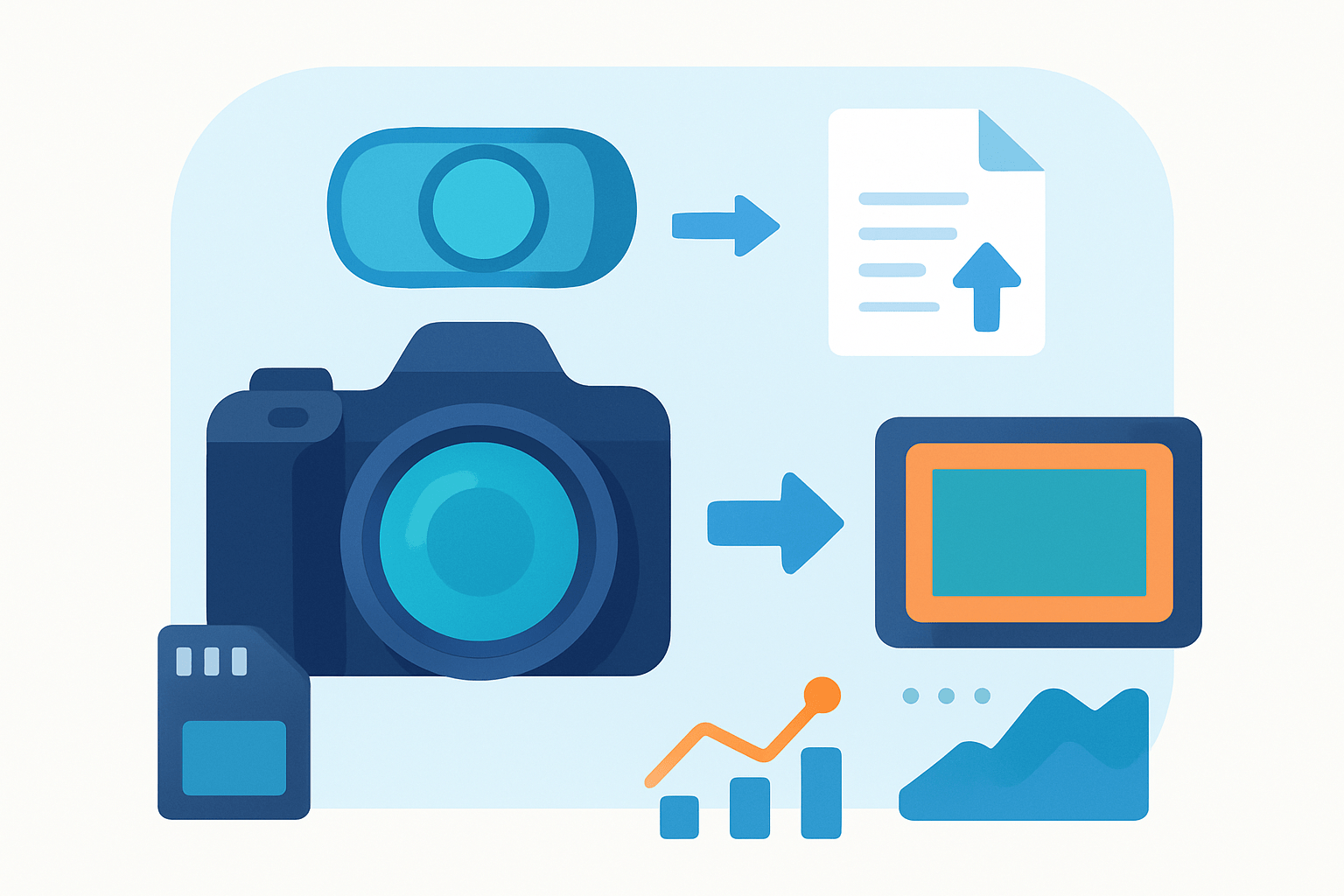
An APS‑C camera is a digital camera that uses an APS‑C sized image sensor (smaller than full‑frame), which affects field of view, depth of field and reach.
If you’ve ever typed “what is apsc camera” into a search bar, this is the clean, one‑line answer. In simple terms, APS‑C means the sensor is smaller than a 35mm full‑frame sensor, so the same lens frames a tighter portion of the scene.
Think of full‑frame as a large rectangle and APS‑C as a smaller rectangle inside it. Because the sensor is smaller, it captures a narrower field of view from the same lens, which feels like extra “zoom” without actually changing the lens.
The name APS‑C comes from the Advanced Photo System film era, where “C” stood for “Classic.” For background and evolution details, see these concise APS‑C facts. Typical dimensions today are close to Canon’s 22.3 × 14.9 mm with a 1.6× crop factor, and about 23.5 × 15.6 mm with a 1.5× crop for Nikon, Sony and Fujifilm.
Picture a visual: a full‑frame rectangle with an APS‑C rectangle drawn inside it, labeled with those dimensions and crop factors. That simple diagram shows at a glance why the image looks tighter on APS‑C without changing the lens.
Sensor size and crop factor — what it means in practice
Crop factor is a comparison number that tells you how the smaller APS‑C sensor changes your field of view. The quick formula is this: equivalent focal length = lens focal length × crop factor, where crop factor is typically 1.5× or 1.6×.
Here are two concrete examples that make it click. A 50mm lens on a 1.5× APS‑C camera gives a 75mm full‑frame equivalent view, while the same 50mm on a 1.6× APS‑C camera gives an 80mm equivalent view.
In practice this affects what you can fit in the frame. Telephoto work gets an effective “extra reach,” which is great for birds, wildlife and field sports. The flip side is that wide‑angle shots are harder, because a 16mm lens behaves more like a 24–25mm equivalent view.
Exposure is simpler than it seems. The same f‑number on any format gives the same exposure per unit area, so f/2.8 lets in the same light in terms of shutter speed and ISO. But when you match the same framing and subject size, smaller sensors give a bit more depth of field and a little less background blur, so the bokeh looks less extreme.
If you want a deeper technical walk‑through, including diagrams and sample frames, this clear primer on sensor basics is helpful. For your own test, shoot a scene on a full‑frame camera and then crop the image to an APS‑C rectangle to simulate the tighter view you’d get from the smaller sensor.
APS‑C vs full‑frame — the differences photographers care about
TL;DR: APS‑C gives more reach, smaller bodies and lower cost; full‑frame gives better low‑light performance, wider field of view for the same lens and often shallower DOF.
Image quality, noise and dynamic range are the big questions. Full‑frame sensors usually win in high ISO and shadow recovery because each pixel can be larger, but modern APS‑C sensors are excellent and continue to close the gap for most uses.
Depth of field is the next thing to weigh. If you compose the same framing with the same aperture, a full‑frame camera will blur the background more than APS‑C, all else equal. Still, the lens itself matters a ton, so a fast APS‑C prime can deliver strong subject separation.
Focal‑length behavior and system weight matter every day. APS‑C makes telephoto work more accessible, while full‑frame makes wide‑angle easier. APS‑C bodies and lenses tend to be smaller, lighter and more affordable, and the big brands offer deep ecosystems to grow into.
Here’s a compact mental comparison you can jot down. APS‑C: about 22–24 × 15–16 mm, crop 1.5–1.6×, strengths are reach and portability, great for wildlife, travel and everyday use. Full‑frame: 36 × 24 mm, crop 1.0×, strengths are low‑light and shallow DOF, great for portraits, studio and night work.
Real‑world scenarios make the choice simple. Wildlife and sports shooters love APS‑C for the effective reach and smaller tele lenses, while travel and street photographers enjoy the lighter kits. Portrait and studio shooters often choose full‑frame for the extra background blur and cleaner high‑ISO files; this clear guide to the full‑frame difference shows example frames and practical notes.
What are the specifics of APS‑C lenses and lens compatibility?
APS‑C lenses are built to project a smaller image circle that tightly fits the smaller sensor. That design keeps lenses compact, lighter and often cheaper, which is a big reason many photographers choose APS‑C systems.
Brand naming makes it easier to spot them. Canon marks APS‑C DSLR lenses as EF‑S and mirrorless APS‑C lenses as RF‑S, Nikon uses DX, Sony uses E for APS‑C and FE for full‑frame, while Fujifilm X‑mount is an APS‑C mirrorless system. Check current brand listings to confirm model names and mounts.
Compatibility depends on direction. Mounting an APS‑C lens on a full‑frame body usually causes heavy vignetting or triggers an automatic crop mode, reducing resolution; some DSLR mounts like Canon EF‑S also physically prevent mounting on full‑frame EF bodies. Mounting a full‑frame lens on an APS‑C body works fine and gives you that “extra reach,” but the lens may be bigger and pricier than an APS‑C alternative.
Here are sensible focal ranges to consider with APS‑C numbers and their full‑frame equivalents. For wide landscapes, 10–18mm APS‑C behaves like about 15–27mm. For walkaround use, 16–50 or 18–55mm kit zooms cover roughly 24–80mm. For portraits, 35mm or 50mm APS‑C primes mimic about 50–80mm. For wildlife, 55–200 or 70–300mm APS‑C zooms shine.
Affordable prime ideas include Canon RF‑S 50mm f/1.8 (use RF 50mm on APS‑C bodies), Sony E 35mm f/1.8 and 50mm f/1.8, Nikon Z DX 24mm f/1.7, and Fujifilm XF 35mm f/2 and XF 50mm f/2. As you buy, think about your upgrade path; a full‑frame lens you love today will still serve you if you move to a full‑frame body later.
Who should choose APS‑C: benefits, limitations, buying and shooting tips
APS‑C is ideal for photographers who want smaller, less expensive systems and extra effective reach; both pros and hobbyists can benefit. If your work leans on mobility and long focal lengths, APS‑C hits a sweet spot.
The benefits are straightforward. You save money on bodies and lenses, you carry less weight, and telephoto work is easier thanks to the crop factor. Major brands offer deep lens lineups, so building a flexible travel kit is simple.
There are trade‑offs to note. Full‑frame models usually have an edge in low‑light cleanliness and maximum background blur at the same framing, though the gap has narrowed with newer sensors. If you crave the creamiest bokeh and the cleanest ISO 12,800 files, full‑frame may be worth it.
Buy with your genre in mind. Pick APS‑C for travel, wildlife and sports, and pick full‑frame for studio, weddings and very low‑light jobs. Look beyond megapixels and check autofocus, in‑body stabilization, lens availability and the total weight of the kit, and remember that the used market can stretch your budget further.
Shoot APS‑C to its strengths. Use the “crop advantage” for wildlife instead of heavy teleconverters, carry a fast prime like a 35mm or 50mm f/1.8 for low light and subject separation, and shoot RAW while exposing carefully to protect shadows. For portraits, try a 35mm APS‑C prime for a normal look or a 50mm APS‑C prime for a classic head‑and‑shoulders perspective.
Upgrade when your work demands cleaner high‑ISO files, the shallowest depth of field at wide apertures, or you already own several full‑frame lenses. Three good APS‑C cameras to shortlist are Canon EOS R50 for budget travel, Sony a6700 for versatile mid‑range power, and Fujifilm X‑H2S for fast action and pro handling. Lens picks by genre could be a 10–18mm ultra‑wide for landscapes, a 23–35mm prime for everyday street, and a 70–300mm class zoom for wildlife; add fast primes to taste. If you publish this guide, include sample images with captions and settings, such as a low‑light street shot at 35mm, f/1.8, ISO 3200, 1/125s; a portrait at 50mm, f/2, ISO 200, 1/250s; and a wildlife frame at 300mm, f/6.3, ISO 800, 1/1000s, so readers can see exactly how APS‑C performs.
If you came here asking “what is apsc camera,” now you know the meaning, the math, and the trade‑offs. Use this knowledge to choose a system that fits how you shoot, then go make pictures that matter.
What People Ask Most
What is an APS-C camera?
An APS-C camera is a type of digital camera with a slightly smaller image sensor than full-frame models, which affects framing and field of view. It is commonly used by hobbyists and enthusiasts for everyday photography.
How is an APS-C camera different from a full-frame camera?
An APS-C camera has a smaller sensor that crops the scene compared with full-frame, which can make lenses appear more zoomed in. The difference mainly affects how much of the scene you capture, not whether you can take great photos.
Is an APS-C camera good for beginners?
Yes, APS-C cameras are great for beginners because they balance image quality, size, and ease of use. They let new photographers learn and grow without being heavy or overly complicated.
Can I use the same lenses on an APS-C camera?
Many lenses work on APS-C cameras, though some change the effective framing when mounted. Check lens compatibility before buying, but most standard lenses will fit and perform well.
Does an APS-C camera work well for portraits and landscapes?
APS-C cameras can handle both portraits and landscapes nicely, especially with the right lens and composition. They offer enough detail and flexibility for most everyday shooting situations.
Will switching to an APS-C camera make my photos look worse?
No, switching to an APS-C camera won’t automatically make photos worse; image quality depends on technique, lighting, and lenses. Many photographers prefer APS-C for its portability and practical benefits.
Do I need special settings to shoot with an APS-C camera?
No special settings are required—basic exposure, focus, and composition rules apply the same way. You may only adjust framing and focal length choices to suit the smaller sensor.
Final Thoughts on APS‑C Cameras
APS‑C bodies give you compact handling, wallet‑friendly kits (you can find decent starter setups for around 270 dollars), and extra effective reach compared with full‑frame. Remember the opening hook about what an APS‑C camera can do? This guide showed how sensor size, crop factor and lens choices translate into real framing, reach and image style.
In plain terms, their biggest payoff is a lighter, cheaper system that makes telephoto work more accessible; you get more framing with the same lenses, which is great for wildlife, sports and travel photographers. Just be realistic: they won’t match the deepest shadows or the creamiest bokeh of full‑frame at the same framing, so very low‑light pros and some portrait shooters may prefer larger sensors.
We answered that initial question by walking through sensor dimensions, equivalence math and lens compatibility so you’ll know what to prioritize when shopping or shooting. Keep exploring with the gear that feels right for your shooting style — you’ll get better pictures and clearer priorities as you go.




0 Comments