
Want to freeze a thunderous spike in midair and turn a chaotic rally into a jaw-dropping still? This magazine-style guide narrows the field to five top choices for volleyball photography and pairs those picks with practical positioning and lens-selection tips so you nail every rally. Whether you’re a sideline shooter chasing collegiate spikes or a parent capturing local club matches, the right lens will transform your shots from fuzzy records into dramatic keepsakes.
Indoor courts are notoriously unforgiving: low, uneven light, fast lateral motion, cramped sidelines, and busy backgrounds that can confuse autofocus and wash out detail. Lens choice is often the difference between a soft blur and a tack-sharp action frame, so we focus on reach, light-gathering ability, autofocus reliability, and compositional flexibility. You’ll learn why some glass performs better under gym lights and how to balance reach versus mobility when you only have seconds to react.
Beyond raw lens picks, this guide explains where to stand for the best angles, how focal length shapes storytelling, and simple habits that improve consistency during long matches. Short, actionable tips and photographer-tested scenarios will help you match gear to your shooting style and the realities of your home court. Grab your camera and a charged battery—the next rally could be the shot that changes your portfolio.
1. Canon RF 24-70mm f/2.8L IS USM

Canon RF 24-70mm f/2.8L IS USM EOS R
Professional fast-aperture standard zoom with stabilized optics for exceptional low-light performance and sharpness across wide-to-portrait focal range.
Check PriceThe Canon RF 24-70mm f/2.8L IS USM is a go-to for courtside volleyball shooters who need flexibility without swapping lenses every rally. From the sideline its versatile zoom range lets you capture full-body action and step in for slightly tighter compositions when the play moves closer to you.
Its constant f/2.8 aperture is a huge plus in dim gym lighting, letting you run faster shutter speeds and lower ISOs to freeze spikes and dives. Autofocus is very fast and accurate, so split-second movements are tracked reliably — which matters more than you think when players change direction instantly.
I often use this lens as a second piece alongside longer telephotos; it handles team huddles, timeouts, and mid-court action with ease. The images are sharp across the frame, and the focal length range is ideal for medium-distance indoor sports where you’re neither right at the net nor stuck at the backline.
Its compact versatility also makes it useful for shooting from remote or unusual angles — under a referee platform or along a narrow sideline — where you need to react quickly to unpredictable play. If you need ultra-wide environmental shots, you’ll want a wider lens, but for everyday courtside work this RF 24-70mm does most jobs exceptionally well.
- Very sharp images
- Excellent autofocus speed and accuracy
- Versatile zoom for medium-distance indoor sports
- Constant f/2.8 for low-light gyms
- Lacks reach from far corners
- Often paired with longer lenses for tight frames
2. Canon EF 70-200mm f/2.8L IS III USM

Canon EF 70-200mm f/2.8L IS III USM
Telephoto pro lens delivering fast f/2.8 performance, reliable stabilization and crisp results for sports, weddings, and distant subjects.
Check PriceRegarded as one of the most important lenses for indoor volleyball, the Canon EF 70-200mm f/2.8L IS III USM is built for the kind of fast, close-action moments you live to capture. It covers a moderate telephoto to relatively long reach that works well on most indoor courts, letting you frame spikes and blocks without crowding the sideline. As a photographer, you’ll appreciate how reliably it fills the frame when the play gets tight.
Its f/2.8 aperture performs well in low light, so you can push for faster shutter speeds and lower ISOs under gym lighting. Image Stabilization and fast, reliable autofocus help freeze motion and keep subjects sharp through erratic movement. That combination makes it feel like a true workhorse during long matches.
In practice this lens produces tight, crisp shots for spikes, blocks, and dives — exactly the moments that win tournament galleries and social posts. It’s also versatile across multiple sports, so if you shoot different events the lens pays back its weight in usefulness. The build quality and handling make it easy to trust on busy courts.
If you’re a serious shooter aiming for consistently sharp action images, this is an excellent choice; it’s commonly described as a core piece of a sports photographer’s kit. Be realistic about the drawbacks, though: it’s relatively heavy and bulky and can be considered expensive or intimidating for beginners. If you can manage the weight and budget, you’ll get professional-grade results.
- Excellent image quality with professional-grade optics
- Fast, quiet autofocus that tracks athletes reliably
- Optical IS reduces handheld shake
- Weather-sealed for durability
- Relatively heavy and bulky; may cause fatigue over long sessions
- Considered expensive/intimidating for some beginners
3. Sony 70-200mm f/2.8 GM OSS
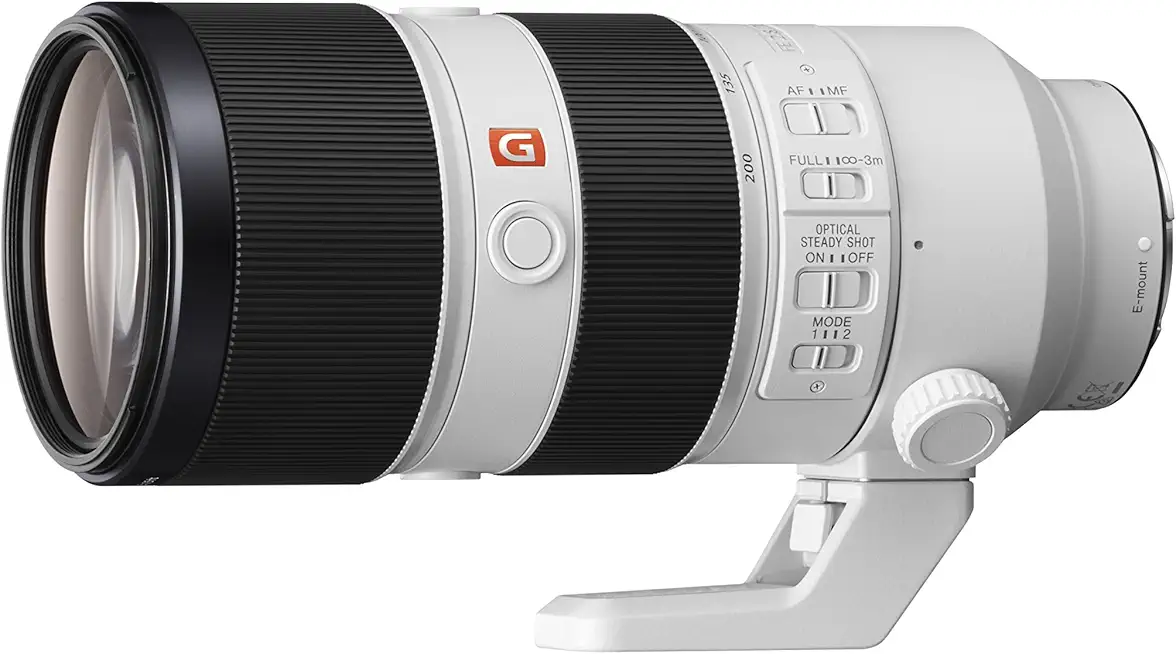
Sony FE 70-200mm f/2.8 GM OSS
Premium telephoto zoom combining constant f/2.8 speed, superior sharpness and optical stabilization for demanding action and portrait work.
Check PriceAs a sports shooter, the Sony 70-200mm f/2.8 GM OSS quickly became my go-to telephoto for volleyball. Its constant f/2.8 aperture gives excellent subject isolation and creamy background blur, which makes players pop against busy gym backgrounds.
The G Master optics deliver high resolution and rich colors that hold up even when cropping tight on a spike or block. Autofocus is fast, accurate, and reliable — it locks onto moving players so you can concentrate on timing rather than hunting focus.
OSS image stabilization is a real practical benefit in indoor gyms where light can be uneven; it lets you use slightly slower shutter speeds without losing sharpness when you’re handholding. Because this 70-200mm is lighter and well balanced compared to some pro tele zooms, you can handhold for longer periods without the same fatigue.
Practically speaking, this lens is versatile for both indoor and outdoor volleyball. It produces the kind of contrasty, detailed images that stand out on galleries and social feeds. The trade-offs are cost — it’s clearly aimed at serious enthusiasts and pros — and in very low light some users have reported occasional focus hunting, although that’s rare.
- Superb image quality with G Master optics
- Fast, precise autofocus that locks onto moving players
- Image stabilization (OSS) permits slower shutter speeds
- Lightweight and well balanced for handheld use
- Costly; geared toward serious enthusiasts and pros
- Occasional focus hunting in very low light (rare)
4. Sigma 50-100mm f/1.8 DC HSM Art

Sigma 50-100mm f/1.8 Art DC HSM for Canon
Ultra-bright mid-tele zoom offering unmatched f/1.8 speed, creamy bokeh and exceptional detail for creative portrait and low-light work.
Check PriceThe Sigma 50-100mm f/1.8 DC HSM Art is a lens I reach for when shooting indoor volleyball on APS-C bodies. Its ultra-wide f/1.8 aperture gives you real low-light headroom — lower ISO and faster shutter speeds — which is priceless under gym lights.
On crop-sensor cameras the 50–100mm range covers the close-court action you often can’t get with wider setups, especially when you can position near the net or along the sideline. The glass renders prime-like image quality: users consistently report exceptional sharpness and a creamy bokeh that separates players from busy backgrounds.
Autofocus is fast and reliable enough to handle quick spikes and blocks, and the zoom produces consistently detailed images across the range. For photographers who want the look of fast primes without swapping lenses constantly, this zoom is an excellent value and feels like a go-to for smaller gyms and tight courts.
Be mindful that this model is designed for APS-C bodies only, so it’s not directly usable on full-frame cameras. Also, if you need very long reach in a large gym or from a far sideline, you may find the zoom range limiting and have to crop or move closer to get tighter frames.
- Ultra-wide f/1.8 for low light
- Sharp, prime-like image quality
- Fast autofocus for action
- Great value for crop-sensor users
- APS-C only — not for full-frame
- Limited zoom reach; may require repositioning
5. Canon EF 85mm f/1.4L IS USM

Canon EF 85mm f/1.4L IS USM
Classic short-tele portrait optic with wide f/1.4 aperture and stabilization for silky bokeh, sharp eyes and beautiful subject separation.
Check PriceThe Canon EF 85mm f/1.4L IS USM is a shooter’s favorite for indoor volleyball because it pairs a very large f/1.4 aperture with impressive sharpness that holds up under fast court action. In gyms with uneven lighting that kind of aperture gives you more flexibility to use faster shutter speeds and keep ISO in check while isolating the subject.
Image Stabilization is a big practical benefit here; it helps keep frames usable when you’re handheld and reacting to unpredictable movement. That stability alongside the wide aperture makes the lens excellent for mid-range action and closer portraits of players during warmups, timeouts, or tighter sideline shots.
The rendering is what sells it for me: creamy backgrounds that separate players from busy indoor environments and professional-grade color and edge-to-edge sharpness. The lens feels solid and reliable on long match days thanks to its durable, weather-sealed build—important when you’re moving around courts and shooting in variable conditions.
Keep in mind this is a prime, so you trade framing versatility for optical quality and low-light performance. It’s best used as a complementary lens when you want fewer compromises on sharpness, background separation, and low-light capability at mid-range distances.
- Large f/1.4 aperture for strong low-light performance
- IS adds stability for handheld shooting
- Superb image quality with professional sharpness and color
- Durable, weather-sealed body
- Fixed focal length limits framing
- Not ideal for very tight or very wide shots
Best Positions for Volleyball Shots
Volleyball is a game of short bursts, so your best shooting location changes with every rally. Anticipate the play and be ready to shift rather than staying rooted in one spot.
Sideline near the net—typically by the referee stand or net post—is prime for spikes, blocks and close serves. Drop to a knee or sit low to emphasize jump height and separate players from the background. For this spot I reach for a medium telephoto like a 70–200mm or an 85–135mm prime to isolate action while keeping some context.
The baseline, slightly off-center at about 45°, gives a clean, full-court perspective for passes, digs and long rallies. A 50–105mm range is ideal here because it balances reach with the ability to include multiple players and the ball arc.
Bleachers or balconies offer overhead looks that show court patterns and player positioning, and they’re great for catching faces during attacks and blocks. These vantage points also eliminate net clutter and collisions.
Whenever possible set up near the center of the court; gym lights are usually aimed there, giving you more even exposure and faster shutter speeds. If light is poor, favor fast glass in the f/2–f/2.8 range to keep ISO down and motion crisp.
Be conscious of referees, scorers’ tables and substitution areas that can block your view—avoid positions they typically occupy. If you’re forced back or kept behind barriers, switch to a longer zoom (120–300mm or 400mm) to retain tight detail. Just make sure the focal length you choose allows you to track players comfortably without losing stability.
Shoot vertically for leaping hitters and net action; portrait orientation often fits the ball and player together better than landscape. Lastly, swap spots between sets, move with the match, and let the play guide your positions.
Choosing Lenses by Court Position
Where you stand largely determines the lens you reach for on a volleyball court. I always pick a focal range that matches my shooting position and the story I want to tell.
Courtside near the net, medium-telephoto zooms like 70–200mm f/2.8 or primes in the 85–135mm range are ideal. They let you isolate spikes and blocks and compress the scene for punchy, tight action. Shooting low with these focal lengths exaggerates jump height and makes images feel more dramatic.
From the back of the court a 50–105mm range gives the best balance between reach and context. You can capture serves, digs and multi-player sequences without losing the ball’s trajectory. It also lets you include bench reactions and the court layout when you want storytelling frames.
If you’re restricted from getting close, plan for longer zooms such as 120–300mm f/2.8 or a 400mm f/2.8. Those lenses let you pull tight frames from the stands and keep clean detail on spikes and blocks. In large gyms they’re often the difference between recognizable frames and unusable crops.
Fast aperture lenses (roughly f/2 to f/2.8) are essential for indoor volleyball photography. They let you run lower ISOs and faster shutter speeds, which reduces motion blur and helps autofocus lock onto players under uneven gym lighting. The shallow depth also isolates players from distracting backgrounds for cleaner images.
Wide-angle glass in the 24–35mm range is handy for environmental court shots and creative sidelines. Use it to show the whole court, fan energy, or the scale of a facility. It’s a secondary tool—telephotos still do the heavy lifting for peak action.
Think about orientation before you press the shutter; portrait (vertical) framing often works best for tall jumps and net spikes. Horizontal framing makes sense for long rallies or when including both teams and the court.
Match your lenses to the position you plan to shoot: net-side for medium telephoto, baseline for midrange zooms, and long glass when distance is unavoidable. Once you lock that basic plan you can fine-tune aperture and framing to match the moment. That simple approach clears a lot of confusion on game day.
What People Ask Most
What is the best lens for indoor volleyball photography?
There is no single best lens; it depends on where you shoot and how close you can get to the action. A versatile telephoto zoom with a fast aperture is commonly chosen for indoor courts because it balances reach and low-light performance.
What focal length is best for volleyball photography?
Medium to telephoto focal lengths tend to be most useful for capturing spikes, blocks, and mid-court action. Wider focal lengths are better for environmental or full-court context when you want to include more of the scene.
Is a 70-200mm lens good for shooting volleyball?
Yes, that style of lens is often considered a workhorse for indoor volleyball due to its reach and flexibility. It helps photographers get tight, dynamic shots while remaining versatile across different court positions.
Do I need a fast aperture lens for volleyball photography?
A fast aperture is very helpful indoors because it allows faster shutter speeds and better autofocus performance in low or uneven gym lighting. It also improves subject isolation against busy backgrounds.
Can I use a 50mm lens for volleyball action shots?
You can use a standard 50mm lens but it may be limiting depending on your distance from the court and the size of the gym. It works better for closer action or wider environmental shots rather than distant play.
What lenses do professional volleyball photographers use?
Professionals typically use fast telephoto zooms and bright primes tailored to their shooting position and the venue. Common choices include reliable telezoom lenses and mid-tele primes for tighter framing and low-light capability.
What lens is best for shooting volleyball from the sidelines?
From the sideline, medium telephoto zooms or mid-tele primes are ideal to capture spikes and blocks while allowing low-angle, dramatic compositions. Shooting vertical can also help fit tall jumps and net action into the frame.
Conclusion for Volleyball Photography Lenses
These five lenses together cover the essential focal lengths, fast apertures, autofocus performance, and stabilization that indoor volleyball demands, and paired with the positioning and selection tips in this article they give you a practical, flexible toolkit for court work.
Applied correctly, the gear and stance choices discussed here help you freeze motion, isolate players from busy gym backgrounds, and compose more dramatic, story-driven images.
If you want to improve your shooting and decision-making, read more articles on the site for additional techniques, positioning advice, and composition tips that build on what you’ve learned here.
Have questions or experiences to share about shooting volleyball indoors? Leave a comment below and we’ll usually reply within a few hours.



0 Comments