
Which 70–200mm lens will finally let your Canon kit sing? Is it the lightweight travel companion, the pro workhorse, or an all-around hybrid? The choices can be baffling.
This guide compares five top 70–200mm lenses compatible with Canon bodies. We cut through the marketing noise to show how each lens performs in the real world. The aim is simple: help you pick the best fit for your shooting style.
Pros, enthusiasts, and travelers will all find value here. Hybrid stills and video shooters will also benefit from the practical notes. You don’t need to be a gearhead to use this guide.
Expect no-nonsense comparisons focused on real-world handling and image quality. We’ll highlight strengths, compromises, and the kinds of shooting where each lens shines. Think practical advice, not long lists of technical detail.
There is no single best lens for every shooter. The right choice depends on whether you prioritize portability, speed, or ruggedness. We’ll help you decide which trade-offs matter most.
Ready to narrow the field and find the 70–200mm that fits your Canon? Turn the page for concise verdicts and clear recommendations tailored to different shooters. Let’s get started.
Whether you’re upgrading a kit lens or adding a pro telephoto, this guide will point you in the right direction. We keep reader budgets and shooting goals in mind.
1. Canon RF 70-200mm f/2.8L IS USM Overview

Canon RF 70-200mm f/2.8L IS USM
Fast-aperture professional telephoto zoom delivering stunning low-light performance, superior stabilization, and ultra-precise autofocus for sports and portrait shooters.
Check PriceThis 70–200mm f/2.8L IS USM is a photographer’s tool built for performance and portability. Its telescoping barrel design makes the lens notably shorter and lighter, so it carries and handles far better during long shoots.
Optically, it delivers the L-series hallmarks: outstanding sharpness, vibrant colors, and excellent contrast. The result is images that need less correction in post and look punchy straight out of the camera.
Autofocus is lightning-fast and highly accurate thanks to Nano USM, which also runs quietly for video work. Image stabilization is very effective, roughly a ~5-stop advantage for handheld low-light shooting, letting you push slower shutter speeds without sacrificing sharpness.
It sits well on EOS R bodies and feels balanced on the camera, which reduces fatigue and improves tracking comfort during events, sports, and wildlife work. Practical downsides are its lack of teleconverter compatibility and the relatively high price, so factor that into any decision about reach and budget.
Who should consider it? If you’re a professional or serious enthusiast who wants top-tier image quality, fast AF, and better portability on RF bodies, this lens is a strong match. It excels for events, sports, and wildlife where weight and responsiveness matter most.
- Compact and significantly lighter
- Outstanding sharpness, color, and contrast
- Fast, quiet Nano USM autofocus
- Effective ~5-stop image stabilization
- Not compatible with Canon teleconverters
- Relatively high cost
2. Canon RF 70-200mm f/4L IS USM Overview
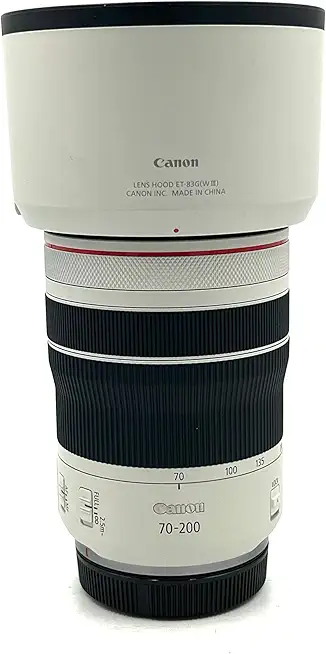
Canon RF 70-200mm f/4L IS USM
Lightweight, travel-ready telephoto with consistent image quality, reliable stabilization, and smooth focusing for landscapes, events, and everyday shooting.
Check PriceAs a travel shooter I appreciate lenses that let me move fast without sacrificing image quality, and the Canon RF 70-200mm f/4L IS USM delivers just that. It’s incredibly compact and lightweight, making it an excellent travel companion when you need reach but don’t want to be weighed down.
Optically it punches above its aperture class—this is L-series performance with sharp results and reliable color and contrast. Autofocus is handled by Canon’s Nano USM, which is smooth, quiet, and quick in real-world use, and the image stabilization is effective even on high-resolution bodies like the EOS R5.
Handling is balanced on mirrorless bodies and the build feels premium, with weather sealing that holds up in varied conditions. The trade-off is obvious: the f/4 aperture limits low-light capability and the creaminess of bokeh compared with f/2.8 alternatives, and there’s no teleconverter compatibility if you need extra reach.
If you’re a traveler, street photographer, or casual shooter who prioritizes portability and still wants professional optics, this lens is a very strong choice. It gives you L-series sharpness and modern AF/IS performance in a form factor you can realistically carry all day.
- Extremely compact and lightweight
- Smooth, quiet Nano USM autofocus
- Solid image stabilization and L-series build with weather sealing
- Bright, sharp optics for a travel-friendly telephoto
- No teleconverter compatibility
- f/4 limits low-light performance and bokeh compared to f/2.8 lenses
3. Canon RF 70-200mm f/2.8L IS USM Z
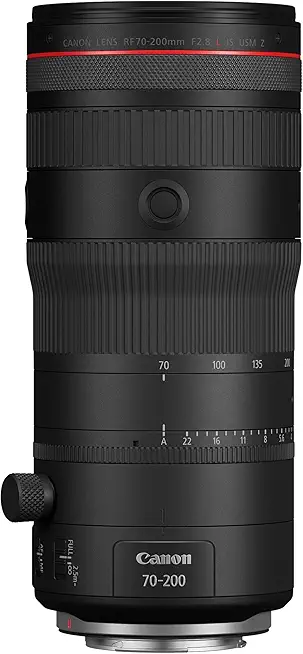
Canon RF 70-200mm f/2.8L IS USM
Professional-grade telezoom offering bright aperture, rock-solid image stabilization, and rapid, whisper-quiet autofocus for decisive action and cinematic results.
Check PriceAs a working pro I reach for this RF 70-200mm f/2.8L IS USM Z when I need the absolute best from a telephoto zoom. It’s considered among the sharpest 70–200s Canon has produced, with superb color and contrast that make images pop straight out of camera.
The lens stays remarkably compact thanks to its internal zoom design — the length remains constant as you zoom. That makes it easier to balance on gimbals and more comfortable for long event days where weight and handling matter.
Autofocus is a revelation. The Dual Nano USM system is extremely fast, whisper-quiet, and pin‑point accurate, which is fantastic for both high-speed stills and smooth video pulls.
Stabilization is another highlight: the lens offers an effective 5.5-stop IS and can extend to up to ~7.5 stops when coordinated with in-body stabilization. That gives you serious handheld flexibility in lower light or when you don’t want a tripod.
There are a couple of practical caveats to consider. The iris control ring only functions on newer RF bodies, so you may lose that tactile exposure option on older cameras. Also, this is a premium tool with a premium price, and it does not support teleconverters.
In short, if you’re a professional or serious hybrid shooter on the RF system chasing top-tier sharpness, silent fast AF, and class-leading IS, this lens will reward you. If budget or teleconverter use is critical, it’s worth weighing those limits first.
- Exceptional sharpness and image quality
- Fast, whisper-quiet Dual Nano USM AF
- Very effective IS (up to 7.5 stops with compatible bodies)
- Internal zoom keeps length constant and supports weather resistance
- Iris control ring limited to newer RF cameras
- High price; no teleconverter compatibility
4. Canon EF 70-200mm f/2.8L IS II USM

Canon EF 70-200mm f/2.8L IS III USM
Pro-level telephoto lens designed for fast shooting, exceptional sharpness, advanced stabilization, and reliable autofocus for sports, weddings, and editorial work.
Check PriceThis Canon EF 70-200mm f/2.8L IS II USM is a longtime pro workhorse that I’ve relied on in tough assignments. It delivers excellent image quality with very sharp images and strong contrast, which matters when clients demand clean, punchy files straight from the camera.
Autofocus is fast and accurate for dynamic subjects, so tracking moving people or action feels confident even in fast-paced shoots. The reliable image stabilization also makes handheld work much more practical, especially when you can’t or don’t want to lug a tripod.
The build is rugged and weather-sealed, so I’ve taken it into rain, dust, and other harsh conditions without worry. That robust construction gives this lens a durable, professional feel that’s built to last through frequent, demanding use.
It’s still very relevant on DSLRs and remains a capable option when adapted to mirrorless bodies with an EF adapter. For photographers transitioning systems, it keeps proven optical and AF performance while letting you reuse a dependable pro-grade lens.
There are trade-offs to consider: it’s heavier and bulkier than newer designs, which affects how long you can comfortably carry it. Also, an older coating can occasionally flare in strong backlit situations, so a lens hood and mindful positioning still help.
Overall, if you shoot events, weddings, sports, or any situation that requires durable, sharp, and dependable performance, this 70–200mm Mark II is a very practical and trustworthy choice.
- Very sharp images with strong contrast
- Reliable image stabilization for handheld work
- Robust, weather-sealed construction
- Fast, accurate autofocus for dynamic subjects
- Heavier and bulkier than newer alternatives
- Older coating can cause occasional flare
5. Canon EF 70-200mm f/4L IS II USM
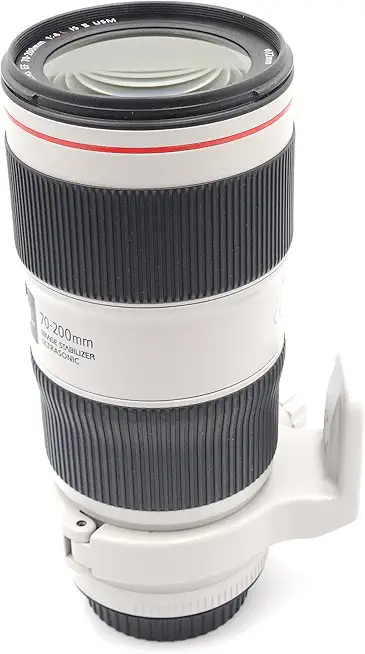
Canon EF 70-200mm f/4L IS II USM
Compact, high-performance telezoom blending portability with crisp optics and effective stabilization—ideal for travel, nature, and candid portraiture.
Check PriceWhen I pick up the Canon EF 70-200mm f/4L IS II USM for a day of shooting, the first thing I notice is how astonishingly light and compact it is — the outline even notes it’s lighter than some prime lenses. That portability makes it a real winner for travel, landscape, and run-and-gun video work where every gram matters.
The internal zoom design is a practical joy: the lens doesn’t change length as you zoom, which reduces dust ingress and prevents lens creep. That stability also makes it easier to balance on gimbals and support rigs, so handheld video and stabilized gimbal shots feel more reliable.
Optically this is a proper L-series performer — sharp, contrasty images with solid weather sealing that stands up in the field. Autofocus is described as quick and quiet, which I appreciate when switching between stills and video; it’s well-suited to daytime shoots and outdoor portraits where detail and color fidelity are priorities.
The trade-off is honest and simple: the f/4 maximum aperture limits low-light capability and the shallow depth-of-field you get from faster f/2.8 glass. If you regularly work in dim venues or need extreme subject isolation for sports or fast-action, this lens will feel constrained. For photographers prioritizing weight savings, gimbal-friendly handling, and L-series image quality in daylight, it’s an excellent, practical choice.
- Very lightweight and easy to carry all day
- Internal zoom prevents lens creep; suits video/gimbal setups
- Sharp, contrasty L-series image quality
- Solid build and weather sealing
- f/4 limits low-light performance and depth-of-field control
- Less ideal for sports/fast-action where wider apertures help
How to Choose the Right Canon 70-200mm
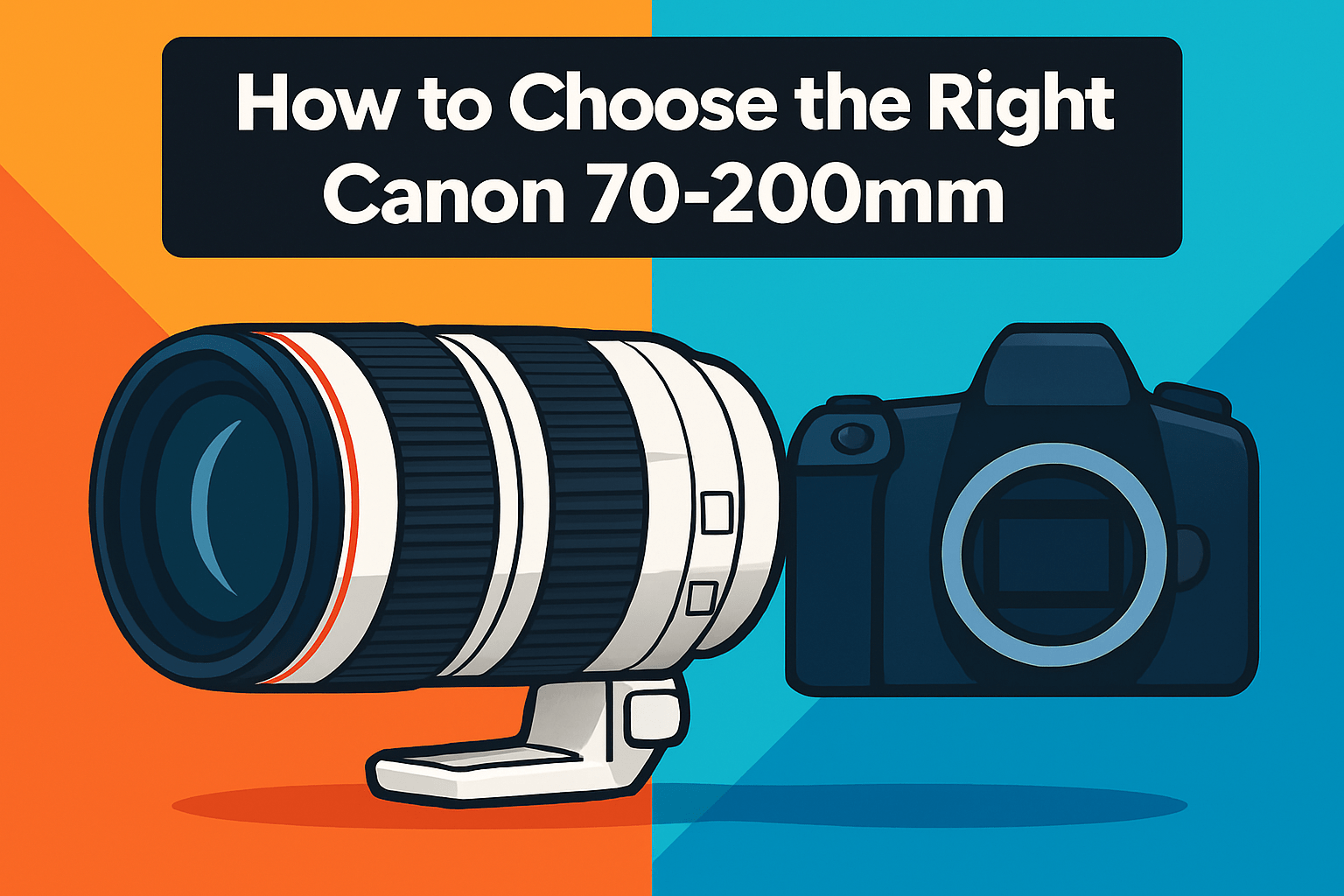
Choosing the right 70–200 really comes down to what you shoot most: reach and subject separation, or carrying comfort and long days. Decide that first and the rest becomes easier.
Aperture is the biggest trade-off. f/2.8 gives cleaner bokeh and faster shutter speeds in dim light—great for sports, weddings and portraits. f/4 saves weight and keeps you shooting longer.
Mount and generation also matter. RF 70–200s are built for mirrorless and usually offer better AF and IS in a smaller package. EF remains the go-to for DSLRs and for models that accept teleconverters.
Teleconverters change the game. Some EF 70–200s accept them; many RF models do not, so confirm compatibility if extra reach matters.
Stabilization and handling show up on day one. Modern RF f/2.8s deliver around five stops of IS and the Z Mark II can reach roughly 5.5 stops or about 7.5 with IBIS coordination. If you shoot handheld a lot, that IS and lighter f/4 options matter.
Autofocus is another tipping point. Dual Nano USM and Nano USM in recent RF glass are fast and quiet for stills and video, while older EF USM lenses are still reliable for fast action.
Try before you buy. Walk with the lens, balance it on your body or gimbal, and shoot at apertures you’ll use. The hands-on feeling will tell you more than charts.
In practice, choose f/2.8 for low light and subject isolation, go f/4 for travel and endurance, and match EF or RF to your camera and needs. Pick the lens you’ll reach for first—those are the shots you’ll make.
Maximizing Image Quality with Canon 70-200mm
Getting the best from a 70–200mm is as much about technique as optics. Small changes in shooting habit often deliver the biggest jumps in sharpness and contrast.
Peak sharpness usually lands one to two stops down—so aim for f/4–f/5.6 on f/2.8 lenses and f/5.6–f/8 on f/4 models. Avoid stopping past f/11–f/16 to limit diffraction, and test across focal lengths because each copy has its own sweet spot.
Use optical stabilization when handholding; modern RF 70–200s combine fast AF with effective IS and let you shoot slower than you might expect. Disable IS on a solid tripod to prevent correction artifacts, and remember some RF bodies add IBIS that extends effective stops.
Respect shutter speed for focal length and motion—start at roughly 1/200s at 200mm and push faster for action. Support heavy setups with the tripod collar or a monopod and keep a steady, relaxed stance.
At wide apertures the plane of focus is thin, so use single‑point AF and focus magnification for pixel‑critical work. Watch for focus shift when stopping down and prefer live‑view or mirrorless AF tweaks on high‑resolution bodies.
Test your copy—stopping down often improves corners, and sample variation is real; service the lens if it consistently underperforms. Always use a hood to cut flare, keep elements clean, shoot RAW, and bench‑check teleconverter use since extenders will cost contrast and AF speed.
Learning your lens’s sweet spot through a few controlled tests will repay you on shoots where quality matters. Practice those reliable habits and the 70–200 will be your sharpest tool in the bag.
What People Ask Most
Which 70-200mm lens is best for Canon cameras?
There is no single best lens; the right choice depends on priorities like sharpness, weight, aperture, and mount. Premium RF f/2.8 options suit demanding hybrid pros, while f/4 variants are better for travel and those prioritising portability.
What is the difference between the Canon 70-200mm f/2.8 and f/4 lenses?
The f/2.8 models deliver better low-light performance and shallower depth of field, while f/4 lenses trade some light and bokeh for significantly reduced size and weight. Both are L-series quality, but handling and suitability change with the aperture choice.
Is the Canon 70-200mm f/2.8 ideal for wedding and portrait photography?
Yes, the wider aperture helps in low light and provides stronger subject separation, making it well suited to events and portraits. Its faster aperture also offers more control over depth of field for creative looks.
Are third-party 70-200mm lenses (Sigma, Tamron) compatible and as good as Canon for Canon cameras?
Compatibility and performance vary between third-party models, so results are not uniform across brands. Always check manufacturer compatibility lists and independent reviews to evaluate autofocus, image quality, and build for a given model.
Which 70-200mm lens is best for sports and wildlife photography on Canon?
Faster f/2.8 variants are generally recommended for sports and wildlife because they aid in faster shutter speeds and subject isolation. High-performance RF f/2.8 lenses and proven EF f/2.8 workhorses are common choices depending on your camera system.
Which 70-200mm lens is best for travel and lightweight use on Canon?
F/4 versions are typically the best compromise for travel due to their compactness and lower weight, making them easier to carry all day. They remain high quality optically while sacrificing some low-light capability and bokeh.
Can Canon EF 70-200mm lenses be used on Canon mirrorless bodies with an adapter?
Yes, EF lenses can be adapted to Canon mirrorless bodies using the appropriate adapter, allowing continued use of DSLR glass. Native RF lenses are designed specifically for mirrorless bodies and often offer size and performance advantages when available.
Conclusion for Best Canon 70-200mm Lenses
Choosing the right 70–200mm comes down to your shooting priorities—aperture, weight, and system compatibility—and this guide was designed to make those trade-offs clear so you can match a lens to how you actually work.
If you prioritise low‑light performance and subject separation, favour the wider aperture; if long days on the road and minimal bulk matter more, the lighter aperture is a strong compromise, and remember to factor in whether you shoot on mirrorless or DSLR systems.
For more practical tips, techniques, and comparisons to help you get the best results from your telephoto setup, take a look through the other articles on the site to keep sharpening your skills and confidence.
Have a question or want to share your own experiences with 70–200mm lenses? Leave a comment below and we usually reply within a few hours.



0 Comments