
Ever tried to frame a breaching whale, a distant brown bear, or the eerie curtains of the aurora only to find your lens coming up short? If so, you’re not alone.
This guide cuts through the confusion with five recommended lenses tailored for Alaska cruises, plus practical tips on protecting and packing your equipment and a focused FAQ that answers common on-board dilemmas. Expect magazine‑style, field‑tested advice that favors real-world shooting over specs‑driven theory.
Whether you’re stalking wildlife from a Zodiac, composing vast glacier panoramas, or waiting out long twilight for the northern lights, the right glass makes the trip. It’s aimed at photographers who need lenses that balance reach, low‑light performance, weather resistance, and manageable weight.
Alaska throws lots of curveballs—distance to subjects, huge skies, dim light, wet spray, and boat motion can all sabotage a shoot. In this guide we’ll highlight the essential lens traits—tele reach, ultra‑wide perspectives, stabilization, and robust sealing—so you can prioritize what matters.
You’ll also get pragmatic packing and gear‑care tips to keep electronics dry, organized, and ready after wet excursions. Those logistics often decide whether a once‑in‑a‑lifetime shot becomes a keeper.
Read on for concise recommendations, field notes, and straightforward answers to the most common lens questions for Alaska cruises. By the end you’ll be ready to choose five lenses that match your shooting priorities and the realities of life at sea.
1. Canon 100-400mm Wildlife Telephoto
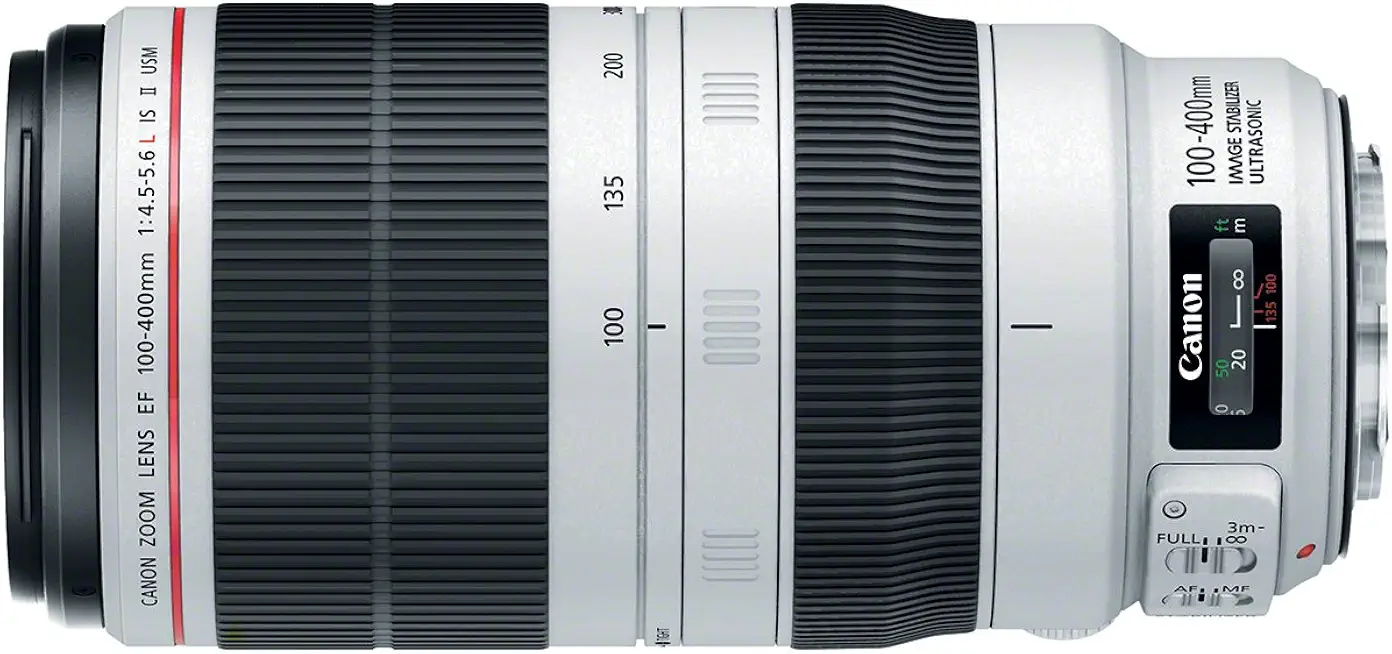
Canon EF 100-400mm f/4.5-5.6L IS II USM
Versatile long‑reach zoom with exceptional sharpness, advanced image stabilization, and fast, accurate autofocus for wildlife and sports photography.
Check PriceThe Canon 100-400mm Wildlife Telephoto (EF 100-400mm f/4.5-5.6L IS II USM) is built to capture distant subjects like bears, eagles, whales and glacier detail without getting too close or disturbing them. Its 100–400mm reach lets you tighten framing on wildlife and distant landscape textures from the deck of a ship or the shoreline.
Image stabilization makes handheld shooting on boats and uneven terrain far more usable, reducing reliance on supports in most situations. The lens is consistently sharp throughout the zoom range, so you can crop for detail and still retain high image quality.
Autofocus is fast and reliable, which is crucial for opportunistic wildlife moments that pop up and vanish quickly. The construction is weather-resistant, so it stands up better to cold, damp Alaskan conditions and sea spray than non-sealed optics.
Real-world users praise the lens for its balance of reach and manageable weight, making it a practical choice for most cruise-based wildlife work. Be mindful that the f/4.5–5.6 maximum aperture limits low-light performance, and the lens can feel heavy on long hikes or day-long excursions—so weigh the trade-offs against your shooting style and tolerance for gear weight.
- 100–400mm reach
- Sharp across focal lengths
- Effective image stabilization (IS)
- Fast, reliable autofocus
- Heavier for long hikes or day-long use
- Limited aperture (f/4.5–5.6) reduces low-light performance
2. Nikon 14-24mm Ultra-Wide Zoom

Nikon AF-S NIKKOR 14-24mm f/2.8G ED
Ultra-wide, bright professional optic delivering edge-to-edge clarity and outstanding low-light performance for landscapes, architecture, and creative perspectives.
Check PriceThe Nikon AF‑S 14–24mm f/2.8 is an ultra‑wide zoom built for the kind of vast Alaskan scenery that fills a frame — glaciers, sweeping fjords, and those dramatic Northern Lights. Its 14–24mm coverage gives you the panoramic field of view to include foreground detail and expansive skies in a single shot, and the constant f/2.8 aperture really helps during long twilight hours or when shooting inside ship interiors.
Optically it’s designed to deliver professional‑grade sharpness and contrast, so glacier textures and distant horizon detail stay crisp across the frame. The lens’ build quality and weather‑sealed construction make it reliable in moist, cold conditions common on Alaska cruises, so you can keep shooting through spray and drizzle without worrying about immediate damage.
That said, ultra‑wide glass demands careful composition — the widest angles can introduce noticeable distortion that often needs post‑processing correction to look natural. If you prefer minimal editing, plan your compositions and horizons carefully; this lens rewards deliberate framing. It also pairs very well with medium and telephoto lenses in a kit so you can switch from grand landscapes to tighter subjects without compromising image quality.
Finally, remember this is a heftier, more professional lens rather than a compact travel optic. If your priority is the widest, most dramatic landscape and strong low‑light performance (Northern Lights included), this lens is an excellent choice. If you need ultra‑light, minimalist travel gear, its bulk may be a downside.
- Outstanding wide-angle coverage
- Constant f/2.8 for low light and creative control
- Professional-grade sharpness and contrast
- Weather-sealed construction
- Heavier and bulkier than typical travel lenses
- Distortion at widest angles often requires post-processing
3. Tamron 150-600mm Super-Telephoto Zoom

Tamron SP 150-600mm f/5-6.3 Di VC USD G2 for Nikon
Extreme-reach telephoto with class-leading stabilization and precise tracking, built for distant wildlife, birds, and fast-action shooting.
Check PriceThe Tamron 150-600mm f/5-6.3 Di VC USD G2 is a super-telephoto zoom built for photographers who put wildlife first. Its 600mm reach lets you frame whales, eagles, and distant bears tightly without disturbing the animals, which is invaluable on an Alaska cruise.
Vibration Compensation (VC) is a practical advantage when shooting from moving boats or handholding at long reach. The stabilization meaningfully reduces blur from ship motion, so you get usable frames more often than you might expect from a lens this long.
Optically it delivers very good sharpness for grabbing rare wildlife moments, though the lens is bulkier and heavier than shorter zooms. In practice I pair it with a gimbal head, monopod, or sturdy tripod for day-long outings; handheld is possible but tiring on long shutter‑hungry shoots.
Autofocus is generally quick for opportunistic shots, but it can hunt in dense foliage or in low light — that’s partly down to the narrow maximum aperture range of f/5–6.3. So plan your shooting windows around decent light, and consider higher ISO settings if you need faster shutter speeds.
If your priority is documenting distant wildlife on an Alaska cruise this lens is mostly a keeper: exceptional reach, reliable stabilization, and weather resistance give you the tools to capture close-up behavior without getting too close. If you need top low-light performance or ultra‑light travel weight, note the trade-offs before you commit.
- 600mm reach for distant wildlife
- VC stabilization for handheld/boat use
- Good optical performance and sharpness
- Weather resistance for Alaskan conditions
- Large and heavy to carry
- Narrow aperture (f/5–6.3) limits low-light performance
4. Sony 24-105mm Travel Zoom
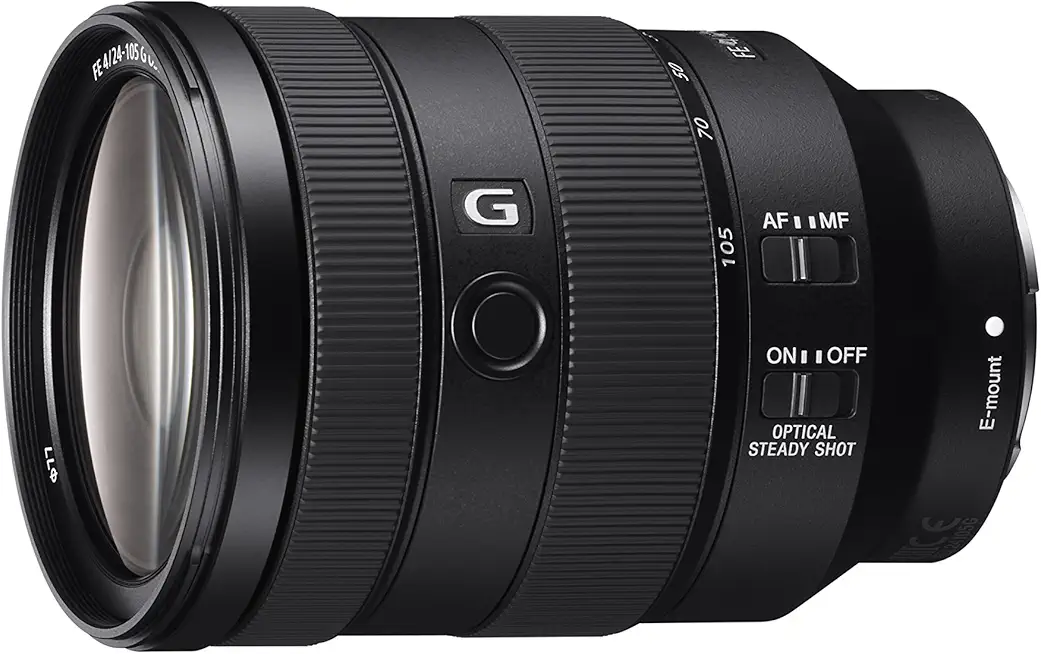
Sony FE 24-105mm f/4 G OSS SEL24105G
Reliable all-purpose zoom offering consistent mid-range sharpness, smooth autofocus, and effective stabilization for travel, events, and everyday shooting.
Check PriceAs a Sony full-frame shooter, the Sony FE 24–105mm f/4 G OSS is the kind of lens I reach for when I want one versatile tool that handles landscapes, portraits, and moderate telephoto needs without swapping glass every five minutes. The 24–105mm range covers most travel scenarios on an Alaska cruise, from cabin decks to shore excursions, so you can frame wide glacier scenes and step in for tighter compositions quickly.
The constant f/4 aperture gives consistent exposure through the zoom and pairs with OSS image stabilization to keep handheld shots usable in variable light and on moving boats. That stabilization is a real asset when the ship’s motion makes tripods impractical; you’ll often get sharp frames at lower shutter speeds than you’d expect.
In the field it behaves like a true walkaround: compact, travel-friendly, and smooth with quiet autofocus that helps with candid portraits and unobtrusive wildlife shooting. Optically it’s sharp across the zoom range, though it won’t quite match the micro-contrast and edge-to-edge acuity of high-end primes — a fair trade for its flexibility and convenience.
If you prioritize minimal kit and want a lens that covers most scenarios on an Alaska cruise, this is an excellent choice. If your primary goal is distant wildlife photography, note that 105mm can feel short; likewise, the f/4 aperture is slower than f/2.8 options for very low-light situations like intense Northern Lights work.
- 24–105mm coverage
- Constant f/4 aperture
- OSS image stabilization
- Compact, travel-friendly design
- 105mm may be short for serious wildlife
- f/4 is slower than primes or f/2.8 zooms
5. Canon RF 24-70mm Fast Standard Zoom

Canon RF 24-70mm f/2.8L IS USM
Pro-level standard zoom with a fast constant aperture, lightning autofocus, robust weather-sealed build, and steady stabilization for events and portraits.
Check PriceAs a Canon shooter I lean on the RF 24–70mm f/2.8L IS USM when I want one lens that handles landscapes, portraits and variable lighting without constant lens swaps. Its constant f/2.8 aperture gives real low‑light punch and creative control for shallower depth of field when you want to isolate a subject against glacier or water backgrounds.
The built‑in image stabilization is genuinely useful on a rolly boat or when handholding at lower shutter speeds, letting you keep shooting through motion and spray. That stability combined with the 24–70mm range means you can react quickly to changing scenes without fumbling for another lens.
Optically it delivers sharp, vibrant images — colors and microcontrast that make glacier textures and skin tones pop in portraits. In practice it’s heavier than earlier 24–70mm versions, but many of us accept the weight for the improved optics and stabilization that reduce the need to switch lenses on the fly.
If you prioritize versatility and low‑light capability on an Alaska cruise, this lens is an excellent workhorse for Canon mirrorless systems. If your trip is wildlife‑heavy and you need long reach, be aware that the 70mm short end limits distant subject capture.
- Fast f/2.8 aperture
- Versatile 24–70mm range
- Excellent image stabilization
- Professional optics and build
- Heavier than older 24–70mm variants
- Not suitable for long‑distance wildlife beyond ~70mm
Protecting Camera Gear From Rain and Moisture
On an Alaska cruise the weather is your co‑photographer — drizzle, sea spray and sudden squalls are part of the job. Weather‑sealed camera bodies and lenses are your first line of defense; they resist dust, humidity and light rain but they are not invincible. Treat sealing as insurance, not permission to be careless.
For shoots from the bow or in steady rain, use a purpose‑built rain cover or waterproof housing; they let you keep shooting while protecting controls. I carry a compact cover for quick deployment and stash emergency options—Ziploc bags or a shower cap—within easy reach. Never change lenses outdoors in wet conditions; the tiny cloud of moisture and salt can do serious damage.
Use a sealed camera bag with organized compartments and zipper seals, and deploy the bag’s built‑in rain cover at the first squall. Slip a few silica gel packs between bodies and lenses to absorb moisture and limit condensation. After a damp day, open the bag, remove the inserts and air everything out so trapped dampness doesn’t linger.
Fit a UV or clear protective filter on working lenses as a sacrificial front element—it’s far easier to clean or replace than an optic. Wipe lenses and camera bodies regularly with a clean microfiber to remove droplets and salt that cause corrosion. If gear gets wet, dry everything thoroughly before storing and let it acclimate so you avoid internal condensation.
Learn to read the weather and plan short shoots to avoid prolonged exposure to heavy rain; it’s better to wait for a calm window than gamble with electronics. Keep protective covers and a dry cloth within easy reach so you can act fast — those small routines keep equipment working through an entire Alaska cruise. Do that and you’ll shoot more, worry less, and come home with gear that still performs.
Packing Camera Gear for an Alaska Cruise
Alaska’s damp, windy, and often cold environment demands a practical packing approach. Protecting gear from moisture and physical shocks should be your top priority, while keeping a small, ready-to-shoot kit accessible on deck. Plan to separate items and simplify so you can react quickly when a whale breaches or a glacier calves.
Always pack camera bodies and lenses separately to avoid jostling the mounts and damaging sensors. I remove lenses, cap both ends, and nest each piece in a padded compartment with adjustable dividers. Choose a water-resistant bag or backpack with zipper seals for the extra protection.
Layer several silica gel packets throughout the bag to fight condensation and salt spray. Keep a soft microfiber cloth and lens caps handy to wipe spray before it dries into salt. A UV or clear protective filter is a modest insurance policy for front elements.
Organize batteries, chargers, SD cards, and cables into small waterproof pouches or zip-locks so wet weather doesn’t ruin your day. Bring multiple batteries and charge them each night because outlets can be scarce and long days ashore drain power fast. Also check the cruise-line rules about power strips and surge protectors before you pack them.
Pack bulky or heavy items like tripods and flashes in checked luggage, cushioned with soft clothing to avoid knocks. Remember that tripods are often impractical on a rolling deck, but they are indispensable for shore landscapes and Northern Lights. If you want a tripod on board, choose a compact travel model and protect it with a padded sleeve.
Keep a compact, inconspicuous camera bag for on-deck use and never leave gear unattended. Set up one go-to camera + lens combo so you limit swaps in wind and spray, and use quick-access pouches for spare cards and your phone. A little planning—dividers set, silica gel in place, batteries charged—will keep you shooting confidently through mist, long twilight, and sudden wildlife moments.
What People Ask Most
What focal lengths are best for an Alaska cruise?
Ultra-wide lenses are ideal for expansive landscapes and sky scenes, while standard zooms cover general travel and portrait needs. Telephoto reach is useful for distant wildlife and glacier details, so choose based on your shooting priorities and how much gear you want to carry.
Which lenses are best for photographing wildlife on an Alaska cruise?
Telephoto zooms with good reach and image stabilization are most useful for photographing animals without disturbing them. Mid-range zooms can cover closer subjects, but dedicated long-reach lenses are preferable for distant wildlife.
What lens should I use for capturing glaciers and landscapes on an Alaska cruise?
Ultra-wide lenses capture the scale and drama of glaciers and broad vistas, while mid-range zooms offer compositional flexibility for varied scenes. A longer lens can be handy for isolating distant textures and details in the ice.
Is a telephoto lens necessary for an Alaska cruise?
A telephoto lens is highly valuable for photographing distant wildlife and landscape details, but it may not be essential for everyone. If your priority is landscapes or the Northern Lights, you can get by with wide and mid-range optics.
What lens is best for shooting the northern lights on an Alaska cruise?
Fast wide-angle lenses work best for capturing the breadth and faint detail of the aurora with minimal noise. Slower lenses can be used, but wider apertures make low-light shooting easier and provide more creative control.
Should I bring wide-angle or zoom lenses on an Alaska cruise?
Bringing a combination of wide-angle and zoom lenses offers the most versatility for landscapes, portraits, and wildlife. Balance your kit according to what you plan to prioritize and how much weight you are willing to carry.
What lens features (weather sealing, stabilization, aperture) are most important for an Alaska cruise?
Weather sealing helps protect gear from moisture and spray, while image stabilization aids handheld shooting on boats and uneven ground. Fast apertures, reliable autofocus, and manageable weight are also practical considerations for varied Alaskan conditions.
Conclusion on Best Alaska Cruise Lenses
In short, pick gear that matches what you plan to shoot most—prioritize reach for wildlife or wide, faster glass for landscapes and night skies—while keeping weather resistance and stabilization top of mind.
Careful packing and simple moisture protection will keep your kit working through rain, spray, and ship motion, and planning power and backups lets you stay ready for fleeting Alaskan light.
Balance reach, aperture, and weight to suit your comfort on excursions, remembering that a lighter, versatile setup often yields more keepers than an overburdened bag.
If you want to sharpen your approach and get more practical tips, explore other articles on the site to build the skills and confidence for your next cruise.
Have questions or want to share gear experiences from your own trip? Leave a comment below and we usually reply within a few hours.



0 Comments