
Which lenses will help you tell stories that feel true, intimate, and visually compelling? This guide presents five top lenses and practical kit-building tips for documentary photographers at every level. Whether you shoot long-form projects or short, run-and-gun assignments, the right glass changes what you can see and what you can keep.
In documentary work, lenses do distinct jobs. Wide glass captures context and atmosphere, showing people inside their worlds. Standard lenses offer a natural perspective that puts viewers in the scene, while tele lenses let you compress space and shoot discreetly from a distance.
Beyond focal length, handling matters: weight, focus reliability, and stabilization shape real-world results. Faster apertures help in low light and control depth of field, but they also add size and cost. A balanced kit prioritizes practical performance over headline numbers.
This feature looks at versatile, field-ready options you can rely on during long days and unpredictable light. We’ll weigh the benefits of primes versus zooms and discuss what to favor depending on your story and shooting style. Expect honest, experience-based guidance rather than spec-driven hype.
You’ll come away with a short list of lenses that cover wide, standard, and tele needs and clear tips for assembling a lean kit. The aim is to help you make confident, efficient choices so you can focus on story, not gear. Ready to refine your bag and shoot with more intention?
1. Versatile Pro Standard Zoom With IS

Canon RF 24-70mm f/2.8L IS USM (for EOS R)
Professional standard zoom with fast aperture, reliable stabilization and ultra-sharp optics for versatile shooting in low light and demanding conditions.
Check PriceThis versatile pro standard zoom is built for on-location documentary work where flexibility matters. The 24–70mm range covers everything from environmental context to tight portraits, so you can move less and shoot more.
Image stabilization genuinely helps when you’re shooting handheld in dynamic situations or working in mixed light. It’s noticeably lighter and more compact than older pro zooms, which makes a long day on the street or in the field much less tiring.
Autofocus is fast and reliable, so you won’t miss decisive moments when subjects move or conditions change. Optically it delivers sharp, color-accurate images that hold up for clients and prints alike.
Professionals value this lens as a solid investment because it covers the essential focal lengths with professional-grade performance. It’s technically excellent — some may feel it’s neutral rather than characterful — but for documentary storytelling it’s a dependable, go-to zoom that lets you focus on the moment instead of gear.
- Excellent image stabilization
- Lightweight and portable for a pro zoom
- Outstanding sharpness and color accuracy
- Fast, reliable autofocus
- Neutral rendering may feel lacking in character
- Considerable investment required
2. Rugged 24-70mm Workhorse for Fieldwork

Tamron 24-70mm f/2.8 Di VC USD G2 (for Nikon)
Versatile standard zoom with constant bright aperture, vibration control and precise rendering for portraits, events, and travel.
Check PriceThe Tokina 24–70mm f/2.8 is a true workhorse for anyone who spends long days shooting in the field. Its rugged, “built like a tank” construction makes it forgiving when you’re moving fast, packing gear roughly, or working in gritty environments.
The 24–70mm zoom range covers the core documentary focal lengths you’ll reach for again and again — wide enough for environment shots and tight enough for portraits without swapping lenses. That flexibility keeps you light and responsive when moments unfold quickly.
That constant f/2.8 aperture is genuinely useful on documentary shoots. It gives you control over depth of field for subject separation and still performs well in low light, so you can rely on it when available light is limited.
Image quality punches above its weight; reviewers note excellent image quality relative to its price and durable build. Practically, it’s recommended for photographers prioritizing durability, and many find it reliable in demanding environments despite some modern shortcomings.
Do expect trade-offs: the lens lacks modern weather sealing, so I’m cautious in rain or heavy dust without extra protection. Autofocus is competent, but it can be slower and noisier than newer designs, which matters if you need near-silent, lightning-fast focusing for discrete shooting.
- Durable, robust construction
- Excellent image quality for the class
- Useful zoom range for varied shooting situations
- Effective f/2.8 aperture
- No modern weather sealing
- Autofocus may be slower or noisier than newer designs
3. Ultra-Sharp 35mm Prime for Low Light

Sigma 35mm f/1.4 DG HSM Art (for Canon)
Ultra-fast prime delivering exceptional sharpness, beautiful bokeh and professional-grade build for low-light, street and creative photography.
Check PriceThe Ultra-Sharp 35mm Prime for Low Light is a 35mm prime designed for documentary work where image quality and low‑light performance matter. Its f/1.4 aperture lets you shoot in dim interiors and available light streets while still isolating subjects with smooth background separation.
That 35mm focal length sits close to human vision, making it ideal for immersive storytelling and environmental portraits without that “too wide” distortion. It works especially well in tighter spaces and indoor scenes where you want context and intimacy in the same frame.
Optically this lens is celebrated for exceptional sharpness and detailed rendering, so your images hold up when you crop or print. Professionals routinely praise the image quality; you can expect crisp textures and excellent micro‑contrast that bring documentary subjects to life.
Autofocus is reliable and fast, which is crucial when moments unfold quickly and you don’t have time to focus manually. The lens is also offered for multiple mounts — Canon, Nikon, Sony, and Pentax — so it fits into most DSLR and mirrorless workflows without compromise.
On the down side, it’s a fixed focal length, so you’ll need to physically move to reframe shots rather than zooming. It’s also larger and heavier than some other primes, so if ultra‑light travel or absolute discretion is your top priority, that’s worth considering.
Overall, if you prioritize sharpness, low‑light capability and a natural, documentary perspective, this 35mm f/1.4 prime is hard to beat; just be ready to accept the tradeoffs in size and framing flexibility.
- Outstanding sharpness and image quality
- Very large aperture (f/1.4) for low light and bokeh
- Reliable, fast autofocus performance
- Natural, versatile 35mm focal length for documentary use
- Fixed focal length requires physical movement to change framing
- Larger size and weight than some other primes
4. Compact 35mm Macro With Stabilization
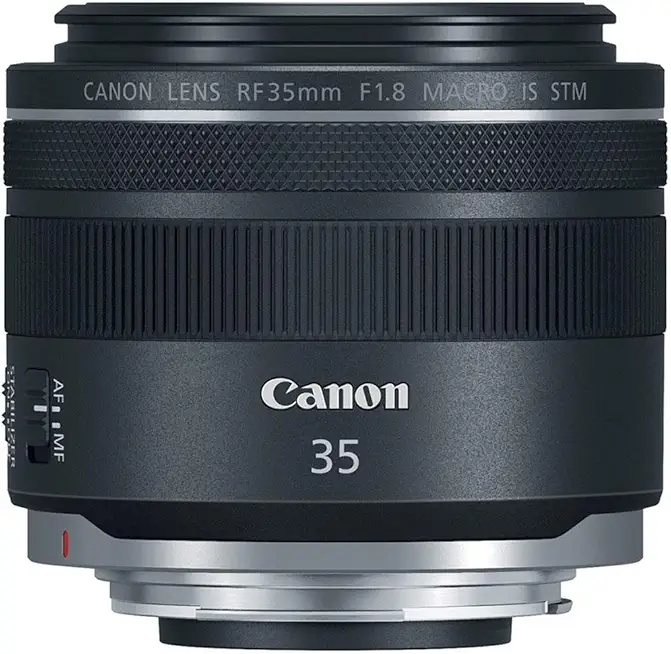
Canon RF 35mm f/1.8 Macro IS STM (for EOS R)
Compact bright wide-angle macro with close-focusing capability, image stabilization and smooth autofocus for detailed close-ups and everyday shooting.
Check PriceThe Canon RF 35mm f/1.8 Macro IS STM is a compact, lightweight 35mm prime that’s ideal when you want to stay unobtrusive and capture candid moments. Its small size helps you blend into scenes, which is invaluable for documentary work where being noticed changes behavior.
At f/1.8 it delivers good sharpness wide open, so you can work in low light and still get pleasing subject separation. The 35mm focal length sits close to the human-eye perspective, making it great for environmental portraits and storytelling without distortion.
What sets this lens apart is its true macro capability — close focusing opens up storytelling options, letting you capture fine details that add depth to a scene. The macro function is versatile for mixing wide-environment shots with intimate detail frames, which strengthens narrative flow in a series.
Built-in image stabilization significantly improves handheld performance, especially during run-and-gun shoots where a tripod is impractical. Stabilization makes it easier to nail sharp images at slower shutter speeds while remaining mobile.
Autofocus is generally acceptable, but note that focusing can be slightly slower near the minimum focus distance. For typical documentary work this is rarely a deal-breaker, but if you rely on fast macro autofocus in chaotic scenes, expect some limitations.
Overall, this lens is mostly a keeper for documentary photographers who value discretion, versatility, and the ability to capture both context and detail. It balances optical quality, stabilization, and macro flexibility in a small package that won’t weigh you down on long shoots.
- Small, lightweight, easy to stay unobtrusive
- Good sharpness wide open at f/1.8
- Effective image stabilization for handheld shots
- Macro capability adds creative flexibility
- Slightly slower autofocus in macro range
- f/1.8 gathers less light than f/1.4 options
5. Fast Telephoto Zoom for Discreet Reach
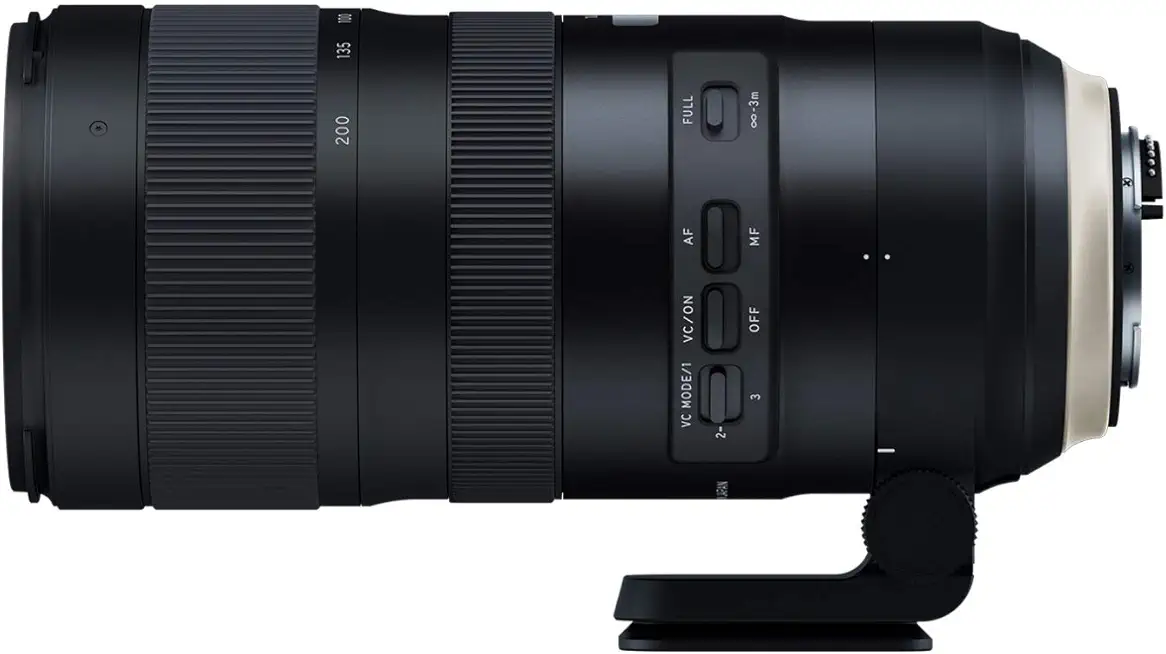
Tamron SP 70-200mm f/2.8 Di VC G2 (for Nikon FX)
Professional telephoto zoom offering constant f/2.8 speed, superior stabilization and fast autofocus for sports, wildlife and event coverage.
Check PriceThis fast telephoto zoom is a workhorse when you need reach without screaming “look at me.” The Tamron 70-200mm f/2.8 G2 lets you keep distance and still capture intimate expressions with natural compression. It’s designed for events and discreet documentary work where you want to stay out of the subject’s space.
The f/2.8 aperture gives you real control over background separation and helps in low-light situations common in on-the-ground storytelling. That shallow depth of field lets you isolate a subject in busy scenes and still render pleasing out-of-focus areas. For run-and-gun situations this makes your subject read clearly even from the sidelines.
Optically, image quality compares favorably to more expensive brands, so you’re not sacrificing sharpness by choosing practicality. The lens is praised for being compact and offering practical handling for a 70–200mm zoom, which matters when you’re carrying gear all day and need to move quickly between moments.
Vibration compensation is a big plus for handheld shooting and low-light frames; it buys you usable shutter speeds when a tripod isn’t an option. Autofocus is fast and quiet, which keeps you discreet and less likely to disturb the scene you’re documenting. Those two traits alone make it a favorite for documentary shooters who need reliability and stealth.
If your work often requires distance, compression, and non-intrusive shooting, this lens is a strong, practical choice. Be mindful that its larger profile can attract attention in very sensitive settings, and it is heavier than primes or shorter zooms during long days of shooting.
- Sharp, high-quality optics for telephoto range
- Fast, quiet autofocus
- Good handling and portability for 70–200mm class
- Effective vibration compensation for handheld shooting
- Larger profile may draw attention in certain scenarios
- Heavier than primes or shorter zooms; can tire on long shoots
Choosing the Right Lens Per Assignment
Start by thinking about the story and the conditions you’ll be shooting in. Ask whether you need context, intimacy or distance and choose your lens to serve that purpose.
For immersive, place‑making images I reach for 24–35mm; those focal lengths show relationships between people and environment. In very tight interiors I’ll go wider to keep subjects and space in the frame.
Around 35–50mm is my everyday documentary lens because it feels natural and honest. It’s versatile for environmental portraits, street work and unpredictable light. Stopped down it gives reliable sharpness when you need fine detail.
When distance and compression matter I use a 70–200mm (or similar telephoto); it lets you be invisible and still capture private expressions. A fast f/2.8 aperture helps freeze motion and separate subjects in busy scenes.
Primes reward you with wider apertures, character and low‑light performance. Zooms give flexibility when you can’t move or when the story unfolds fast, so choose a zoom for run‑and‑gun assignments and a prime when you want mood and maximum light gathering. When mood matters I’ll often bring a single fast prime for its rendering and control.
Never ignore autofocus, stabilization and build quality—reliable AF and IS turn split‑second opportunities into keepers. Weight and weather‑sealing are practical choices when you’re shooting long days or in harsh conditions.
If you can take only one lens pick the one that matches your intent: 35mm for a human, immersive feel; 24–70mm for maximum versatility; 70–200mm for distance work. For a minimal kit pair a versatile zoom with a single fast prime to cover both flexibility and low‑light needs.
Finally, let the story lead your choice rather than the specs. Start wide to set the scene, then move in or reach out depending on what the moment demands.
Build Your Documentary Lens Kit
Build your kit around storytelling, not ego. I pick lenses that let me move from wide context to intimate moments without pausing the story.
Think in three zones: wide, standard, and telephoto. Carrying a lens for each zone covers the vast majority of documentary situations without overpacking.
A wide-angle in the 12–35mm range gives you context, tight interiors, and immersive street scenes. A reliable 35–50mm serves as the daily workhorse for environmental portraits and run-and-gun moments. A 70–140mm or 70–200mm telephoto lets you work discreetly and compress backgrounds for intimate close-ups.
Pack a polarizer and a variable ND — they extend control over reflections and exposure and often salvage tricky light. A small cleaning kit and spare caps are cheap insurance against ruined frames in dusty or rainy locations.
Prioritize lightweight, well-built glass that you’ll actually carry all day. Weather sealing is worth the investment; it keeps you shooting when conditions turn against you.
Fast, dependable autofocus and stabilization matter more than a slight edge in bench sharpness. They increase keepers during handheld, low-light, or fast-moving moments.
Mix sharp primes for the focal lengths you use most with one or two versatile zooms to cover gaps. Primes force you to move and often produce better low-light performance; zooms save time and lens swaps during chaotic shoots.
For a compact travel kit I’ll take a 35mm f/1.8 and a 24–70mm zoom; it covers streets, interiors, and portraits. If I expect to shoot from a distance I’ll swap in a 70–200mm instead. For documentary portrait work add an 85–135mm prime for flattering compression.
Minimize lens changes to stay in the moment — if it helps, set a single zoom to cover most focal needs and force yourself to move for framing. The fewer decisions you make under stress, the more likely you are to capture honest moments.
Finally, test your kit before an assignment and carry one dependable backup if possible. Reliability and consistency will win you stories more often than the newest piece of glass.
What People Ask Most
What focal length is best for documentary photography?
There is no single best focal length; it depends on the story and how much of the scene you need to include. Wide lenses work well for context and immersive shots, while standard and short telephoto lenses suit portraits and candid details.
Should I use prime or zoom lenses for documentary photography?
Primes often deliver superior sharpness and wider apertures for low light and subject separation, while zooms provide flexibility and faster framing changes in dynamic situations. A mix of both can give you the benefits of quality and versatility.
What aperture is best for documentary photography?
Prefer lenses with wide maximum apertures for unpredictable lighting and to isolate subjects when needed. Wider apertures also help maintain shutter speeds in low light while allowing creative depth of field control.
What lens do documentary photographers commonly use?
Documentary photographers commonly rely on standard focal lengths near normal perspective and versatile zooms that cover wide to short telephoto ranges. These choices allow a balance between environmental context and intimate portraits.
Are wide-angle lenses good for documentary photography?
Yes, wide-angle lenses are excellent for capturing environments, tight interiors, and immersive scenes that convey context. Be mindful of distortion and use them when you want to emphasize surroundings and atmosphere.
What lens is best for street and documentary photography?
Compact, unobtrusive lenses with natural perspective are often preferred for street and documentary work to help you blend in and stay quick on the move. Versatile zooms or a standard prime provide practical framing options for most situations.
What lens is best for low-light documentary photography?
Choose lenses with large maximum apertures to gather more light and allow faster shutter speeds in dim conditions. Lenses with stabilization or fast autofocus also help preserve sharpness and capture fleeting moments.
Conclusion for Best Lenses for Documentary Photography
The right documentary kit starts with the story and the environment, not a shopping list, so prioritize lenses that give you the flexibility to capture context, expression, and detail while staying portable and reliable.
Balance is the practical win: pair unobtrusive primes with one or two versatile zooms, favor solid autofocus and stabilization, and pack only what covers the angles you actually need to tell the story.
If you want to keep improving your craft, explore more of the practical guides and gear advice on our site to sharpen your selection and shooting choices.
Have questions or want to share your setup? Leave a comment below — we usually reply within a few hours.


0 Comments