
What is TTL flash — and can it save your shot when the light changes in a blink?
In simple terms, we’ll answer what is ttl flash and how it works. You will learn about the quick pre‑flash metering and how the camera and flash communicate. We also point out common names like Canon e‑TTL and Nikon i‑TTL so you know which system you have.
We explain when TTL is a time‑saver and when manual control is better. Expect clear examples, quick tests, and real settings for weddings, portraits, and outdoor fill flash.
Keep reading for practical tips and a troubleshooting checklist. By the end you’ll know when to trust TTL and how to fix common TTL problems.
What TTL Flash Means and How It Works
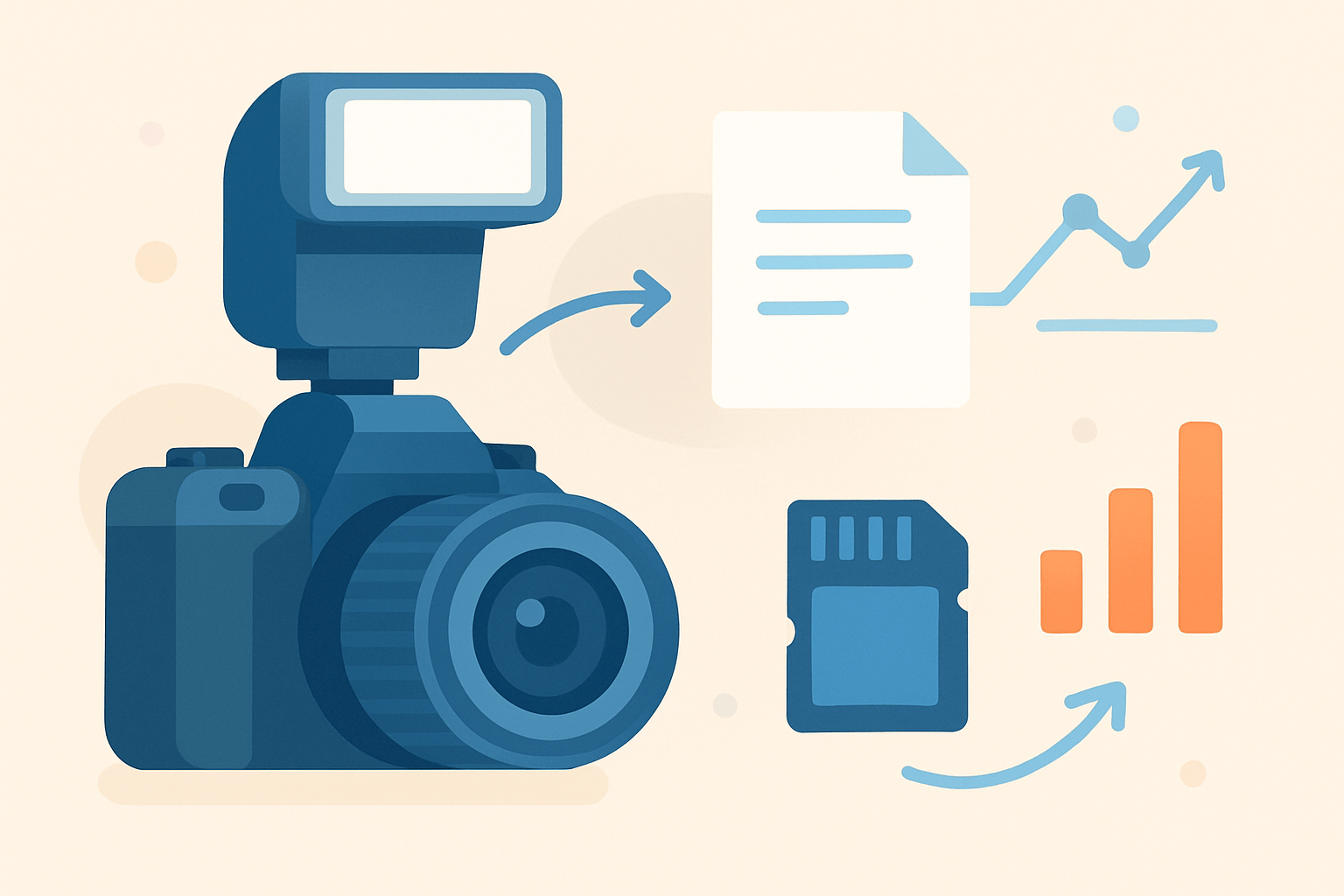
TTL stands for Through-The-Lens, and it means the camera and flash use a pre-flash measured through the lens to set flash power automatically. If you have ever asked what is ttl flash, it is simply through‑the‑lens automatic flash metering that makes a quick test flash, reads it, and fires the real exposure at the right power.
The sequence is fast: a tiny pre‑flash fires, the camera meters that light through its sensor, then the main flash fires for the actual photo. This happens in a blink, so you rarely see it, but it explains how the camera decides brightness for faces and backgrounds.
Communication happens through the hotshoe pins or a compatible radio system. The camera sends data like ISO, aperture, metering mode, and focusing information, and the flash responds with a calculated burst. Modern radio TTL triggers can do this off‑camera as well, keeping the same automatic control from several meters away.
TTL takes into account your aperture and ISO because both control how much light the sensor collects. It also uses the camera’s metering mode and may use lens distance data to refine its guess. If you zoom your lens and the flash head zooms to match, the system also factors the narrower or wider beam of light.
Here is a simple example in practice. If your subject steps closer to the flash, TTL lowers power to keep exposure stable; if your subject backs away, TTL raises power to compensate.
One quirk is the pre‑flash can cause sensitive subjects to blink. It may also create a small extra catchlight in eyes at close range, which some photographers notice in portraits.
Different brands have different names for a similar idea: Canon e‑TTL/e‑TTL II, Nikon i‑TTL, and Sony ADI/TTL. The underlying promise is the same, and if you want a short refresher on the basics, this guide to what is TTL explains the core terms in plain language.
Imagine a simple diagram labeled pre‑flash, meter, and main flash in a straight line. That three‑step dance is the heartbeat of every TTL exposure.
How Does TTL Flash Metering Work?
TTL uses the camera’s metering brain to decide how bright the flash should be. Change the metering mode and you change the brain’s priorities, which is why faces can look different under evaluative/matrix, center‑weighted, or spot metering.
Evaluative or matrix metering looks across the whole frame and tries to balance subject and background. Center‑weighted cares more about the middle, which can be helpful if your subject is near the center. Spot metering bases the flash on a tiny area, which is powerful but risky if the spot lands on something very bright or very dark.
Ambient light matters because TTL sets the flash relative to the light already in the scene. Shutter speed controls ambient exposure but does not directly change the brightness of the flash burst, while aperture and ISO affect both ambient and flash. That is why dragging the shutter can brighten the background without blowing out faces lit by TTL.
Flash head zoom and modifiers also change the equation. A zoomed flash concentrates light, so TTL may reduce power because more of the beam hits the subject; a wide zoom spreads the light, so power often goes up. When you add a softbox, bounce off a wall, or tape on a heavy diffuser, TTL automatically raises power to compensate for light loss until it hits the flash’s limits.
Some systems read distance data from the lens and fold it into the calculation. This can help when you are direct‑flashing a subject at a known distance, but it is less accurate with bounce or large modifiers, because the flash path is no longer straight to the subject.
High‑Speed Sync (HSS) changes how the flash fires by pulsing across the exposure. You can now shoot above your camera’s sync speed, but the effective power drops, so TTL often increases output and you lose working distance quickly. Expect to raise ISO or open your aperture in HSS to keep the same look.
There are common times when TTL guesses wrong. Very dark backgrounds can trick the system into adding too much light, while bright or reflective backgrounds can make it cut light too aggressively. Backlit scenes or frames with heavy specular highlights can also throw off the reading and dim your subject.
You can run two quick tests to see this for yourself. First, point the camera at a grey card and make a TTL shot, then point at a white wall and repeat with the same settings; compare the subject brightness to see how the meter responds. Second, shoot the same scene with evaluative/matrix, center‑weighted, and spot metering, and note how TTL changes face exposure.
If you are learning what is ttl flash metering at a deeper level, keep an eye on the histogram and highlight “blinkies” as you run these tests. Small nudges with flash exposure compensation will show how flexible and responsive the system is.
TTL Flash vs Manual Flash: Which to Choose?
TTL shines when the world keeps moving. It is fast, it adapts when subjects change distance or light shifts, and it saves time at events, weddings, documentary work, and quick portraits on location.
The downside is consistency and transparency. TTL can vary from shot to shot, and reflective or very dark scenes may push it around; it also uses more battery because it often fires higher power or HSS for balance.
Manual flash is the opposite: stable and predictable. Once set, it repeats exactly, which is perfect for studio portraits, product work, or any controlled scene with multiple lights.
The tradeoff with manual is speed. You must change power yourself when a subject moves or light changes, and that takes practice and time under pressure.
Use a simple rule of thumb. Reach for TTL when the subject, distance, or ambient light changes quickly, and switch to manual when you control the set and want repeatable frames; if you want a deeper comparison, this summary of TTL vs manual lays out the key differences. A hybrid approach works well too: find exposure with TTL, lock it in, then flip the flash to manual at that power for perfect consistency.
Practical Use Cases for TTL Flash
Wedding receptions are classic TTL territory. Set ISO around 800–1600, aperture between f/2.8 and f/4, and a shutter near 1/60–1/200 depending on how much ambient you want, then bounce when you can; a small negative FEC like −0.3 to −1 EV keeps skin tones gentle and avoids shiny foreheads.
For indoor portraits of moving kids or candid family moments, TTL gives you a safety net while you track faces. Try ISO 400–800, f/2–f/4, and 1/125–1/200, then use FE Lock on a well‑lit face and recompose for a series of consistent frames.
Outdoor daylight fill benefits from TTL because clouds move and subjects turn. Start at ISO 100–200, f/4–f/5.6, and 1/200 if under sync, or enable HSS and keep 1/500–1/2000 with a touch of negative FEC so the fill looks natural and not flashy.
For fast action or dance floors, combine TTL with HSS to freeze movement. Use ISO 800–1600, f/2.8–f/4, and 1/500–1/2000 as needed; test your recycle time and keep an eye on overheating if the flash is working hard.
Documentary and street shooters lean on TTL for speed and changing compositions. Keep settings simple with auto ISO capped at a sensible top end, 1/250 for crispness, and f/4–f/5.6; be aware that the pre‑flash can trigger reactions, so time your shots as people look away or engage.
Off‑camera TTL with radio triggers is a flexible run‑and‑gun portrait setup. Put a small softbox on a TTL‑capable off‑camera flash, set groups if your system supports them, and let the radio TTL balance exposure while you move; always check brand compatibility across camera, trigger, and flash before the job.
Modifiers and gels change how hard TTL has to work. A big softbox or heavy diffusion eats light, so TTL increases power to compensate, which can reduce battery life and speed; if the flash hits full power, exposures may fall short, so consider raising ISO or opening the aperture.
Practical Tips for TTL Flash Photography
Begin with a clean slate on location. Set the flash to TTL, pick a metering mode that suits your subject, choose a base ISO and aperture to shape depth of field and ambient, then select a shutter speed to taste; enable HSS only if you need to go over sync speed, and turn on wireless TTL when you move the flash off‑camera.
Start with flash exposure compensation at 0 and adjust as you review your test shots. Small steps of ±1/3 or ±2/3 are usually enough, and bracketing a sequence with ±1/3 while you learn gives you safe options without slowing down.
Understand the two different compensation dials. FEC changes only the flash brightness, while camera exposure compensation changes the ambient metering baseline and may also influence TTL behavior on some systems; when in doubt, use FEC to fix faces and use camera exposure compensation to fix backgrounds.
Use FE Lock or AE‑Lock to pin a reference. Point at a mid‑tone on the face, press the lock button to store the flash reading, and shoot a series with consistent results even if you recompose or the background changes.
Spot metering can be a secret weapon for tricky scenes. Aim the spot at a mid‑tone area on the subject, lock or shoot quickly, and your TTL result will be closer to what you expect.
If your flash supports it, limit TTL with a cap so it never goes above a certain power. Keeping it under 1/2 power preserves recycle times, stabilizes color, and saves batteries during long events.
When faces look too dark, add positive FEC, open the aperture a third stop, or raise ISO slightly, and move the flash closer or reduce diffusion if needed. When faces look too bright, dial negative FEC, bounce or add diffusion, and increase flash‑to‑subject distance a touch.
If exposures vary frame to frame, try FE Lock on a stable reference or switch the flash to manual once you like the look. A consistent metering target, like a grey card or the shadow side of a face, also steadies results.
Battery and recycle issues are common with heavy TTL and HSS use. Carry spare cells, consider an external battery pack for long events, and use moderate head angles or closer bounce surfaces to reduce required power and heat.
A short cheat sheet helps in the field. For receptions, think ISO 800–1600, f/2.8–f/4, 1/100–1/200, TTL with −0.3 to −1 FEC; for indoor portraits, ISO 400–800, f/2–f/4, 1/125–1/200, FE Lock on the face; for outdoor fill, ISO 100–200, f/4–f/5.6, 1/200 or HSS above sync with slight negative FEC.
Brand quirks exist, so check your camera and flash manuals for exact behavior, especially around HSS, FE Lock, and how exposure compensation interacts with TTL. Adapters and mixed-brand triggers can break distance data or group control, so test your kit before any paid job.
Always review with the histogram and highlight warnings. When learning what is ttl flash in practice, bracket a few frames by ±1/3 EV, and you will land more keepers while you build instinct.
If you want a quick refresher on how the mode behaves, this readable overview of TTL flash mode reinforces the key ideas. Keep these habits tight, and TTL becomes a trusted assistant rather than a mystery box.
Remember the simple definition whenever someone asks what is ttl flash. TTL equals through‑the‑lens automatic flash metering that fires a pre‑flash, meters it, and delivers the right power for the moment.
What People Ask Most
What is TTL flash and how does it work?
TTL flash means “Through The Lens” metering where the camera measures the light and tells the flash how much power to use. It gives quick automatic exposure so you get balanced shots without guessing.
Is TTL flash a good choice for beginners?
Yes, TTL is great for beginners because it adjusts flash power automatically, letting you focus on composition instead of settings. You can still fine-tune the result with simple flash exposure compensation.
How is TTL flash different from manual flash?
TTL auto-adjusts the flash output using the camera’s meter, while manual flash stays at the fixed power you choose. TTL is faster for changing scenes and manual is better when you want consistent, repeatable light.
Can I use TTL flash outdoors in daylight?
Yes, TTL works outdoors and can help fill shadows or balance harsh sunlight automatically. It’s useful for portraits or backlit scenes where you need quick, reliable fill light.
Will TTL flash always give perfect exposure?
No, TTL is a smart starting point but it can be fooled by very dark or very bright backgrounds. Use flash exposure compensation or simple modifiers to correct common TTL errors.
Do I need special gear to use TTL flash?
You need a camera and a flash that both support TTL, but many beginner kits already include compatible units. No deep technical knowledge is required to start using TTL effectively.
What are common mistakes when using TTL flash?
Beginners often rely only on TTL and forget to check background exposure or diffuse the light, which can cause harsh shadows or blown highlights. Try adjusting flash compensation, angling the flash, or adding a diffuser for better results.
Final Thoughts on TTL Flash
If you came here asking what TTL flash actually does, we’ve shown that TTL meters through the lens and adjusts flash power so you’ll spend less time guessing exposure and more time shooting; we even ran tests across settings like ISO 100–270 to illustrate its behavior. The core payoff is on‑the‑fly balancing of flash and ambient light, which speeds work and keeps results feeling natural. Just remember it can trip up with very reflective or strongly backlit scenes, so pros who need predictability—wedding photographers, event shooters, and run‑and‑gun portrait makers—will still want to combine TTL with proofing steps or switch to manual when control matters.
Between the timing diagram, TTL vs manual comparisons, scenario settings and cheat sheets, this piece answered the “how and when” of TTL so you can choose confidently. With those tools in your pocket, you’ll be making smarter lighting choices on the next shoot.


0 Comments