
Ever wondered why the same dish looks stunning in one photo and flat in another?
Could the lens be the secret ingredient that turns a good shot into a mouthwatering one?
This guide focuses on five top Nikon lenses that make food sing.
You’ll get practical lens-choice tips for tabletop, overhead, and on-location work.
Recommendations come from hands-on tests in kitchens, cafes, and studios.
I also pulled feedback from bloggers and pro shooters to gauge real-world performance.
Expect clear, non-technical notes on how each lens handles light, depth, and texture.
No heavy specs—just what matters when you’re styling and shooting a plate.
Working distance and depth of field affect composition and lighting more than many expect.
I explain how to match lens behavior to your lighting and styling workflow.
I’ll guide you through choosing primes, zooms, or macro glass based on the shots you want.
You’ll learn the practical trade-offs between flexibility, sharpness, and close-up detail.
Find concise pros and cons, quick tips, and a short FAQ for tight restaurants, bright studios, and busy kitchens.
Whether building a kit or upgrading one lens, you’ll get advice that fits budget and workflow.
By the end you’ll know which Nikon glass suits your style and the shots you favor.
Ready to pick the lens that makes your food look irresistible?
1. Nikon 50mm f/1.8G Nifty Fifty
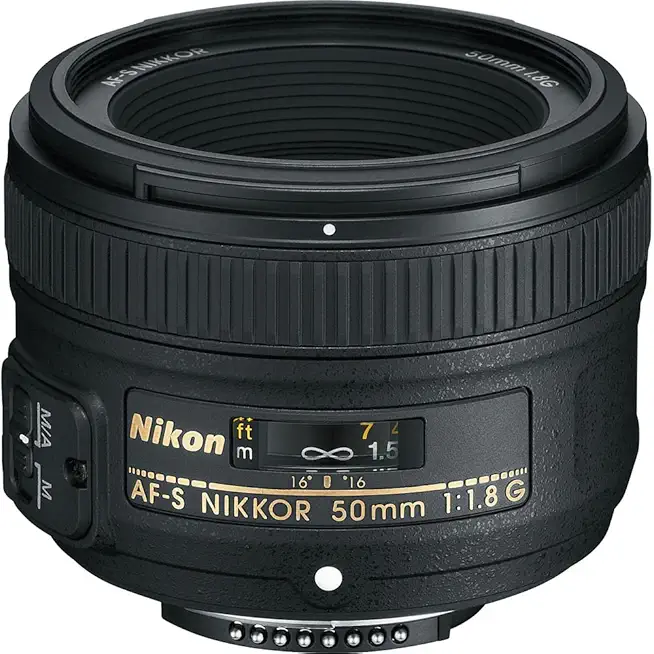
Nikon AF-S FX NIKKOR 50mm f/1.8G Lens
Bright, lightweight prime delivering sharp images, smooth background separation, and excellent low-light performance for everyday shooting and portraiture.
Check PriceThe Nikon 50mm f/1.8G is widely considered a versatile, beginner-friendly prime that fits food photography like a glove. It’s the sort of lens I recommend to anyone moving beyond a kit lens because it’s affordable, compact, and reliably sharp.
It handles overhead flat lays, 45-degree angles, and straight-on shots without needing to swap glass. Food bloggers and pros alike favor it for its compact size and the way it lets you compose quickly in tight tabletop setups.
Optically it delivers beautiful background blur at wide apertures, which helps separate your dish from cluttered backgrounds and creates that professional, mouth-watering look. Autofocus is fast and accurate, so you can nail quick setups and still images without fuss.
There are a few practical trade-offs to keep in mind. The build is mainly plastic, so it doesn’t feel as rugged as higher-end lenses and might not withstand heavy daily travel as well. You may also notice some edge softness when shooting wide open at f/1.8, so stopping down slightly often yields more uniform sharpness across a plate.
For most food shooters—bloggers, small-studio cooks, and hobbyists—this lens is an excellent value: lightweight, easy to use in tight spaces, and capable of producing the pleasing bokeh and sharpness that make dishes look appetizing. If you need extreme close-ups or commercial-level ruggedness, you’ll have to consider other options, but as a primary or first upgrade lens it’s hard to beat.
- Extremely versatile for different angles
- Lightweight and compact
- Beautiful background blur at wide apertures
- Fast, accurate autofocus
- Plastic build feels less durable
- Some edge softness wide open (f/1.8)
2. Nikon 105mm f/2.8G Macro Lens

Nikon AF-S VR Micro-NIKKOR 105mm f/2.8G IF-ED Lens
Professional macro optic with vibration reduction, superb close-up sharpness, and reliable performance for intricate detail and product, nature, and clinical photography.
Check PriceThe Nikon 105mm f/2.8G Macro is a go-to lens when you want food to look tactile and irresistible. It’s built to reveal fine textures — think droplets, crumbs, and the sheen on sauces — with exceptional sharpness and clarity that editorial and commercial clients demand.
At f/2.8 and 105mm, it delivers beautiful, soft bokeh that isolates single elements on a plate while keeping detail where it matters. The longer focal length gives you a comfortable working distance (minimum focus distance around 31.4 cm from the sensor), so you can light and style without casting shadows or disturbing delicate arrangements.
In practice this lens shines for close-ups and detail work used in cookbooks, menus, and high-end food editorials. Many pros call it a must-have because it’s equally flattering at 45-degree angles and versatile enough to handle both macro captures and tighter standard food shots with consistent, professional results.
There are trade-offs. It’s larger and heavier than typical primes, so it’s less convenient for lightweight travel or rapid handheld shooting. Also, its longer minimum focus distance means that in very tight tabletop setups you might not get the extreme close-in magnification some shorter macros provide.
- Exceptional sharpness and clarity for close-ups
- Beautiful, soft bokeh that separates subject
- Comfortable working distance (~31.4 cm sensor-to-subject)
- Versatile for both macro detail and standard food shots
- Larger and heavier than standard primes
- Longer minimum focus distance limits extreme close-ups
3. Nikon 24-70mm f/2.8G Zoom Lens

Nikon AF-S FX NIKKOR 24-70mm f/2.8G ED Lens
Versatile professional zoom covering wide-angle to short-telephoto, constant fast aperture, robust build, and sharp optics for events, weddings, and everyday pro use.
Check PriceThe Nikon 24-70mm f/2.8G is the workhorse zoom I reach for when I need to move fast on set or work in tight restaurant spaces. Its 24–70mm focal range lets you go from a wide contextual shot to a tighter plate composition without swapping lenses or shifting a tripod, which saves time and keeps the styling intact.
What makes it especially useful for food photography is the consistent f/2.8 aperture across the zoom range — that gives you reliable low-light performance and pleasing background separation whether you’re at 24mm or 70mm. The lens’s durable build suits frequent use on location, and the fast, reliable autofocus handles both stills and video smoothly, so you don’t lose fleeting moments like steam or a sauce drip.
As a working photographer, I appreciate how versatile this zoom is: it’s ideal for capturing dishes in context (restaurants, kitchens, styled scenes) and for situations where you need to reframe quickly without disturbing the setup. Just be aware it’s larger and heavier than primes, and you might notice a touch of softness at the extreme ends of the zoom (24mm and 70mm) compared with fast primes. If flexibility and speed matter most, this lens is a strong, mostly positive choice for food work.
- 24–70mm wide focal range
- Consistent f/2.8 aperture
- Durable professional build
- Fast, reliable autofocus
- Large and heavy for handheld use
- Minor softness at 24mm and 70mm
4. Nikon 85mm f/1.4G Lens

Nikon AF-S FX NIKKOR 85mm f/1.4G Lens
Studio-quality portrait optic delivering creamy background blur, exceptional subject separation, and impressive low-light capability for flattering close-ups and headshots.
Check PriceThe Nikon 85mm f/1.4G is a dream when you want to isolate a dish and make it sing. Its exceptional center sharpness even wide open combined with that creamy, painterly bokeh gives you images where the subject truly pops from the background.
It excels in low-light situations and is perfect for portrait-style food shots where you want drama and mood. Fast and accurate autofocus makes quick setups and handheld work painless, while the full-time manual focus override lets you fine-tune focus on delicate details.
Because of its longer focal length and wide aperture, this lens encourages a more deliberate, stylized approach to food photography. Use it when you want shallow depth of field to emphasize a single element—think a perfectly plated entrée or a slice of cake with mood lighting.
Be mindful of its limitations: the relatively long minimum focus distance means it’s less suitable for extreme close-ups or very small items. Also, when shot wide open, you can see axial chromatic aberration (color fringing), so careful focus and sometimes stopping down are necessary for critical work.
In short, if your style favors moody, subject-forward images with beautiful background separation, this lens is a top choice. If you need extreme close-ups, wide overheads, or maximum working distance flexibility, you might find its limitations restrictive.
- Exceptional center sharpness even at f/1.4
- Beautiful, creamy bokeh
- Fast, accurate autofocus
- Full-time manual focus override
- Relatively long minimum focus distance
- Axial chromatic aberration wide open
5. Nikon 60mm f/2.8G Macro Lens

Nikon AF-S FX Micro-NIKKOR 2177 60mm f/2.8G ED Lens
Precision macro lens offering life-size close focusing, sharp edge-to-edge detail, and color-accurate optics ideal for jewelry, insects, and product photography.
Check PriceThe Nikon 60mm f/2.8G Macro is a compact, go-to lens when you need true macro capability without sacrificing everyday usability. I reach for it when I want both tight, life-size detail and reliable performance for standard food shots.
Optically it delivers excellent sharpness and detail, which is crucial for capturing textures, crumbs, and droplets that make food look appetizing. Its fast and accurate autofocus keeps shoots moving, so you won’t waste time hunting focus during plated-food setups.
Be mindful of the working distance: the lens has a minimum focus distance of about 18.5 cm (sensor to subject), which results in a working distance under 4 cm. That close proximity is fantastic for extreme detail but can limit lighting placement and make styling hands-on items trickier.
At f/2.8 the maximum aperture is a practical trade-off — you get good light-gathering and decent subject separation, but not the ultra-creamy bokeh of wider primes. For many food shooters this is an ideal single-lens choice because it balances macro detail, everyday framing, and a compact footprint that fits tight tabletop setups and small studio spaces.
If you commonly shoot small subjects, herbs, or texture-heavy plates, this lens will become a staple. If you need wide overheads or very shallow bokeh for large scenes, plan to pair it with a different focal length or accept its limitations.
- Excellent sharpness and detail for close-ups
- Compact and lightweight; easy in tight spaces
- Fast, accurate autofocus for quick setups
- Versatile focal length for macro and standard shots
- Maximum aperture f/2.8 limits background blur
- Some edge softness when shot wide open
Prime vs Zoom vs Macro Lenses
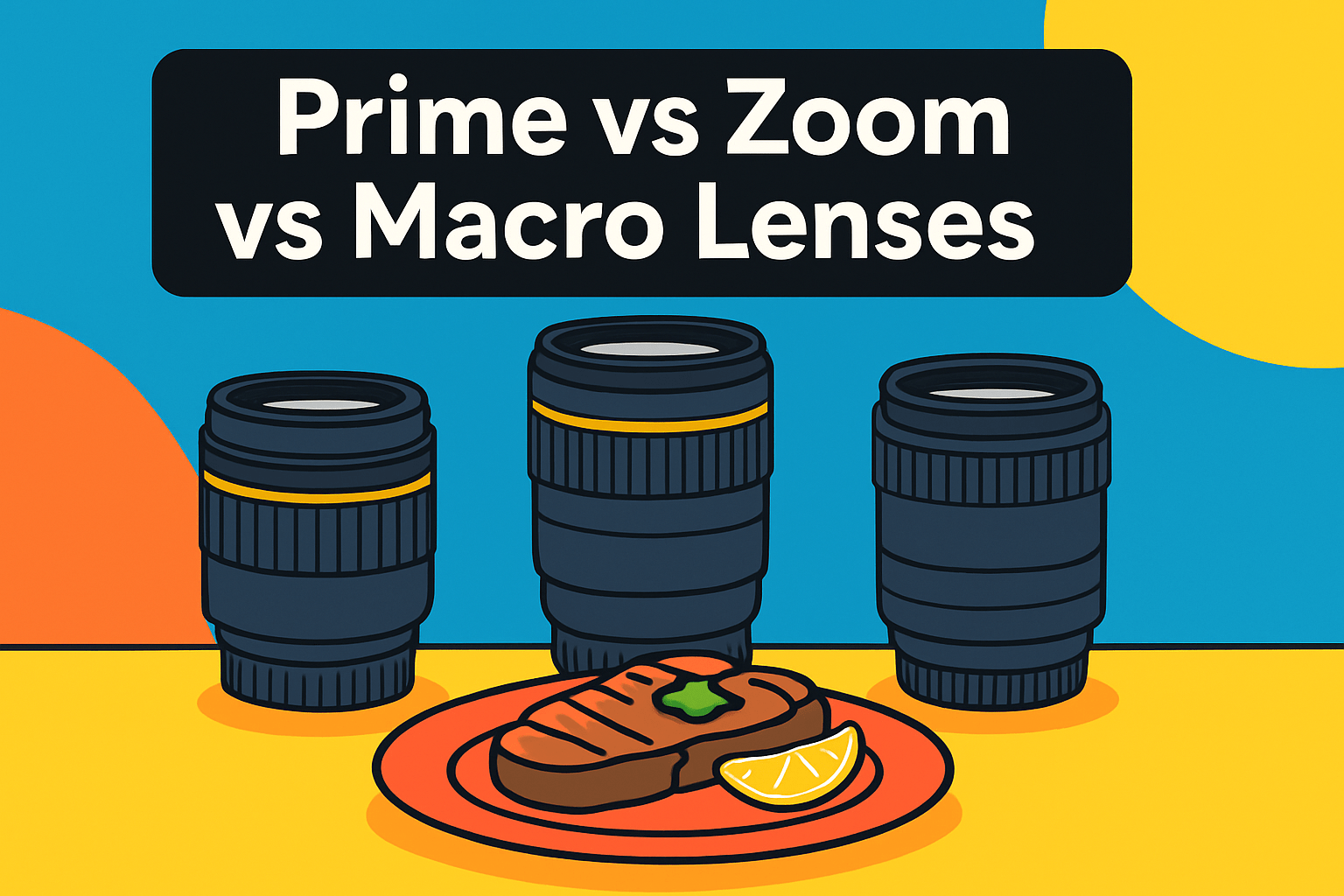
Lens choice doesn’t just change framing; it controls working distance, depth of field and how you light a dish. Understanding the trade-offs between primes, zooms and macros will save time on set and improve your results.
Primes force you to move, which often leads to more intentional compositions. They’re typically sharper and offer wider apertures (f/1.4–f/2.8) for shallow depth of field and creamy bokeh. Compact sizes also make primes great for overhead or tight tabletop setups.
Zooms buy you speed and framing flexibility without swapping glass. That convenience is invaluable for restaurant work, fast recipe shoots, or when you can’t move the tripod. Modern zooms like a 24–70 f/2.8 are versatile, though they can trade a bit of edge-to-edge sharpness and max aperture for that flexibility.
Macro lenses are for texture work; they reproduce life-size detail and render surfaces with surgical sharpness. Use macros to capture droplets, crumbs, herbs and the tiny highlights that sell tastiness. They also make excellent everyday primes, but consider how close you’ll need to be when styling and lighting.
Working distance matters more than magnification alone; it changes how you light and move around a dish. The Nikon 60mm macro has a minimum focus distance near 18.5 cm (sensor to subject), which leaves under 4 cm of working space in front of the lens. By contrast, a 105mm macro focuses around 31.4 cm and gives you far more room for modifiers and hands.
In a studio chase primes for the best IQ and shallowest DOF. If you need one lens to do everything, a short macro like a 60mm covers close detail and most tabletop work. Pick a zoom when speed and flexibility beat marginal gains in sharpness, and always match your glass to how you light and move on set.
Minimum Focus and Working Distance
Minimum focus distance is the shortest distance from the camera’s sensor plane to the subject at which a lens can focus. Working distance is the space between the front of the lens and the subject and it dictates how you light and style a dish. Lens markings show the minimum distance to the sensor plane, not the front element.
In food work those centimeters matter. A short working distance limits where you can put softboxes, flags or reflectors and forces styling tools closer to the frame. In macro shots those millimetres often cause lens/cast shadows and make lighting fiddly.
Focal length drives working distance. A 60mm macro focuses at about 18.5 cm to the sensor, leaving the front element under 4 cm from the food. A 105mm needs roughly 31.4 cm, giving room for tweezers, side lights or a small snoot.
Match the lens to the job. For tiny details pick a longer macro so you don’t crowd lights; for overheads and wider tabletop scenes shorter 50–60mm lenses are easier to maneuver.
When space forces a short working distance, use small LEDs, ring lights or ribbon flashes that can sit close without piling on heavy shadows. Flag the lens to prevent flare and use a tiny reflector to fill gaps instead of moving the main softbox.
Extension tubes and close-up filters get you closer but reduce light, change effective aperture and can soften the image. They’re useful for experiments, but for professional macro detail I rent or buy a lens with the working distance I need.
Always mock up the plate and mark tripod height and focus before the shoot—knowing your working distance saves time and keeps hands and modifiers out of frame. If magnification makes depth of field too shallow, focus stacking is usually the cleaner solution than crowding the lens into the food.
What People Ask Most
What are the best Nikon lenses for food photography?
It depends on the style of shot you want, with primes, macros, and zooms each offering different strengths. Match the lens to the perspective, working distance, and level of detail you need.
Which Nikon lens is best for close-up food shots?
A macro lens is typically the best choice for close-up work because it focuses closely and renders fine textures clearly. It also helps separate the subject from the background for appealing detail shots.
Is a Nikon macro lens necessary for food photography?
Not always; many food images can be made with fast primes or versatile zooms depending on the shot. Macro lenses are most useful when you need extreme close-up detail or life-size reproduction.
Which focal length is best for food photography with Nikon cameras?
There is no single best focal length, as different lengths suit overhead, tabletop, and detail work. Choose a focal length that gives you the working distance and perspective you prefer for the dish and styling.
Should I use Nikon prime lenses or zoom lenses for food photography?
Primes offer better sharpness and wider apertures for shallow depth of field, while zooms provide flexibility to reframe without moving the camera. Many photographers use both to cover different shooting situations.
What Nikon lens gives the best background blur (bokeh) for food photography?
Lenses with wider maximum apertures produce shallower depth of field and creamier background blur, which helps the subject stand out. Pairing a fast lens with careful subject-to-background distance enhances the effect.
Which Nikon lens is best for low-light restaurant food photography?
In low light, a lens with a wide aperture that allows faster shutter speeds and lower ISO values is advantageous for cleaner handheld shots. Also consider a lens that balances portability and reliable autofocus for restaurant work.
Conclusion for Best Nikon Food Lenses
Choosing the right lens for food photography comes down to the types of shots you want, the working distance you need, and whether you prioritize flexibility, shallow depth of field, or extreme close-up detail.
Primes often deliver superior sharpness and creamy background separation, zooms give you framing flexibility without switching glass, and macro optics let you capture textures and tiny details that make food feel tactile.
If you want to improve your results, keep experimenting with focal length and working distance in whatever setups you shoot, and explore more how-to content on the site to refine technique and gear decisions.
Have a question or want to share a setup that worked for you? Leave a comment below — we usually reply within a few hours.


0 Comments