
What does a reflector do to turn flat light into beautiful portraits?
It bounces or softens light to fill shadows, add catchlights, and shape skin tones. This simple tool can change your photos without adding a flash.
This guide shows what a reflector is, why to use one, the common types, and how to place it for best results. You’ll also get five easy setups, gear tips, and quick fixes for common mistakes.
No jargon — just step-by-step setups, diagrams, and photo examples you can try in minutes. Whether you shoot portraits, products, or video, you’ll learn simple tricks to improve your light fast.
What is a reflector?
The quick answer to what does a reflector do is simple: it bounces or redirects existing light to fill shadows, shape the light, and add catchlights—without creating light of its own.
A reflector is any surface that redirects light. In photography it is usually a foldable fabric disc, a sheet of foam-core, a rigid metal panel, or a translucent panel that modifies how light reaches your subject.
It performs three core jobs. It can bounce light to add brightness, it can diffuse light when the panel is translucent to soften harsh edges, and it can subtract light with a black surface to deepen shadows.
Compared with a diffuser, a reflector can add light rather than only soften it. Compared with a flash or LED, it does not emit light, so it looks natural and depends on the light you already have; compared with a flag, it can add or subtract rather than only block.
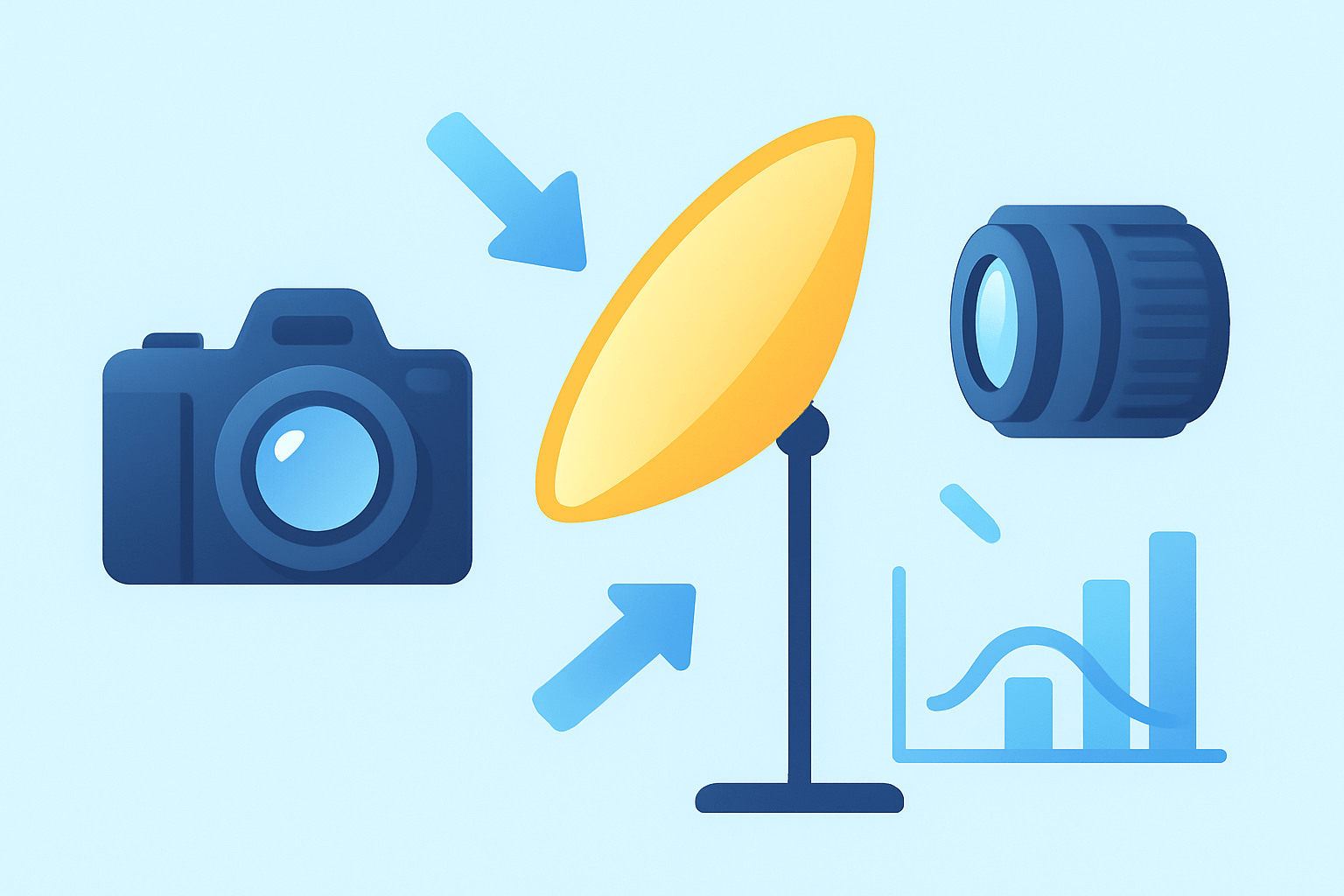
Think of a simple diagram: light source to reflector to subject. The light arrives at the reflector and leaves at the opposite angle, so angle of incidence equals angle of reflection, which is why a small tilt can move highlights and shadow detail so precisely.
Most photographers start with a collapsible 5‑in‑1 disc. It packs white, silver, gold, and black surfaces around a translucent core, so you can bounce, soften, or subtract with one tool and switch surfaces in seconds.
Why use a reflector?
A reflector is the fastest way to control light outdoors or by a window. It fills shadows, reduces contrast, sculpts facial features, and adds eye‑catching catchlights that make portraits feel alive.
The surface you choose also nudges color. White stays neutral, silver adds crisp sparkle, and gold warms skin for that late‑day glow, so you can steer mood without touching your camera settings.
It shines in tricky daylight. In harsh midday sun, a reflector lifts raccoon‑eye shadows; in backlit scenes it brings detail back to faces; in open shade it adds shape so skin does not look flat; with products and jewelry it creates clean edge highlights; on group shots it evens exposure; and on video interviews it gives a natural key or fill.
Compared with on‑camera flash, a reflector looks more natural because it borrows the scene’s light direction and color. It is also silent, lightweight, and affordable, though it cannot overpower the sun the way a strobe can and needs someone or something to hold it steady.
Versus a small LED, it is brighter per ounce when the sun is strong, yet it cannot help in a dark room. That is the trade: passive and beautiful, but limited by available light.
Picture this before/after. Before: backlit portrait, face dim, 85mm, ISO 100, f/2.8, 1/2000s. After: white reflector under chin, shadows raised about a stop, catchlight appears, same settings, and the background stays glowing.
Another example outdoors. Before: midday headshot, deep under‑eye shadows, 50mm, ISO 100, f/4, 1/2000s. After: translucent panel above to soften and silver reflector low to bounce, skin smooths and eyes pop while exposure stays consistent.
If you want a quick walkthrough of techniques and starter setups, explore how to use photo reflectors and notice how small changes in angle and distance change the look.
Put simply, when someone asks what does a reflector do, the answer is that it makes existing light more useful. It lets you shape, polish, and direct light in seconds and with almost no gear.
Types of reflectors
Silver reflectors give bright, punchy fill with stronger specular highlights. They are great on overcast days or whenever your key light is weak and you want extra snap and defined catchlights, but they can magnify shine on oily skin.
White reflectors give soft, even fill and are the safest portrait choice. They brighten shadows without increasing contrast or hotspots, and they keep color neutral so they are also excellent for product work.
Gold reflectors warm the light. Use them to fake golden hour or flatter cooler skin tones, but do not overdo it; a light touch looks elegant, while heavy gold can look artificial.
Black surfaces are for negative fill. They absorb bounce from walls and sky to deepen shadows, define jawlines, or carve cheekbones when a scene feels flat, and they double as flags to stop stray light.
Translucent panels sit between the light source and subject to diffuse. They turn hard sun into a larger, softer source, lowering contrast and smoothing highlights before you even add a bounce.
In format, the collapsible 5‑in‑1 disc is the most portable option and covers nearly every need. Foam‑core boards are cheap, rigid, and perfect near windows; rigid metal reflectors handle wind better; large diffusion frames and bounce cards excel in studio where you can leave them on stands.
Size matters. Small cards work for macro or to add catchlights close to a face; 30–42 inch discs suit headshots and half‑body; 60 inches and up are for full‑length portraits or groups, especially when you want softer wrap.
If you travel, pick a 42 inch 5‑in‑1 to start and add a small silver card for eyes. In studio, pair a big white or silver panel with a separate translucent frame so you can both diffuse and bounce with control.
Color balance is easy to manage. Silver and white stay neutral, while gold shifts warm, so set an appropriate white balance preset, use a gray card, or correct quickly in RAW if the warmth runs too strong.
If you want to dive deeper into surfaces and shapes, the overview of reflectors and diffusers explains how each texture changes contrast and specularity.
Here is a practical starter kit you can carry anywhere. A 5‑in‑1 collapsible reflector, a rigid foam‑core card, a C‑stand with a clamp, two small sandbags, a pocket‑size silver card for catchlights, a separate diffusion panel, and a simple carrying case.
How to position a reflector
Start with the geometry. Light hits the reflector and leaves at the opposite angle, so if the sun is at 45 degrees to your subject, aim the reflector at roughly the mirror angle to send light into the shadows.
Distance controls strength and character. Closer makes the bounce stronger and, with silver, can look harsher; farther softens the effect and keeps skin smoother, but you lose power as you back away.
For portraits, place a reflector about one to three feet from the face to start. For full‑body work, three to six feet keeps the fill even without bright bands across clothing.
Placement around the face changes the look. Low in front fills under the eyes and chin; higher and angled down lifts cheekbones and hair; near the lens axis makes bigger catchlights and flattens contrast.
Hand‑held is fastest when you have an assistant. Alone, use a reflector stand or C‑stand with a strong clamp, and always add sandbags; in wind, tilt the panel to spill air and prevent it from acting like a sail.
Watch for glare and hotspots. If silver is too crispy, angle it a few degrees to spread the reflection, switch to white, or step back; if the bounce is glaring the lens, move it off‑axis or flag the lens with your hand or a small black card.
Meter for intent rather than background. Spot‑meter the shadow you want to lift, then add the reflector until those shadows rise about one stop for a natural look; bracket a half‑stop each way and check your histogram to avoid clipping highlights.
Use this rule when stuck. If the subject is backlit, place a white reflector about three feet in front, slightly above camera height, angled up toward the face so you lift shadows without flattening the scene.
Pro tip: start with white, then swap to silver if you need more punch. Another pro tip: for oily skin, keep silver farther away or use white to avoid harsh specular highlights.
Common mistakes are simple to fix. If silver looks too sharp, change to white or back it off; if lens flare appears, rotate your position or block the path with a flag; if a gold surface is too warm, correct the white balance or switch to neutral; if wind threatens the setup, clamp hard or fold the reflector and recompose.
Quick drills help build muscle memory. Indoors by a window, move a white reflector from one to three feet and watch shadows rise and fall; at midday, hold a translucent panel above a face and see how the nose shadow softens; at sunset, use a small silver card to pop a catchlight and note how eye detail jumps.
When someone asks again what does a reflector do, remember this positioning dance. Small movements, smart distances, and steady mounts turn cheap fabric into precise, beautiful light.
How to do reflector photography: 5 simple approaches
Here are five copy‑and‑paste setups you can use today, with what to use, where to place it, and what to expect in camera. Each takes minutes to test and tweak on location.
Approach A — Bounce fill outdoors with the sun as your key. Stand the subject with the sun off to one side, then hold a white reflector on the opposite side and angle it until the shadow side lifts; switch to silver if the day is dull and you need more pop.
For this setup, a 42 inch disc is perfect and easy to handle. Expose for the background first, say ISO 100, f/4, and adjust shutter to taste, then bring the reflector in until the face brightens by about a stop, watching that the silver surface is not too close.
Watch out for glare on the cheeks if you use silver at arm’s length. If the highlights spike, step back two feet or flip to white and keep the same exposure.
Approach B — Diffuse and soften with a translucent panel between sun and subject. Place the panel just out of frame above the face to turn hard light into soft, even light, then add a white reflector below if you want a gentle clamshell effect.
Use at midday when shadows are razor sharp around the nose and chin. Keep your chosen aperture, for example f/2.8 at ISO 100, and slow the shutter as needed because the diffuser cuts light; watch that your shutter does not dip low enough to blur motion.
Approach C — Backlight with a rim and fill the face from the front. Put the sun behind the subject to light the hair, then hold a silver reflector in front, just below the lens, to send bright light into the eyes for separation and sparkle.
This shines at golden hour when the rim is warm and soft. Start at ISO 100, f/2.8, and 1/1250s to hold the sky, then tilt the reflector until the face lifts without flattening the background glow.
Approach D — Negative fill for drama with a black card. Place the black surface on the side opposite your key light, close to the face, to steal stray bounce from walls or sky and deepen shadow on the jaw or cheek for sculpted contrast.
Use this in open shade or studio when light is too even and faces look flat. Keep exposure as metered for skin, say ISO 200, f/5.6, 1/200s, and simply slide the black panel in and out until you see the shape you want.
Approach E — Studio augment with strobe and a reflector. Aim a strobe through a softbox as your key, then use a white reflector just outside frame to lift the far side, or angle a silver reflector behind for a low‑power kicker; feather the reflector by turning it slightly so the bounce glances the edges rather than blasting the face.
For a classic portrait, start at ISO 100, f/8, 1/200s sync speed, and keep your reflector about two feet from the subject. If the silver kicker outlines the ear too strongly, swap to white or move it back a foot.
If you learn best by example sets, this short walkthrough on using a reflector shows how surfaces and angles change the portrait mood without changing the camera.
Each approach has a simple three‑step rhythm. Place the subject relative to the sun or key, expose for the background or skin, then bring the reflector in and tilt until the shadow detail looks right in your eyes and on the histogram.
A few reminders keep results consistent. Start with white, then add silver only if you need more strength; for people with shiny skin, keep reflective surfaces a bit farther; for fast sessions, tuck a pocket silver card under the lens for quick catchlights.
To close the loop, remember the core idea behind what does a reflector do. It turns what you already have into the light you need, making natural scenes look intentional without the overhead of extra lights.
What People Ask Most
What does a reflector do?
A reflector bounces light onto your subject to fill in shadows and soften harsh light, improving overall exposure and detail without extra equipment.
What does a reflector do in photography?
In photography a reflector redirects existing light to brighten subjects, reduce contrast, and shape the light for more pleasing images.
What does a reflector do for portrait lighting?
For portraits a reflector fills in shadows under the eyes and chin, creates catchlights, and gives a more even, flattering look.
Can a reflector replace a flash — what does a reflector do compared to a flash?
A reflector can often replace or supplement a flash by using available light to brighten a subject, but it can’t create light in very dark scenes like a flash can.
How do different reflector colors work — what does a reflector do with silver or white surfaces?
White reflectors give soft, natural fill while silver adds stronger, brighter highlights, and gold warms the light for a sunlit effect.
When should I use a reflector outdoors — what does a reflector do in sunlight?
Use a reflector in sunlight to fill harsh shadows, reduce squinting, and redirect light into faces for better catchlights and balanced exposure.
What happens if I use a reflector wrong — what does a reflector do badly if misused?
If misused a reflector can create hot spots, glare, or flat, unflattering light, so move it and try different angles to get a natural result.
Final Thoughts on Using a Reflector
We began by asking, “what is a reflector?” and answered it plainly: a reflector redirects existing light to lift shadows, shape form, and add catchlights. Think of it as 270 degrees of wrap that bends soft light around faces without adding another lamp. That simple, portable tool is the core idea you can use anywhere.
Across the guide we showed practical setups, surfaces, and angles so you can shape mood and skin tones quickly. Be realistic: silver can blow out highlights on shiny skin and reflectors can’t brighten a scene beyond the available light — work within limits or pair them with a diffuser or strobe. These tips are especially useful for portrait and product shooters, plus beginners and intermediates who want a portable, budget-friendly way to control light.
This piece was built to answer that opening question with hands-on rules — from the 45° bounce to tight catchlights and negative fill — so you can practice in minutes. Try the simple setups and you’ll see how a small panel and a little angle turn flat light into shape and personality, and you’ll feel more confident with each shot.


0 Comments