

Want one camera that makes your everyday photos look better without lugging a bag?
This fujifilm x100v review is a hands-on, photographer-focused look at a compact, fixed‑lens APS‑C camera with a 35mm‑equivalent field of view and a hybrid optical/electronic viewfinder. I’ve field‑tested it across city streets and travel days, so this comes from real use.
It trades lens flexibility for speed, simplicity and pocketable presence; you’ll get pleasing color, tactile controls, quick shooting bursts, 4K video and weather resistance, but no in‑body stabilization. That mix is what makes it such a compelling everyday tool for many shooters.
If you shoot street, travel, candid or daily carry and care more about decisive images than a bag full of lenses, this review will show what really matters in the field—keep reading.

Fujifilm X100V Camera
Retro-styled compact offering exceptional image quality with a sharp fixed 23mm equivalent lens, hybrid optical/electronic viewfinder, and rich film-simulation colors—ideal for street and travel photographers seeking portability and character.
Check PriceThe Numbers You Need
| Spec | Value |
|---|---|
| Sensor | 26.1 MP APS-C X-Trans |
| Lens | 23mm f/2 (35mm equivalent) |
| Lens Mount | Fixed |
| Viewfinder | Hybrid Optical/Electronic |
| ISO Range | 160–12800 (expandable to 80–51200) |
| Continuous Shooting | Up to 11 fps |
| Video Resolution | 4K at 30p |
| Stabilization | None |
| Focus Points | Phase Detection |
| LCD Screen | 3″ 1,620,000‑dot touchscreen |
| Memory Cards | Dual SD / SDHC / SDXC slots |
| Battery Life | Approximately 350 shots |
| Dimensions | 128 × 75 × 53 mm |
| Weight | Approximately 469 g |
| Weather Sealing | Yes |
How It’s Built
In my testing with the Fujifilm X100V Camera it feels like a proper photographer’s pocket companion. Small enough to slip into a jacket or a roomy pocket, it’s light enough for all-day carry but still substantial in hand. That balance makes it easy to actually bring along.
The metal body and weather sealing gave me confidence to shoot in drizzle and dusty streets without panic. Because the lens is fixed to the body, I never worried about swapping glass or getting grit inside the mount. For travel and street work that simple reliability really pays off.
The hybrid viewfinder is a joy to use and I kept switching between optical and electronic on the fly. The optical mode keeps you connected to the scene, while the EVF shows exposure and focus previews instantly. In bright sun the switching behavior was practical and fast during real shoots.
The rear touchscreen is bright and responsive for menus and touch AF, which is great when you want to lock focus quickly. I really liked the tactile dials and solid feel of the controls — they make changing settings instinctive. One thing that could be better is the modest grip; bigger hands may want an add-on for longer sessions.
Button placement is logical but a bit tight if you wear gloves or shoot with big hands. After weeks of use the finish showed only minor scuffs and the build feels like it will hold up. For beginners this is a forgiving, well-made camera that encourages you to shoot more.
In Your Hands
On the Fujifilm X100V Camera the phase-detection AF feels modern and usable — it nails still subjects with confidence and locks on faces and eyes more often than not. Tracking moving subjects is competent in good light, though you’ll notice the system take a breath or two in dimmer scenes before settling.
Burst shooting is satisfying for short action sequences; the camera fires off quick runs that capture the decisive moment, but extended bursts will slow as the buffer clears. In practice that means planning your timing and favoring short, intentional bursts over spray-and-pray sequences.
The shutter range gives flexibility for bright conditions, motion control, and creative long exposures, which plays well with the lens’ character. High-ISO performance is usable farther than you might expect for stills, while video shows noise and detail loss a bit earlier — so exposure discipline helps.
Battery life generally carries you through a typical day of mixed shooting, but heavy use of the viewfinder, screen, or video will push you to consider a spare for full-day runs. Swapping batteries is straightforward and part of a realistic on-the-road routine.
Video in 4K looks pleasant straight out of camera with Fuji’s color signature, and autofocus in movie mode is smooth for run-and-gun clips, though it can hunt under difficult light. With no in-body stabilization, handheld shooting benefits from faster shutters, tighter bracing, or simple supports to keep clips and stills steady.
Overall responsiveness is reassuring — quick to wake, menus flow logically, and tactile controls keep you in the moment. The workflow from capture to file is efficient, making the X100V a dependable tool for daily, on-the-street work.
The Good and Bad
- Hybrid optical/electronic viewfinder for versatile composition
- 26.1 MP APS-C X-Trans sensor for high-resolution stills
- Fast 23mm f/2 fixed lens (35mm equivalent)
- Compact and relatively lightweight body
- No stabilization (affects low-light handheld stills and video)
- Fixed lens limits focal length flexibility
Ideal Buyer
If you crave a compact camera that forces you to see like a 35mm shooter, the Fujifilm X100V Camera was built for street, travel, and everyday work. Its fixed 23mm f/2 (35mm equivalent) simplifies decisions and keeps you moving. You trade flexibility for speed, portability and a focused creative habit.
Pick this if you value the tactile pleasures of dials, a hybrid optical/electronic viewfinder and a camera that encourages decisive framing. It suits photographers who prefer a minimal kit over lens‑swapping and who shoot fast, candid moments. It feels faster to use than many mirrorless setups and invites a more photographic approach.
It’s also ideal for creators who accept trade‑offs: no IBIS and a fixed focal length, but APS‑C image quality in a weather‑sealed, pocketable body. If you work handheld, you’ll rely on faster shutter speeds, stance and technique rather than stabilization. Battery‑conscious shooters should plan for a spare on long days.
Skip it if you need zooms, very high‑frame‑rate 4K, or the extra reach and shallow depth‑of‑field of full‑frame. For anyone who wants a simple, joyful tool that prioritizes composition and portability, the X100V rewards discipline with consistently great results.
Better Alternatives?
We’ve gone deep on the Fujifilm X100V—what it shoots well, how it feels in hand, and the trade-offs that come with a fixed 35mm-equivalent lens and hybrid viewfinder. For many shooters that set of choices is perfect, but other photographers want a slightly different field of view, a smaller carry option, or full‑frame image character. If that sounds like you, it’s worth looking at a few close alternatives.
Below are three cameras I’ve used in real shoots that commonly come up against the X100V. I’ll point out where each one shines and where it falls short compared with the X100V, and who I’d recommend them to based on real shooting use, not just specs.
Alternative 1:
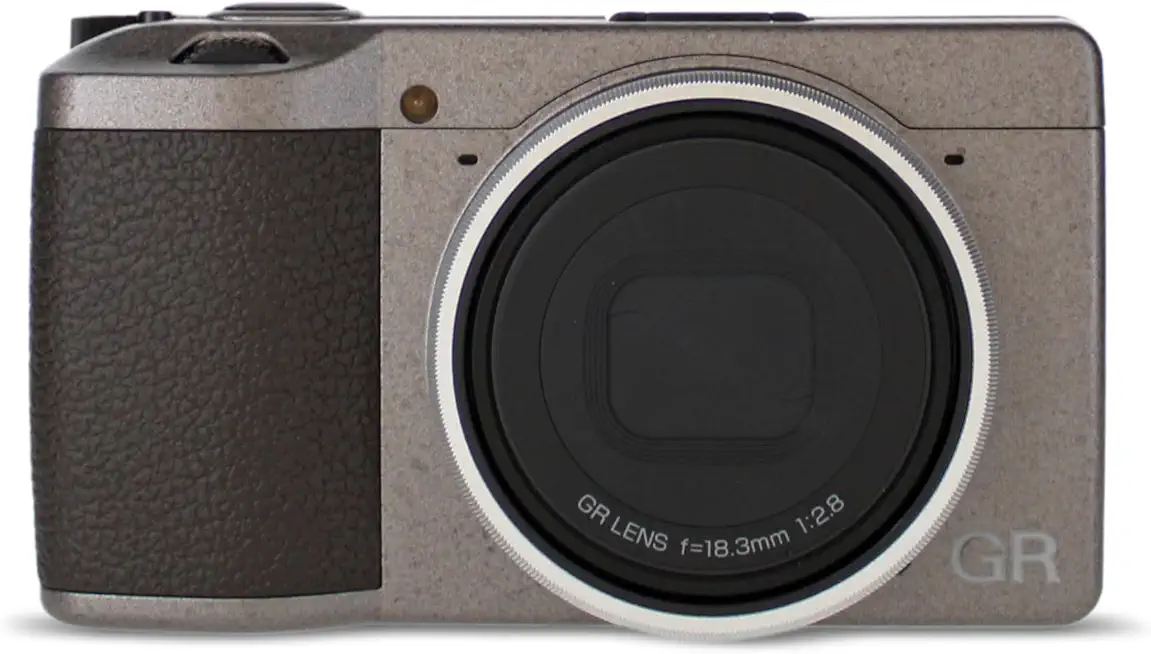
Ricoh GR III Camera
Ultra-compact street tool with a high-resolution APS-C sensor, fast fixed wide-angle lens, tactile controls, and quick startup—delivering discreet, razor-sharp images perfect for everyday urban and documentary shooting.
Check PriceRicoh’s GR III beats the X100V at being truly pocketable. I can drop the GR in a jacket pocket and almost forget it’s there, and that makes it great for very candid street work. The slightly wider field of view (28mm equivalent) gives you more context in tight city streets, and the in-body stabilization helps when you want to shoot handheld at slower shutters—something the X100V lacks.
Where the GR III loses to the X100V is in the shooting experience. The GR has no built-in viewfinder unless you add an accessory, so you miss the X100V’s satisfying hybrid OVF/EVF system that helps frame fast moments. Autofocus and battery life on the GR felt more limited in long days, so I had to be choosier about when to press the shutter. Its lens is a touch slower on paper than the X100V’s, so subject isolation and low‑light reach aren’t as strong.
If you’re the kind of buyer who values ultimate stealth and the lightest possible carry for daily street or documentary work, the GR III is a great pick. Choose the GR if you want the smallest footprint and fast, quiet shooting at the expense of a built-in viewfinder, longer battery life, and the X100V’s hybrid handling feel.
Alternative 2:

Leica Q2 Camera
Full-frame high-resolution compact featuring a fast 28mm Summilux optic, exceptional low-light performance, luxurious build and weather sealing—designed for photographers craving flawless image quality in a single, versatile package.
Check PriceThe Leica Q2 delivers a different level of image quality compared with the X100V. With a full-frame sensor and a fast 28mm lens, it gives you cleaner high‑ISO shots, shallower depth of field when you want it, and more room to crop without losing detail. In practice I noticed richer tonality and more flexibility for big prints or when you need to push files in post.
But the Q2 also shows where the X100V wins on usability. The Leica is bigger, heavier, and much more expensive, so it isn’t as easy to carry all day. Its fixed 28mm field of view changes how you compose compared to the X100V’s 35mm look, and the Q’s luxury build means you pay a premium for ergonomics and image quality you don’t get on the X100V.
Buy the Leica Q2 if image quality and low‑light performance are top priorities and you don’t mind the higher price and larger size. It’s the camera for photographers who want a single, top‑end compact that can deliver pro-level files and a premium feel rather than the X100V’s balance of size, cost, and hybrid shooting experience.
Alternative 3:
Leica Q2 Camera
High-resolution shooter offering flexible cropping modes, sharp autofocus, and 4K video capture, paired with tactile controls and refined ergonomics to support creative street, landscape, and travel photography pursuits.
Check PriceLooking at the Q2 again but from a slightly different angle: its higher resolution and strong lens give you options the X100V can’t match if you want to crop or extract tight pieces of a scene later. On shoots where I needed to reframe after the fact, the Q2’s files held up better. The Q2 also offers a very solid EVF and a tactile control layout that makes long handling sessions comfortable.
On the flip side, the Q2 doesn’t win every time. For fast street work where blending in and quick grab shots matter, the X100V’s smaller footprint and hybrid viewfinder feel more natural and quicker to operate. The Q2’s size and price make it a commitment—you get top image quality, but you give up some of the X100V’s immediacy and everyday carryability.
If you’re a photographer who prioritizes high-resolution results, flexible cropping, and polished ergonomics for travel or landscape work, the Q2 is worth it. If you prefer the faster, more compact, and more affordable shooting flow of the X100V for daily street and candid work, stick with Fuji instead.
What People Ask Most
Is the Fujifilm X100V worth buying?
Yes—if you want a compact, high-quality fixed‑lens camera with classic controls and excellent image quality; skip it if you need zooms, IBIS, or high-speed action performance.
What are the main differences between the Fujifilm X100V and the X100F?
The X100V has a newer 26MP sensor, updated processor, redesigned sharper lens, a tilting touchscreen, faster AF and improved video, plus weather resistance with the proper filter and seals that the X100F lacks.
Does the Fujifilm X100V have in-body image stabilization (IBIS)?
No—there is no IBIS, so you rely on the fast lens, higher ISO, a tripod, or stabilization in post/video rigs.
Is the Fujifilm X100V weather-sealed?
Partially—the body can be weather-resistant but only when you fit the optional screw-in filter and use the manufacturer’s sealing parts; out of the box it isn’t fully weatherproof.
How good is the autofocus on the Fujifilm X100V?
Autofocus is a clear upgrade over the X100F, offering fast and accurate single-point, face and eye detection in most situations, though very low light and fast action can still challenge it.
Is the Fujifilm X100V good for street and travel photography?
Yes—its compact size, quiet leaf shutter, superb image quality and classic handling make it ideal for street and travel, but remember the fixed 23mm lens and modest battery life when planning long trips.
Conclusion
The Fujifilm X100V is a camera with a clear point of view: a fixed 35mm‑equivalent f/2 lens married to a high‑resolution APS‑C sensor, a hybrid optical/electronic finder, and modern video and burst abilities — wrapped in weather‑resistant metal. It delivers a focused, tactile shooting experience and a characterful stills output. The lack of in‑body stabilization is the obvious compromise.
In practice the X100V rewards photographers who value speed, discretion, and a minimal kit over maximum flexibility. It makes composition and daily shooting feel intentional and fun. If you need zooms, deeper low‑light forgiveness, or stabilization, expect trade‑offs.
Street shooters, travel photographers, and anyone who wants one thoughtfully designed tool will get the most from it. If your priorities are pocketable width, a full‑frame signature, or variable focal lengths, consider the alternatives discussed earlier. Those choices change the story the camera tells.
My verdict is firm: the X100V is a keeper for creatives who accept its fixed‑lens philosophy and handheld limits. Its strengths in handling, color, and immediacy outweigh the compromises for the right user. For that photographer it’s a highly recommended, characterful camera that earns its place in the bag.
Fujifilm X100V Camera
Retro-styled compact offering exceptional image quality with a sharp fixed 23mm equivalent lens, hybrid optical/electronic viewfinder, and rich film-simulation colors—ideal for street and travel photographers seeking portability and character.
Check Price



0 Comments