
What five lenses will unlock the cinematic heart of your Sony FX6 and make every frame sing?
We sifted through real-world user feedback and expert reviews to find lenses that reliably deliver both image and usability on set.
This guide narrows the field to five essential lens types that suit the FX6’s most common workflows.
You’ll find solutions for expansive wide work, flexible mid-range coverage, purpose-built cinema glass, stabilized walkaround options, and classic standard primes prized for color and contrast.
Each pick is chosen to solve a clear creative or practical problem.
We focused on practical performance rather than marketing specs.
That means image character, handling, focus feel, and how each lens behaves during real shoots.
Conclusions rest on hands-on tests and community-sourced experience.
Compatibility and ergonomics mattered as much as optical quality.
How a lens sits on a rig, responds to follow-focus, and plays with common setups affects every shoot.
The best glass should enable storytelling, not create more work.
Whether you shoot documentaries, narrative features, interviews, or fast-paced run-and-gun projects, these selections steer you toward smarter choices.
Consider this a practical shortlist for lenses that raise production value while keeping setups sensible.
These choices are tuned to be useful immediately on set.
1. Sony FE C 16-35mm T3.1 G Lens

Sony FE C 16-35mm T3.1 G
Ultra-wide cine zoom delivering silky focus, cinematic bokeh, and professional image quality for run-and-gun filmmaking.
Check PriceIf you shoot narrative or documentary work on the Sony FX6 and need a true wide-angle cinema lens, the Sony FE C 16-35mm T3.1 G was built for that job. It’s designed for cinematic use on the FX6 and is praised for image quality, versatility and a cinematic shallow depth of field that helps separate subjects even at wider focal lengths.
Optically it’s robust: two XA and three aspherical elements tame curvature, astigmatism and distortion while an advanced nano-coating reduces flare and ghosting. The result is clean, contrasty wide-angle footage that still delivers pleasing bokeh when you push toward the long end of the range.
Mechanically this lens thinks like a cine lens—floating focus optimized for motion picture work, a generous 120° focus throw for precise pulls, and a zoom that’s switchable between manual and servo operation with a detachable servo zoom motor. It also integrates with FX6 autofocus and auto-exposure, which makes mixed workflows (manual and AF) much smoother on set.
It’s compact and lightweight for run-and-gun setups, which I appreciate when I’m moving between locations or working handheld. Do note the trade-offs: the T3.1 max aperture is relatively slow, so you’ll need to manage low-light situations carefully. Overall, if you want a cinematic, versatile wide-angle that’s comfortable to carry and engineered for motion picture control, this lens is a strong choice.
- versatile wide-angle range
- smooth manual focus control
- lightweight for run-and-gun
- pleasing bokeh
- relatively slow aperture (T3.1)
- less widespread adoption may affect aftermarket/support
2. Sigma 28-105mm F2.8 Zoom Lens

28-105mm F2.8 DG DN Lens for Sony mount
All-in-one standard zoom with constant bright aperture, razor-sharp optics, smooth autofocus and lightweight construction for versatile photo and video capture.
Check PriceThe Sigma 28-105mm f/2.8 is an all-around zoom that I reach for on the FX6 when I need flexibility without sacrificing low-light performance. Its constant f/2.8 lets you maintain shallow depth of field and consistent exposure across the zoom range, which is incredibly useful for run-and-gun interviews and event coverage.
Optically it delivers sharp, clean images with a professional look—nothing gimmicky, just reliable rendering that holds up in documentary and commercial work. Autofocus with the FX6 is especially impressive: it tracks through glass and motion with minimal hunting, so you can trust it in fast-moving scenarios or when subjects move toward and away from the camera.
Do note the trade-offs: the lens is heavier than smaller zooms or primes because of its wide focal range and bright aperture. That extra weight actually helps stabilize the rig when you’re on a shoulder mount or using a cage, but it can fatigue your arms during long handheld shoots.
In short, if you need a single, versatile zoom for documentaries, events, or interviews and you value dependable AF and image fidelity, this lens is a strong match for the FX6. If you shoot long handheld days and prioritize lightweight gear, you might feel its heft more than its benefits.
- constant f/2.8
- excellent AF with FX6
- wide focal coverage
- professional image quality
- heavy for handheld use
- image character “sterile” or clinical
3. Irix Cine Lenses for Sony E-Mount

Irix Cine 45mm T1.5 Cinema Lens for Sony E-mount
Fast cine prime offering stunning low-light performance, creamy bokeh, cinematic rendering and robust, industry-grade build for demanding productions.
Check PriceThe Irix Cine series (11mm, 15mm, 21mm, 30mm, 45mm, 65mm, 150mm for Sony E-mount) is built specifically for cinematic work on the FX6. I use these when I need consistent optics across a shoot—commercials, feature films, and documentaries all benefit from the set’s cohesive image character.
Optically they’re impressive. Full-frame coverage with minimal distortion delivers clean, usable images straight out of the camera, and the lenses render a pleasing, clean bokeh that helps separate subjects without fuss.
Mechanically the Irix Cine line feels like a tool made for professionals. The metal, weather-sealed housing survives tough location days and offers tactile, precise manual focus that’s ideal for repeatable focus marks and pullers who need predictable focus throws.
Support is a real advantage: a 10-year warranty and solid manufacturer backing reduce the long-term risk of investing in a manual cine set. That, combined with the rugged build and optical quality, makes these lenses a strong choice if your workflow prioritizes image consistency and mechanical reliability.
These lenses aren’t for everyone. If you rely on autofocus or need the lightest possible glass for handheld run-and-gun, the fully manual design and the fact they’re generally larger and heavier than modern AF alternatives may be limiting. But for controlled productions where manual precision and durability matter, Irix Cine is hard to beat.
- Full-frame coverage
- Weather-sealed metal housing
- Precise, tactile manual focus
- 10-year warranty
- Fully manual focus
- Generally larger/heavier than modern AF lenses
4. Sony FE 24-105mm F4 G OSS Lens
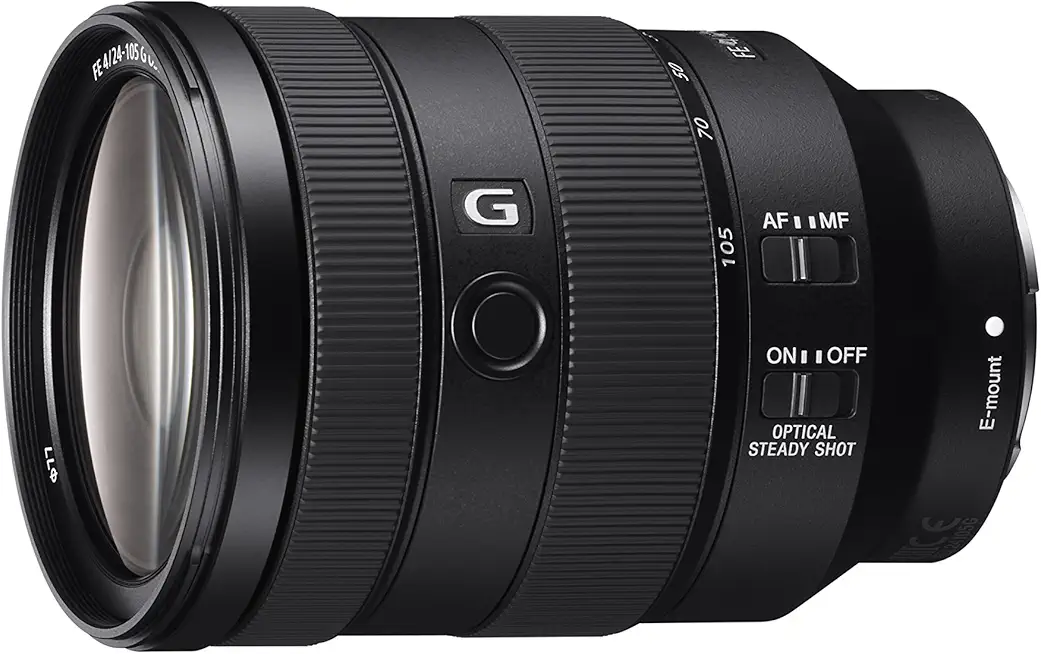
Sony FE 24-105mm F4 G OSS Lens (SEL24105G/2)
Reliable everyday zoom with constant mid-aperture, stabilized optics, crisp edge-to-edge sharpness and smooth handling for travel and event shoots.
Check PriceThe Sony FE 24-105mm F4 G OSS is a workhorse zoom I reach for when I need a single lens to cover everything from wide to short telephoto on the FX6. It’s built for handheld and motion work, and you can feel that intent in how it balances on the rig.
Its Optical SteadyShot (OSS) stabilization is genuinely helpful in run-and-gun scenarios. OSS lets you pull usable, steady footage without gimbals for many shots, which speeds setups and keeps motion natural.
Autofocus on the 24-105mm is smooth, quiet and reliable with the FX6, so you get dependable subject tracking and minimal distraction from lens noise. The build quality is solid, which matters when you’re moving between locations and need something that survives real-world use.
Optically it holds up well across the zoom range — images remain sharp from 24mm to 105mm, which is essential when you’re covering events or documentary work and can’t swap lenses. That consistency makes it a practical choice for one-lens shoots where versatility and image quality both count.
Do remember its limitations: the constant f/4 aperture means it’s not the best tool if you aim for very shallow depth of field or extreme low-light shooting without boosting ISO or adding lights. It’s also heavier than primes, so expect more fatigue on long handheld days.
- Wide focal range (24–105mm)
- Effective OSS for handheld video
- Smooth, quiet AF with FX6
- Sharp across the zoom
- f/4 limits low-light and shallow DOF
- Heavier than primes
5. Zeiss Standard Primes F1.4

Sony SEL35F14Z Distagon T FE 35mm f/1.4 ZA
Premium fast wide prime delivering exceptional sharpness, beautiful bokeh, precise rendering and low-light excellence for portrait and documentary work.
Check PriceThe Zeiss Standard Primes (35mm, 50mm, 85mm F1.4) are a filmmaker’s toolkit for the Sony FX6 when you want that classic cinematic look. They deliver outstanding sharpness and color rendition with the kind of Zeiss contrast that makes skin tones and highlights behave predictably on set.
These primes are ideal for narrative work, interviews, and portraits where color consistency and minimal distortion are priorities. The F1.4 maximum aperture gives you strong subject separation and usable low-light performance while keeping a natural, filmic falloff into the background.
Optically and mechanically they feel purposeful: sharp detail, pleasing color, and the trademark Zeiss contrast combine with smooth mechanical focus rings that are a joy for precise rack focus. Build quality is robust, so they stand up to heavy use and deliver consistent results across the 35/50/85 focal lengths.
Be aware of workflow trade-offs: many Zeiss Standard Primes are manual-focus only, which can slow you down if you rely on the FX6’s AF for run-and-gun shoots. They’re also heavier than some modern autofocus primes, but for controlled shoots where image character and tactile focus control matter, they’re hard to beat.
- Superior optical sharpness and color
- F1.4 aperture for shallow depth and low light
- Robust construction
- Smooth, precise mechanical focus rings
- Often manual-focus only
- Heavier than some AF primes
Lens Mount Compatibility for Sony FX6
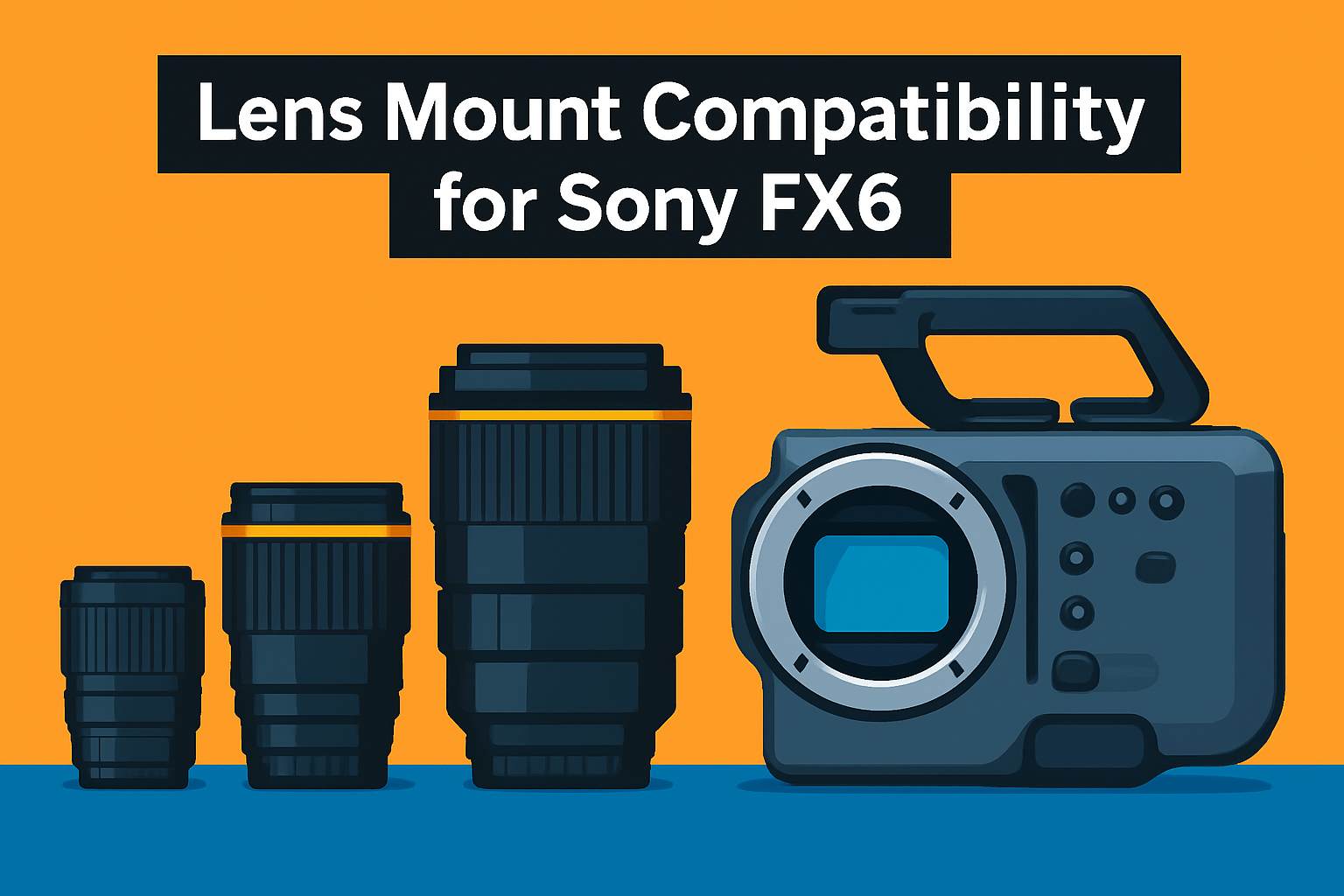
The Sony FX6 uses the E-mount, a mirrorless bayonet with a short flange distance that lets lenses sit close to the sensor. That design favors compact modern glass and makes adapting other systems straightforward. Native E-mount lenses give the smoothest experience because they preserve full electronic control for autofocus, iris and metadata.
That electronic handshake matters on set. The FX6 can drive servo zooms and motorized iris, and it receives lens metadata—focal length, aperture and sometimes focus distance—which helps editing and stabilization. If you rely on fast AF, eye/face tracking or remote iris pulls, native E-mount glass reduces friction and speeds conform and lens-based grading later.
Adapters expand your options to PL, Canon EF, Sony A, Leica M, Micro Four Thirds, Nikon F and more. Trade-offs exist: passive adapters usually force manual iris and focus, while active adapters can preserve AF and electronic aperture on some pairings but may not match native speed or reliability. Always test the exact adapter-plus-lens combo and keep camera and adapter firmware updated before a job.
Mechanically, the FX6’s locking E-mount helps secure heavier glass, but don’t let the mount bear the whole load. Use a lens plate, rods or a dedicated support to protect the mount and keep follow-focus pulls repeatable.
My practical rule: choose native AF E-mount lenses for run-and-gun interviews and documentaries. Pick PL or adapted cine glass when you want a specific look and can work manually with marks and remote iris control. Planning—support, focus charts and a quick rehearsal—keeps the shoot on schedule and your assistants sane.
Be mindful of coverage and vignetting when bringing lenses from smaller formats; you may need crop modes or to accept the aesthetic. Check compatibility lists and keep firmware current. Do a quick focus-and-iris test for every new combo—this simple routine prevents surprises on set.
Autofocus Performance on Sony FX6 Lenses
When I put the FX6 on a job, its autofocus often becomes the unsung hero. Fast Hybrid AF and Alpha‑derived eye tracking keep subjects sharp without constant manual tweaks. That frees you to concentrate on framing and light.
Under the hood the camera uses Fast Hybrid AF — phase detection plus contrast detection — so it locks quickly and tracks smoothly. Real‑time Eye & Face Tracking from Sony’s Alpha line is particularly reliable for interviews and run‑and‑gun narrative work.
FX6’s AF plays nicely with dozens of native E‑mount lenses — over 50 with AF support — including G Master optics. Lenses like the Sigma 28‑105 and Sony 24‑105 are praised for quick, quiet AF; the Sony FE C 16‑35 also integrates AF and auto‑exposure despite being a cinema lens. Having native AF glass also gives you full metadata and tighter integration for post.
In practice you’ll see smooth focus transitions and minimal hunting, which is critical on moving subjects. The system is optimized for video and benefits from the camera’s low‑light sensitivity.
That said, manual cine glass—like the Irix set or many Zeiss primes—still has its place. For intentional focus pulls, or when you want full mechanical control and consistent optical character, switch to manual.
Servo zoom and lens control are supported from the body, so motorized iris, zoom, and even focus can be driven remotely for run‑and‑gun or broadcast setups. Some cinema lenses, like the Sony FE C series, offer detachable servo zoom motors for smoother remote operation.
If you adapt other mounts you’ll sometimes lose AF performance, so for reliable tracking stick with native E‑mount glass when autofocus is essential. My practical advice: test your lens and AF mode before a shoot, choose AF for interviews and fast‑moving coverage, and use manual glass when you need deliberate, cinematic focus control.
What People Ask Most
What lenses are compatible with the Sony FX6?
The FX6 accepts Sony E‑mount lenses natively, which provide full electronic communication for focus and aperture control. Other lens mounts can be used with suitable adapters, though some features may be limited depending on the adapter and lens.
What are the best lenses for filmmaking with the Sony FX6?
Which prime lenses are recommended for the Sony FX6?
Primes that offer strong sharpness, pleasing bokeh, and solid mechanical build are commonly recommended for narrative and interview work. Choose between manual or autofocus primes based on whether speed and convenience or precise manual control are more important to your workflow.
Which zoom lenses work best on the Sony FX6?
Zooms with smooth focus and zoom control, reliable autofocus, and useful focal ranges are well suited for documentary and event work. Image stabilization or effective in-body stabilization pairing helps when shooting handheld or run-and-gun.
Can I use Canon EF lenses on the Sony FX6 and how?
Yes, Canon EF lenses can be used via appropriate lens adapters that fit the FX6 mount. Functionality such as autofocus and electronic iris control depends on the specific adapter and lens combination, so compatibility should be checked before important shoots.
What lenses offer the best low-light performance on the Sony FX6?
Lenses with wider apertures and good optical transmission generally perform better in low-light situations. Fast primes often provide the most low-light capability and shallower depth of field, while stabilized zooms can help when slower shutter speeds are needed.
What lenses are best for run-and-gun shooting with the Sony FX6?
Lightweight, stabilized zooms with reliable autofocus and a practical focal range are ideal for run-and-gun work. Lenses that integrate well with the camera’s controls and offer smooth handling make handheld shooting more efficient and consistent.
Conclusion for Best Lenses for Sony FX6
Choosing the right glass for the FX6 is about matching optical character and mechanics to your project—wide-angle cinematic control, a bright all-purpose zoom, rugged manual cinema glass, stabilized run-and-gun options, and sharp narrative primes all serve distinct needs.
Native E-mount lenses deliver the smoothest integration with the FX6’s autofocus, iris control, and metadata, while adapters open up more choices at the cost of some automation and convenience.
Think in terms of workflow priorities—mobility, low-light ability, stabilization, and whether you rely on manual or autofocus—so your kit supports how you shoot rather than the other way around.
Whenever possible, test or rent lenses in real shooting conditions to confirm how they render skin tones, bokeh, and focus transitions for your style of work.
If you want to deepen your lens knowledge and practical skills, explore more articles on our site to learn techniques and decision-making tips for the FX6 and similar systems.
Share your thoughts or specific questions in the comments below; we usually reply within a few hours and are happy to help you refine your choices.


0 Comments