
Ever missed the game-winning shot because your lens couldn’t keep up?
If you shoot sports with a Nikon D3500, choosing the right lens matters more than any camera body tweak. This guide cuts through specs and hype to show what real users and real-world shooting reveal about lenses that actually perform on the sidelines and in the stands.
We’re focused on helping D3500 owners find the right sports glass based on user reviews and hands-on field experience. You’ll get five carefully selected options that span wide stadium perspectives to long-reach telephoto needs, plus practical guidance on focal-length choices and the prime-versus-zoom trade-offs that matter in fast-paced play.
You’ll learn how reach, aperture, and handling influence your ability to freeze action and frame decisive moments in low light as well as bright sun. The goal is to give you usable, real-world advice so your next game becomes a portfolio of keepers, not a dozen blurry attempts.
Whether you’re shooting youth soccer from the stands or court-side basketball, this guide will help you match the D3500 to lenses that fit your sport, venue, and shooting style. Ready to upgrade your game-day kit? Practical tips and real-world impressions will help you pick gear that actually gets results rather than just impressing on paper.
1. Nikon 18-140mm DX VR Zoom
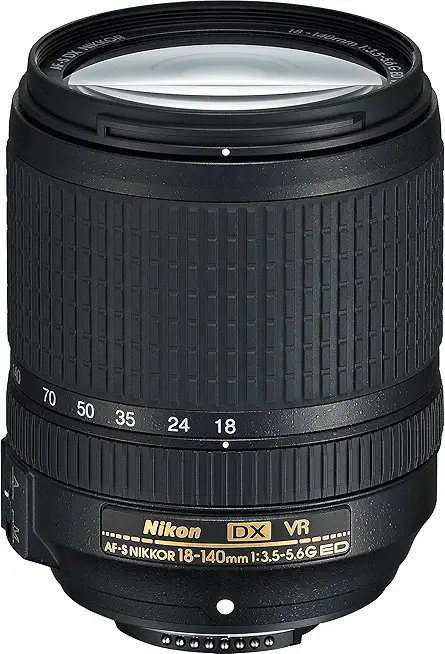
Nikon AF-S DX NIKKOR 18-140mm f/3.5-5.6G ED VR Lens
All-in-one travel zoom delivering flexible framing, sharp optics and vibration reduction for crisp photos and smooth handheld video.
Check PriceThe Nikon AF-S DX 18-140mm f/3.5-5.6G ED VR is an incredibly versatile all-in-one zoom for D3500 owners who need coverage from wide to mid-telephoto without swapping lenses. Its focal range handles everything from near-court action to tighter sideline shots, and the variable f/3.5-5.6 aperture keeps the kit small and light.
One of the biggest practical benefits is the Vibration Reduction system, which delivers roughly 3.5 stops of shake reduction. That VR makes handheld shooting at slower shutter speeds much more usable during long events or when you can’t carry a monopod.
In real-world use the lens shows very good center sharpness across much of the range, so subjects in the frame look crisp. Expect corner sharpness to drop at the long end, though—so if you crop heavily from the edges you’ll notice it.
The lens is compact and lightweight, so you can shoot an entire game without feeling weighed down. Autofocus is fast and quiet, which is helpful for both stills and video in venues where noise matters.
For casual sports shooters and hobbyists this is a great value: it covers a lot of ground, stabilizes well, and won’t tire you out during a full day of action. Just be mindful that the variable aperture and edge softness at full telephoto make it less ideal in very low light or when you need edge-to-edge tack-sharp results.
- Broad zoom range (18–140mm)
- Effective VR (~3.5 stops)
- Lightweight and compact
- Fast, quiet AF (good for video)
- Corner softness at long end
- Variable aperture limits telephoto low-light
2. Nikon 10-20mm DX VR Ultra-Wide

Nikon AF-P DX NIKKOR 10-20mm f/4.5-5.6G VR Lens
Ultra-wide zoom that expands perspective, ideal for landscapes and architecture with reliable stabilization and compact portability.
Check PriceThe Nikon AF-P DX 10-20mm f/4.5-5.6G VR is an ultra-wide zoom built for expansive stadium shots, indoor arenas, and environmental sports images where context matters. Its 10–20mm range lets you capture entire courts, group play, and architectural interiors that a standard zoom simply can’t fit into the frame.
On the D3500 this lens feels light and unobtrusive — compact for long events and easy to handhold. Built-in VR helps steady the shot when you’re shooting from the stands or walking the sidelines, and the stepping-motor autofocus is fast and nearly silent, which is great if you also record video or need discreet focusing.
Optically it delivers excellent central sharpness, so your main subject and mid-frame detail look clean and punchy. Expect the usual trade-offs of an ultra-wide: corners are weaker and fall off compared to the center, so for critical edge-to-edge detail you’ll need to manage composition or stop down.
Where this lens really shines is as a second body lens for wide establishing shots and indoor scenes — think team huddles, full-court action from the sideline, and arena atmosphere. It’s not intended to replace a telephoto for tight action or a fast prime for dim gym lighting; the f/4.5–5.6 maximum aperture limits low-light performance and depth-of-field control.
In short, if you want dramatic wide perspectives, portability, and steady handheld performance on a D3500, this 10–20mm VR is a strong, affordable choice. If your work requires low-light closeups or edge-to-edge landscape sharpness, be mindful of its limitations.
- Very wide field of view
- VR improves handheld low-light usability
- Lightweight
- Quiet AF (stepping motor)
- Limited aperture (f/4.5–5.6) restricts low-light sports
- Weaker corners / corner sharpness drop
3. Nikon 35mm DX f/1.8 Prime

Nikon AF-S DX NIKKOR 35mm f/1.8G Lens
Bright prime offering beautiful low-light performance, creamy background blur and sharp detail for everyday and portrait photography.
Check PriceThis Nikon AF-S DX 35mm f/1.8G prime is a photographer’s favorite for low-light sports and subject isolation on the D3500 thanks to its large f/1.8 aperture. That wide aperture lets you push shutter speeds and isolate players from busy backgrounds, which really helps freeze action indoors or in dim arenas.
It’s compact and lightweight, so you can carry it all day without fatigue and react quickly to changing moments. Autofocus is swift and accurate, practically disappearing into the background when you’re tracking a subject up close.
Optically the lens shines in the center and mid-frame, delivering sharp images that let you crop or produce clean full-frame-like results on the crop-sensor D3500. Expect some edge softness at the widest apertures, but stopping down a bit tightens up the corners nicely for more consistent sharpness.
One practical trade-off is the lack of vibration reduction, which can make handheld shooting at lower shutter speeds more challenging, so you’ll rely on the camera’s high ISO or faster shutter speeds to avoid blur. Also, being a fixed 35mm means you’ll need to move to reframe or crop later—great when you can control distance, less ideal when action is unpredictable.
If you shoot indoor sports from relatively close positions or want a lightweight, fast prime for sharp subject isolation and low-light performance, this lens is a strong, affordable choice for the D3500. It’s a mostly positive tool for photographers prioritizing speed and image quality over zoom flexibility.
- Large f/1.8 aperture
- Compact and lightweight
- Excellent center and mid-frame sharpness
- Fast, silent AF
- No vibration reduction
- Fixed focal length limits framing flexibility
4. Nikon 55-200mm DX VR II Zoom

Nikon AF-S DX NIKKOR 55-200mm f/4-5.6G ED VR II Lens
Compact telephoto delivering reach, optical clarity and vibration reduction for sports, wildlife and distant subjects on the go.
Check PriceAs a working photographer, I appreciate the Nikon AF-S DX 55-200mm f/4-5.6G ED VR II for what it is: a lightweight telephoto zoom that gets you closer to the action without breaking your back. The reach to 200mm on a DX body like the D3500 is genuinely useful for sideline and field sports where you can’t physically get near the subject.
The built-in VR stabilization is a real benefit for handheld shooting during long games and when light is fading. VR won’t make it a low-light monster, but it helps keep shutter speeds manageable and reduces camera shake for tighter shots.
Image quality punches above its price point. In real-world use it delivers good results for the class, especially through most of the zoom range. Expect some softness at the maximum zoom, and be mindful that the autofocus isn’t as snappy as higher-end glass — you’ll want to avoid relying on it for split-second, fast-moving subjects.
For outdoor sports and casual event shooting this lens is a solid budget-friendly option. It’s light enough for all-day carry and gives you useful reach and stabilization; just temper expectations about low-light performance and top-end sharpness. If you need ultimate speed, tracking, or edge-to-edge sharpness at 200mm, consider stepping up, but for many D3500 shooters this lens strikes a good balance of portability, reach, and value.
- Useful telephoto reach to 200mm
- VR reduces shake
- Lightweight for long days
- Decent sharpness for its class
- AF can be slow with fast action
- Variable f/4–5.6 aperture limits low-light
5. Sigma 70-300mm DG Macro Zoom

Sigma 70-300mm f/4-5.6 DG Macro Telephoto Zoom Lens for Canon
Versatile budget telephoto with true macro capability, long reach and dependable optics for hobbyists and travel photographers.
Check PriceAs a working photographer, I reach for the Sigma 70-300mm f/4-5.6 DG Macro when I need long reach without breaking the bank. This third‑party telephoto is well suited to crop‑sensor bodies like the Nikon D3500 and gives you real reach for distant outdoor action.
The lens delivers good center and mid‑frame image quality, so your main subject will look sharp in most situations. That solid central performance makes it a reliable choice for sideline shots and field sports in good light.
Its macro capability is a handy bonus, letting you switch from distant action to close‑up details without swapping glass. That versatility is useful when you want extra creative options during a shoot.
Autofocus is acceptable but not class‑leading; expect it to be slower and a bit noisier than Nikon’s higher‑end lenses, especially in low light. If you shoot fast, low‑light indoor sports, the combination of a variable f/4–5.6 aperture and slower AF can be limiting.
Also be aware of softness and chromatic aberration at the extreme end of the zoom. In bright outdoor conditions the lens performs well, but at full 300mm you may see image degradation compared with shorter focal lengths.
All told, the Sigma 70–300mm DG Macro is a practical, budget‑friendly option for D3500 owners who need reach and versatility for outdoor sports and occasional close‑ups, as long as you can work around its AF and edge‑performance limits.
- Long 70–300mm telephoto reach
- Macro capability for close‑ups
- Good center/mid‑frame image quality
- Affordable/budget‑friendly
- AF is slower and noisier than Nikon equivalents
- Softness and chromatic aberration at max zoom; no stabilization unless OS model
Best Sports Focal Lengths
Choosing the right focal length will often decide whether you get the tight, emotional shots or a lot of empty grass. On the D3500’s DX sensor multiply focal length by 1.5 — a 200mm lens gives roughly the reach of a 300mm on full frame.
For many outdoor sports — soccer, tennis, baseball — a 70–300mm range is the practical sweet spot. It covers sideline shooting and moderate distances without constantly swapping glass. It’s also light enough to carry all afternoon, which matters on long event days.
If you’re shooting large fields or you’re stuck in the stands, move toward 100–400mm or longer. A 400mm on the D3500 behaves like a 600mm field of view, which can be the difference between a head-and-shoulders crop and a dot on the field. Longer lenses demand faster shutter speeds, steadier hands, or a monopod.
Indoors, low-light conditions force a different priority — aperture. Fast glass (f/2.8 or wider) lets you hold shutter speeds high enough to freeze action; that’s where primes and pro f/2.8 zooms shine. If budget matters, a 35mm f/1.8 is an excellent bleacher-side option for courts and gyms.
Zooms give you framing flexibility in unpredictable situations; primes give you low-light advantage and cleaner images. Image stabilization (VR) on zooms helps handheld work, but remember to use panning modes or turn VR off when you intentionally pan. My typical kit is a stabilized tele zoom for general coverage and a fast prime when light is poor.
As a rule of thumb, target around 70–300mm for one-lens versatility, go 100–400mm+ when distance matters, and choose primes or f/2.8 zooms for dim venues. Match focal length to the sport and your shooting position — that will make your lens choice obvious. If you can only buy one lens now, think about the sports you shoot most and pick the focal length that covers that first, then add specialized glass over time.
Primes Vs Zooms For Sports
Choosing between primes and zooms is one of the most practical decisions you’ll make when shooting sports with your D3500. Primes trade flexibility for speed and image quality, delivering cleaner files and wider apertures; zooms trade that speed for adaptability and reach so you can capture unpredictable plays without swapping glass. Match the lens to the venue, your shooting position and how much you can move.
Primes give you wider apertures, crisper images and faster autofocus, which helps freeze motion and separate subjects from busy backgrounds. On the D3500 a 35mm f/1.8 (about a 52mm equivalent) is a lifesaver in dim gyms because it allows faster shutter speeds and lower ISO. The trade-off is the fixed focal length — you’ll need to move, crop or change lenses to reframe.
Zooms let you react when action moves unpredictably and distance changes constantly. Lenses like a 70–300 or 55–200 give the long reach most outdoor sports demand, while an 18–140 is a practical all-in-one for multi-sport days. Modern zooms are surprisingly sharp and many include VR, which helps with handheld shooting and panning.
Think about the role you play at the event. If you’re stuck on the sideline or in a press box, a zoom is far more practical; if you can predict distance or work close to the action, a fast prime will reward you with cleaner low-light shots and better subject separation. Also remember variable-aperture zooms will struggle more in low light than a prime.
A simple working setup I recommend is one zoom plus one fast prime — a mid-to-tele zoom for framing and reach paired with a 35mm f/1.8 for close, low-light moments. Your D3500’s crop sensor gives you extra effective reach, so a 70–300 behaves roughly like 105–450mm on full-frame; that often reduces the need for longer glass. Balance reach with weight — long lenses fatigue you fast.
If you can carry only one lens, err on the side of a versatile zoom for most sports, then focus on technique: high shutter speeds, continuous AF and smooth panning. When you need raw low-light speed and the last stop of sharpness, bring the prime — it’s the secret weapon for portraits and decisive moments.
What People Ask Most
What are the best lenses for sports photography on a Nikon D3500?
Telephoto zooms that provide reach and flexibility are commonly recommended, while fast primes are favored for low-light performance and subject isolation. Choice depends on the sport, distance to the action, and whether you need portability or top image quality.
What focal length is best for shooting sports with a Nikon D3500?
Telephoto focal lengths are typically best for capturing distant action, while wider focal lengths are useful for indoor or wide-angle venue shots. Think about the typical distance you can be from the action when choosing focal length.
Are DX or FX lenses better for sports on the Nikon D3500?
DX lenses are designed for the crop-sensor body and are often lighter and more affordable, making them practical for many shooters. FX lenses can be used and may offer wider focal options, but they tend to be larger and heavier.
Which lens is best for indoor sports on a Nikon D3500?
Fast lenses with larger maximum apertures or wide-angle zooms are generally best for indoor sports to help maintain faster shutter speeds in lower light. Compact primes that offer good low-light performance are a popular choice for arenas and gyms.
Is a fast aperture (like f/2.8) necessary for sports photography with the D3500?
A fast aperture is not strictly necessary but it helps a lot in low light and makes it easier to freeze motion without raising ISO excessively. If you can’t use a fast lens, image stabilization and higher shutter speeds become more important considerations.
Will a 70-200mm lens be suitable for sports on a Nikon D3500?
A 70-200mm zoom is a versatile choice for many sports because it covers a useful range for sideline and court shooting and allows quick reframing. It can be heavier than smaller lenses, so consider weight and handling for long shoots.
Can the Nikon D3500 autofocus properly with telephoto lenses for sports?
Yes, the D3500 can autofocus with telephoto lenses, but real-world performance depends on the lens’s autofocus motor and lighting conditions. Faster, higher-quality lenses typically deliver more reliable and snappier focusing on moving subjects.
Conclusion For Nikon D3500 Sports Lenses
Deciding on sports lenses for your Nikon D3500 comes down to a simple trade-off: zooms give flexibility to follow unpredictable action, while primes deliver faster apertures and top image quality when light or distance are controlled.
Use the five lens profiles above and the focal-length guidance to match gear to the sport, venue distance, and low-light needs you face most often.
For many shooters the practical solution is a reliable zoom for versatility and a fast prime for situations demanding speed and subject isolation.
If you want to sharpen your technique and gear choices, keep exploring the other articles on this site to build both confidence and consistency behind the camera.
Have questions or experiences to share? Leave a comment below and we usually reply within a few hours.





0 Comments