
Which camera will turn your first footage into something that feels cinematic—and not cost you a small fortune in 2026?
This quick guide narrows the five best beginner cameras for cinematography into clear, practical advice. It’s built for people who want strong-looking results fast.
Choosing the right body means balancing image quality, handling, audio and your future gear needs. Those trade‑offs shape how easily you’ll light scenes, stabilize motion, and grade color in post.
We’ll walk through core specs and real‑world pros and cons without drowning you in jargon. You’ll also get clear guidance on which camera suits different beginners and budgets.
Practical learning tips and an accessory checklist are included to accelerate your results without fluff. Expect hands‑on advice you can use on day one.
Recommendations come from hands‑on testing and photographer feedback, so you get realistic expectations. We focus on ease of use, reliability and growth potential more than feature lists.
Whether you want to craft short narratives, start a documentary or level up your online videos, this guide helps. Ready to stop guessing and start shooting intentional, filmic frames? Let’s dive into five great starter options and the practical tips that make them useful for newcomers.
1. Sony FX3 for Beginner Filmmakers
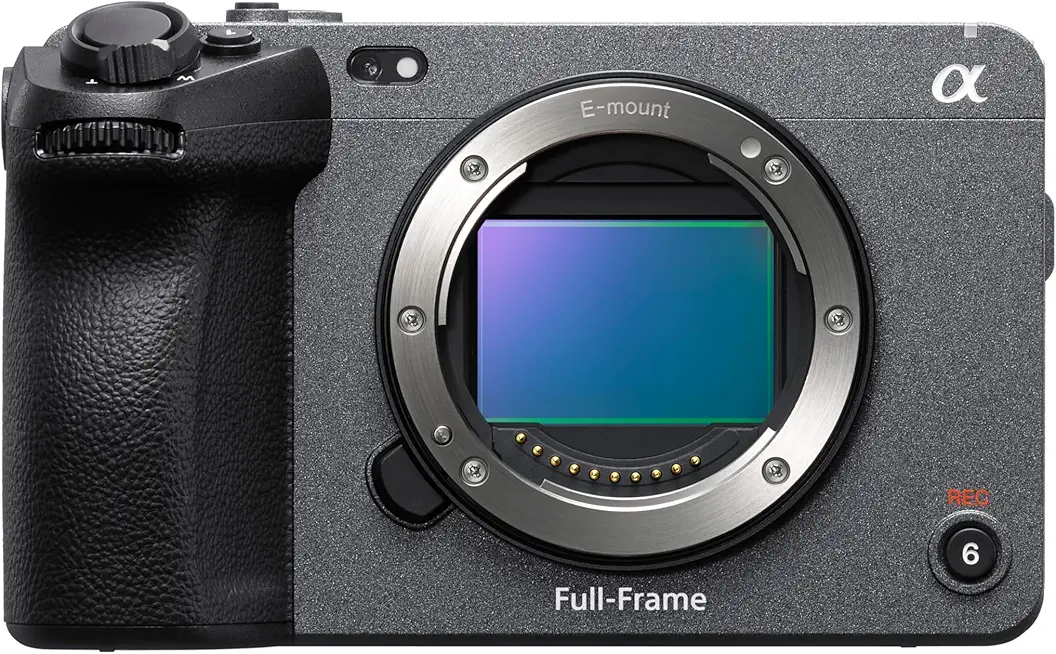
Sony FX3 ILME-FX3A Full-Frame Cinema Camera
Compact cinematic powerhouse delivering stunning low-light 4K capture, impressively fast autofocus, professional video features and robust thermal performance for extended shoots.
Check PriceThe Sony FX3 is a purpose-built entry into full-frame cinema for beginners who care about image quality first. It pairs a 12.1MP full-frame sensor with an impressive 15 stops of dynamic range and an ISO range of 80–102,400, which translates to usable shadows and clean highlights in mixed lighting.
For motion work you get 4K up to 60fps and Full HD slow motion at 120fps, so you can cover standard cinematic frame rates and dramatic slow-motion without complex rigs. Its form factor is compact and responsive, with intuitive menus and a touchscreen that make on-set operation faster for newcomers.
Audio is a clear win: two XLR inputs let you record professional-grade sound straight to the camera, removing a common headache for beginners who want clean production audio. Users also report the FX3 is reliable on long shoots and does not overheat easily, which matters when you’re learning and want uninterrupted takes.
Who should buy it? If you’re a beginner serious about cinematic quality and want an industry-recognized camera that can grow with your skills, the FX3 is an excellent choice. The main trade-offs are practical: the 12.1MP resolution isn’t ideal if you plan heavy cropping or need very high-res stills, and the full-frame sensor means you’ll want to be thoughtful about lens choice and budget.
- Superior low-light performance and broad dynamic range
- Reliable for extended shooting without overheating
- Professional XLR audio inputs
- Intuitive interface suitable for newcomers
- 12.1MP limits heavy cropping/high-res stills
- Full-frame sensor requires careful (and potentially costly) lens selection
2. Canon EOS R10 for New Videographers
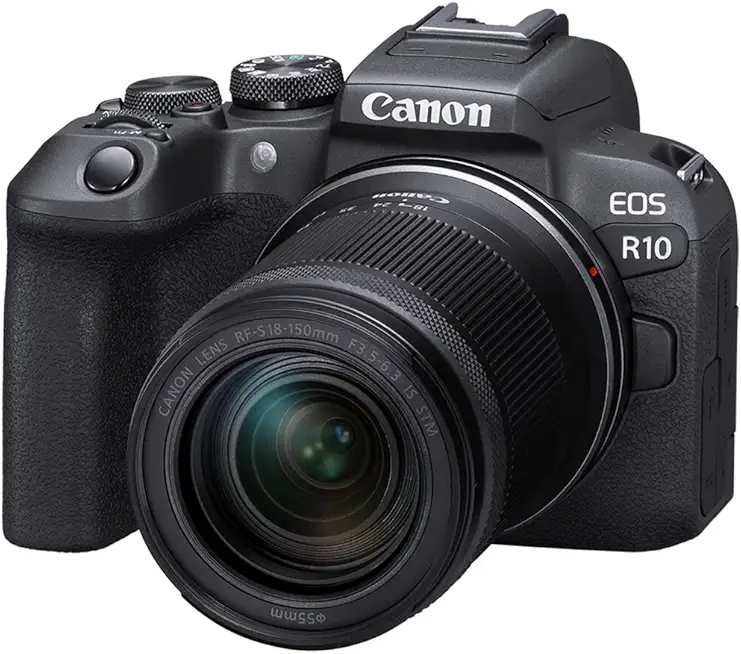
Canon EOS R10 with RF-S 18-150mm f/3.5-6.3 IS STM Lens Kit
All-in-one travel kit offering wide focal range zoom, optical stabilization, responsive autofocus and rapid continuous shooting for everyday photography and hybrid video.
Check PriceThe Canon EOS R10 is a compelling APS-C mirrorless option if you’re stepping from stills into video. It delivers crisp 4K footage with Canon’s pleasing color profile, and the 4K auto color handling makes getting natural-looking clips quicker when you’re still learning color workflows.
Handling is one of its strongest selling points — an articulating touchscreen plus dual control dials mean you can rapidly tweak exposure and settings on the fly without fumbling menus. The body is lightweight and built for handheld shooting, which helps when you’re practicing camera moves or shooting run-and-gun projects.
Autofocus is fast and reliable, with excellent tracking that keeps moving subjects sharp without constant manual focus pulls — a real time-saver for solo creators and newcomers. The camera also offers a 15fps burst with the mechanical shutter, so it performs well for hybrid shooters who want both stills and video capabilities.
Be aware of the limitations: there’s no in-body image stabilization (IBIS), so handheld low-light footage can be less steady unless you use stabilization tools. Also, the Canon RF APS-C native lens ecosystem is still growing, which means you may face a more limited lens choice compared with more mature mounts.
- Crisp 4K with pleasing color
- Intuitive controls and articulating touchscreen
- Fast autofocus with excellent tracking
- Lightweight — great for handheld work
- No IBIS — handheld low-light issues
- Limited RF APS-C lens selection
3. Sony ZV-E10 Mark II for Creators

Sony ZV-E10 II with Kit Lens
Designed for content creators: lightweight mirrorless with flip screen, excellent autofocus, clear onboard audio support and user-friendly creative controls.
Check PriceThe Sony ZV-E10 Mark II for Creators is an APS-C mirrorless designed squarely for solo shooters and content creators. It packs a 26MP sensor (shared with the Sony FX30) and dual native ISO, which gives you cleaner low-light footage without wrestling with noise.
Video capabilities are strong for its class. You get 4K up to 60fps downsampled from 6K, plus support for 10-bit video profiles and advanced codecs, so your clips hold up well in post and retain dynamic range.
Autofocus is a real workhorse here. The eye and face detection is reliable and fast, which means more usable takes and less hunting for focus when you’re shooting alone.
Handling is thoughtful for creators. The grip is comfortable and the fully articulating screen makes framing vlogs, interviews, and run-and-gun shots simple and predictable.
Users praise its clean low-light video, speedy autofocus, and high burst speed for action. That makes this camera a sweet spot if you want cinematic features without a steep learning curve or a lot of extra gear.
Be aware of a couple of practical drawbacks. There’s no headphone jack for on-camera audio monitoring, so you’ll need a workaround for critical sound checks. Battery life is modest under heavy video use, so bring spares for long shoots.
- 10-bit HDR / advanced codecs
- Dual native ISO — cleaner low light
- Reliable face/eye-detect AF
- Ergonomic body with articulating screen
- No headphone jack
- Modest battery life
4. Fujifilm X-M5 for Creative Looks

Fujifilm X-M5 Camera Body
Elegant, tactile mirrorless body delivering high-resolution images, classic film simulations, fast performance and intuitive controls for passionate photographers.
Check PriceThe Fujifilm X-M5 is an APS-C camera that immediately wins you over with Fuji’s color science and built-in film simulations. Those film simulations give you film-like aesthetics straight out of camera, so you can spend less time grading and more time shooting narrative or artistic work.
It records in 6.2K open-gate, which gives you extra resolution and compositional flexibility for reframing or stabilizing in post. The body is lightweight and compact, so it’s easy to move with and comfortable for long handheld setups or run-and-gun shoots.
Controls are thoughtful for filmmakers: an articulating touchscreen and an AF joystick make quick framing and focus shifts fast and precise. That responsiveness helps when you’re learning to block scenes and adjust focus pulls on the fly, especially for story-driven shorts where look and movement matter.
Know the trade-offs before you buy. Video is 8-bit, so heavy color grading latitude is limited compared with 10-bit rivals, and low-light performance is weaker versus those competitors. The camera also lacks an EVF, which can be awkward in bright outdoor conditions, and it can heat up during extended 8K 360° shooting modes—important if you plan long continuous takes.
- Stunning colors and film-like aesthetics.
- Lightweight and compact.
- Strong creative control via film simulations.
- Responsive touchscreen and precise AF controls.
- No EVF complicates bright-light shooting.
- Lower low-light video performance compared to 10-bit rivals.
5. Olympus OM-D E-M10 Mark IV for Beginners

OM System E-M10 Mark IV Micro Four Thirds Camera
Compact and lightweight system camera offering creative modes, user-friendly handling, flip touchscreen and versatile lens ecosystem for everyday photography.
Check PriceThe Olympus OM-D E-M10 Mark IV is a Micro Four Thirds mirrorless that wears its retro styling well while staying very approachable for newcomers. It packs in-body stabilization of about ~4.5 stops and 4K video, which together make handheld shooting feel far more forgiving than the size suggests.
As a working photographer I appreciate how the stabilization translates to smoother pans and longer usable shutter speeds without a gimbal, so you can focus on composition and movement. The touchscreen and art filters make it easy to experiment creatively on the fly, which is great when you’re learning how look and mood change with small adjustments.
If portability matters—travel, run-and-gun narrative shorts or vignette-style practice shoots—the E-M10 Mark IV’s compact, lightweight body is a real advantage. You won’t be fighting the camera when you need to move fast, and the UI is intentionally simple so beginners spend less time in menus and more time shooting.
One of the subtle strengths is the Micro Four Thirds ecosystem: lenses are plentiful and generally affordable, so you can build a useful kit without breaking the bank. That makes this camera a sensible choice for someone who wants to try many focal lengths and styles while keeping costs down.
Be realistic about limits: the smaller sensor does constrain dynamic range and low-light performance compared with larger formats, so you’ll want to light scenes thoughtfully for cinematic looks. Likewise, while the 4K and IBIS deliver smooth, usable footage, the video won’t match the cinematic shallow depth and low-light authority of APS-C or full-frame alternatives.
Overall, the E-M10 Mark IV is mostly good for beginners who value portability, stabilization and a fun, forgiving shooting experience while they learn cinematography basics.
- Effective IBIS (~4.5 stops)
- Compact, lightweight and portable
- Large, economical Micro Four Thirds lens ecosystem
- Simple, enjoyable UI with touchscreen and art filters
- Smaller sensor limits dynamic range and low-light
- Video less cinematic than APS-C/full-frame
Beginner Tips to Learn Cinematography
Start with story. Cinematography is first and foremost storytelling with moving images, so ask what each shot needs to communicate before worrying about gear. If you know the beat you want—tension, intimacy, escape—your composition, lighting and camera movement will naturally fall into place.
Learn basic cinematic rules as tools, not laws. The 180° axis keeps screen direction clear, the Rule of Thirds helps pleasing composition, and mise en scène teaches you how to arrange actors and props so every frame tells part of the story. Break these rules deliberately once you know their effect.
Get familiar with essential shots and why they exist: wide for context, medium to anchor action, close-ups for emotion, over-the-shoulder for perspective. Practice transitions between them so coverage feels intentional rather than accidental. Small changes in angle or focal length dramatically alter what the audience feels.
Master the exposure “holy trinity”: ISO, aperture and shutter speed. Use the 180° shutter rule as a starting point—shutter speed roughly double your frame rate—and choose 24fps for a cinematic motion blur or 30fps for a cleaner, more “real” look. Aperture controls depth of field; ISO is your noise trade-off.
Plan with storyboards and shot lists. Even simple sketches and a one-page shot list save hours on set and help your collaborators understand your vision. When you don’t have a crew, clear planning keeps your single-operator shoots efficient and focused.
Finally, practice with purpose: recreate a scene you love, then reverse-engineer why it works. Spend sessions concentrating on smooth pans and tilts, solid eyeline matches, and shaping light and color to match mood. Over time, technical habits become instinctive and your camera becomes an expressive tool rather than a puzzle.
Essential Accessories for Your First Camera
Buy the gear that actually lets you finish a shoot. A sturdy tripod with a smooth fluid head is worth its weight in gold for controlled pans, tilts and interviews. If you plan to move with the camera, a gimbal or handheld stabilizer will help you get cinematic motion without the shakiness that ruins a take.
Sound matters more than you think. A shotgun mic on the camera is great for run-and-gun work, while a wireless lavalier system is essential for dialogue. If your camera has XLR inputs or you can add an adapter, prioritize that for clean, professional audio.
Lenses shape your look. Start with a fast prime (a 35mm or 50mm equivalent) for shallow depth of field and low-light work, plus a versatile standard zoom for run-and-gun situations. You can add a wide-angle later, but nailing one fast lens will change your footage overnight.
Neutral density filters are a small investment with big payoff. They let you keep wide apertures and the 180-degree shutter rule in bright daylight. For reliability, I prefer fixed ND sets to variable NDs that can introduce artefacts at extreme settings.
Spare batteries and fast memory cards are non-negotiable. Get at least two extras and high-speed cards rated for sustained video (V60/V90 or UHS-II, depending on codec). Nothing kills a shoot quicker than a dead battery or a card that drops frames.
A lightweight field monitor or electronic viewfinder helps with focus, exposure tools and framing outdoors. Look for one with focus peaking, zebras and a sun hood if you’ll shoot outside. It’s an instant upgrade over relying on tiny built-in screens.
Finally, invest in basic lights and a good camera bag. A couple of portable bicolor LED panels and a reflector let you shape light for interviews and small scenes. Choose a bag that protects your kit, keeps it organized and fits the way you shoot—comfort matters on long days.
What People Ask Most
What is the best camera for beginner cinematography?
There is no single best camera; choose one that balances ease of use, image quality, and budget. Consider features like stabilization, audio options, and lens availability to match your learning goals.
What features should I look for in a beginner cinematography camera?
Look for reliable autofocus, good low-light performance, solid stabilization, and useful audio inputs. Ergonomics and a healthy lens ecosystem also help you learn and grow without frustration.
DSLR or mirrorless: which is better for beginner cinematography?
Mirrorless cameras often offer lighter bodies and better live-view video tools, while DSLRs can feel familiar and robust. Choose based on handling preference, lens options, and how you plan to upgrade later.
Can I use a smartphone for beginner cinematography?
Yes, smartphones are useful for practicing composition, movement, and storytelling, especially in well-lit conditions. They are limited in depth-of-field control and external audio connectivity compared with dedicated cameras.
What lenses should a beginner cinematographer start with?
Begin with a versatile standard zoom and a fast prime to cover everyday shots and learn shallow depth-of-field. Pick lenses that are compatible with your camera mount and suit the types of scenes you want to shoot.
How do I choose the right sensor size for cinematography?
Sensor size influences depth of field, low-light performance, and the feel of your images, so weigh those trade-offs against portability and lens cost. Select a system that fits your shooting style and future needs.
What camera settings should beginners learn for cinematography?
Focus on exposure basics like ISO, aperture, and shutter speed, along with frame rate and white balance to control motion and color. Practice adjusting these settings deliberately to achieve consistent, intentional results.
Conclusion for Best Beginner Cinematography Cameras
These five beginner-friendly cameras map clear routes into cinematography—full-frame, APS-C and Micro Four Thirds each bring different strengths and trade-offs around low-light performance, stabilization, color and audio inputs, so your best pick depends on which of those matters most to you.
Use the article’s pros, cons and target-buyer notes to match a camera to your shooting style, then combine that choice with the accessory and learning tips to get practical results faster.
If you want to keep improving, read more articles on the site to deepen your gear knowledge and technical skills at your own pace.
Leave a comment with questions or your own experiences and we’ll usually reply within a few hours to help you decide or troubleshoot.



0 Comments