

Ever had your camera die in the middle of a crucial interview or a marathon livestream?
That sudden cut can ruin a story, cost you clients, and waste hours of setup and emotion. If uninterrupted runtime matters, you need gear that prioritizes cooling, power handling, long-form usability, and robust audio performance.
This guide compares five cameras that excel at long continuous recording and real-world endurance under pressure, with an eye toward workflow-friendly features. We look beyond specs to assess recording limits, heat management, codecs, stabilization, and professional audio options. Our aim is straightforward: help you pick the best camera for long video recording for your exact shooting needs and deliver consistently trouble-free captures across hours of filming.
Along the way we’ll weigh pros and cons, share real-user feedback, and outline which setups suit specific workflows and shooting styles. You’ll also find practical tips to extend recording time, manage heat, choose power solutions, and improve on-camera audio, plus simple battery and card strategies. A concise FAQ covers the most common long-form recording questions so you can get shooting faster and with more confidence.
Whether you’re filming weddings, documentaries, multi-camera livestreams, or educational series, uninterrupted capture transforms the finished product and simplifies post. Read on for an honest, camera-by-camera look and practical advice that helps you match gear to budget and workflow without guesswork. By the end you’ll know which option best supports marathon shooting without surprises, and which trade-offs make sense for your projects.
1. Panasonic Lumix GH7 Overview

Panasonic LUMIX GH7 (DC-GH7BODY)
Compact cinema-grade mirrorless delivering high-resolution 4K/6K video, lightning autofocus, and weather-sealed durability for versatile hybrid shooters.
Check PriceAs a working pro, the Panasonic Lumix GH7 stands out when long, uninterrupted video is the priority. Its built-in active cooling with a fan means you can shoot uncropped 4K up to 120 fps for extended sessions without the usual overheating shutdowns, which is a game-changer for multi-hour interviews, live streams, or event coverage.
Where the GH7 really helps your workflow is in the recording options: internal Apple ProRes and RAW recording give you huge flexibility in post, and dual card slots add redundancy for long takes. The I/O is ultra-adaptable — multiple aspect ratios/resolutions, XLR adapter support, and 32-bit float audio (with adapter) make it a solid choice if you need pro audio and a reliable pipeline straight out of the camera.
Autofocus is reliable too, with strong real-time recognition and phase-detection AF that keeps subjects locked during run-and-gun or staged shoots. Real-world users report it’s versatile for cinematic interviews, vertical reels, and live streaming, and that it reliably avoids overheating or shutdowns in multi-hour shoots — precisely what you want from a camera built for endurance.
The trade-offs are clear: the Micro Four Thirds sensor won’t match full-frame for low-light performance or shallow depth-of-field, and the body is a bit bulkier with lots of controls that might intimidate casual users. If you’re a professional content creator, advanced YouTuber, or indie filmmaker who prioritizes long-session flexibility and robust workflow options, the GH7 is mostly a very good fit.
- Internal Apple ProRes and RAW recording
- Active cooling: uncropped 4K up to 120 fps
- Ultra-adaptable I/O; dual card slots; XLR + 32-bit float audio
- Reliable real-time recognition and phase-detection AF
- Micro Four Thirds sensor: weaker low light and DoF
- Bulky with many controls; can intimidate casual users
2. Panasonic Lumix S5IIX Overview
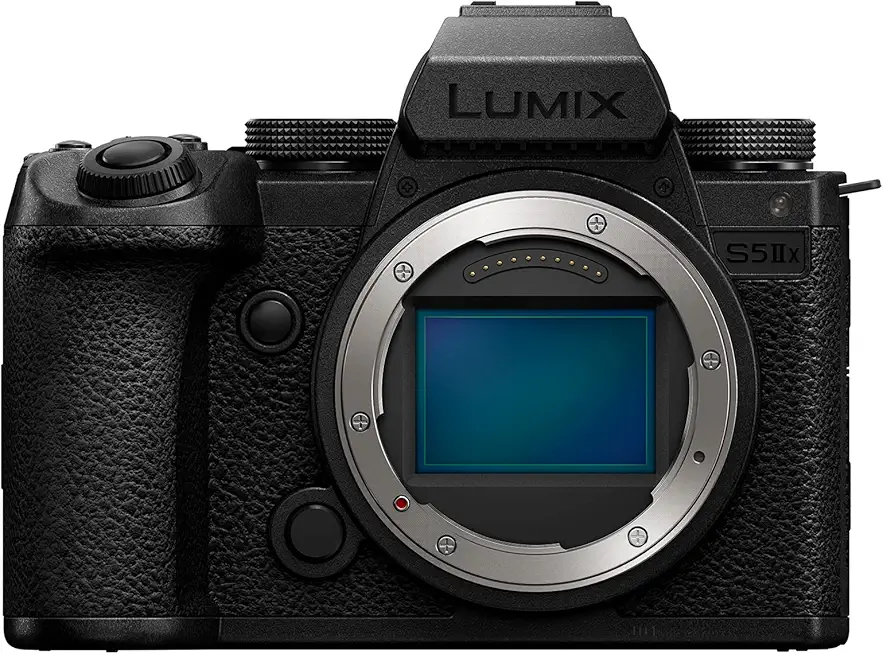
Panasonic LUMIX S5IIX (DC-S5M2XBODY)
Lightweight full-frame hybrid offering superior stabilization, AI-powered autofocus, 6K/4K cinematic capture, and professional connectivity for creators.
Check PriceThe Panasonic Lumix S5IIX is a true workhorse for long-form video. Its internal fan enables unlimited recording at 6K/30p or C4K/60p in 10-bit 4:2:2, and you can get 12-bit ProRes RAW output for heavy post work. That combination gives you flexibility for delivery and color grading without worrying about shutdowns during multi-hour shoots.
If you shoot handheld or run-and-gun events, the 5-axis IBIS makes a real difference. The full-frame sensor also delivers strong low-light performance, so wedding receptions, dim auditoriums, and documentary interiors look cleaner with better tonality and shallower depth of field.
Panasonic packed in a pro-level codec and workflow set: MOV/MP4 containers, ALL-I and Long-GOP options, plus custom LUT banks that speed grading. V-Log is effective for dynamic range, though it has a learning curve if you’re used to ready-to-roll picture styles. Real-world users praise this body for long shoots and event work because it balances image quality, stabilization, and unlimited runtime.
There are trade-offs. The body is heavier, so it’s less ideal for lightweight travel rigs or casual vlogging. Autofocus has improved but still trails some Sony/Canon competitors on fast, unpredictable subjects. Also note the internal fan can be audible in very quiet recording situations, so plan audio placement accordingly.
- Unlimited internal recording: 6K/30p or C4K/60p in 10-bit 4:2:2
- 5-axis IBIS for smooth handheld footage
- 12-bit ProRes RAW output
- Full-frame sensor with strong low-light performance
- Heavier body — less ideal for casual vlogging or travel
- Autofocus behind some Sony/Canon competitors
3. Canon EOS R5 Mark II Overview

Canon EOS R5 Mark II Body
High-resolution pro mirrorless with blazing continuous shooting, advanced autofocus, and robust heat management for extended video sessions.
Check PriceThe Canon EOS R5 Mark II is a true high-end hybrid aimed at photographers who also demand top-tier video. It delivers best-in-class 8K video with internal 8K 60p RAW and includes improved cooling compared to its predecessor.
Image quality is exceptional — users praise its outstanding 8K for commercial and documentary work. Autofocus is rock-solid too, with Dual Pixel CMOS AF II offering fast, reliable subject tracking that keeps long takes sharp and usable.
Handling and build are geared for pro use: a weather-sealed body and dual card slots give you confidence on location and practical redundancy for long shoots. As a hybrid it genuinely excels at both stills and video, so you won’t be compromising either discipline.
That said, overheating is a real consideration. 8K 60p is limited to about 20 minutes without the optional active cooling grip, and many users find that grip necessary for unlimited recording — at the cost of added bulk and expense.
Bottom line: if you’re a high-end professional or commercial videographer who needs the absolute best resolution and a capable stills camera in the same package, the R5 Mark II is a compelling choice. If you’re video-first and need guaranteed unlimited internal 8K recording out of the box — or you have a tighter budget — be prepared for trade-offs in thermal management and system cost.
- Best-in-class 8K video: internal 8K 60p RAW
- True hybrid: excels at both stills and video
- Robust build: weather-sealed body and dual card slots
- Autofocus: Dual Pixel CMOS AF II is fast and reliable
- Overheating remains a concern: 8K 60p limited to about 20 minutes without the optional active cooling grip
- Costly ecosystem: RF lenses and accessories can add substantially to total expense
4. Nikon Z9 Overview

Nikon Z 9
Flagship professional powerhouse combining blackout-free electronic viewfinder, stunning image fidelity, and relentless speed for demanding photo and video workflows.
Check PriceThe Nikon Z9 is a no-compromise workhorse built for long-form and high-resolution video. It records internal 8K/60p and 4K/120p with no crop or time limits thanks to advanced heat management, so you can actually shoot marathon events without being cut off.
Its stacked sensor and rapid readout significantly reduce rolling shutter, which matters when you’re tracking fast-moving subjects or panning quickly. Autofocus and burst performance are class-leading, so the Z9 is equally comfortable as a hybrid tool for stills and video in the same assignment.
Physically the camera feels pro-grade — a rugged, weather-sealed body with an integrated grip that sits well on gimbals and for shoulder-mounted setups. That build and reliability are why sports, wildlife, and event videographers commonly choose the Z9 for endurance shoots.
There are trade-offs: it’s big and heavy, so it’s not ideal for casual travel or run-and-gun vlogging. The system also asks for commitment — investing in Z-mount glass and accessories is part of getting the best from the camera.
Operationally expect a steeper learning curve because of deep, advanced menus and features. Also, heavy video use drains batteries faster, so plan for multiple spares (or continuous power) when you’re heading into long shoots.
- No recording limits — internal 8K/60p and 4K/120p
- Rugged, weather-sealed body with integrated grip
- Stacked sensor with rapid readout (less rolling shutter)
- Hybrid strength — class-leading AF and burst rates
- Large and heavy
- Requires significant system investment (Z-mount)
5. Sony FX6 Overview

Sony ILME-FX6
Compact cinema camera engineered for filmmakers: superb low-light sensitivity, cinematic color science, and flexible modular workflow integration.
Check PriceThe Sony FX6 is a cinema-focused workhorse that excels for long-form video. It delivers full-frame 4K with excellent low-light performance and that cinematic depth of field filmmakers crave.
It’s packed with pro-oriented features you’ll actually use on set: a built-in ND filter, dual XLR inputs, timecode, and robust autofocus that real shooters praise for speed and accuracy. Those elements make it a reliable choice for unpredictable, extended shoots like documentaries and events.
Recording flexibility is another strong suit. You can record internally to 10-bit codecs for high-quality deliverables, or output 16-bit RAW to external recorders when you need maximum latitude in post.
Ergonomically the FX6 feels like a proper video camera rather than a hybrid stills body — a camcorder-style design that’s comfortable for long handheld sessions and keeps fatigue down during day-long gigs. That professional build also makes it less discreet, so consider whether you need a smaller form factor for run-and-gun or stealthier work.
Who should buy it? If you’re a cinematographer, documentary filmmaker, or event videographer who prioritizes image quality, reliable long-session performance, and pro audio/recording features, the FX6 is mostly a perfect fit. If stills are a big part of your workflow or you’re on a tight budget for glass and accessories, you might hesitate.
- Full-frame 4K, great low-light
- Built-in ND, dual XLR, timecode
- Internal 10-bit or 16-bit RAW output
- Camcorder-style ergonomics for long handheld use
- Limited stills capability
- Costly E-mount ecosystem
Extending Your Recording Time
When you need a camera to run for hours, planning is more important than hoping the battery will hold out. I’ve ruined a few shoots by trusting a single cell, so now I always start with fully charged batteries and at least two spares on hand. Rotate them during breaks and keep a simple checklist so you don’t find yourself mid-take swapping power in a panic.
External power is a game changer. A USB‑C PD power bank or an AC adapter with a dummy battery will keep your camera running far longer than internal cells, and it often reduces heat buildup because the camera isn’t constantly charging or discharging small packs. If you’re shooting on location, tuck the power bank out of direct sun and run a short cable so nothing strains ports or connectors.
Heat kills recording sessions more reliably than batteries do. Shoot in the shade, give the camera airflow, and avoid stacking hot accessories on top. Lowering resolution or frame rate can significantly reduce processor load and thermal stress, and often the difference is invisible to your audience when framed and lit well.
Small tweaks to settings stretch runtime without sacrificing quality. Dim the LCD or use the electronic viewfinder, turn off Wi‑Fi/Bluetooth, and disable continuous autofocus or in‑body stabilization when you can lock focus or use a tripod. Avoid constant LCD playback between takes—use histograms and audio meters to check exposure instead.
Memory cards matter as much as batteries and heat. Use high‑capacity, high‑speed cards rated for continuous video; large V60/V90 cards reduce the chance of write interruptions. If your camera has dual slots, configure overflow or simultaneous recording so you don’t lose footage mid‑session.
Finally, keep firmware up to date and test your whole workflow before the shoot. A runtime test with the actual rig—lenses, mics, monitors, power—reveals surprises much better than theory. Those preflight minutes save you hours of headache on the day.
Choosing the Right Audio Inputs
Audio can make or break a long shoot, so choose inputs that match the job rather than the cheapest option. For run-and-gun vlogs a clean 3.5mm jack and a good lavalier will do, but for interviews, events or anything that needs reliability, XLR or an XLR adapter is worth the extra weight and cost. Balanced XLR keeps interference down and gives you access to phantom power and proper preamps—big wins on multi-hour shoots.
Preamp quality matters more than most people realize. Low-noise, high-quality preamps preserve detail on long takes and prevent an annoying hiss that becomes distracting after an hour. If your camera offers 24-bit or even 32-bit float capture, you get massive headroom and less risk of clipping, which is fantastic for unpredictable dialogue levels.
Manual controls are your friend. Set levels manually with enough headroom—aim for peaks around -12 to -6 dB—then monitor with headphones throughout the shoot. Built-in limiters and wind filters can save you from disaster when someone laughs into the mic or a gust hits the outdoor mic, but don’t rely on them as a substitute for good gain staging.
Always plan redundancy. Run an external recorder in parallel or use a camera that can record both internal and external channels simultaneously. A backup track eliminates panic if a cable gets tugged or an input clips unexpectedly, and a simple slate or clap at the top makes lining up files painless.
Think ergonomics and reliability: place inputs where you can reach them, secure cables so they won’t disconnect mid-take, and carry spare XLR cables, batteries, and a small windscreen kit. Finally, test the whole chain in the actual environment—rooms, crowds, and winds change noise characteristics more than you expect.
What People Ask Most
What is the best camera for recording long videos?
There is no single best camera for everyone; the right choice depends on your needs and budget. Prioritize models with strong heat management, reliable autofocus, and professional audio options for long sessions.
Which cameras allow unlimited continuous video recording?
Some professional models are designed with active cooling or advanced heat dissipation to remove recording time limits. Always verify a specific model’s stated capabilities and real-world feedback before assuming unlimited recording.
Which camera has the best battery life for long video recording?
Battery life varies widely by model and by how you use features like stabilization and the LCD. Look for efficient power management, the ability to use external power, and plan to carry spare batteries for extended shoots.
What cameras are best for long-form YouTube videos?
Choose cameras that balance good autofocus, in-body stabilization, clean audio inputs, and comfortable ergonomics for long takes. Also consider codecs and workflow compatibility to make editing smoother.
Which cameras can record long videos without overheating?
Cameras built with active cooling or robust heat management are most likely to avoid overheating during extended recordings. Environmental conditions and recording settings can still influence heat, so monitor temps and adjust as needed.
Can mirrorless cameras record long continuous videos?
Many modern mirrorless cameras can record long continuous videos, though some models have limits due to heat or power constraints. Higher-end mirrorless bodies often include features that extend or remove those limits.
What features should I look for in a camera for long video recording?
Prioritize effective heat management, pro audio inputs, reliable autofocus, and good stabilization for sustained shooting. Also consider battery and power options, recording codecs, and ergonomics for comfort during long sessions.
Conclusion for Long Video Recording Cameras
In short, the best long-video camera for you depends less on a single spec and more on how well it handles heat and recording limits, the codecs and stabilization it offers, the quality and flexibility of audio inputs, plus battery life and ergonomics for your workflow.
Match a camera’s strengths to the job: prioritize active cooling or no-limit recording for multi-hour events, strong stabilization for handheld shoots, and pro audio options for interviews and live productions.
Practical preparation—managing power, using external sources, controlling heat, and choosing the right media—will often matter as much as the body you pick when aiming for uninterrupted long-form footage.
If you want to improve your shooting and workflow, explore more of our site to deepen your skills and learn practical techniques for long recordings.
Have questions or got experience to share? Leave a comment below and we usually reply within a few hours.





0 Comments