

Ever wondered which camera will give your movie that cinematic polish without breaking the budget or requiring a production overhaul?
With mirrorless bodies, compact cinema rigs, and pro camcorders all vying for attention, the choice feels overwhelming.
In 2026 the camera landscape is deeper and more capable than ever.
But lab specs only tell part of the story; real-world performance and user feedback separate the hype from the genuinely useful.
This guide cuts through the noise by comparing five top cameras for movies using hands-on testing and filmmaker experiences.
We evaluate how each camera behaves on set, under pressure, and across common production scenarios.
Rather than burying you in numbers, we translate technical capabilities into clear pros and cons and practical use cases.
Expect straightforward buying guidance that connects features to the types of shoots and workflows you actually run.
Whether you’re shooting an indie feature, documentary, or client-driven commercial work, the right camera is the one that fits your story and workflow.
This guide will help you match budget, ergonomics, and recording needs to real-world filmmaking demands.
Read on for concise, expert-tested advice to help you choose the best camera for movies in 2026.
With the right tool in hand, your focus stays where it should be—on making better films.
1. Nikon Z9 For Filmmakers

Nikon Z9
Professional flagship mirrorless delivering extreme speed, high-resolution stills, and reliable autofocus for demanding photo and video creators.
Check PriceThe Nikon Z9 is a true powerhouse for high-resolution video work — it records internal 8K/60p and 4K/120p without any crop or time limits. That capability alone makes it attractive for filmmakers who want maximum detail and flexibility for high-frame-rate slow motion and future-proof delivery.
At the heart of the Z9 is a stacked 45.7MP full-frame sensor that delivers superb detail and excellent dynamic range. In practical terms you get cleaner highlights and shadow retention, which is invaluable when grading footage for cinematic looks.
Autofocus on the Z9 is advanced, with subject-detection AF and strong tracking in real-world video use. That reliability lets you concentrate more on composition and performance, especially when shooting fast-paced scenes or run-and-gun moments where focus pullers aren’t available.
Build and ergonomics are pro-level: a robust, fanless body that avoids overheating and is comfortable for extended shoots. The fanless design means long continuous recording without audio or vibration issues introduced by active cooling.
This camera is especially well suited to hybrid shooters who need top-tier stills and video, and it benefits from a growing Nikon Z-mount ecosystem. If you’re running professional jobs where resolution, reliability, and long takes matter, the Z9 will serve you well.
Be aware it’s very large and heavy, so it’s less ideal if you need a lightweight, run-and-gun setup. There’s also a steeper learning curve with a complicated menu system that some users find challenging.
- Uncropped 8K and 4K recording with no time limits
- Excellent autofocus with advanced subject detection
- Robust, fanless build ideal for long shoots
- Great ergonomics for professional use
- Very large and heavy — less ideal for run-and-gun
- Steeper learning curve and complicated menu system for some users
2. Panasonic Lumix S5IIX Video Workhorse
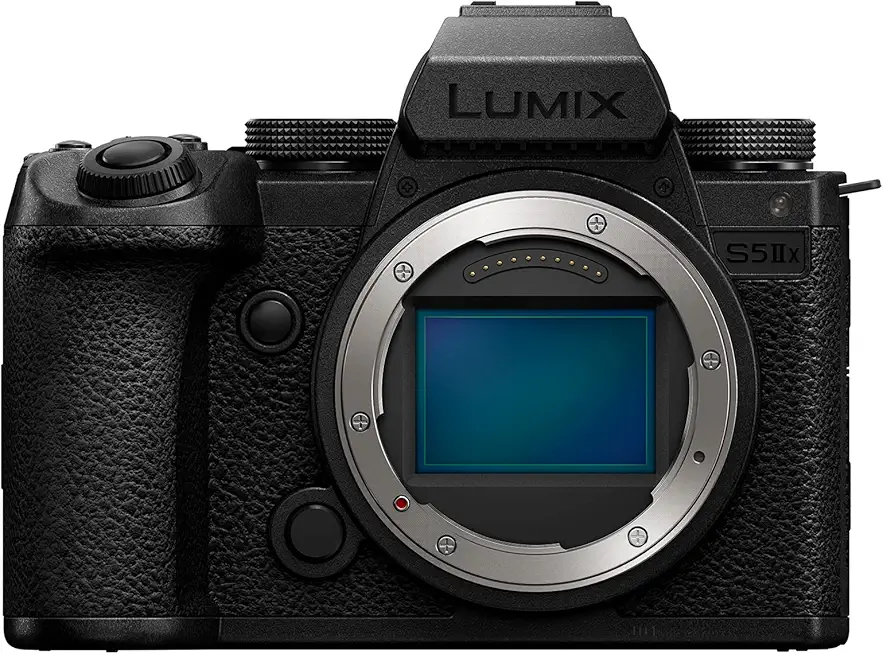
Panasonic LUMIX S5IIX DC-S5M2X Body
Compact full-frame hybrid body offering advanced autofocus, robust image stabilization, and cinematic video features for creators on the go.
Check PriceThe Panasonic Lumix S5IIX is a real video workhorse in a compact, portable package. It records 6K/30p and Cinema 4K/60p internally in 10-bit 4:2:2, giving you plenty of latitude for color grading while keeping files manageable for most editing systems.
What impresses me most is the camera’s recording flexibility. It offers ProRes RAW output and a wide range of recording formats, compression types, bit depths, and custom LUT banks — a toolkit built for creators who need to match multiple cameras or push heavy grading workflows.
For run-and-gun and handheld run-throughs, the effective 5-axis in-body image stabilization (IBIS) is a lifesaver. Combined with reliable phase-detection autofocus, you get steady, well-tracked footage without fighting focus or motion blur on tight shoots.
Image quality is solid thanks to the full-frame 24.2MP sensor, which delivers strong low-light performance and wide dynamic range. That sensor helps the S5IIX punch above its weight in darker environments while preserving highlight and shadow detail.
Practical workflow features matter here: unlimited 4K recording enabled by an internal fan removes time-limit headaches on long takes. That, plus its portable form factor, makes it a go-to for professional content creators who need a versatile system that travels well.
There are a couple of trade-offs to note. You’ll face a 1.5x crop when shooting 4K60p, which affects field of view for wide shots. And the menus and interface can feel slightly complex for beginners, so expect a learning curve before you can run it at full speed.
- Superb video flexibility with 10-bit internal recording and ProRes RAW output
- Effective IBIS for stable handheld footage
- Excellent autofocus for video
- Unlimited 4K recording with active cooling fan
- 1.5x crop when shooting 4K60p
- Slightly complex menus and interface for beginners
3. Blackmagic Pocket Cinema Camera 6K Pro Highlights

Blackmagic Pocket Cinema Camera 6K Pro
Cinema-grade 6K recording with RAW support, versatile ND filters, and professional color science for filmmakers seeking high dynamic range.
Check PriceThe Blackmagic Pocket Cinema Camera 6K Pro is a Super35 camera built around high-quality 6K capture. It records in Blackmagic RAW and ProRes, giving you flexible files that hold up through heavy color grading.
You get genuinely cinematic latitude thanks to the camera’s excellent dynamic range (13 stops). That headroom makes it easy to retain highlight and shadow detail, which is a huge win for narrative work and controlled lighting setups.
On the body, Blackmagic includes a 5-inch HDR touchscreen and built-in ND filters. The interface is straightforward, so you can dial in exposure and review footage quickly on set.
Physically it’s compact and relatively portable for cinematic cameras, which means you can achieve a filmic look without hauling a full-size cinema rig. Indie filmmakers and budget-conscious cinephiles will appreciate the color science and image quality this camera delivers for the price.
There are practical trade-offs to know before you buy. The camera has limited battery life — requires extra batteries or external power, so plan for power solutions on longer shoots. Also, the ergonomics are not optimal for prolonged handheld shooting, so consider a small rig or shoulder support for lengthy handheld takes.
In short, if your priority is image quality, RAW workflow, and dynamic range on a budget, the 6K Pro is a strong choice. If you need long-duration handheld shooting straight out of the box, be ready to add power and support accessories.
- High-quality 6K RAW and ProRes recording
- Excellent dynamic range (13 stops)
- Built-in ND filters and user-friendly interface
- Compact and relatively portable for cinematic cameras
- Limited battery life — requires extra batteries or external power
- Ergonomics not optimal for prolonged handheld shooting
4. Sony a6700 Compact Hybrid
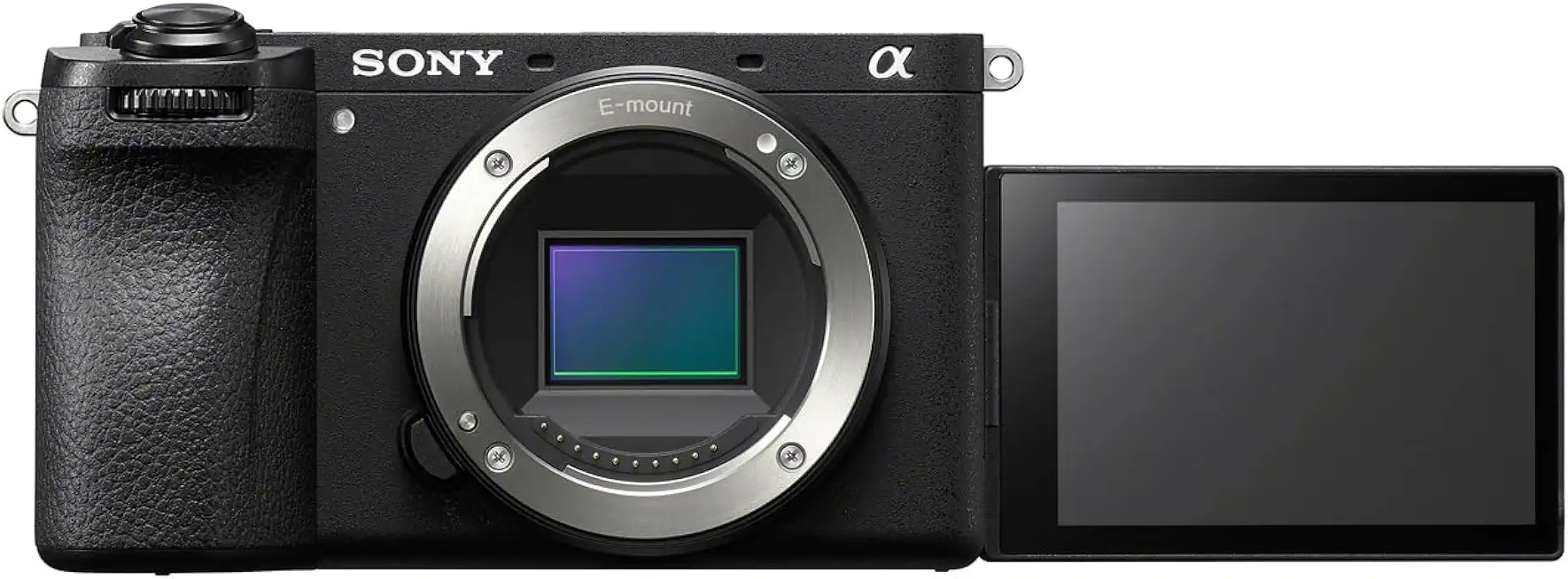
Sony Alpha 6700
Compact APS-C mirrorless with fast autofocus, impressive low-light performance, and smooth 4K video for hybrid creators and vloggers.
Check PriceThe Sony a6700 is a compact hybrid that punches well above its size for filmmakers who need mobility without sacrificing features. Its APS-C 26MP backside-illuminated sensor delivers detailed stills and a pleasing video image, while the body remains small enough for gimbal work or run-and-gun shooting.
For video, the a6700 is impressive: 4K 120fps capture and internal 10-bit 4:2:2 recording give you smooth slow-motion and much more grading latitude than typical consumer cameras. The in-body image stabilization (IBIS) tracks with those capabilities, making handheld footage look usable straight out of camera on tight shoots.
Autofocus is one of the camera’s strongest real-world benefits. Its best-in-class AF is praised for accuracy and subject tracking, which saves time on set and reduces the need for constant manual pull-focus when shooting moving subjects or one-operator setups.
That said, know the trade-offs: the APS-C sensor is inherently more limited for low-light performance and shallow depth-of-field compared to full-frame options. Also, there’s no internal RAW video output, so if you demand RAW workflow inside the camera you’ll need to consider external solutions or different systems.
Overall, the a6700 is an excellent choice for hybrid shooters and creators who value a compact, feature-rich camera that handles video and stills reliably. It’s especially suited to solo operators, content creators, and documentary shooters who need dependable autofocus, high-frame-rate capture, and solid stabilization in a pocketable package.
- 4K 120fps for slow-motion
- Effective IBIS for smooth handheld footage
- Highly reliable autofocus video system
- Compact and lightweight design
- APS-C sensor limits low-light and shallow depth-of-field vs full-frame
- No RAW video output internally
5. Canon XA75 Camcorder For Events

Canon XA75 Camcorder
Reliable compact professional camcorder with long zoom range, dependable autofocus, and broadcast-ready audio for ENG and event production.
Check PriceThe Canon XA75 is a true run-and-gun camcorder built around a camcorder form factor with UHD 4K30p recording and a powerful zoom, so you can cover events end-to-end without swapping glass. Its continuous recording capability and excellent autofocus tracking — including reliable face tracking — make it exceptionally forgiving when shooting live, fast-paced situations.
As a working shooter you’ll appreciate how compact and discreet the XA75 is; it’s easy to handle for long shoots and less conspicuous than a rigged mirrorless setup. Audio is also thoughtfully addressed with dual XLR mic inputs, so you can capture broadcast-quality sound without an external recorder or adapter.
Low-light performance is a standout for a camcorder of this class — users report results comparable to the Canon EOS R6, which means usable detail and cleaner images in dim venues where event lighting is unpredictable. That capability, combined with reliable autofocus, makes the XA75 a strong choice for weddings, documentaries, corporate gigs and news gathering.
There are trade-offs: the XA75 tops out at 4K30p, so if you need high-frame-rate 4K or internal RAW options this isn’t the camera. It also lacks Wi‑Fi or wireless sharing capabilities, so live-streaming or quick file transfer on set requires extra accessories or cards. For shooters who prioritise usability, long-form recording, pro audio and low-light reliability in a compact package, the XA75 is a very practical, workhorse choice.
- Compact and easy to handle for long shoots
- Strong low-light performance for a camcorder
- Excellent autofocus with face tracking
- Dual XLR inputs and uninterrupted recording
- No Wi‑Fi or wireless sharing capabilities
- Limited to 4K 30p video resolution
How To Choose The Right Camera
Choosing the right camera starts with being honest about the story you want to tell and the conditions you’ll be shooting in. A small documentary crew needs different specs than a solo travel filmmaker, so let your production scale and budget drive the format: mirrorless for hybrid flexibility, camcorders for long continuous runs, and digital cinema bodies when image latitude and post workflows are paramount.
Think in terms of recording specs rather than just marketing labels. Decide what resolution, frame rates and codecs you actually need for distribution — 4K at 24/25fps creates a cinematic feel, higher frame rates are for slow motion, and RAW or high-bitrate 10-bit codecs buy you huge leeway in post. Also check platform or client requirements up front; some outlets mandate specific deliverables or color spaces.
Sensor size matters more than people realize. Full-frame generally gives better low‑light performance and a creamier shallow depth of field, while APS‑C or Super 35 can be friendlier for run‑and‑gun rigs and tighter lenses. Don’t sacrifice lens choices and depth-of-field control for a camera body that looks good on paper — your glass and lighting will shape the final image far more than megapixels.
Practical workflow features are often the deciding factor on set. Look for timecode, SDI outputs, reliable power options, and audio connectivity if you’re working with multiple crew members. Stabilization, built‑in NDs and fan cooling can remove headaches during long shoots, and ergonomics will save your shoulders and sanity on day three of a marathon shoot.
Budget wisely: a great camera body won’t fix poor lenses, sound or lighting, so allocate funds for what matters most to your project. If you’re unsure, rent the camera you’re considering and test it in the exact scenarios you’ll face; real-world testing catches crops, overheating, battery drain and other quirks faster than reviews.
Finally, choose a system you can grow into: lens mount support, third‑party accessories and serviceability matter down the line. Prioritize a setup that matches your storytelling needs and workflow — that’s the clearest route to consistently great results.
Common Camera Buying Mistakes For Movies
Buying a camera for movies is easy to overthink if you focus only on headline specs. The most common mistake I see is treating the body like the whole budget. You end up shortchanging lenses, lights, sound, or the people who make the picture sing.
People often overspend on a camera and skimp on glass. A sharp, fast lens and a few good primes will change your images more than one upgrade in megapixels. Invest in optics and lighting first, then choose a body that fits that system.
Another trap is ignoring delivery and post needs. Pick resolution, frame rates and codecs that match your platform and editing workflow. Internal RAW or high-bitrate 10‑bit files may save you hours in color grading and preserve highlights you’ll need later.
Sensor size matters, especially for low light and depth of field. Don’t assume a crop sensor is “good enough” for every project or that full frame is always better. Test lenses on the sensor size you’ll use and check how it behaves at the ISOs you shoot in real conditions.
Practical features get overlooked. Timecode, SDI/clean outputs, continuous recording limits, battery life and cooling all affect a shoot day. If the camera can’t run for your shoot length or integrate into a multi-camera workflow, it becomes a liability, not an asset.
Always test before buying. Rent or borrow the exact kit and shoot a short scene with your crew, lenses and sound setup. Ergonomics, menus, autofocus behavior and stabilization are very different under real pressure than on a spec sheet.
Finally, check system compatibility. Lens mounts, adapters, audio inputs and power options dictate what accessories you must buy. Prioritize tools that make your workflow faster and your image more reliable — the rest is just specs hunting.
What People Ask Most
What is the best camera for shooting movies?
There is no single best camera for every situation; the right choice depends on your project, budget, and workflow. Consider sensor size, recording options, ergonomics, and lens availability to match your needs.
Which cameras do professional filmmakers use?
Professionals use a mix of mirrorless hybrids, cinema cameras, and camcorders depending on the job and production scale. They tend to prioritize image quality, reliability, and system compatibility.
Can mirrorless or DSLR cameras be used to make a feature film?
Yes, mirrorless and DSLR cameras can be used to shoot feature films when combined with suitable lenses, stabilization, audio solutions, and post workflow. Many filmmakers choose these bodies for their portability and image quality when paired with proper production practices.
What camera features matter most for filmmaking?
Important features include sensor performance, recording formats and codecs, autofocus and stabilization, and professional inputs and power options. Ergonomics and lens ecosystem also play a big role in how efficiently a camera works on set.
Is full-frame better than Super 35 for movies?
Neither format is inherently better; full-frame can offer a shallower depth of field and stronger low-light performance while Super 35 provides familiar focal lengths and lens choices. Choose based on the aesthetic you want and the lenses you plan to use.
What camera settings should I use to get a cinematic look?
Select a motion cadence and exposure approach that delivers natural motion, use a flat or log profile for grading flexibility, and manage depth of field and lighting thoughtfully. These choices together help create a filmic appearance that holds up in post.
Are smartphone cameras good enough for making movies?
Smartphones can produce impressive results for many projects when paired with intentional lighting, stabilization, and good audio capture. For larger productions or when maximum image control is required, dedicated cameras remain the more flexible option.
Conclusion For Best Cameras For Movies
These five cameras span flagship high-resolution models, versatile hybrid systems, cinematic tools and practical camcorders, offering solid options for most filmmaking needs in 2026.
Choose based on your budget, sensor size, desired recording specs and the realities of your workflow, and always test a camera in real-world shooting conditions before committing.
Remember that ergonomics, battery life, lens and audio compatibility, and how a camera fits your shooting style often matter more than raw specs alone.
If you want to refine your craft and make smarter gear choices, explore more articles on our site for practical tips and real-world guidance.
Have questions or experiences to share? Leave a comment below and we usually reply within a few hours.



0 Comments