

Which Canon-compatible lens will finally give your footage that cinematic edge? Lens choice often defines both look and workflow. This article narrows the field to five top Canon-compatible cinema lenses and pairs those picks with practical buying tips and a helpful FAQ.
This guide is written for professional cinematographers and hybrid shooters. Whether you run a narrative set, cover events, or shoot solo documentaries, you need glass that fits your workflow. We compare cine primes, versatile zooms, and mirrorless-optimized cine glass so you can see trade-offs at a glance.
Expect candid, real-world commentary on optical character and on-set ergonomics. We discuss how build, focus control, and lens behavior affect creative choices without bogging you down in marketing speak. These notes will help you balance image quality, handling, and budget when choosing glass for Canon systems.
You won’t get a single best pick for every shooter. Instead you get clear use-cases and a short list of lenses worth testing on your own rig. By the end you should be ready to match lens personality to your camera, project, and production style.
Along the way we’ll outline the pros and cons every shooter should weigh. You’ll also find practical buying tips and a short FAQ about mount compatibility, ergonomics, and post workflows. Read on to find lenses that elevate your Canon filmmaking without guesswork.
1. Canon CN-E Cinema Prime Set
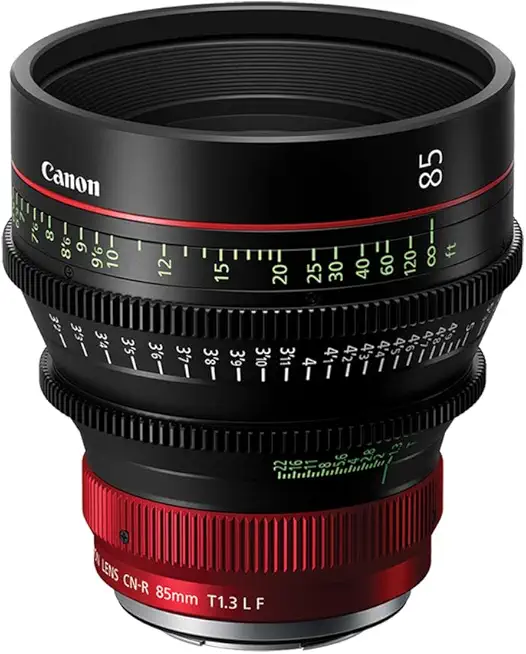
Canon CN-R 85mm T1.3 L F Cinema Prime (RF mount)
Ultra-fast short telephoto delivering dramatic shallow depth, smooth background separation and precise focus for professional narrative and portrait work.
Check PriceThe Canon CN-E cinema prime set (14mm T3.1, 24mm T1.5, 35mm T1.5, 50mm T1.3, 85mm T1.3, 135mm T2.2) is Canon’s benchmark cine-prime lineup, built around consistent form and operation for narrative and commercial work. As a working cinematographer, I appreciate that the matching gear and balanced weight let you swap lenses quickly on set without recalibrating follow-focus positions.
Optically these lenses are very sharp even wide open; the 50mm T1.3 is specifically noted for sharpness comparable or even superior to Canon stills lenses. The 11-blade iris produces smooth, round bokeh that helps backgrounds melt away at T1.3–T1.5, which is perfect when you want subject separation without harsh highlight shapes.
Build and handling are decidedly cine-oriented: robust metal construction, smooth manual iris and geared focus rings with a long throw (approx. 300° rotation) give you the tactile feel necessary for precise focus pulls. Do note the EF mount versions are lighter but less rugged than PL, and some rear elements (the 85mm in particular) are exposed — handle rear elements and caps with care.
If you’re a professional or advanced cinematographer who needs reliable, consistent primes and traditional manual cine control, this set is an excellent core kit. Hybrid shooters who rely on autofocus or need very lightweight run-and-gun glass may find the manual-focus-only workflow and heavier cine build less suited to their needs.
- Excellent sharpness wide open — 50mm T1.3 highlighted
- Smooth, precise focus & iris rings (approx. 300° throw)
- 11‑blade iris for smooth, round bokeh
- Consistent cine build and gear positioning for fast swaps
- EF mount less rugged than PL
- Bulky lenscaps can block focal length markings
2. Canon EF 24-105mm f/4L IS II USM

Canon EF 24-105mm f/4L IS II USM 1380C002
Versatile standard zoom with constant aperture, dependable image stabilization and quick autofocus for travel, event and everyday professional use.
Check PriceThe Canon EF 24-105mm f/4L IS II USM is a true workhorse for EF-mount videography—an all-in-one zoom that covers everyday shooting needs with a dependable 24–105mm range. For run-and-gun setups and solo operators it gives you flexibility without swapping glass mid-shoot.
Its Dual Pixel AF provides quiet, smooth continuous focus tracking, which is a huge advantage when you’re shooting solo or capturing unpredictable events. The AF is well-suited to hybrid workflows and keeps subjects sharp while you concentrate on framing and movement.
Optically, the constant f/4 aperture means it performs best in well-lit or outdoor scenarios where you don’t need extreme shallow depth of field. That aperture will limit low-light performance and DOF control, so if you live in dim interiors or chase very creamy bokeh, you’ll feel that trade-off.
Build-wise it’s reassuringly L-series: solid construction, image stabilization that reduces handheld shake, and quiet USM mechanics that are friendly to on-camera audio. Its manageable weight makes it usable handheld and on gimbals for longer periods without excessive fatigue.
In practice this lens is ideal for event, documentary, and corporate videographers who want one versatile piece of glass that autofocuses reliably and steadies footage. Be mindful at extreme zoom settings where some chromatic aberration and edge softness have been reported, and test critical shots if you plan heavy cropping.
- Reliable Dual Pixel autofocus for video
- Versatile 24–105mm focal range
- Image stabilization reduces handheld shake
- Quiet mechanics suitable for on-camera audio
- Max aperture f/4 limits low-light and DOF
- Chromatic aberration and edge softness at extreme zoom
3. Canon EF 85mm f/1.4L IS USM

Canon EF 85mm f/1.4L IS USM 2271C002
Bright portrait tele with optical stabilization and silky bokeh, designed for tack-sharp subject isolation in low-light conditions.
Check PriceThis Canon EF 85mm f/1.4L IS USM is widely regarded as one of Canon’s sharpest EF lenses, delivering exceptional image quality and beautiful bokeh that serve portrait and cinematic work very well. Its optical rendering and color reproduction make skin tones and highlights pop without looking artificial.
Image stabilization in a fast 85mm prime is uncommon, and here it genuinely helps for handheld video and run‑and‑gun portraiture. That IS gives you more usable frames at slower shutter speeds and helps smooth small camera movements during interviews or walking shots.
The lens pairs strong color rendition with fast, quiet autofocus, which is ideal for hybrid shooters who need stills and video performance from the same glass. The AF is smooth enough for live productions while still preserving pleasing background separation.
Build quality is robust and weather‑sealed, so it stands up to real‑world shooting conditions. The mechanics are solid and the autofocus is designed to be unobtrusive on set.
At roughly 650 g, the lens has a reassuring heft that can stabilize the camera in hand and on small rigs. That extra weight can actually help reduce small shakes, though it’s worth noting for long handheld days.
Practically, this is a great choice for portraitists and hybrid filmmakers who want fast aperture, IS, and autofocus in one package. It’s especially useful when you need cinematic shallow‑DOF without giving up AF or stabilization.
Do keep in mind it’s slightly less sharp wide open than some cinema primes; many shooters stop down to around f/2 for peak crispness. Also, extended handheld use can cause fatigue because of its weight.
Overall, if you value image stabilization and reliable AF in a fast portrait prime, this lens will serve you well—just plan your shooting days around its weight and optimal aperture behavior.
- Outstanding sharpness and image quality
- Effective image stabilization for handheld shooting
- Creamy, cinematic bokeh
- Fast, reliable autofocus for hybrid workflows
- Heavier weight can cause fatigue with extended handheld use
- Slightly less sharp wide open—many stop down to ~f/2
4. Canon EF 35mm f/1.4L II USM

Canon EF 35mm f/1.4L II USM 9523B002
Fast wide-angle lens offering exceptional sharpness, beautiful background rendering and reliable autofocus for street, environmental portraiture and low-light shooting.
Check PriceThis Canon EF 35mm f/1.4L II USM is a pro-grade wide prime that I often recommend to hybrid shooters who need cinematic look with stills-level sharpness. It delivers razor-sharp images and true edge-to-edge resolution, so your subject stays crisp even at the frame edges.
Optically it uses Canon’s Blue Spectrum Refractive optics to control chromatic aberration, which is a real advantage when you’re shooting high-contrast scenes or backlit interviews. The fast f/1.4 aperture gives you low-light headroom and subject separation while a 9-blade aperture renders very smooth, pleasing bokeh.
In practical use this lens excels for wedding and documentary videographers because the 35mm field of view is versatile — wide enough for environmental shots, yet intimate for narrative coverage. The build is sturdy and weather-sealed, so it holds up on location and in mixed conditions.
Handling is more DSLR-style than cine-style: it’s heavier than previous versions but still manageable for handheld work, and it’s an autofocus-driven design which benefits run-and-gun shooters and hybrid workflows. If you need geared focus rings or whisper-quiet manual focus for follow-focus systems, this is where a cine lens would differ.
Overall, if you want top optical quality, cinematic bokeh, and a versatile wide-angle that works for both photo and video, the 35mm f/1.4L II is a very strong choice for hybrid professionals and documentary shooters.
- Razor-sharp wide-open performance at f/1.4.
- Smooth bokeh from 9-blade aperture.
- Versatile focal length for documentary and narrative work.
- Sturdy, weather-sealed build.
- Heavier lens can tire handheld shooters.
- AF may be noisy or less ideal for on-camera audio compared to cine glass.
5. Irix Cine Lenses For Canon EOS R

Irix Cine 30mm T1.5 Cinema Lens (Canon EF mount)
Bright wide lens crafted for filmmaking with smooth manual focus, minimal breathing and high-contrast rendering for immersive on-set imagery.
Check PriceDesigned specifically for Canon EOS R mirrorless cinema cameras, the Irix Cine line is a refreshing option when you need lightweight, high-quality glass that won’t weigh down a gimbal or your shoulder. Optically these lenses deliver excellent optics, high contrast, and superior color saturation — the kind of look that translates straight into a clean, filmic image without heavy grading work.
Physically they’re built for real-world shooting: fully weather sealed with a rugged, durable casing that stands up to outdoor and documentary use. That weather sealing combined with a cine-focused design makes them predictable and repeatable on mirrorless systems, which is a big plus when you’re switching mounts or working fast on location.
What I love most as a shooter is the weight and balance — the lineup is intentionally lightweight and compact, ideal for handheld and gimbal run-and-gun setups. That means longer days without the usual fatigue, and easier stabilizer tuning. The lenses feel purpose-built for EOS R filmmakers who want cinema-style rendering without the bulk.
Be aware of the trade-offs: Irix is a less common brand, so you won’t find the same long-term pro track record as some legacy cine makers. They’re also manual focus only, so if your workflow depends on autofocus or fast single-operator AF pulls, plan for a follow-focus or an operator comfortable with manual pulling.
- Outstanding sharpness and contrast tailored to EOS R video
- Robust weather sealing
- Lightweight and compact—great for handheld and gimbal
- Designed specifically for mirrorless cinema compatibility
- Less common brand; less long-term pro testing
- Manual focus only—learning curve for AF-dependent users
Choosing Canon Cine Lenses For Low Light
When I choose cinema lenses for low‑light work, the first spec I check is the T‑stop. Cinema lenses use T‑stops because they measure actual light transmission, not just theoretical aperture. For most dim environments I aim for T1.3–T2.0 to keep ISO and noise under control.
Primes are the fastest tools in your kit. Canon’s CN‑E 50mm T1.3 and CN‑E 85mm T1.3 are go‑to options for interiors and night exteriors. They give usable exposure and beautiful subject separation, but remember a shallower DOF makes precise focus essential.
If versatility is a priority, pick constant‑T zooms like the CN‑E 14‑35mm T1.7 or CN‑E 31.5‑95mm T1.7. Constant T‑stops keep exposure predictable across the focal range, so you can reframe without changing lighting or ISO. T1.7 costs you a bit of light versus T1.3 but buys flexibility on set.
Match the lens image circle to your sensor size. Super‑35 optics on a full‑frame body can vignette or suffer edge falloff. Choosing the correct coverage prevents surprise shadowing and preserves usable light across the frame.
Minimize focus breathing and favor long, smooth focus throws. In low light you often rely on subtle pulls; lenses that hold consistent framing and have geared focus/iris rings make those pulls reliable. Manual control beats a noisy, hunting autofocus when every stop matters.
Build quality and color consistency matter more than you might expect. Weather sealing protects shoots that run late into the night, and matched color across a set simplifies grading. Durable gears and smooth iris action keep you rolling when conditions get tough.
Finally, consider metadata‑capable glass (Cooke/i, ZEISS eXtended Data) if your workflow benefits from lens data in post. Accurate T‑stop reporting and lens metadata speed grading and keep exposure decisions honest when working at the edge of available light.
Selecting Canon Cine Lenses For Shallow DOF
Shallow depth of field is the quickest way to give images a cinematic feel. It’s about separating your subject from the background with light and focal choices rather than heavy processing.
Start by choosing lenses with wide T-stops. Cine primes like Canon’s CN-E 50mm and 85mm T1.3 are the obvious tools; they deliver true light transmission and maximum blur that stills f-stops can’t guarantee.
Focal length and camera-to-subject distance do a lot of the heavy lifting. Moving from 50mm to 85mm or 135mm compresses the scene and yields a shallower plane of focus at the same aperture, and a full-frame sensor will render noticeably shallower DOF than Super 35.
Bokeh quality matters almost as much as degree of blur. The CN-E set’s 11-blade iris gives round, creamy out-of-focus highlights that read as cinematic on camera; when testing glass, watch how highlights and midtones roll off so the subject remains pleasingly isolated.
Precise focus control is non-negotiable at T1.3. Those long, ~300° focus throws on cine lenses let you hit tiny marks reliably, and minimal focus breathing keeps framing stable during pulls, so factor in a follow-focus or a practiced puller when planning shots.
Remember the trade-offs: shooting wide open means heavy ND filtration in daylight and a much slimmer margin for focus error. Cine primes are heavier than stills glass, so use support gear to maintain sharpness and reduce operator fatigue, and always test lenses on your camera and sensor before committing to a look.
Finally, match lenses across your kit for similar color, sharpness, and iris character so cuts feel natural. Check mount compatibility and be wary of adapters that can alter focus or aperture behavior; for consistent, beautiful shallow DOF, prioritize fast primes and plan your focus pulls as carefully as your lighting.
What People Ask Most
What are the best cinema lenses for Canon?
The best cinema lenses depend on your workflow and shooting needs; many filmmakers choose lenses that offer consistent color, robust build, and manual control. Consider prime sets for narrative work and versatile zooms or mirrorless-focused cine glass for run-and-gun or hybrid shoots.
What are the best prime cinema lenses for Canon?
Canon’s CN-E prime series is widely regarded for sharp optics, geared focus rings, and smooth iris control favored by professionals. Primes generally deliver the widest apertures and most consistent optical character for cinematic work.
What are the best zoom cinema lenses for Canon?
Good cinema zooms provide a constant aperture and reliable coverage for flexible shooting situations, and certain EF L-series zooms are popular for hybrid video work. Choose zooms that match your sensor size and offer stable focus and exposure behavior.
Can I use Canon EF lenses on Canon Cinema EOS cameras?
Yes, EF lenses can be used on many Cinema EOS bodies that accept the EF mount, but you should verify mount compatibility and any required adapters. Be mindful of mechanical differences and handling considerations when mixing stills lenses with cine workflows.
Are Canon RF lenses suitable for cinema work?
RF lenses can be suitable for cinema work, especially on mirrorless cinema cameras, but compatibility and cine-specific features vary by model. Using adapters or selecting lenses designed for video helps ensure consistent focus and aperture behavior.
What is the difference between cinema lenses and Canon stills lenses?
Cinema lenses are built for manual control with geared focus and iris rings, long focus throws, and consistent color and build across a set. Stills lenses prioritize autofocus and compact size, which can make them less ideal for traditional cinematic focus and iris operation.
Which Canon cinema lenses do professional filmmakers use?
Professional filmmakers often favor Canon’s CN-E primes for narrative and commercial work due to their consistent performance and cine-oriented controls. Others mix in EF L-series zooms or mirrorless-optimized cine lenses depending on the project and desired workflow.
Conclusion For Best Cinema Lenses For Canon
This guide has walked through the practical trade-offs you’ll face when choosing Canon-compatible cinema glass, helping you prioritize what matters for your shoots.
Match lens choice to your workflow—traditional cine setups favor manual, consistent glass, while hybrid and run-and-gun shooters often benefit from autofocus and versatile zooms, and mirrorless systems have their own optimized options.
Let aperture (T-stop), focal length, and reliable focus control be your primary decision drivers for low-light work and shallow depth of field rather than marketing claims.
Weigh build, handling, and the pros/cons notes against your shooting style and production demands so your kit supports storytelling, portability, and post workflow needs.
If you want to sharpen your selection process and improve your shooting skills, read more articles on the site for practical tips, comparisons, and workflow advice.
Have questions or real-world experiences to share? Leave a comment below—we usually reply within a few hours.





0 Comments