
Hunting for a mirrorless camera that won’t weigh down your bag but still delivers stunning travel photos and smooth video?
This guide simplifies the search by comparing portability, image quality, video features, lens flexibility, and beginner-friendliness for travelers.
You’ll see options from full‑frame powerhouses shrunken for travel to pocketable fixed‑lens compacts and ultra‑compact interchangeable systems. There’s also truly entry‑level gear for those who want simple controls and lightweight setups.
We evaluate the trade‑offs that matter on the road: sensor size versus weight, lens choices versus convenience, and video chops versus battery life. Autofocus reliability, stabilization, ergonomics, and image quality in low light also get special attention.
Beyond lab numbers we focus on how cameras perform in real travel scenarios, like busy markets, long hikes, and dim cafes. That includes handling, menu simplicity, and what accessories you’ll actually need to carry.
Flip through this guide to find compact mirrorless solutions matched to different travel styles, shooting goals, and budgets. By the end you’ll know which small camera helps you travel lighter while keeping your photos and videos memorable.
We also include practical packing tips for batteries, memory cards, and a small tripod so you aren’t caught off guard. Read on for travel‑tested picks and concise buying advice that helps you shoot better instead of carrying more gear.
1. Sony Alpha 7C II Overview
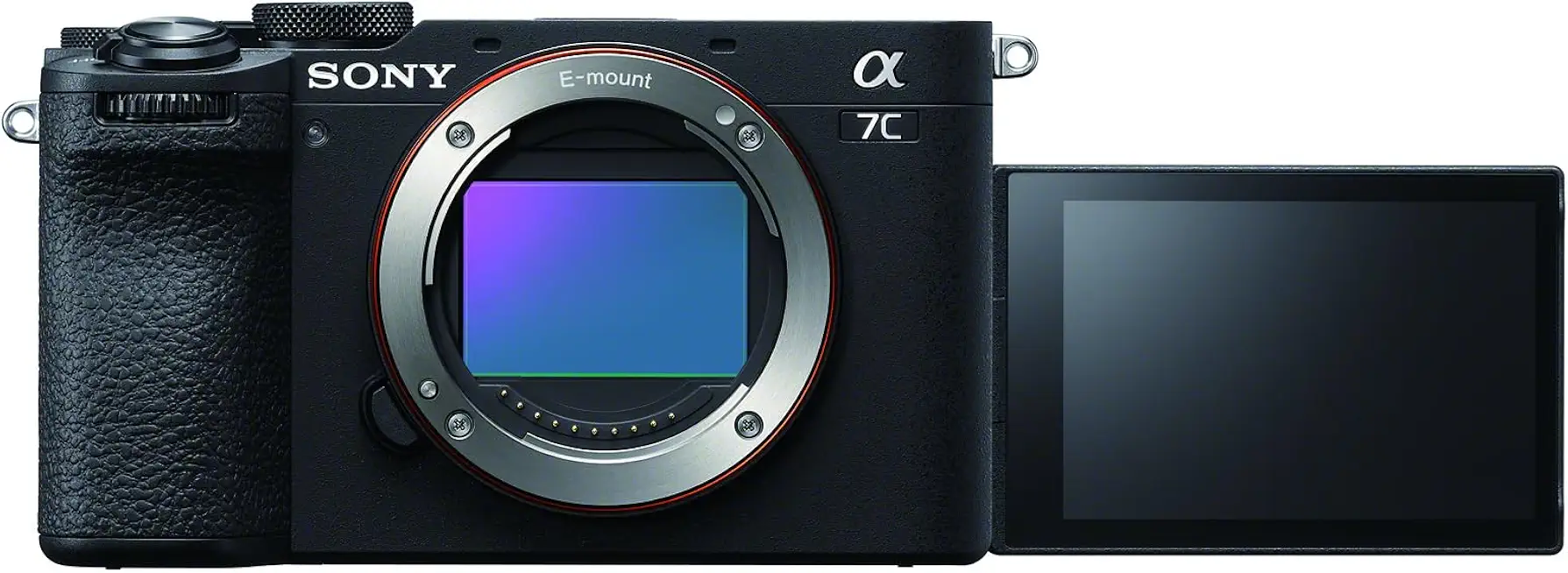
Sony Alpha 7C II Full-Frame Camera
Compact full-frame powerhouse delivering exceptional low-light performance, fast autofocus, stabilized 4K video, and professional image quality for travel and hybrid shooters.
Check PriceI’ve carried the Sony Alpha 7C II on multi-day trips and it truly delivers full-frame image quality in a body that won’t weigh you down. It’s one of the smallest and lightest full-frame mirrorless cameras, so you can shoot all day without the fatigue that comes with larger setups.
The flip-out screen is a game-changer for travel video and vlogging. Being able to monitor yourself or compose at odd angles makes solo shooting far easier and more reliable.
Autofocus on the 7C II is impressively sharp and trustworthy, even in low light. That reliability means fewer missed moments when you’re racing golden hour light or capturing candid street scenes.
Its discreet size helps keep you unobtrusive for street and documentary work, letting you blend into the scene and get more natural expressions from subjects. That small footprint is one of the main reasons I reach for it when I want high-quality results without announcing I’m shooting.
Be mindful that the small grip can feel uncomfortable if you have larger hands and plan on long handheld sessions. Battery life is adequate but average, so I always pack a spare for full-day shoots.
Finally, the E-mount opens a vast lens selection, though truly compact native lens options are limited—so consider how much you value ultimate portability versus lens flexibility. If you want the best full-frame image quality in a travel-sized package, the 7C II is hard to beat.
- Exceptionally compact full-frame quality
- Flip-out screen ideal for video and self-shots
- Excellent autofocus, even in low light
- Discreet size for candid/street shooting
- Small grip uncomfortable for larger hands
- Battery life is average; carry spares
2. Fujifilm X100VI Overview

Fujifilm X100VI
Elegant fixed-lens compact with retro styling, advanced film simulations, outstanding color rendition, and intuitive controls for street and everyday photographers.
Check PriceThe Fujifilm X100VI is a dream for minimalist travelers who want great images without hauling a kit. Its retro styling and extremely compact, lightweight body mean it truly fits in a small bag or a large pocket, so you can keep it with you all day and not miss a shot.
At the heart is a 40MP APS-C sensor that delivers outstanding image quality — sharp files that hold up for large prints and serious cropping. Paired with a fixed 23mm (35mm equivalent) lens, the setup is sharp and virtually distortion-free, making it ideal for streets, landscapes, and everyday travel scenes.
Where the X100VI really shines is in the JPEGs: Fujifilm’s film simulations give you ready-to-share images straight out of camera, saving time on editing while keeping a distinct, attractive look. The optical viewfinder is a joy to use for thoughtful composition, and the camera’s quiet, discreet design is perfect for candid street work.
There are trade-offs to accept. The fixed lens limits flexibility — you’ll need to move physically to change framing — and there’s no touchscreen autofocus, which can slow things down if you’re used to tap-to-focus on moving subjects. Battery life could also be better, so bring spares for long travel days.
- Extremely compact and lightweight
- 40MP APS-C sensor — excellent image quality
- Film simulation modes for great JPEGs
- Quiet shutter and discreet design
- Fixed lens limits versatility
- No touchscreen autofocus
3. Ricoh GR III Overview
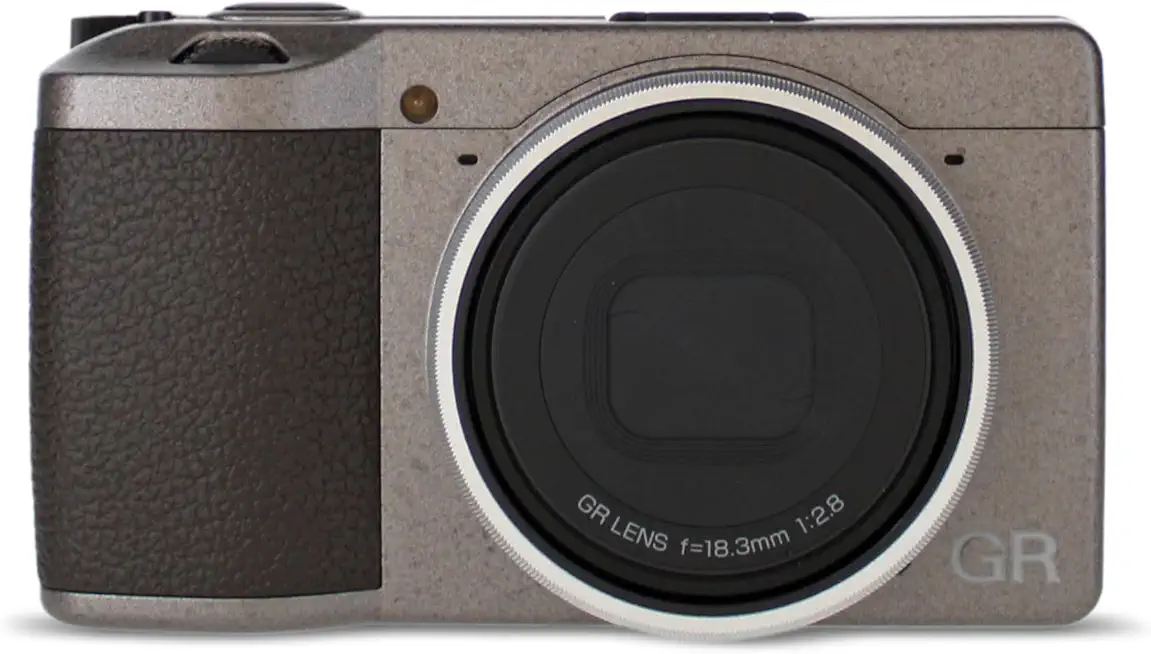
Ricoh GR III Diary Edition
Pocket-sized street camera offering sharp APS-C image quality, discreet handling, and personalized diary-style presentation for creative everyday shooting.
Check PriceThe Ricoh GR III is the camera I reach for when I want to travel light without sacrificing image quality. It’s truly pocketable—literally fits in a jeans pocket—and packs a 24MP APS-C sensor paired with a sharp 28mm (full-frame equivalent) lens, so your travel shots look detailed and punchy straight out of the bag.
Its “snapshot” DNA matters in real shooting: minimal lag and extremely fast autofocus mean you capture spontaneous moments without fumbling. The lens even retracts automatically when powered off, so it’s unobtrusive and ready the instant you need it.
There are trade-offs to be aware of. The fixed lens is relatively slow at f/2.8, so low-light shooting and creamy shallow-depth backgrounds are more limited than on faster lenses. It’s also not weather-sealed, so I avoid shooting it in heavy rain or dusty conditions unless I protect it.
What makes the GR III a favorite for street and documentary travel work is the combination of discretion and responsiveness: fast, quiet operation and a minimalist, distraction-free design let you blend into a scene and focus on composition. Battery life is modest, so carry a spare if you plan long days of shooting, but if portability and image quality are your priorities, this camera is hard to beat.
- Truly pocketable—fits in a jeans pocket
- 24MP APS-C with sharp 28mm (full-frame equiv) lens
- Fast, nearly silent autofocus—great for candid shots
- Minimalist, distraction-free design
- Not weather-sealed
- Slower f/2.8 lens limits low-light and shallow-DOF
4. Fujifilm X-M5 Overview

Fujifilm X-M5 Body
Lightweight mirrorless body delivering high-resolution images, fast autofocus, in-body stabilization, and versatile handling for enthusiast and travel photographers.
Check PriceThe Fujifilm X-M5 is an ultra-compact APS-C mirrorless that I reach for when weight and handling matter. It’s noticeably slimmer and lighter than traditional bodies, so it slides into a small travel bag without feeling like dead weight.
Video shooters will love the 6K capability and Fujifilm’s latest processor powering fast, reliable autofocus. In practice that means clean 6K footage and confident tracking of moving subjects during walks, markets, and city shoots.
Stills benefit from strong image quality even though the sensor is a touch older. Fujifilm’s film simulations remain one of my favourite tools for producing instant, shareable photos with pleasing colour and tone straight out of the camera.
Build quality is solid and feels premium in hand, so it survives the bumps of travel. It’s also supported by a range of compact lenses, giving you the flexibility of an interchangeable system without bulk.
There are trade-offs to consider. There’s no electronic viewfinder, so you’ll be composing on the rear screen, which may be awkward in bright sun or for fast handheld framing. Battery life is competitive, but if you’re a heavy shooter I’d still pack a spare.
Overall, the X-M5 is an excellent choice for travelers who want interchangeable-lens flexibility in the smallest possible package, strong video, and dependable autofocus — as long as you’re comfortable composing on the rear screen and accepting a slightly older sensor.
- Exceptionally compact and lightweight
- 6K video and advanced autofocus
- Fujifilm film simulations for great JPEGs
- Solid, premium build
- No EVF; rear-screen composition only
- Slightly older sensor compared to newer models
5. Canon EOS R50 Overview

Canon EOS R50 with RF-S 18-45mm f/4.5-6.3 IS STM
Compact beginner kit with responsive autofocus, versatile 18–45mm zoom, 4K video capability, and user-friendly features ideal for vlogging and learning.
Check PriceThe Canon EOS R50 is delightfully pocketable — one of the smallest and lightest entry‑level mirrorless bodies I’ve used — and will comfortably slip into a jacket pocket when paired with a pancake lens. That compactness makes it an easy companion for daylong wandering when you want to travel light without sacrificing creative control.
As a working photographer, I appreciate how beginner‑friendly the R50 feels straight away: the interface is clean, the touchscreen is responsive, and autofocus is reliable for fast-moving street and candid moments. You won’t wrestle with menus, which makes it ideal for travelers who’d rather shoot than tinker between frames.
Image quality stands out for its pleasing color science and detail, producing attractive photos ready for social sharing and casual prints. For vacation snaps and memory‑keeping, the JPEGs and colors will often need minimal editing — a real time‑saver on the road.
The flip‑out screen and built‑in flash are practical touches: the articulating display helps with selfies and vlogging, while the flash is handy for indoor or low‑light fill without hauling extra gear. These features make the R50 a sensible hybrid for someone who wants both stills and casual video capability.
There are a few tradeoffs: battery life is modest, so bring a spare for longer outings, and the minimal button layout means power users will miss quick‑access controls. The lens lineup is still growing, with fewer ultra‑compact options today, but for most first‑time travelers and casual shooters the R50 strikes a strong balance of size, ease, and image quality.
- Ultra-compact and lightweight
- User-friendly interface & responsive touchscreen
- Excellent color and image quality
- Flip-out screen and built-in flash
- Minimal button layout—limited quick controls
- Modest battery life—carry spares
Essential Travel Photography Tips
When I travel I think like a packer first and a photographer second. Choose a camera and lens combo that you’ll happily carry all day. A tiny full-frame body or a pocketable fixed‑lens is often a better choice than hauling a heavy kit that ends up in your hotel room.
Primes are my go‑to because they’re small, fast, and force you to move and frame deliberately. A 28–35mm equivalent covers most travel scenes, while a 50mm brings flattering portraits. If you want absolute minimalism, a fixed‑lens pocket camera gives you superb image quality without the extra weight.
Light is everything, so learn to read it. Expose for highlights in contrasty scenes and let shadows fall where they must; cameras with wide dynamic range and good high‑ISO performance make this easier. Stabilization matters too—IBIS or a stabilized lens will save you in low light, and a tiny tabletop tripod turns shaky late‑night shots into keepers. Always carry at least one spare battery and an extra memory card.
For video and solo shooting I prioritize a flip‑out screen and reliable autofocus. Good audio is often overlooked, so bring a compact external mic if you plan to vlog. Lastly, shoot more than you think you need and edit ruthlessly. Travel photography is about moments, light, and curiosity—not collecting gear. Travel light, shoot deliberately, and let the place guide your framing.
Video Features for Travel Vloggers
When I travel with video in mind, the first thing I look for is a screen I can actually see while I film. A fully articulated or flip-out screen is non-negotiable for solo vlogging — it lets you frame, check exposure and engage with the camera without guessing. If you plan run-and-gun shooting, being able to monitor yourself saves rehearsal time and keeps energy natural on camera.
Stabilization is the second make-or-break feature. In-body image stabilization (IBIS) or optically stabilized lenses dramatically reduce the need for a gimbal on short trips. If your camera has neither, budget for a small gimbal or practice steady handheld techniques and short, deliberate moves to keep footage watchable.
Autofocus that tracks faces and eyes reliably is worth its weight in gold for travel vlogs. Fast continuous AF lets you move through crowds, walk-and-talk, or cut quickly between scenes without losing focus. I prioritize systems with proven subject tracking so I can focus on storytelling rather than peeking at the screen every few seconds.
Good audio matters more than you think; viewers forgive soft footage but not bad sound. Choose a camera with a mic input or a hot-shoe that accepts an external microphone. A small shotgun mic or a compact wireless lavalier is a travel-friendly upgrade that instantly improves perceived production value.
Resolution and frame-rate flexibility give you creative options: 4K at 24/30fps for cinematic base clips, and 60/120fps for useful slow motion. If you color grade, 10-bit recording is a big plus, but it also increases file sizes and battery drain — factor that into your storage and power plans.
Finally, think about expandability and weight. Pick a system that accepts the small accessories you’ll actually use: a tiny tripod, ND filters, an external mic, and spare batteries. Keep the kit lean; the best camera for travel is the one you’ll carry all day, not the one that looks best on paper.
What People Ask Most
What are the best compact mirrorless cameras for travel photography?
The best travel camera matches your priorities for size, image quality, and video. Look for models that balance portability, reliable autofocus, and a lens selection that suits your shooting style.
Which compact mirrorless camera has the best image quality for travel?
Larger sensors often provide superior image quality, but many compact APS-C and high-resolution models also deliver excellent results. Choose a camera whose image rendering and lens performance meet your needs for prints and editing.
Which compact mirrorless camera is best for low-light travel photography?
Low-light capability depends on sensor performance and lens speed rather than body size alone. Opt for cameras with good high-ISO behavior and fast optics to handle dim scenes effectively.
What features should I look for in a travel-friendly mirrorless camera?
Prioritize a lightweight body, dependable autofocus, and battery life that matches your shooting habits. Useful extras include an articulating screen, image stabilization, and access to compact lenses.
Which lenses are essential for travel with a compact mirrorless camera?
A versatile wide-to-normal prime or zoom plus a small telephoto option will cover most travel situations. Lightweight, fast primes are helpful for low light and street work while a compact zoom adds flexibility.
How important is sensor size in compact mirrorless cameras for travel?
Sensor size influences image quality, dynamic range, and depth-of-field control, but it is only one factor to weigh. Balance the advantages of a larger sensor with the desire for portability and the lenses you plan to carry.
Are compact mirrorless cameras better than DSLRs for travel?
Mirrorless cameras often offer smaller bodies, electronic viewfinders, and modern autofocus that benefit travel photography. DSLRs remain capable and familiar to many users, so choose the system that fits your comfort and lens needs.
Best Compact Mirrorless Travel Camera Conclusion
Choosing the right compact mirrorless camera ultimately comes down to your priorities: portability versus sensor size, fixed versus interchangeable lenses, video needs, and your comfort level as a shooter.
If you value simplicity and minimal weight, favor truly pocketable bodies or fixed-lens options; if versatility is key, accept a slightly larger kit with interchangeable lenses.
Plan for spares—extra batteries and memory cards—and keep your kit lean to avoid fatigue during long travel days.
Above all, remember that light and composition make the difference between a snapshot and a story, so focus on practicing those skills as much as on gear choices.
If you want to sharpen your techniques or refine gear decisions, read more articles on the site to build practical skills and confidence at your own pace.
Have a question or need a quick recommendation? Leave a comment and we usually reply within a few hours.


0 Comments