
What if your child’s next adventure could be captured from the sky, guided by their own thumbs? Choosing the best drone for kids shouldn’t mean wading through tech jargon or risking safety for thrills; a good starter drone can be safe, simple, and seriously fun.
This guide pares the market down to five kid-friendly picks that balance play with protection. We’ll focus on the essentials parents care about: safety, ease of use, and durability, with camera performance and battery life framed as useful bonuses rather than deal-breakers.
Every recommendation here favors beginner-friendly controls — think simplified takeoff, training modes, and propeller guards that reduce accident risk. We also flag which designs suit supervised indoor flights versus backyard play, because parental involvement is part of the equation, not an afterthought.
Safety frames every choice because a child’s first drone should build confidence, not worry. Expect options that fit different ages and temperaments, from palm-sized starters to beginner kits for kids ready to advance their skills, paired with tips to make practice safe and fun.
Whether you’re buying a birthday gift or planning a weekend STEM project, this article helps you pick a trustworthy first drone. Think like a photographer: prioritize steady control, protective design, and simple learning curves, then read on to find five great ways to get your kid off the ground safely.
1. DJI Neo Kid-Friendly Option

DJI Neo Mini Drone 4K 135 g Controller-free
Ultralight aerial camera captures crisp cinematic footage with reliable stabilization and intuitive smartphone piloting—perfect for travel and spontaneous shoots.
Check PriceAs a photographer who’s shot everything from backyard blowouts to family hikes, the DJI Neo stands out as a genuinely kid-friendly camera drone. Its controller-free, app-based, and FPV flight modes mean a child can get airborne quickly — and parents can step in with a controller if needed.
The Neo’s “selfie drone” automatic tracking (follow-me) is particularly useful for capturing candid moments without advanced piloting skills. For family outings and active kids, that reliable automatic tracking in open spaces turns chaotic action into usable footage with minimal effort.
Physically, the Neo is compact, palm-sized and lightweight, so it’s easy to toss into a daypack. Built-in propeller guards give extra safety during indoor practice or inevitable bumps, reducing injury risk during crashes and making it easier to teach beginners in confined spaces.
There are trade-offs to be aware of. The camera quality is adequate but not exceptional — fine for social posts and memory-making, but don’t expect pro-grade detail. Battery life is relatively short, so plan on swapping batteries or keeping flights brief during outings.
- Extremely easy to fly (app, controller, FPV)
- Reliable automatic tracking in open spaces
- Compact and travel-friendly
- Propeller guards reduce injury risk during crashes
- Camera quality adequate but not exceptional
- Relatively short battery life
2. DJI Flip For Kids
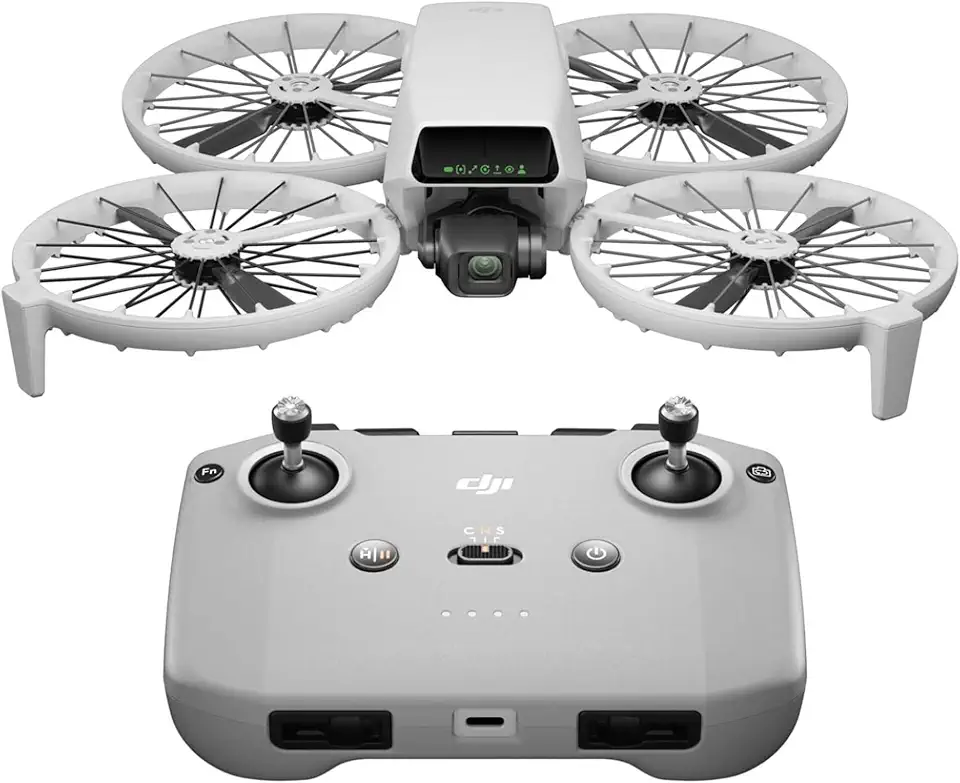
DJI Flip RC-N3 4K Drone under 249 g 3-axis gimbal 31 min flight
Foldable aerial camera delivers pro-level stabilized footage, extended airborne time, responsive controls and compact portability for travel and vlogging.
Check PriceAs a photographer who tests kit with kids in mind, the DJI Flip stands out for a reason: its rugged, folding, family-friendly design makes it genuinely easy to pack and grab for outings. The folding chassis is practical for storage and transport, so it’s the kind of drone you actually bring to a family picnic or a weekend hike.
What most impresses me is the mechanical stabilization — it yields smooth, high-quality video and photos even when the pilot is a beginner. That kind of stabilization outperforms many peers and means fewer shaky takes and more usable clips for family memories or simple social videos.
On the flight side, DJI Flip gives real peace of mind: reliable GPS return-to-home and a sturdy controller with a strong outdoor signal both reduce the worry of losing the craft. For parents supervising young flyers, those features translate into safer, more predictable sessions outdoors.
Practical touches matter too: the onboard 2GB storage is a lifesaver when you forget a MicroSD card, and the unit stays under the 250g limit, which simplifies some local rules. Do note that the size and weight, while legal-friendly, can still feel a bit bulky to very small children.
It’s mostly a winner for families and beginners who want solid image quality and trustworthy electronics, but it does have trade-offs. The Flip requires a phone as a monitor, and the folding mechanism can be fiddly for younger kids; battery life is described as decent but not exceptional, so plan for moderate session lengths.
- Mechanical stabilization for smooth video/photos
- Reliable GPS return-to-home
- Robust controller with strong outdoor signal
- Onboard 2GB storage backup
- Requires a phone as a monitor
- Folding mechanism can be fiddly for younger children
3. HolyStone HS210 Beginner Pick
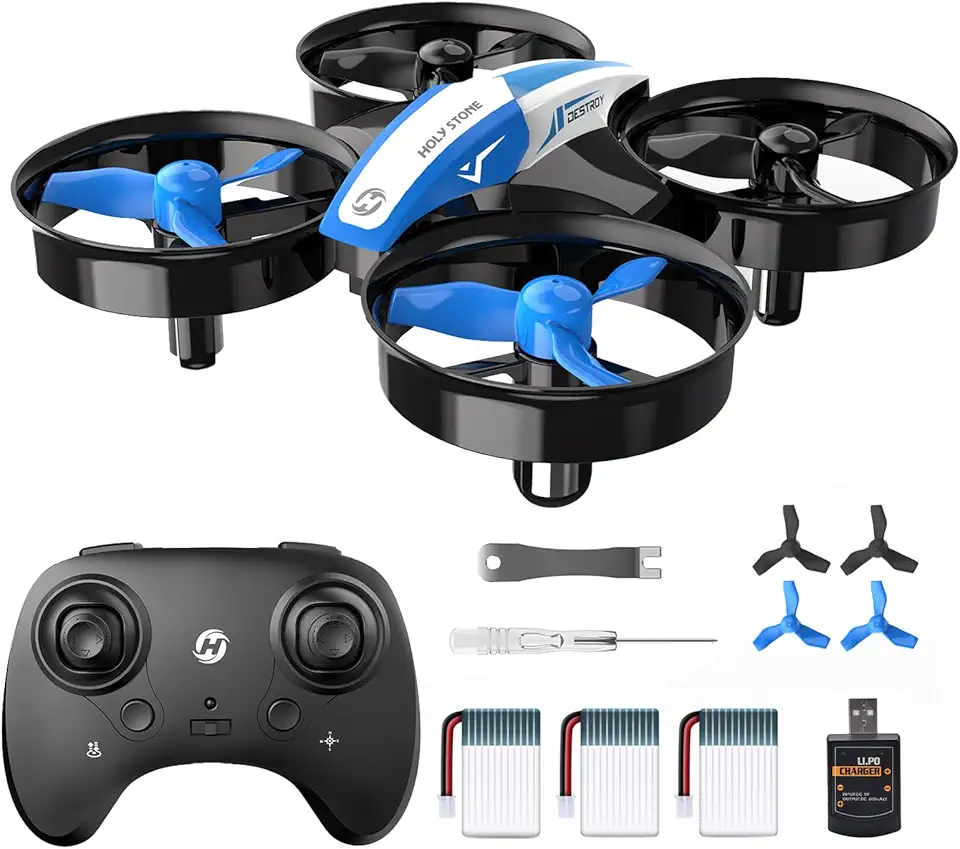
Holy Stone HS210 Mini Nano Quadcopter 3 batteries
Tiny indoor flyer with included spare power packs for extended play; durable frame, easy controls, and safe prop guards ideal for beginners and kids.
Check PriceAs a photographer who’s tested many entry-level drones, the HolyStone HS210 stands out for what matters most to parents buying for kids: toughness and a decent camera. Its durable build soaks up minor crashes and rough handling, which means fewer repair headaches and more uninterrupted playtime for beginners. The camera is described as “surprisingly good” for the price, so you can capture casual shots and social-media clips without fuss.
Flying this drone is forgiving and approachable. The controller is responsive and easy to use, which helps new pilots learn orientation and basic maneuvers quickly. Because it’s lightweight and portable, it’s simple to pack for park sessions or backyard practice, and kids aren’t weighed down by bulky gear.
There are limits to keep in mind. Battery life is short, so plan for shorter flights or bring extra batteries if you want longer outings. It can also be wobbly in windy conditions, so it’s best suited to indoor flying or calm-weather days until skills improve.
Overall, the HolyStone HS210 is a solid beginner pick that prioritizes durability and ease of use while delivering better-than-expected camera results at an affordable price. If you want a forgiving, travel-friendly drone to teach a child the basics and capture simple footage, this one’s a practical, mostly worry-free option.
- Robust construction ideal for rough handling
- Good camera performance for casual use/social media
- Engaging, responsive controller
- Lightweight and easy to carry
- Short battery life
- Wobbly in windy conditions
4. HoverAir X1 Kid-Friendly Choice

HOVERAir X1 Foldable Camera Drone Combo
All-in-one foldable aerial kit featuring stabilized camera, durable carrying case, and beginner-friendly flight modes for effortless content creation on the go.
Check PriceAs a photographer who’s spent a lot of time chasing light with compact gear, I appreciate the HoverAir X1’s palm-sized design — it’s genuinely easy to slip into a backpack or a pocket and bring along for family outings. The built-in propeller guards give real peace of mind around kids; they lower the risk of injury during indoor flights and make those first crashes much less stressful.
The X1 can take off and land from the palm, which is a small feature that makes a big difference for very young pilots learning coordination. With parental supervision, that accessibility helps kids build confidence quickly and keeps launches consistent for better practice sessions.
On the image side, the camera is adequate for casual use and social media or YouTube clips — not something I’d use for paid work, but perfectly fine for documenting adventures and getting fun aerial family footage. Its lightweight build and travel-friendly nature mean you’re more likely to bring it along and actually use it, which matters far more than having a heavy, high-end rig that stays at home.
Be realistic about limitations: battery life is short, so plan for short flights or bring spare batteries if you want longer sessions. Also, the X1 can be wobbly in windy conditions, so reserve it for calm days or indoor practice until controls are well learned.
- Built-in propeller guards
- Palm-sized with palm takeoff/landing
- Adequate camera for social media/YouTube
- Lightweight and travel-friendly
- Short battery life
- Wobbly in windy conditions
5. BetaFPV Cetus Kit Starter Set

BETAFPV Cetus Pro FPV Kit with LiteRadio 2 SE transmitter VR02-ready
Complete beginner-friendly racing bundle with responsive radio, goggles-ready compatibility, intuitive setup software, and modular components for immersive, precise piloting.
Check PriceThe BetaFPV Cetus Kit is a true starter set for kids who want to get into FPV flying. The kit includes everything needed to get started, so you won’t be hunting for extra parts the first time you introduce a child to first-person view flying.
Build quality is robust and performance is reliable for beginners, which makes it forgiving during the learning curve. Included accessories — extra batteries and spare propellers — are especially useful for extended play and hands-on learning without long downtime.
As a photographer I’ll say the onboard camera is adequate for casual use and social media; it won’t replace a stabilized action camera, but it’s perfectly fine for practice flights and sharing fun clips. For kids focused on piloting skill and FPV experience rather than cinematic footage, this is an excellent match.
There are trade-offs to know about before buying: battery life is short, and the craft can be wobbly in windy conditions. If those limitations are acceptable given the strong beginner-friendly kit and included spares, the Cetus Kit is a very practical choice for youngsters learning FPV.
- Complete starter kit ideal for FPV beginners
- Robust construction and reliable performance
- Useful accessories included for extended play/learning
- Adequate camera for casual use
- Short battery life
- Can be wobbly in windy conditions
Choosing The Right Kids Drone
Choosing the right drone for a child is about balancing safety, simplicity and the joy of making pictures. As a photographer I want a machine that helps a kid capture moments without needing advanced piloting skills. Look for models with propeller guards, one-button takeoff/landing, and altitude hold so the craft feels steady while they learn framing and composition.
Age and attention span matter. Around ten years old many kids can pilot independently, younger kids need close supervision and simpler controls. If your child is curious about racing or immersive flying, an FPV starter kit can be a great learning tool, but expect a steeper learning curve and more parental involvement.
Think about where you’ll fly. Indoor practice in a cleared room or gym removes wind and reduces loss risk. For outdoor flights choose open fields away from people, power lines and roads, and keep flights below 400 feet and in line of sight.
Camera quality is tempting, but battery life and durability often matter more for kids. Short flights are normal, so budget for spare batteries and extra propellers. A drone with mechanical or electronic stabilization will give better, usable photos and video with less effort, which keeps kids motivated.
Teach orientation early using visual aids like colored lights or nose markings, and introduce controls gradually—hovering and gentle turns before aggressive maneuvers. Make practice fun: simple photo challenges or small obstacle courses build skill and focus without stress.
Finally, set clear rules and supervise until skills and responsibility are proven. Encourage reading basic safety guidance or taking the TRUST exam to instill good habits. The right drone should make learning safe, photographic results rewarding, and family time memorable.
Who Should Avoid Kids Drones
As a photographer who’s spent years chasing light from rooftops to backyards, I’ll say this plainly: drones are fantastic tools for creativity, but they’re not a one-size-fits-all toy. For some kids and families, buying a drone right now creates more risk and frustration than memorable photos.
Very young children — roughly under eight — often lack the fine motor control and spatial awareness needed to keep a quadcopter safe. A steady thumb and an ability to judge distance are surprisingly essential, and without them crashes and tears usually follow.
Kids who won’t or can’t follow basic safety rules are also poor candidates. If a child routinely ignores instructions, flies toward people or animals, or refuses supervision, a drone can quickly turn into a danger rather than a learning tool.
Family commitment matters as much as the child’s readiness. Drones require time for practice, supervision, and learning the rules — including taking the TRUST exam and following FAA guidelines. If parents can’t commit to hands-on training and monitoring, it’s smarter to postpone the purchase.
Some children with developmental or attentional challenges may struggle without tailored support. That doesn’t mean they’ll never enjoy flying, but they often do better with simplified, highly supervised steps: sensor-stabilized micro-drones, one-button takeoff/landing models, or instructor-led sessions.
If you’re unsure, opt for low-stakes alternatives first: remote-control cars, stabilised camera toys, or phone-camera lessons can build coordination and visual composition skills. Flight simulators and supervised clubs are great ways to test interest without the expense or risk of a full drone.
In short, wait when safety, supervision, or readiness are in doubt. When the time is right, the learning curve and the photos will be that much more rewarding — and a lot less stressful for everyone involved.
What People Ask Most
What is the best drone for kids to learn on?
A beginner-friendly model with simple controls, stable flight, and built-in safety features is usually the best choice. Look for drones designed for new pilots and that support parental supervision.
What age is appropriate for kids to start flying drones?
Appropriate age depends on the child’s motor skills and ability to follow safety rules. Younger children should have closer supervision and simpler controls while learning.
Are drones safe for kids to use?
Drones can be safe when operated with proper safety features and adult supervision. Using propeller guards and practicing in open, controlled spaces helps reduce risk.
Do kids need a license or registration to fly a drone?
Requirements vary by location, so check your local aviation authority for rules on registration and operation. Many areas recommend basic safety education or an online test such as the TRUST exam.
What features should I look for in a kid-friendly drone?
Choose drones with propeller guards, simplified controls like one-button takeoff and landing, and training or low-speed modes. Durable construction and easy-to-use controllers help beginners learn safely.
How do you teach a child to fly a drone?
Start in a calm, open area and practice hovering and gentle movements before introducing more complex maneuvers. Keep sessions short, use positive reinforcement, and provide hands-on guidance as skills develop.
What size or type of drone is best for children?
Compact, lightweight drones designed for beginners are generally the best choice for kids. Palm-sized models or those with protective cages make practice less intimidating and safer.
Conclusion for Best Drones for Kids
These five kid-friendly drones show the common trade-offs between ease of use, durability, camera quality, battery life, range, and built-in safety features, so you can pick the balance that best fits your child’s skill level and your supervision style.
Above all, prioritize models with propeller guards, simple beginner modes, and features that make learning forgiving, and remember that parental supervision and rule education (like TRUST/FAA basics) are essential.
Start in controlled spaces, introduce controls gradually, and turn practice into short, fun sessions so kids build confidence without frustration or unnecessary risk.
If you want to deepen your skills or compare options further, explore more articles on the site to learn practical tips and step-by-step guidance for safer, more enjoyable flying.
Please leave a comment with questions or your own experiences — we usually reply within a few hours and are happy to help you choose the right path for your young pilot.



0 Comments