
Which drone will elevate your aerial photography in 2026?
This guide separates marketing from performance to spotlight five drones that deliver pro-level images and effortless flight.
Across beaches, cityscapes, and low-light evenings we tested for reliable image quality and steady flight.
We assessed handling, battery endurance, transmission reliability, and how each machine performs when the sun is low or the wind picks up.
Expect concise product rundowns that focus on what matters to photographers, not irrelevant specs.
You’ll also find practical buying guidance that matches gear to shooting style, experience level, and budget.
We include hands-on shooting tips to elevate your aerial frames fast.
From composition and exposure to flight planning and legal basics, the advice is field-tested and straightforward.
Whether you shoot landscapes, real estate, travel, or action, we help you match drone capabilities to your creative goals.
We call out which options favor portability, autonomy, image fidelity, or cinematic flexibility so you can pick wisely.
If you want cleaner horizons, richer detail, and smoother flight paths, this guide is your shortcut to better aerial photos.
Flip the pages ahead to meet the five top contenders for aerial photography in 2026 and learn how to get the most from each setup.
1. DJI Air 3S Overview

DJI Air 3S RC-N3 Dual-camera 1in CMOS 4K Drone
Compact aerial system with dual 1-inch sensors, cinematic 4K capture, intelligent flight modes and extended range for professional-grade imagery.
Check PriceAs a working photographer, I appreciate the DJI Air 3S for the practical balance it strikes between image quality and flight performance. Its dual-camera design gives real compositional flexibility without changing lenses mid-flight.
The main camera is a 1″ sensor at 12MP, paired with a second focal-length lens that covers wide-angle and telephoto perspectives. That combination lets you quickly reframe scenes for landscapes or tighter detail shots while keeping excellent low-light performance compared with mini-class drones.
On the flight side it’s impressive: Ocusync 4 transmission with the DJI RC2 controller (external antennas) keeps a solid link, and flight time exceeds 45 minutes so you can finish long golden-hour runs without rushing. Strong wind resistance and LiDAR-enhanced obstacle avoidance make it feel stable and safe in mixed conditions.
In practice the long battery life encourages experimentation and extended shooting sessions, while the dual-lens setup changes how I plan sequences — switching perspectives for variety is seamless. Image quality from the 1″ sensor is a clear step up in challenging light, though it’s worth noting single-shot 12MP files are less ideal for very large prints.
If you shoot landscapes, real estate, or client work where reliable flight and versatile framing matter, this drone fits well for enthusiasts and semi-pros. Be aware that HDR/bracketed captures take a bit longer, so for fast bracketed workflows it may feel a touch slower than top-tier models.
- 45+ minute battery life
- Dual lenses for diverse perspectives
- Better low-light capture vs mini-class drones
- Strong wind resistance and LiDAR avoidance
- 12MP limits very large prints
- Slower bracketed/HDR capture
2. DJI Mini 5 Pro Overview

DJI Mini 5 Pro Fly More Combo DJI RC 2 1in CMOS 4K 3 Batteries
Ultra-light travel drone kit with one-inch sensor, three batteries, advanced stability, and long flight time for uninterrupted creative capture.
Check PriceThe DJI Mini 5 Pro is a compact workhorse that feels like a pocketable pro camera. Its sub-250g design houses a true 1″ sensor capable of 50MP photos, so you get detail and dynamic range you wouldn’t expect from a mini drone.
For travel photographers this is huge — you get pro-level images without the luggage hit, and the sub-250g weight brings regulatory advantages in many countries. The drone’s native 90° vertical video shooting and 225° gimbal rotation mean you can frame social and portrait formats in-camera, not by cropping later.
Low-light and obstacle sensing are strong points: there’s 1-lux omnidirectional obstacle sensing with LiDAR, and the platform is noted for advanced night and obstacle sensing. Flight endurance is impressive too — up to 52 minutes with the extension — so you can chase golden-hour light without constantly swapping batteries.
Owners report near-professional results from a truly pocket-sized rig, and the vertical shooting alone speeds workflow for social platforms and editorial layouts. That said, its advanced features have a learning curve, and the smaller form factor can feel less stable in very high winds, so it’s best for photographers who balance portability with some piloting experience.
Overall, the Mini 5 Pro is ideal if you’re a travel or social-focused shooter who values image quality and portability above all else. It’s mostly a win — superb sensor, versatile gimbal, long flight times — but be aware of regional availability and the slight trade-offs in extreme conditions.
- 50MP 1″ sensor in ultra-compact design
- Native 90° vertical shooting / 225° gimbal rotation
- Flight time up to 52 minutes with extension
- 1-lux omnidirectional obstacle sensing with LiDAR
- Limited availability in key markets like the U.S.
- Less stable in extreme/high winds
3. DJI Mavic 4 Pro Overview

DJI Mavic 4 Pro DJI RC 2 100MP 4/3 CMOS Hasselblad Tri-camera
Flagship imaging powerhouse delivering 100MP clarity, large 4/3 sensor, precision color science and versatile multi-lens perspectives for professional photography.
Check PriceAs a shooter, the DJI Mavic 4 Pro feels like a purpose-built tool for high-end aerial work. It pairs a 100MP Hasselblad main camera with multiple integrated cameras, a 360° rotating Infinity gimbal, and 6K video recording up to 60fps.
That combination delivers extraordinary detail for large prints and frames you wouldn’t otherwise get from smaller drones. The 360° gimbal opens creative possibilities—true cinematic pans and complete subject coverage without awkward repositioning.
On the practical side, flight time reaches up to 51 minutes, which means fewer battery swaps and longer uninterrupted shoots; users consistently praise both the camera quality and long flight duration per battery. In the field this translates to longer scouting windows and more opportunities to nail golden-hour sequences.
It’s very much a professional platform: stable, fast, and feature-rich for serious projects, ideal for photographers and cinematographers who prioritize image fidelity and cinematic control. Reviewers regard it as one of the best drones for professional aerial photography.
Be mindful of trade-offs. The Mavic 4 Pro is heavier than 1 kg, which triggers pilot certification requirements in many countries. Users also note the lack of included ND filters and the higher overall cost, so plan for accessories and regulatory needs when budgeting.
- 100MP Hasselblad sensor
- 360° rotating Infinity gimbal
- Up to 51 minutes flight time
- 6K video up to 60fps
- Weight >1kg requires pilot certification in many jurisdictions
- No ND filters included
4. Skydio 2+ Overview
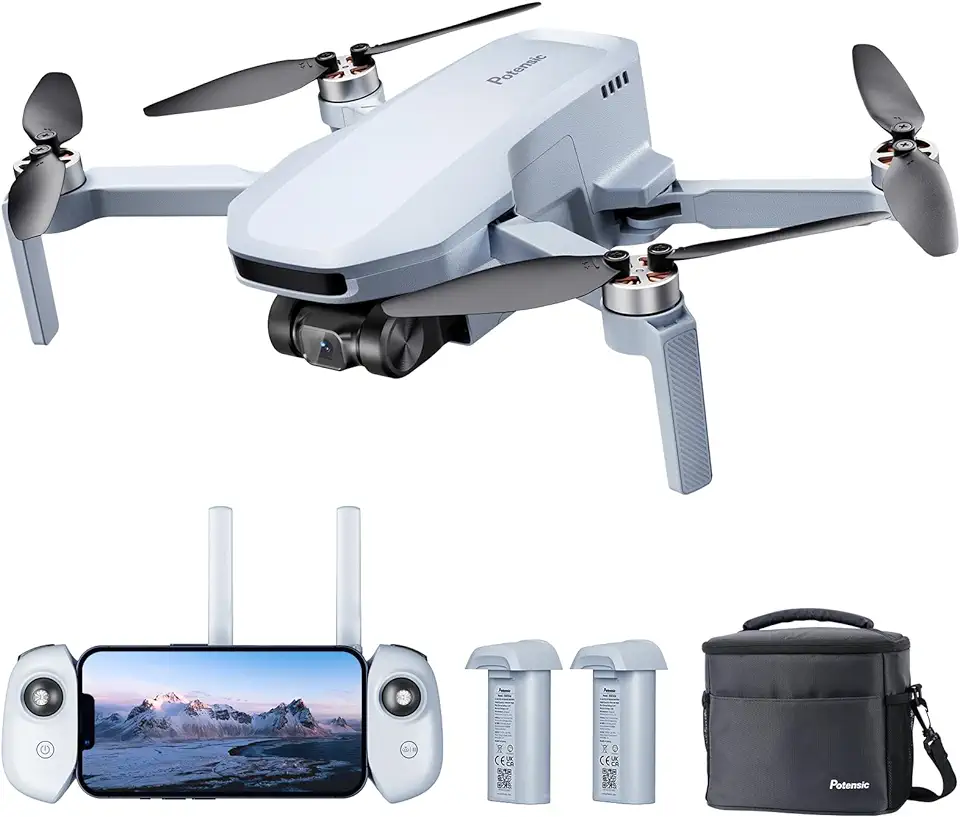
Potensic ATOM SE GPS 4K EIS Drone under 249g
Lightweight sub-249g quad with GPS, 4K stabilized video and electronic image stabilization for smooth, reliable aerial footage on the go.
Check PriceAt 775g the Skydio 2+ sits in a comfortable mid-weight class and is built around a 12.3MP sensor that shoots crisp 4K60 video. Its standout trait is autonomous flight — industry-leading 360° obstacle avoidance and flight AI let you focus on composition instead of piloting. For action sports, wildlife, or any fast-moving subject, the tracking is shockingly intuitive; I’ve captured complex, unpredictable movements without constant stick input.
In practice that autonomy translates to safer flights in cluttered, dynamic environments. The drone feels confident weaving around trees and structures, which reduces the risk of lost shots and gear. If you’re a photographer who values getting the shot over manual flying mastery, the Skydio 2+ is a tool that lets you concentrate on framing and timing.
Do note the trade-offs: the 12.3MP sensor and the camera’s image characteristics make it less of a choice for image-quality purists aiming for very large prints or maximum detail. Likewise, the roughly 6 km transmission range is respectable but not industry-leading, which matters if you plan very long-range missions. For most users prioritizing safety, automated tracking, and reliable action video, this drone delivers excellent real-world results.
Bottom line: the Skydio 2+ is an excellent option if your work or hobby involves dynamic subjects and you value autonomy and collision avoidance above absolute sensor resolution. It’s particularly friendly for first-time flyers or shooters who want confident, hands-off tracking when the moment counts.
- Best-in-class 360° obstacle avoidance and flight AI
- Reliable tracking modes for moving subjects
- Good 4K60 action video
- Suitable for first-time flyers needing automated assistance
- Smaller, lower-resolution 12.3MP sensor
- Limited transmission range (~6km)
5. DJI Flip Overview
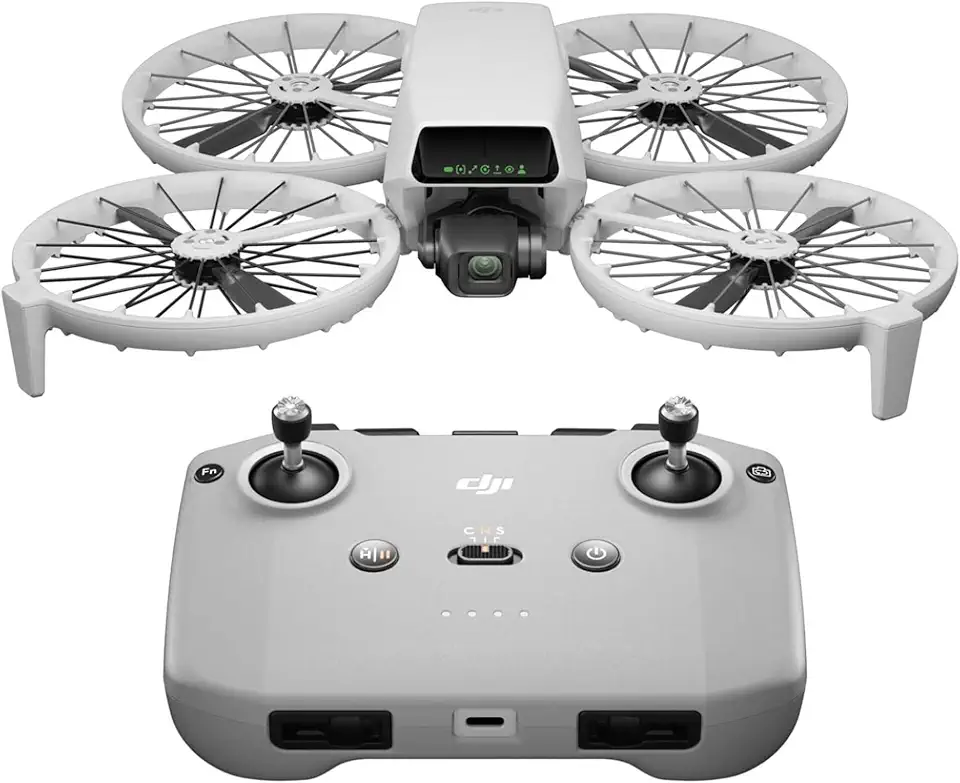
DJI Flip RC-N3 4K 3-axis Gimbal Drone under 249g
Foldable micro drone under 249g featuring 3-axis gimbal, crisp 4K video and agile flight for effortless content creation anywhere.
Check PriceThe DJI Flip is a surprisingly capable budget-minded drone for photographers who want pro-style results without a pro price. It packs a 1/1.3″ sensor that delivers 48MP stills and shoots 4K60 HDR video, so your landscape and travel frames will have the resolution and dynamic range to hold up in editing.
For video work you get 10‑bit internal recording with D‑Log and an impressive slow‑motion option — 4K at 100fps — plus vertical shooting for social formats. Connectivity is strong too: O4 transmission gives a rated range of 13 km, which is excellent for confident long-line flights when you’re in open areas.
What makes the Flip especially appealing to newcomers is the practical feature set: foldable body with propeller guards for safer indoor/outdoor use, voice control, AI tracking, and palm-launch functionality that shortens the learning curve. In real shoots I found those aids reduce stress and let you focus on composition rather than piloting details.
Be realistic about limitations: flight time is approx 31 minutes, so plan batteries for longer sessions. Obstacle sensing is basic (forward-facing 3D infrared only), and the package doesn’t include a dedicated controller, which some pilots feel affects precision. Overall, for beginners and casual shooters who prioritize image quality and ease of use on a budget, the Flip is a very attractive option.
- 1/1.3″ sensor — 48MP stills
- 4K60 HDR + 10‑bit D‑Log; 4K100fps slow‑motion
- O4 transmission range 13 km
- Foldable design with prop guards; beginner-friendly features
- Shorter battery life — approx 31 minutes
- Limited obstacle avoidance (forward-facing only)
Choosing a Drone for Aerial Photography
Choosing a drone for aerial photography starts with how you plan to use it. If you shoot landscapes, real estate, or commercial work your priorities will differ; the same is true if you travel light and need something pocketable for social content.
Camera quality is the single biggest factor for final image results. Aim for a 1″ sensor or larger when possible — 12MP is a reasonable baseline, while 20MP+ or a high-megapixel medium-format-style sensor is better for large prints and heavy cropping.
Don’t overlook lens and stabilization. A lower f-number lens gathers more light for cleaner low-light shots, and a rock-solid 3-axis gimbal keeps frames sharp during wind or slow cinematic moves.
Flight time shapes how you shoot in the field. I prefer drones that give at least 25–40 minutes per battery so you can chase light without constant swaps; if you’ll be on long shoots, factor in extra batteries and a fast charging workflow.
Flight performance and safety features let you concentrate on composition. Reliable GPS, strong wind handling, and obstacle avoidance reduce the risk of losing a shot or a machine, while intelligent modes like follow, orbit and waypoint save time and produce consistent results.
Range and transmission stability matter less for most photo work than you think, but a dependable link of a few miles keeps framing and live histogram accurate. Always fly within line-of-sight and consider local interference when scouting locations.
Match the drone to your skill level and purpose. Beginners benefit from automation and safety-first models, while pros often choose heavier, more capable platforms for image fidelity and flexibility despite extra certification or carry weight.
Ultimately balance sensor size, stabilization, flight time and portability against your budget and workflow. Rent or test-fly before committing — hands-on time will tell you whether the drone fits your shooting style as much as any spec sheet.
Tips for Better Aerial Drone Photos
Good aerial photos start long before takeoff. Scout the location, plan your flight path and timing, and aim for golden hour whenever possible—soft light turns ordinary scenes into images with depth and color.
Use manual exposure when you can. Keep ISO as low as practical, stop the aperture down for sharpness if your drone allows, and choose a shutter speed fast enough to freeze motion—think around the reciprocal of the lens focal length (or faster) to avoid motion blur from both the aircraft and the subject.
Shoot RAW and bracket exposures when the scene has big dynamic range. HDR or bracketed stacks give you far more control in post, especially when skies are bright and shadows deep. Just be aware some drones take longer between bracketed frames, so plan your framing and timing accordingly.
Trust the gimbal but fly smoothly. Gentle, predictable movements and steady yaw will keep images crisp and make composition easier. Avoid abrupt inputs and let the drone settle between adjustments; that patience separates a good shot from a great one.
Composition matters up high too. Vary altitude and angle to find leading lines, patterns and symmetry that don’t read from the ground. Use vertical framing when shooting for social formats to avoid heavy cropping later.
Finally, keep safety and maintenance front of mind. Know local regulations, keep line-of-sight, check batteries and props before every flight, and carry spare batteries so you’re not rushed. A well-prepared pilot consistently makes better photos than one who’s improvising in the field.
What People Ask Most
What is the best drone for aerial photography?
The best drone depends on your priorities such as image quality, portability, and budget. Choose one that balances a good sensor, reliable flight performance, and the features you need.
Which drones have the best cameras for aerial photography?
Models with larger sensors and higher-quality optics typically deliver the best image quality. Look for drones known for professional-grade cameras and stable gimbal systems.
What drone do professional aerial photographers use?
Professionals often pick models that offer top-tier image quality, flexible controls, and robust flight performance. They prioritize features that support detailed stills and cinematic video.
What is the best drone for beginners for aerial photography?
Beginners benefit from lightweight, easy-to-fly models with strong safety features and simple controls. Choose one that includes automated flight modes and reliable obstacle sensing.
What features should I look for in a drone for aerial photography?
Prioritize sensor size and camera stabilization, followed by flight stability, battery life, and useful intelligent flight modes. Good connectivity and obstacle avoidance also make shooting safer and easier.
How do I choose the best drone for aerial photography and videography?
Decide whether photos or video are your main focus and match the drone’s camera and recording capabilities to that need. Balance image quality with flight time, portability, and the level of control or automation you require.
Are compact or folding drones good for aerial photography?
Compact and folding drones can produce excellent images while offering superior portability and convenience. However, very small models may trade off some stability or sensor size compared with larger designs.
Conclusion on Best Aerial Photography Drones
From the pocket-friendly Mini 5 Pro and beginner-focused Flip to the autonomy-first Skydio 2+, the versatile Air 3S and the pro-grade Mavic 4 Pro, these five picks map neatly to different photographer needs and use cases.
Choose the drone that best matches your priorities—camera and sensor size, flight time, portability, autonomy features, and budget will have the biggest impact on your results and workflow.
If you want to improve your gear decisions and shooting skills, read more articles on the site to deepen your knowledge and refine techniques at your own pace.
Questions or experiences to share? Leave a comment below and we usually reply within a few hours.



0 Comments