
Which DSLR will help you capture sweeping vistas and subtle tonal details in a single frame?
Choosing the best dslr for landscape photography can feel like navigating a dense gear catalog on a cold ridge at dawn while the light shifts every minute. The right camera should make fieldwork easier, not more complicated.
This guide compares five top contenders and helps you weigh the trade-offs that matter in changing light and varied conditions. We focus on real-world performance, not just spec sheets, paying attention to handling, battery life, and durability in the field.
Whether you print large, shoot long days, or prefer a lighter pack, we’ll help you find the right balance. Inside you’ll find concise camera summaries and clear pros and cons to speed your decision-making in the shop or on the trail.
We’ll also offer lens guidance — what to prioritize in wide-angle glass, when to choose primes over zooms, and why stabilization and weather sealing matter. Practical composition tips and a short FAQ will help you translate gear choices into stronger images.
So whether you trek foggy coasts, climb alpine ridgelines, or wait for the perfect sunset, this guide will steer you toward the best DSLR for landscape photography. Expect direct recommendations, lens pointers, and shooting tips you can use on the trail and back home during post-processing. Let’s find a DSLR that fits your vision, your workflow, and the miles you plan to cover.
1. Nikon D850 Landscape Powerhouse

Nikon D850 DSLR body
High-resolution full-frame imaging with exceptional dynamic range, lightning-fast performance, and rugged weather-sealed construction for demanding professional photographers.
Check PriceThe Nikon D850 is a landscape workhorse built around a 45.7MP full‑frame BSI CMOS sensor that delivers exceptional resolution and class‑leading dynamic range. With a Base ISO of 64 you get cleaner shadows and more retained detail in highlights, which is exactly what you want for wide tonal landscapes and large prints. In practice the sensor is regarded as a benchmark for landscape image quality and heavy cropping or big wall prints.
Its weather‑sealed magnesium alloy body gives real confidence in the field when conditions turn sour. Expect a noticeably heavy camera, but that weight comes with superb battery life and rock‑solid durability for long days outdoors.
The 2.4M‑dot tilting touchscreen and detailed live view make tripod and low‑angle compositions easy, especially when manually focusing for critical sharpness. Landscape‑focused tools like focus stacking, time‑lapse, long‑exposure options and a vibration‑free shutter mean you can execute technically demanding techniques in-camera without extra hacks.
Autofocus is a 153‑point system that handles low‑light acquisition well, and the D850’s live view focusing is particularly useful for pixel‑peeping and precise manual focus. If you already own F‑mount glass the extensive lens ecosystem is a huge plus, and the camera’s combination of image quality, ruggedness and feature set makes it a top choice for photographers willing to carry a bit more weight for superior results.
- 45.7MP BSI sensor — outstanding detail
- Base ISO 64 — excellent low‑noise shadows
- Weather‑sealed magnesium alloy body
- Focus stacking, time‑lapse, vibration‑free shutter
- Noticeably heavy in the field
- Very large RAW files require more storage/processing
2. Canon EOS 5DS R High-Resolution Choice

Canon EOS R5 body
Mirrorless powerhouse with ultra-detailed sensor, pro-grade autofocus, and cinema-quality 8K video for hybrid photo-video creators.
Check PriceThe Canon EOS 5DS R is Canon’s high-resolution DSLR built expressly for detail hunters, packing a 50.6MP full-frame CMOS sensor and a cancelled anti-aliasing filter to squeeze every bit of sharpness from a scene. It runs on Dual DIGIC 6 processors, uses a 61-point autofocus system, and sits in a weather-sealed pro-grade body.
On the landscape trail that resolution translates to stunning large prints and generous cropping freedom without visible loss of detail. Canon’s color rendering is pleasing and the camera delivers good dynamic range, though it sits slightly behind the very best at base ISO for highlight and shadow latitude.
Handling is solid and familiar to Canon shooters; the body feels rugged and trustworthy in adverse conditions. A few users note the ergonomics can become less comfortable on very long shoots, but overall operation is fast and dependable.
Where this camera truly shines is when ultimate detail is the priority: fine textures in rock, distant ridgelines, and expansive panoramas all benefit. Expect very large RAW files, so plan plenty of storage and a robust processing workflow to handle the workload.
This is not the camera for action or fast-paced shooting. The burst rate is relatively slow and video features are not the focus, so if you need speed or advanced movie capabilities you should consider other options.
If you’re a landscape photographer who values maximum resolution, Canon color, and the extensive EF lens ecosystem, the 5DS R is an excellent, mostly straightforward tool for creating gallery-quality prints and detailed landscape images.
- Extremely high resolution for large prints and cropping
- No AA filter for maximum sharpness
- Reliable, weather-sealed construction
- Wide EF lens selection
- Slower burst rate — not ideal for action
- Very large files require substantial storage/processing
3. Canon EOS R5 Versatile Mirrorless Option
Canon EOS R5 body
In-body stabilization and blazing continuous shooting enable sharp, silent captures and versatile pro-level performance in any shooting scenario.
Check PriceThe Canon EOS R5 is a landscape powerhouse that balances high resolution with modern mirrorless conveniences. Its 45MP full-frame sensor and Dual Pixel AF deliver the detail and color you need for large prints and careful post-processing.
Built-in IBIS rated up to 8 stops makes handheld low-ISO shooting far more practical on chilly dawn hikes or when you want to avoid a tripod. Advanced weather sealing gives confidence in rough conditions, and the 400MP Pixel Shift mode can produce astonishingly detailed files—when the scene is perfectly static.
In the field you’ll notice strong autofocus and a familiar Canon ergonomics package, though some find the body a bit dense. The RF mount ecosystem is expanding rapidly, and you can still use EF glass via an adapter with excellent results. Battery life is good for mirrorless but doesn’t match DSLR endurance, so plan for spares on long outings.
Pixel Shift is a neat studio-style tool, but it’s of limited use for most landscape situations where wind or moving water are present. Overall, the R5 suits photographers who want high resolution, excellent stabilization, and the flexibility to mix stills and video without abandoning legacy glass.
- 45MP sensor for large prints and cropping
- IBIS up to 8 stops enables handheld low-light shots
- Strong Dual Pixel AF performance
- Versatile RF mount with EF compatibility via adapter
- Pixel Shift limited for dynamic landscape scenes
- Battery life not as strong as top DSLRs
4. Sony A7R IV Detail-Driven Mirrorless

Sony α7R IV body
Ultra-high-resolution sensor delivers astonishing detail, advanced autofocus, and exceptional dynamic range for demanding landscape and studio photographers.
Check PriceThe Sony A7R IV’s headline is its 61MP full-frame BSI CMOS sensor — that kind of pixel count is a landscape photographer’s dream for large prints and heavy cropping. In the field I’ve used it to pull extraordinary detail from distant ridgelines and textures in foreground rocks without losing fine tonal transitions.
Dynamic range is another strong suit; the sensor gives excellent shadow and highlight recovery, which makes it forgiving in high-contrast scenes at sunrise or sunset. Those extra stops of recoverable detail mean fewer blown highlights and richer shadow information when processing RAW files.
Sony packs a 5-axis in-body stabilization (about 5.5 stops) into the body, and combined with fast real-time eye AF and tracking the camera is surprisingly capable handheld. The tilting touchscreen and weather sealing make composing from odd angles and working in mixed conditions much less stressful when you’re on a long walk.
Ergonomically it’s lighter than most DSLRs, so it’s easier to carry on long hikes; however, the body can feel awkward with larger lenses mounted, something to try before you commit if you prefer big, heavy glass. Pixel Shift Multi Shooting exists for even higher fidelity, but it demands an absolutely static scene — not practical for wind-swept landscapes.
Battery life is decent for a mirrorless system but doesn’t match top-tier DSLRs, so plan for spares on long outings. The menu system is deep and feature-rich, which is powerful but has a learning curve if you like to keep things simple.
If you prioritize resolution, portability, and modern mirrorless features, the A7R IV is an excellent choice — just be mindful of handling with heavy lenses and pack extra batteries for long days in the field.
- Industry-leading resolution for landscapes
- Lightweight and portable for long hikes
- Effective IBIS reduces tripod reliance
- Broad native and third-party lens selection
- Handling/grip can feel awkward with heavy lenses
- Battery life not on par with DSLRs
5. Nikon Z7 II Mirrorless Landscape Performer
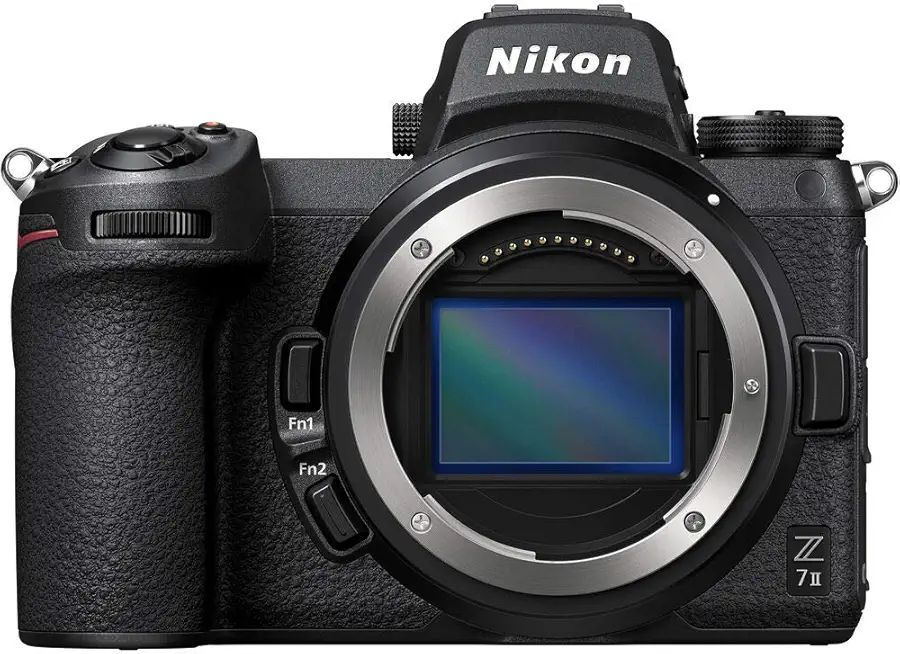
Nikon Z7 II body
Dual-processor mirrorless camera offering faster performance, improved autofocus, and superb image quality with a bright electronic viewfinder.
Check PriceThe Nikon Z7 II is essentially the D850’s image-quality engine in a mirrorless body — it uses the same 45.7MP full-frame BSI CMOS sensor, so expect the same sharp files and excellent dynamic range that landscape shooters prize. Dual EXPEED 6 processors keep throughput smooth for big RAWs and in-camera tasks without slowing your workflow on location.
IBIS up to 5 stops is a game-changer for handheld landscape and low-light shooting, allowing slower shutter speeds without a tripod and making sunrise/sunset handheld bracketing more practical. The tilting touchscreen and high-res EVF make composition from odd angles much easier than you’d get with a traditional DSLR.
Build quality and weather sealing are robust, so this body inspires confidence in harsher field conditions while being noticeably lighter than the D850 for long hikes. That lighter weight and mirrorless ergonomics do come with a change in feel — some shooters miss the optical viewfinder and DSLR-style handling.
The Z-mount lens system is excellent and clearly the future direction for Nikon; native glass is growing quickly and F-mount lenses work well via the FTZ adapter. Still, the ecosystem isn’t as deep as older DSLR mounts yet, so plan lens choices ahead if you need specific focal lengths.
Battery life has improved over Nikon’s earlier mirrorless bodies but remains short of DSLR-level endurance, so bring spare batteries for full-day shoots. Overall, if you want D850-level image quality with modern IBIS, weather sealing, and a lighter package, the Z7 II is one of the best mirrorless choices for landscape work.
- D850-level 45.7MP BSI sensor
- IBIS up to 5 stops for handheld shots
- Excellent weather sealing and lighter body
- Future-proof Z-mount lens system
- Battery life less robust than DSLRs
- Fewer native lenses compared with established DSLR mounts
Choosing Lenses for Landscapes
For landscapes I default to wide-angle glass — it lets you include sweeping skies and foreground drama while exaggerating depth. On full-frame bodies that usually means roughly 10–35mm (or the crop-sensor equivalent). In the field I lean on versatile wide-angle zooms like the Canon RF 15–35mm, Nikon 14–24mm or Sony 16–35mm GM because they let you reframe quickly as light and composition change.
Primes also have their place. A 21mm or 24mm prime (for example the Zeiss Loxia 21mm) will often reward you with micro-contrast and edge-to-edge sharpness that’s hard to beat for critical prints. I’ll pull a prime out when I can spend time composing and when conditions are stable — for fast-moving light or tight windows a zoom usually wins.
Think about aperture in practical terms. For most landscapes you’ll stop down to about f/8–f/16 to get the near-far depth of field you want. If you plan nightscapes or want to push ISO low while handholding, faster lenses in the f/2.8–f/4 range help — and they’re useful for astro or low-light foregrounds.
Build features matter in the real world. Weather sealing keeps you shooting in spray and wind, and image stabilization (either in-lens or in-body) opens up handheld possibilities when tripods are impractical. If you can, prioritize a sharp, weather-sealed wide-angle zoom with stabilization — it’s the most flexible single lens for many landscape trips.
Finally, match lenses to your workflow. If you print big or crop heavily, favor higher-resolution primes and super‑sharp zooms. If you hike miles and shoot changing light, choose lighter zooms with weather protection and IBIS support. That balance will shape how you capture a scene more than any single focal length.
Landscape Composition Techniques
When I scout a scene I start by asking where the eye should travel. The rule of thirds gives an instant framework: place the horizon or your main subject on a gridline or intersection and the composition often falls into balance.
Leading lines are my secret weapon. Rivers, ridgelines, fences or paths pull the viewer into the frame and create a natural route toward the focal point, so look for shapes that guide the eye rather than distract it.
Never underestimate foreground interest. A lone rock, a clump of grass, or textured sand adds scale and layers, turning a flat vista into a near-far composition that breathes depth.
Balance your frame like a calm conversation. If your dominant element sits on one side, add a counterpoint—subtle rocks, a patch of light, or a distant tree—to avoid an empty void that makes the image feel lopsided.
Geometry and vanishing points give order to wild scenes. Natural triangles, arcs, and converging lines create stability and drama; place vanishing points toward the horizon to emphasize depth and distance.
Think in tones as much as shapes. Position brighter areas to lead toward your subject and keep darker edges to frame and contain the viewer’s attention. This dark-to-bright approach often improves impact without extra contrast in post.
Finally, practice the “stop and stare” method. Slow down, change your height and angle, and move slightly left or right. Small shifts transform relationships between foreground and background, and a tripod will let you refine those subtle moves for the sharpest, most intentional compositions.
What People Ask Most
What is the best DSLR camera for landscape photography?
There is no single best DSLR for everyone; pick a camera that balances image quality, dynamic range, weather sealing, and lens availability for your needs. Consider factors like weight, battery life, and any existing lenses you already own when deciding.
Is a full-frame DSLR better for landscape photography than an APS-C camera?
Full-frame bodies often offer advantages in image quality and dynamic range that can benefit landscape work. APS-C cameras can still deliver excellent results and may be preferable for portability or budget considerations.
Which DSLR features are most important for landscape photography?
Key features include strong image quality and dynamic range, reliable weather sealing, good battery life, and access to sharp wide-angle lenses. Stabilization and resolution are useful depending on your shooting style and output needs.
Can I use a crop-sensor DSLR for landscape photography?
Yes, crop-sensor cameras are fully capable of producing great landscape images and can be lighter and more affordable. Using quality wide-angle lenses and careful composition will help you maximize results.
What lenses are best for landscape photography with a DSLR?
Wide-angle lenses are generally preferred to capture expansive scenes, and sharp, weather-sealed optics offer the most versatility in the field. Many photographers pair a reliable wide-angle zoom with a high-quality prime for critical detail.
What camera settings should I use for landscape photography with a DSLR?
Settings vary by scene, but photographers often use smaller apertures for depth of field, low ISO for image quality, and stable support for longer exposures. Bracketing exposures and using manual or aperture-priority modes helps control depth and exposure.
How many megapixels do I need for landscape photography?
Higher megapixels can help with large prints and cropping, but overall image quality also depends on sensor performance, lenses, and technique. Choose a resolution that fits your print goals, storage capacity, and post-processing workflow.
Conclusion for Best DSLR Landscape Photography
Choose the camera that best aligns with what you value most—whether that’s ultimate resolution, IBIS for handheld work, long battery life for long days, a wide lens ecosystem, or rugged weather sealing.
Pair your chosen body with a sharp, weather‑resistant wide‑angle lens and use the composition techniques covered above, like foreground interest and leading lines, to turn technical strengths into stronger landscape images.
Revisit the pros and cons and the ideal‑buyer notes in this guide to narrow your options against your shooting style, travel plans, and budget before you buy.
If you want to keep improving, read more articles on our site for practical tips, real-world insights, and step‑by‑step advice to build your skills over time.
Have a question or want to share your experience? Leave a comment below — we usually reply within a few hours to help you choose or troubleshoot.




0 Comments