

What makes on-camera dialogue feel cinematic instead of distant and flat?
Small choices in mic selection and placement often decide the difference.
This compact guide narrows the field to five trusted lavalier systems for film work.
It also covers practical on-set techniques so you get usable sound, fast.
Whether you run a crew or shoot solo, this guide speaks your language.
Filmmakers, podcasters, vloggers, and YouTubers will find clear, actionable advice.
Expect straightforward product breakdowns with real-world impressions, not marketing fluff.
We’ll highlight pros and cons along with selection criteria you can use today.
You’ll also get practical concealment tips to keep mics invisible and sound pristine.
There are smart tricks for routing cables, taping, and mic placement that save takes.
I put these systems through typical production scenarios, from interviews to run-and-gun shoots.
You’ll read about durability, wireless performance, and how each mic handles human voices.
We break down the selection criteria that actually matter on set.
Audio quality, concealment, battery life, and setup speed get prioritized over specs that impress only on paper.
If you need a mic for intimate drama or noisy location work, this guide helps you choose.
Consider it your shortlist for dependable dialogue capture on real shoots.
Flip the page and find the microphone that makes your performances sound as good as they look.
The right lavalier lets emotion come through, even on the quietest lines.
Ready to simplify your sound strategy and stop chasing re-takes?
Let’s get the dialogue right, from placement to playback.
1. DJI Mic 2 for Filmmakers

DJI Mic 2 1TX+1RX Wireless Microphone
Crystal-clear wireless audio for creators; compact transmitters and receiver deliver reliable long-range performance and studio-quality sound on the go.
Check PriceThe DJI Mic 2 for Filmmakers is one of the most refined lavalier systems you’ll reach for on set. It combines advanced noise cancelling with 32-bit float internal recording so you capture clean, usable dialogue even when levels change. That makes it forgiving for fast shoots and noisy locations.
In practice the sound is natural and consistent across environments. The receiver’s large touchscreen and physical control wheel let you make quick adjustments without fumbling. Transmitters have a reconfigured layout to reduce accidental button presses during takes.
Connectivity is flexible with Lightning and USB-C adaptors included. A locking-latch charging case keeps everything organized and ready for long days. The wireless link is stable enough for typical film setups and solo operators.
If you’re a filmmaker or a YouTuber who values reliability and post-production flexibility, this system is a strong fit. The 32-bit float recording gives you headroom for dynamic scenes and helps salvage tricky takes in editing. Just be mindful that the transmitters aren’t the smallest for invisible placement under wardrobe.
For dialogue-heavy shoots in mixed environments the DJI Mic 2 hits the sweet spot between usability and sound quality. It isn’t a long-range specialist, so for very large outdoor sets you might need something with extended range. But for most narrative, interview, and run-and-gun shoots it will raise your production audio noticeably.
- Exceptional noise cancellation in real-world noisy environments
- 32-bit float internal recording for high dynamic range in post
- Intuitive UI with touchscreen and physical controls
- Wide device compatibility and stable wireless signal
- Transmitters could be smaller for more discreet placement
- Wireless range may be less than some specialized long-distance systems
2. SYNCO G3 Pro Long-Range Wireless
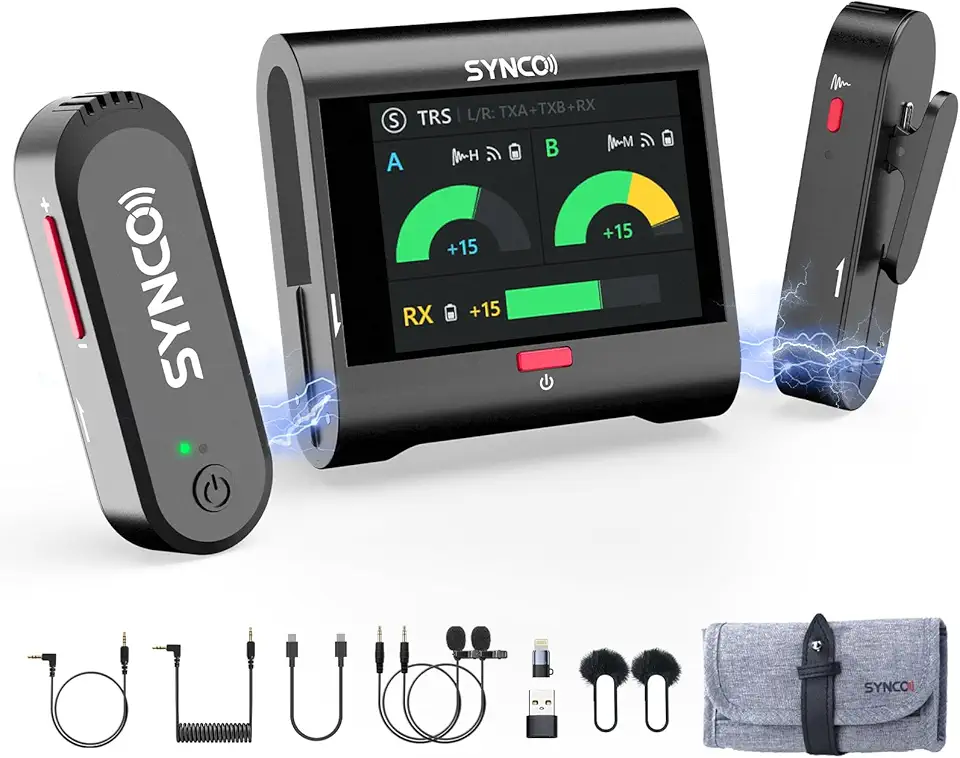
SYNCO G3 PRO Dual Lavalier Wireless Microphone
Dual-channel lavalier system offering interference-free transmission, crisp vocals, and easy setup for interviews, presentations, and on-camera recording.
Check PriceThe SYNCO G3 Pro Long-Range Wireless is built for filmmakers who need rock-solid connectivity on larger shoots. It delivers extremely stable transmission up to 200+ meters, which makes it ideal for multi-camera setups, live events, and outdoor documentaries.
Setup is straightforward and fast. Pairing is easy and the unit offers practical controls like gain adjustment and real-time monitoring so you can tweak levels on the fly without interrupting the take.
Sound is solid and professional-grade, though it’s described as slightly less refined than true audiophile lavs. In practice that means excellent dialogue capture for most film work, but you may notice it isn’t the absolute best choice if you’re chasing ultra‑nuanced vocal textures in intimate drama scenes.
What really sells the G3 Pro is its reliability in difficult RF environments. The system includes a TFT screen, a safe channel feature, and dual-channel recording — tools that keep multi-actor shoots and busy locations running without dropouts.
The build quality is robust and made for demanding production use. The tradeoff is size: the transmitter and receiver are bulkier than some competitors, so concealment requires a bit more thought during wardrobe and rigging.
Summed up, the SYNCO G3 Pro Long-Range Wireless is an excellent choice when range, signal stability, and multi-channel reliability matter most. Choose it for larger sets, outdoor shoots, or any situation where losing signal is not an option, and accept a slight compromise if your top priority is the last ounce of tonal refinement.
- 200+ m wireless range
- Extremely stable transmission in noisy RF environments
- TFT screen, safe channel, dual-channel recording
- Easy pairing, gain adjustment, real-time monitoring
- Sound not as refined for ultra‑nuanced dialogue
- Bulkier transmitter and receiver units
3. SYNCO G2 Max Pristine Audio

SYNCO G2 A2 MAX Dual Transmitter Wireless Lavalier Microphone
Two transmitters plus compact receiver deliver dependable audio capture, long battery life, and professional clarity for run-and-gun shoots.
Check PriceAs a photographer who often crosses into short dramas and commercial shoots, I lean toward lav systems that offer clean, edit-ready audio—and the SYNCO G2 Max fits that bill. It’s clearly aimed at filmmakers focused on sound quality and post-production flexibility for web films and commercials.
In practice the G2 Max delivers pristine recorded sound with a strong tonal balance and clarity that holds up in editing and sound design. Its effective noise reduction helps tame challenging acoustic environments without making dialogue sound processed.
The physical package is nicely thought out for on-set use: a compact design that’s easy to hide on actors and less likely to cause clothing rustle. The dual-transmitter configuration is especially useful when you need to record two actors simultaneously without juggling extra kit.
If you prioritize detailed audio for narrative work or commercials, this system will likely be a very good match—professional-grade results with sensible concealment options. Be aware, though, that its wireless range is shorter than some longer-range systems, and the interface and controls can take a little getting used to if you’re switching from simpler units.
- High-quality sound suitable for professional film production
- Effective ambient noise reduction
- Compact, discreet lavalier capsule design
- Dual-transmitter for multi-person recordings
- Shorter wireless range compared to the G3 Pro
- Interface and controls have a slight learning curve
4. Rode Wireless Micro for Mobile

RØDE Wireless Micro Two Mics with Charging Case USB-C
Portable kit with dual microphones and USB-C charging case ensures uninterrupted recording, effortless pairing, and broadcast-quality sound.
Check PriceRecommended in 2026 for smartphone-based filmmaking and vloggers, the Rode Wireless Micro gives you professional audio with very simple integration. As a photographer who often doubles as a one-person shooter, I appreciate gear that just works with phones and small cameras.
In real-world use it delivers excellent audio quality for the price and platform. It’s lightweight and easy to use with smartphones, computers, and cameras, so setup is fast when you’re on a tight schedule.
Signal and battery life are solid — you get consistent signal quality and good battery life that keeps you rolling through interviews and run-and-gun shoots. The transmission is strong and stable for short to medium distances, which covers most on-location vlogging and mobile interview scenarios.
Rode’s reputation for durability and customer service is a practical benefit when you rely on a single kit for fast turnaround work. The system is especially well suited to solo creators, interviews, and casual filmmaking where portability and ease trump advanced multi-person features.
Keep in mind the trade-offs: it lacks many advanced features found in higher-end film lav systems and isn’t ideal for complex multi-person or long-distance shoots. If your projects are mostly mobile, quick interviews, or single-subject pieces, this is a very sensible, reliable choice.
- Seamless integration with smartphones and USB-C/Lightning devices
- Strong, stable wireless transmission for short to medium distances
- Compact, lightweight design for discreet use
- Good battery life and easy charging
- Limited advanced features compared to higher-end film lav systems
- Not ideal for complex multi-person or long-distance shoots
5. Sanken COS-11D Broadcast-Grade Wired

Sanken COS-11D-PT-AL-1.8 Omni Lavalier Mic 3m Unterminated Cable
Ultra-low-noise omnidirectional lavalier for transparent vocal pickup, durable cable, and discreet on-body placement for film and broadcast.
Check PriceAs a photographer who frequently records on-set dialogue, I reach for the Sanken COS-11D when the priority is utterly natural, transparent sound. Its tonal response is praised for being one of the most open and detailed of any lavalier, which makes dialogue sit cleanly in a mix without artificial coloration.
The capsule is very small, so concealment under clothing is far easier and less likely to cause rustle. That small size, combined with very low self-noise and excellent handling-noise rejection, means you can mic close to the source and still avoid unwanted fabric or movement artifacts.
Remember this is a wired mic by design, so mobility requires pairing it with a compatible wireless transmitter. For controlled shoots—interviews, studio drama, or any situation where transparency is paramount—the wired connection gives you interference-free, stable audio that editors and mixers will love.
Placement matters more with the COS-11D than with many consumer lavs. There’s a bit of a learning curve in routing and securing the cable to keep the mic invisible yet stable. When you take the time to place it correctly, though, it becomes an industry-standard tool for high-end film and TV work.
If you need the cleanest, most honest capture of a voice and you can manage cable routing or add a transmitter for movement, this mic is an excellent investment. It’s best for filmmakers who prioritize fidelity and low noise in controlled environments and who don’t mind the extra care required during placement.
- Exceptional natural, detailed, and transparent sound
- Very low susceptibility to handling and clothing noise
- Small capsule for discreet placement
- Industry standard for film professionals
- Wired only — needs transmitter for mobility
- Requires careful placement and handling
How to Choose a Lavalier Microphone
Choosing the right lavalier is like picking the right lens for a shot — it shapes your dialogue as much as lighting shapes a face. Start with audio quality: look for a mic that captures clear, natural vocals with low self-noise and a balanced frequency response. That transparency will save hours in post and keep performances honest.
Decide wired versus wireless by the shoot’s needs. Wired lavs give rock-solid, interference-free audio in controlled environments, while wireless systems buy you freedom of movement outdoors or on run-and-gun shoots. Remember a wired Sanken-style mic can be paired with a transmitter if mobility becomes necessary.
Directionality matters. Omnidirectional capsules sound open and forgiving for close, quiet setups, but in noisy locations a tighter pattern or good noise rejection will keep street or crowd noise out of your takes. If you can’t change location, pick a mic that focuses on the speaker without sounding “boxy.”
Match wireless range and connectivity to the set size. Large outdoor scenes and multi-camera setups need long-range, stable transmission. Also prioritize battery life or fast charging so you’re not swapping packs between takes.
Ease of use is underrated. Systems with simple controls and quick pairing speed up runs, especially with small crews. Look for compact capsules and a solid set of clips, windscreens, and tape — these accessories are the real MVPs for clean, hidden placement.
Concealment and handling are practical constraints. Smaller capsules tuck into collars or seams and reduce rustle, but placement matters more than size. Always mic and tape the cable securely, do a movement check, and monitor with headphones to catch any clothing noise before the camera rolls.
In the end, match the mic to the environment, plan your concealment, and always record a backup if possible. A bit of prep and the right lav will make dialogue feel immediate and effortless on screen.
How to Hide Lavalier Microphones
Concealing a lav is part technique and part compromise. You want it invisible, but you also need clean, natural dialogue. Think of concealment as a way to hide without choking the sound.
Place the capsule roughly at chest level, about a handspan from the mouth near the sternum. That spot gives a balanced, consistent tonality and reduces breathing and rustle. Avoid clipping it too high by the neck or too low on the stomach—both positions thin or boomy the voice.
Different garments demand different tricks. For shirts and blouses clip just above the sternum and route the cable inside the shirt; collars and ties work well when the mic is tucked under the collar and the cable runs along the seam. For T‑shirts or sweaters clip to the neckline or shoulder and tuck the wire under the fabric so it can’t swing.
Cable routing is where most noise problems start. Run the wire through seams, button gaps, or along the inside of a jacket and secure it with low‑residue draper’s tape so it stays put. Never tape over the capsule—taping the wire or the fabric behind the mic is fine, but covering the mic muffles and kills high end.
Hiding the mic under layers works, but not under heavy fabrics that smother the capsule. Use hair, buttons, straps, or props as alternative hides when wardrobe allows. Keep the capsule as close to the sound source as possible and test placement with movement to catch rubbing or fabric shift.
Finally, always do a quick movement test. Have the actor turn, breathe deeply and walk while you listen on headphones. Add a small foam windscreen outdoors and a secondary tape anchor near the capsule for longer takes—these two simple steps will save you from a lot of unwanted rustle in post.
What People Ask Most
What are the best lavalier microphones for film production?
Select lavaliers that provide clear, natural dialogue and low handling noise while fitting your workflow needs. Choose wired or wireless based on mobility requirements and prioritize ease of concealment and reliable performance.
How do lavalier mics compare to shotgun/boom mics for film dialogue?
Lavaliers capture consistent, close-up voice and are easy to hide on talent, while booms capture more of the room and can sound more natural from a distance. Many productions use both to provide complementary options for mixing and redundancy.
Are wireless lavalier microphones reliable for on-set film production?
Modern wireless systems can be very reliable when properly set up with good channel planning and battery management. For important shoots, monitor levels and consider backup options to reduce the risk of interruptions.
How do I choose the right lavalier mic for on-camera dialogue?
Consider audio quality, whether you need wired stability or wireless freedom, mic directionality, and how easy the system is to operate on set. Also weigh concealment options and practical factors like battery life and connectivity.
How do you hide or conceal lavalier microphones on actors?
Place the mic near the chest area and route the cable inside clothing, using tape or clips to secure it and prevent rustle. Avoid burying the capsule under heavy fabrics and test placement while the actor moves.
What are the differences between omnidirectional and cardioid lavalier mics for film?
Omnidirectional lavs pick up sound from all directions and are forgiving of placement, making them useful in controlled settings. Cardioid or directional lavs focus on the speaker and help reduce background noise in louder environments.
Can lavalier microphones capture broadcast-quality sound for film?
High-quality lavaliers can produce very clean, professional dialogue when properly placed and recorded. For the highest standards, combine careful mic technique with good monitoring and post-production processing.
Conclusion for Best Lav Mics for Film
Choosing the right lavalier comes down to matching practical priorities: clear, natural audio, the wired-versus-wireless trade-offs, directionality, range and battery life, plus concealment and handling-noise needs.
This guide has framed those choices so you can compare styles—from high-end noise-reducing wireless systems and long-range transmitters to compact, high-fidelity lavs, mobile-friendly kits, and industry-standard wired capsules—against your workflow and budget.
On set, careful placement and cable routing usually make a bigger difference than the model name, so test placements with the actual wardrobe and movement you’ll be shooting.
If you’re assembling a kit, balance ease of use and battery/connection reliability with the tonal character you want to capture for editing and sound design.
Want to keep improving your on-set audio and concealment skills? Read more on the site to deepen techniques, compare options, and build confidence for your next shoot.
Have a question or a setup to share? Leave a comment below and we’ll usually reply within a few hours.


0 Comments