
What lens can turn a chaotic event into a gallery of unforgettable moments? In the heartbeat of a reception or under the glare of stage lights, the right glass shapes mood, frames emotion, and keeps you ready for the decisive instant.
This guide rounds up the five best lenses for event photography and tests them in real shooting scenarios. You won’t get dry specs here; you’ll get practical advice about focal length choices, aperture trade‑offs, and when stabilization or a fast prime actually matters. We focus on usable combinations that keep you mobile, minimize lens changes, and maximize the story in every frame.
Expect clear guidance on pairing lenses for weddings, corporate gigs, concerts, and casual parties. We explain how to match lens type to venue size, subject distance, and light levels so you can choose with confidence. Short, actionable tips show how to manage depth of field, avoid distortion, and stay discreet while shooting.
Whether you’re assembling a first kit or refining a pro setup, these recommendations will make packing simpler. By the end you’ll know which glass covers wide room context, which isolates subjects with creamy backgrounds, and which keeps handheld shots sharp in low light. Read on to build a versatile, confidence‑boosting kit and keep your focus on people and moments, not gear.
1. Sigma 24-70mm f/2.8 Art

Sigma 24-70mm f/2.8 DG OS HSM Art for Canon EF
Versatile professional standard zoom with bright constant aperture, optical stabilization and razor-sharp optics—ideal for weddings, events, portraits, and run-and-gun shooting.
Check PriceThe Sigma 24–70mm f/2.8 Art is a true workhorse for event shooters who need one lens to cover wide interiors, portraits and the small details. Its 24–70mm range gives you the framing flexibility to move from venue context to intimate candid shots without changing glass.
That constant f/2.8 aperture is invaluable in dim receptions and ceremonies. It keeps shutter speeds usable and helps separate subjects with pleasant background falloff.
Build quality is pro-grade: a metal barrel and weather sealing mean this lens withstands tough, on-the-go use. It feels solid on a shoulder strap and survives the occasional outdoor ceremony without worry.
Autofocus is fast, quiet and precise, with AF/manual override when you need fine control. That reliability matters during fleeting moments when you can’t second-guess focus.
For handheld work the 4‑stop optical stabilizer is a real benefit in low light. It lets you pull usable frames at slower shutter speeds when flash isn’t an option.
Optically, the lens is noted for superb sharpness and attractive bokeh, with minimal chromatic aberration and distortion. In short, it renders people beautifully and holds up when you push ISO and aperture.
If you need a single, dependable zoom for most event scenarios, this Sigma is a top choice. Just be aware it’s on the heavier side and some mount versions (for example Sony E‑mount) do not include the optical stabilization, so check the spec for your camera.
- Excellent optical sharpness wide open
- Versatile 24–70mm focal range
- Robust metal build with weather sealing
- 4‑stop optical stabilization for low light
- Heavy and bulky for long handheld use
- Some versions (e.g., Sony E‑mount) lack optical stabilization
2. Canon EF 16-35mm f/2.8L III
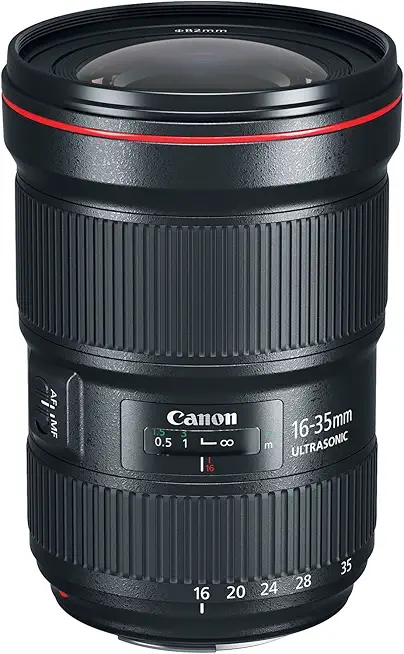
Canon EF 16-35mm f/2.8L III USM
Ultra-wide professional zoom delivering edge-to-edge clarity, fast aperture and durable weather sealing—perfect for landscapes, architecture and dramatic environmental portraits.
Check PriceI reach for the Canon EF 16-35mm f/2.8L III USM whenever I need to show the scene as much as the subject. This ultra‑wide zoom is built for group shots, interiors and large venues, and it reliably captures entire rooms and big groups even when space is tight.
The Mark III redesign is immediately noticeable in real-world use — edge and corner sharpness is far improved, so your wide shots hold detail across the frame. The lens also benefits from superior coatings that reduce ghosting and flare, which keeps contrast strong under challenging lighting.
Fluorine coatings on the front element make cleaning quick between runs, and the overall handling feels like a pro tool when you’re moving fast at an event. Because it’s weather and dust sealed it stands up to unpredictable conditions during dynamic events where you can’t afford to baby your gear.
Composition-wise, be mindful at the widest focal lengths; ultra‑wides will exaggerate near subjects and require careful framing to avoid unflattering distortion. Also remember the constant f/2.8 aperture — it’s great for most venue work, but in the very darkest receptions a faster prime will still give you an edge.
In short, if your event work requires sweeping environmental context, roomy interiors, or large group coverage in confined spaces, this lens should be on your short list. It balances pro-grade build and optical control with the practical needs of event shooting.
- Sharp image quality edge-to-edge
- Excellent flare and ghosting control
- Weather and dust sealed
- Wide coverage ideal for venue and group shots
- Requires careful composition to avoid distortion at widest focal lengths
- f/2.8 aperture limits in extremely low light compared to faster primes
3. Sigma 35mm f/1.2 Art

Sigma 35mm F1.2 Art DG DN for L Mount
Extremely bright 35mm prime producing creamy bokeh, exceptional low-light performance and ultra-high resolution for cinematic portraits and creative wide-angle storytelling.
Check PriceThe Sigma 35mm f/1.2 DG DN Art is a fast 35mm prime built around an ultra-wide f/1.2 aperture, and it truly shines in low‑light event situations like concerts and evening receptions. That f/1.2 opening alone lets you shoot with natural available light and keep ISO lower than with slower optics.
Optically the lens delivers outstanding sharpness even wide open, and the bokeh is creamy and attractive for isolating subjects in busy scenes. Those qualities make it a favorite when you want dreamy separation between your subject and a chaotic background.
In practice it’s excellent for candid moments captured without flash — faces and expressions stay clean and readable, while backgrounds melt away. You get a very filmic look with minimal effort, which is ideal when discretion and atmosphere matter more than absolute reach.
Do keep in mind the trade-offs. The fixed 35mm focal length reduces framing flexibility, so you’ll need to move more to compose and anticipate shots. The lens is also noticeably heavy and large compared to many other primes, so plan for the extra weight during long events.
All told, if your shooting style prioritizes low‑light capability, subject isolation and top‑tier sharpness, the Sigma 35mm f/1.2 DG DN Art is an excellent, mostly straightforward choice. If you need to rapidly change framing from wide to tight without moving, however, the fixed focal length and size may be limiting.
- Outstanding low-light performance (f/1.2)
- Beautiful bokeh and subject isolation
- Excellent sharpness even wide open
- Solid, professional build quality
- Fixed focal length reduces framing flexibility
- Heavy and large compared to other primes
4. Sony FE 28-70mm f/2 GM

Sony FE 28-70mm F2 GM
Compact professional zoom with unusually fast aperture, delivering smooth bokeh, stunning sharpness and versatile framing for run-and-gun and portrait work.
Check PriceThis Sony FE 28-70mm f/2 GM is a premium standard zoom built for event shooters who want one do-it-all lens. It gives a constant f/2 aperture across the zoom range, so you get consistent exposure and shallow depth of field without swapping primes.
Optically it stands out — exceptional sharpness and noticeably creamier bokeh than typical f/2.8 zooms, which makes subjects pop in dim ceremony light and keeps backgrounds pleasing for portraits. For wedding receptions and evening events that demand subject separation, that wider aperture is a real advantage.
Handling is another strong point: it’s lightweight and compact for a pro-level zoom, so you can comfortably shoot all day without the fatigue of heavier glass. Its smooth, silent autofocus is perfect for discreet ceremony coverage where noise and speed matter.
Practically, this lens replaces multiple primes without compromising image quality, letting you move fast through a wedding or corporate event while maintaining a high-end look. Weather resistance gives confidence shooting outdoors or in unpredictable venues.
The trade-offs are straightforward: it comes at a higher price point than standard zooms, so weigh the convenience and image gains against your budget. Some users have also noted flare in certain lighting — manageable in post, but something to watch for in backlit situations.
- Exceptional image quality with constant f/2
- Compact and manageable size for long shoots
- Quiet, fast autofocus ideal for sensitive events
- Robust weather sealing
- Higher price point compared to standard zooms
- Some users report flare in certain lighting (correctable in post)
5. Canon EF 135mm f/2L
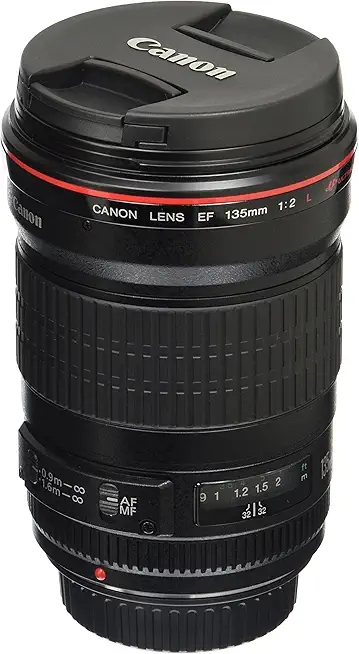
Canon EF 135mm f/2L USM
Classic short-telephoto prime offering dreamy background separation, rapid autofocus and superb contrast—favorite for portraits, events and cinematic subject isolation.
Check PriceThe Canon EF 135mm f/2L is a portrait-focused prime that I reach for when I want subject separation and buttery out-of-focus backgrounds. Its fast f/2 aperture gives me extra shutter speed latitude in dim receptions and evening ceremonies without cranking ISO through the roof.
Optically it’s very strong — extremely sharp with smooth color rendition that flatters skin tones and produces punchy, true-to-life images. That character is why many event photographers treat this lens like a go‑to for headshots, couple portraits, and detail moments where background compression matters.
Handling feels professional and reassuring; the build quality has that L-series solidity so it survives days of heavy use. The focal length compresses the scene well, letting you isolate subjects at distance and create intimate-looking frames even in busy venues.
There are trade-offs. The narrow field of view means you need more working distance, so it isn’t the lens for tight indoor group shots or cramped cocktail spaces. Also, at such a fast aperture you may want to verify AF accuracy before a gig, as focus can need occasional manual fine‑tuning for pixel‑peeking results.
In short, if your event work includes portraits, speeches, or you can step back for framing, the Canon 135mm f/2L delivers beautiful separation, low‑light reach and professional build. If you need a do‑everything lens for crowded rooms, you’ll likely want something wider or more versatile alongside it.
- Fast f/2 for low light
- Exceptional sharpness and color
- Beautiful shallow depth of field
- Professional, solid build
- Narrow field of view needs distance
- AF can require fine‑tuning
How to Choose Event Lenses
Decide what story you’re there to tell — atmosphere, candid faces, or posed portraits. Pick lenses that help you capture that story and match your working style. Factor in your access and working distance when choosing focal lengths.
For intimate weddings and receptions, mid‑range 35–85mm lenses keep perspective natural and let you move close without intruding. For conferences, stage events, or sports you’ll need 70mm+ glass to isolate subjects from a distance.
Zooms are the pragmatic choice: fewer swaps and instant framing flexibility when scenes change. Primes shine when light is low or you want creamy bokeh — a single fast prime can transform portraits. A pairing like 24–70 and 70–200 still covers almost everything.
Prioritize aperture if you plan to shoot by available light — f/1.4–f/2.8 lenses keep ISO down and render pleasing subject separation. If you rely on flash, stopping down to f/4 works, but expect flatter backgrounds and less mood.
Use ultra‑wide 16–35mm to show context and large groups, but step back to avoid edge distortion. Keep 35–50mm for a natural look and 85–200mm when you need to compress the scene and capture expressions from afar.
Image stabilization matters once you pass about 50mm or when shooting handheld in dim light. Full‑frame plus fast glass gives top image quality, while APS‑C bodies can be a lighter, budget‑friendly choice that adds reach.
Balance optical performance with comfort. If you’re on your feet all day favor manageable weight. A compact f/2 zoom can be a great lightweight compromise when you want shallow depth but less heft; bring a backup lens or body and plan swaps so you don’t miss key moments.
Test AF speed, stabilization and minimum focus distance in similar light before the event. A quick rehearsal saves you surprises and keeps you shooting the story, not fiddling with gear.
Tips for Using Event Lenses
Lenses are your primary storytelling tools at an event. Choosing the right glass and using it with intent shapes mood, perspective and how moments read.
Before the doors open, spend time with each lens. Learn minimum focus distance, where the bokeh sings, and how sharp it stays at different apertures.
Match focal length to the story you want. Use 16–35mm for room context, 24–70mm or 28–70mm as a walkaround, and 85–200mm to isolate expressions and speakers.
Use aperture to set mood. Open to f/1.2–f/2.8 for intimate low‑light moments and subject separation. Stop down to about f/4 for groups; heavy flash often favors smaller apertures.
When you reach for wide angle, step back rather than leaning in. That prevents stretched limbs and curved faces, and stopping down a touch (f/4–f/5.6) usually helps corner sharpness.
Respect shutter speed. Aim for roughly 1/(focal length) handheld, though image stabilization will buy you an extra stop or two. For moving subjects, choose faster speeds.
Bring a backup plan: a second body or an extra zoom plus a fast prime covers most failures. Pack spare batteries, cards and a quick‑change pouch to keep lens swaps fast and dust to a minimum.
Work quietly and at the right distance. Use longer lenses when discretion matters, enable quiet autofocus and move deliberately so you don’t intrude on a moment.
Arrive early and test AF, stabilization and white balance under real venue lighting. A few practice frames with and without flash will reveal flare, vignetting and focus quirks before guests arrive.
Know the strengths of your kit and choose lenses with intention. When you trust the glass you can concentrate on people and storytelling instead of technical second‑guessing.
What People Ask Most
What are the best focal lengths for event photography?
Use wide-angle lenses to capture venue context and group shots, mid-range lenses for a natural perspective and general coverage, and telephoto lenses to isolate subjects and capture candid expressions from a distance. Choosing focal lengths that match your working distance and the event’s size will make framing easier.
Which lenses work best for low-light event photography?
Fast lenses with wide apertures are most useful in low light because they let you work without relying on flash and provide better subject isolation. Stabilization and reliable autofocus also help you keep handheld shots sharp in dim conditions.
Should I use prime or zoom lenses for event photography?
Primes typically offer wider apertures and very sharp results, while zooms give framing flexibility and reduce the need to change lenses. Many event shooters mix both types to balance creative control with practical versatility.
What aperture is ideal for event photography?
Open apertures are ideal for dim, intimate moments and for creating shallow depth of field, while smaller apertures are better for group shots and ensuring everyone is in focus. Adapt your aperture to the scene and whether you prioritize isolation or overall sharpness.
Which lenses are best for indoor events and receptions?
Wide-to-standard lenses are useful for capturing rooms and groups, and medium telephoto lenses are great for portraits and candid moments from a distance. Choose lenses that handle the venue’s space and lighting while allowing you to be discreet around guests.
How many lenses should I bring to an event shoot?
Bring a combination that covers wide, standard, and telephoto needs plus a fast option for low light, and include a backup if possible. This approach ensures you can handle venue shots, portraits, and distant candid moments without excessive lens changes.
Is image stabilization important for event photography lenses?
Image stabilization is helpful for handheld shooting in lower light and at longer focal lengths because it reduces motion blur from camera shake. It’s a useful feature when you need to keep shutter speeds low without increasing ISO excessively.
Conclusion for Event Photography Lenses
These five lenses provide a compact toolkit that covers most event scenarios, from wide venue context to intimate portraits and low‑light candid moments.
Choosing the right glass comes down to matching focal length and aperture to the event type, available light and the amount of subject separation you want, while balancing the flexibility of zooms against the low‑light advantages of fast primes.
Practical considerations—stabilization, working distance, and having a reliable backup—will keep your coverage consistent, and practicing with your kit under event conditions will pay off on the day.
If you want to sharpen your technique and expand your lens choices, explore more articles on the site to deepen your knowledge and workflow without being tied to a single setup.
Please leave a comment with questions or your own experiences and we’ll usually reply within a few hours to help you choose or troubleshoot gear for upcoming shoots.


0 Comments