

Ever watched a game under harsh stadium lights and wondered how some photographers freeze the decisive moment with such clarity?
Night sports photography is a unique beast: low ambient light forces wide apertures and high shutter speeds, while fast players demand precise autofocus and split-second timing.
This roundup highlights five top-tier lenses that pros and serious enthusiasts reach for when the sun goes down.
Each one shines in different situations, and each brings trade-offs that determine whether it’s the right tool for your kit.
At the top of the decision tree is aperture: faster glass lets you run higher shutter speeds and lower ISO, which translates to cleaner, sharper frames.
But wider apertures also give razor-thin depth of field that can make keeping moving subjects in focus harder, especially at long reach.
Focal length dictates how close you need to be and whether you can isolate one player or show a play in context.
Autofocus speed and tracking separate usable frames from misses, and stabilization can buy you a stop or two when handheld shooting is necessary.
Durable construction and weather sealing let you work through rain, dust, and the physical demands of stadium gigs.
This primer translates those technical trade-offs into practical choices for gym hardwoods, lit soccer fields, and late-night track meets.
If you want to choose a lens that helps you freeze action, reduce noise, and get publishable frames under lights, read on.
1. Canon EF 400mm f/2.8L IS II USM

Canon EF 400mm f/2.8L IS II USM
Ultra-telephoto performance with fast aperture and advanced stabilization for decisive wildlife and sports action from long distances.
Check PriceThe Canon EF 400mm f/2.8L IS II USM is a professional-grade 400mm prime built for demanding night sports work. Its f/2.8 aperture and image stabilization let you shoot faster shutter speeds and lower ISO when light is scarce.
In the field it delivers ultra-fast autofocus and exceptional sharpness. The lens isolates subjects beautifully, giving you crisp, high-contrast frames even wide open.
I reach for this lens for football, soccer and field athletics at night. It excels at locking focus on players under stadium lights and producing usable images at high ISOs.
Handling is honest: it’s heavy, but the tripod collar and balance make long days manageable. The build is robust and weather-sealed, so you can keep shooting through drizzle and cold nights.
This lens is aimed squarely at pro sports photographers, agency shooters, and serious amateurs who must deliver under pressure. If your assignments demand reliability, hit rate, and image quality, this is a lens that pays back what it costs in results.
Expect outstanding subject separation and a pleasing bokeh that really helps your subjects pop against busy backgrounds. Reviewers and seasoned shooters consistently praise the results; the weight is the common trade-off.
Be realistic about the downsides: it is extremely heavy and bulky, and the price places it beyond many enthusiasts. For those who need top-tier performance at night, however, it remains one of the most trusted choices.
- Unmatched sharpness and contrast, even wide open
- Fast, silent, accurate autofocus that locks in low light
- Robust weather-sealed build
- Excellent subject isolation and bokeh
- Extremely heavy and bulky
- Very expensive; out of reach for many
2. Canon EF 70-200mm f/2.8L IS III USM

Canon EF 70-200mm f/2.8L IS III USM
Versatile telephoto zoom delivering consistent sharpness, fast focusing, and reliable image stabilization for pro portraits, events, and sports.
Check PriceThis 70–200mm f/2.8 zoom is one of the most practical tools for night sports. It pairs a constant f/2.8 with built-in image stabilization and a rugged, weather-sealed build, which makes it reliable under gym lights and in marginal outdoor conditions.
In real-world shooting it shines on indoor and outdoor night sports like basketball, hockey, and volleyball. You get sharper and faster focusing than entry-level zooms, plus the flexibility to switch from close-up player portraits to wider team action without changing lenses.
Autofocus is fast and quiet, which helps when tracking unpredictable athletes under poor light. The constant f/2.8 aperture keeps shutter speeds up and ISO down, and the stabilization lets you handhold more safely when sidelines space is tight.
If you’re a sports shooter who needs a versatile, portable option, this lens is a strong choice. It’s a significant investment, but it’s more affordable than big super-telephoto primes while giving much of the day-to-night performance you actually need.
Expect excellent edge-to-edge sharpness across the zoom and consistent results even wide open. The only real trade-offs are price and that subject isolation at 200mm won’t match longer primes when you need extreme background separation.
- Fast, reliable autofocus in low light; silent operation
- Consistent sharpness across the zoom range, even wide open
- Built-in image stabilization for handheld shooting
- Rugged, weather-sealed construction
- Significant investment
- Subject isolation at 200mm not as strong as longer primes
3. Sigma 85mm f/1.4 DG DN Art

Sigma 85mm f/1.4 DG DN for Sony E
Creamy bokeh and razor-sharp detail thanks to large aperture ideal for flattering portraits and low-light creativity.
Check PriceIf you shoot indoor sports, the Sigma 85mm f/1.4 DG DN Art is one of those lenses that instantly makes low-light work feel easier. It’s an 85mm prime with an f/1.4 aperture, available for Sony E-mount and L-mount, so it pairs naturally with modern mirrorless bodies.
The f/1.4 opening lets you run much faster shutter speeds and lower ISOs in gyms and arenas. That extreme aperture also gives you beautiful subject separation and creamy bokeh, which helps isolate athletes from busy backgrounds under artificial lights.
Autofocus on this lens is consistently praised for speed and accuracy on mirrorless systems, so it will keep up with the erratic movement of basketball and volleyball players. In practice I’ve found it sharp and contrasty wide open, delivering colors and detail that hold up even at higher ISOs.
Because it’s a prime, the lens is compact and relatively light compared with long telephoto zooms, making it easy to handhold for extended courtside shifts. The trade-off is obvious: you must be close enough to use an 85mm effectively, so it’s best for photographers who can work inside the venue rather than from the stands.
- F/1.4 — exceptional low-light performance
- Fast, accurate autofocus on mirrorless bodies
- Compact and relatively light for fast prime
- Outstanding sharpness and color, even wide open
- Fixed 85mm limits compositional flexibility
- Some users report minor focus breathing
4. Canon EF 300mm f/2.8L IS II USM

Canon EF 300mm f/2.8L IS II USM
Lightweight telephoto with exceptional speed and stabilization to freeze distant action while maintaining superb optical clarity.
Check PriceThe Canon EF 300mm f/2.8L IS II USM is a pro-grade 300mm prime with an f/2.8 maximum aperture and built-in image stabilization. It’s built for shooters who need speed and reach without the full bulk of a 400mm prime.
In real-world night sports I turn to this lens for baseball, track, and field. It hits the sweet spot when 400mm feels too tight and 200mm leaves you wanting more.
Optically it’s tack-sharp wide open and delivers a very pleasing background blur that helps isolate athletes under stadium lights. The autofocus is fast and quiet, and it performs extremely well in low light when you need reliable focus on moving subjects.
Handling is where this lens shines for many. It’s noticeably lighter and more portable than 400mm primes, so handheld work and long shifts feel more manageable. That balance of reach, speed, and portability is why many pros call it the “perfect middle ground” for field sports at night.
If you need extra reach it also plays nicely with teleconverters, retaining good performance when you extend focal length. That flexibility makes it a sensible investment for photographers who sometimes need more reach without swapping bodies or lenses mid-game.
It’s not flawless for everyone. It remains a significant investment and is heavier than most zooms, so if you prize versatility or minimal weight a fast zoom might suit you better. But if your priority is low-light performance, subject isolation, and dependable AF in night sport conditions, this 300mm is hard to beat.
- 300mm f/2.8 with IS
- Tack-sharp wide open
- Fast, silent AF that excels in low light
- Lighter and more portable than 400mm primes
- Still a significant investment
- Heavier and less flexible than zooms
5. Sony FE 70-200mm f/2.8 GM OSS II
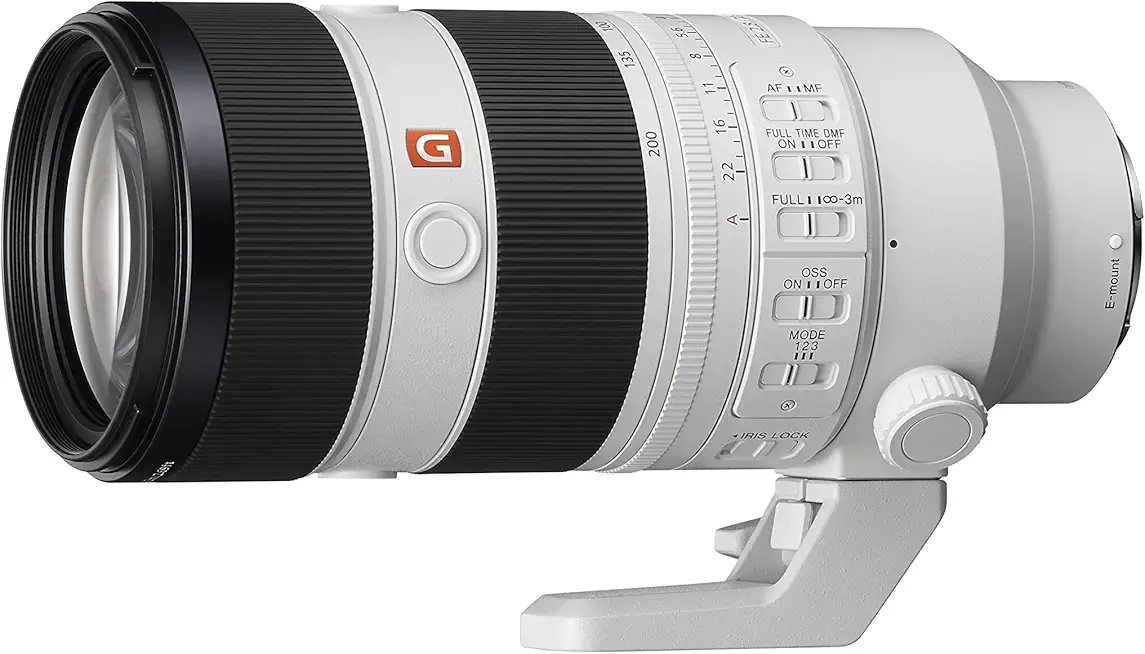
Sony FE 70-200mm f/2.8 GM OSS II
Premium pro-grade zoom offering unmatched sharpness, fast autofocus, and steady shots for professionals and demanding enthusiasts.
Check PriceThe Sony FE 70-200mm f/2.8 GM OSS II is a pro-level 70–200mm zoom with a constant f/2.8 aperture, OSS image stabilization, and G Master optics. As a working sports photographer, I value that combination—fast glass, in-body-friendly stabilization, and the kind of rendering that holds up at high ISOs.
In practice this lens shines in marginal light. It’s highly regarded by Sony shooters for night sports because the aperture and rapid AF let you freeze motion without pushing ISO into unbearable territory. Edge-to-edge sharpness even wide open and AF that tracks erratic movement mean you get usable frames from tough sequences.
Handling is another strong suit. It’s compact and relatively light for a 70–200mm f/2.8, so you can handhold longer runs on the sideline or move quickly between positions. The built-in stabilization helps catch frames when the shutter speed needs to drop a touch, which is a real benefit in dim gyms or floodlit fields.
Is it for you? If you shoot Sony mirrorless and need a reliable, high-performance zoom for low-light sports, this is one of the best choices. Be aware it sits at a premium price within the Sony ecosystem, and you may see some minor vignetting at f/2.8 that’s easily corrected in post or by stopping down a stop. Overall, it gives the speed, sharpness, and handling most night-sports shooters demand.
- Extremely fast and accurate autofocus in challenging light
- Compact and relatively light for a 70–200mm f/2.8
- Excellent sharpness and contrast with minimal distortion
- Built-in stabilization aids handheld shooting in low light
- Premium price within the Sony ecosystem
- Some minor vignetting at f/2.8 reported (easily corrected in post)
Why Aperture Matters in Low Light
On a night shoot, aperture is the lever that most directly changes your exposure and image quality. It controls how much light hits the sensor, so it determines the shutter speeds and ISO you can realistically use.
When lights are marginal, you often need 1/500s or faster to freeze action cleanly. Lenses that open to f/2.8 let you hit those speeds at much lower ISO than f/4 glass. Move to f/1.4 or f/1.8 and you suddenly have extra stops of headroom—less noise, fewer blown highlights, and more options for shutter speed.
Wide apertures also give you that pro look: sharp subjects separated from creamy, out-of-focus backgrounds. That isolation makes the athlete pop under stadium lights but comes with razor-thin depth of field that demands precise focus.
A larger maximum aperture also helps autofocus systems because it lets more light reach the AF sensors and improves acquisition in dim conditions. Faster AF plus more light often translates into a noticeably higher keeper rate when the action is messy.
There are times when you should stop down, though. If the play stretches in depth—lineouts, scrums, or groups of players—you’ll often need f/4 or f/5.6 to keep multiple subjects acceptably sharp. Expect to nudge ISO upward and accept a little extra noise for the gain in usable frames.
My routine is simple: start wide, pick a shutter target (I aim 1/500–1/1000s depending on the sport), then raise ISO only as necessary. If focus begins to miss too often I stop down one stop and reassess. Check frames at 100% on your LCD between bursts so you can adjust aperture, shutter, or ISO on the fly.
When you choose glass for night sports, prioritize maximum aperture above convenience or size. A constant f/2.8 zoom gives balance and flexibility, but an f/1.4–f/1.8 prime will buy you cleaner high-ISO images and more freedom to freeze action.
Tips for Sharp Night Images
Night sports are unforgiving. Low light, fast motion and harsh stadium lighting will expose weak technique faster than anything else, so the goal is simple: freeze action, nail focus, and manage noise.
Prioritize shutter speed above all. I aim for at least 1/500s for general play and push toward 1/800–1/1000s for sprinting or sudden bursts; that usually means opening the lens fully and accepting higher ISO.
Use the widest aperture your lens allows. An f/2.8 or faster optic buys you critical shutter speed and cleaner files. Modern cameras tolerate ISO 3200–6400 well, so raise ISO when needed but keep shooting RAW so you can recover detail in post.
Focus strategy matters as much as exposure. Run continuous AF (AF‑C/AI‑Servo) with a small AF area or single point on the athlete’s head or chest, and use back‑button AF if you want separation between focusing and firing. Eye/head detection helps in clean scenes, but in crowded frames I still prefer placing my own point.
Support and stabilization increase keeper rate. A monopod is a great compromise for long sequences; use lens or body stabilization for handheld shots and switch IS off on a locked tripod. Practice bracing—elbows in and controlled breathing—and you’ll reduce motion blur instantly.
Check your frames often and zoom in on the LCD to confirm sharpness and exposure. If highlights are clipping, dial slight negative exposure compensation and recover shadows in RAW; protecting highlights is usually more forgiving than brightening noise‑filled shadows.
In post, apply noise reduction judiciously so you don’t smudge edges, then sharpen selectively. Small, deliberate tweaks to shutter, focus point and ISO during a game will quickly improve your keeper rate more than chasing perfect gear.
What People Ask Most
What focal lengths are best for night sports photography?
Long telephoto focal lengths are ideal for field sports where you need to isolate distant subjects, while shorter telephoto and standard ranges work well for indoor and close-up action. Choose focal length based on your position relative to the play and the amount of subject isolation you want.
What aperture do I need for night sports photography?
Wider apertures such as f/2.8 or wider help a lot because they let more light in and allow faster shutter speeds. Using a fast lens also gives shallower depth of field for subject separation in low light.
Should I choose prime or zoom lenses for shooting sports at night?
Primes often offer wider apertures and excellent image quality, while zooms provide compositional flexibility and reach in changing situations. Pick based on whether maximum light-gathering or framing versatility matters more for your shooting style.
How important is fast and accurate autofocus for night sports photography?
Fast and reliable autofocus is essential to keep up with erratic motion and low-contrast scenes at night. Good AF performance greatly increases your keeper rate and reduces missed moments.
Do I need image stabilization for night sports photography?
Image stabilization is useful for handheld shooting and when using slower shutter speeds, helping reduce blur from camera shake. It is less critical when you need very fast shutter speeds to freeze motion, but it adds versatility overall.
Is full-frame or crop sensor better for night sports photography when choosing lenses?
Full-frame bodies generally perform better in low light and give shallower depth of field, while crop sensors can provide extra apparent reach with the same lens. Both systems can produce excellent results; choose the combination that fits your workflow and lens options.
Which lens features matter most for shooting fast-moving athletes at night?
Prioritize a wide maximum aperture, fast and accurate autofocus, solid build quality, and useful focal length for the sport you cover. Image stabilization and weather sealing are valuable extras that improve handheld performance and reliability.
Conclusion for Night Sports Lenses
Choosing the right lens for night sports comes down to matching your shooting distance, the sport’s demands, and your camera system while prioritizing aperture, autofocus, stabilization, and build quality.
Every option involves trade-offs between reach, speed, weight, flexibility, and budget, so the best choice is the one that balances those factors for your typical assignments and working style.
Whenever possible, test gear in real shooting conditions or rent before you buy, and remember that practice with the lenses you own often yields bigger gains than waiting for the perfect setup.
If you want to sharpen your night-sports workflow and gear decisions, read more articles on the site to learn practical tips, comparisons, and techniques that will help you improve quickly.
Have questions or want to share your own experiences? Leave a comment below — we usually reply within a few hours and welcome the conversation.





0 Comments