

Which Canon lens will make your subject leap off the frame and render backgrounds into liquid silk?
Every portrait photographer chases that mix of pin-sharp detail, flattering compression, and creamy bokeh. But with multiple mounts, formats, and price tiers, choosing the right glass can feel overwhelming.
This Ultimate Guide trims the field to five Canon portrait lenses that consistently deliver flattering results for shooters at every level. We compare primes versus zooms and explain the trade-offs between wide apertures, focal flexibility, and portability.
You’ll also find straightforward focal-length guidance tailored to different portrait styles—environmental scenes, half-body shots, and tight headshots. We break down how perspective, compression, and depth-of-field shape facial features and background separation.
Beyond optics, this guide digs into handling, size, autofocus behavior, and real-world low-light performance so you know what to expect on a shoot. I weave pro experience with user feedback to highlight strengths and reasonable compromises.
No heavy spec-sheets or needless jargon—just magazine-style, hands-on insights. A concise FAQ answers the common questions photographers ask about focal length, bokeh, and choosing primes or zooms, so you can find the lens that fits your camera, workflow, and creative goals.
1. Canon RF 85mm f/1.2 L USM

Canon RF 85mm F1.2L USM
Exceptional portrait lens delivering creamy shallow depth-of-field, lightning-fast focus, and professional-grade optics for stunning low-light performance.
Check PriceThe Canon RF 85mm f/1.2 L USM is widely regarded as the ultimate portrait lens for Canon RF mirrorless cameras and I’ve seen that reputation hold up in studio, wedding, and fashion shoots. It’s the kind of lens that photographers reach for when they need images with real presence and polish. In the right hands it consistently delivers pro-level results.
Optically, it’s remarkable — it produces stunning sharpness even wide open at f/1.2, and the bokeh is often described as “creamy” and “dreamy.” Images gain a palpable three-dimensional look with strong subject separation that makes faces and details pop off the frame. That combination of pinpoint sharpness and smooth background rendition is why it’s a go-to for headshots and editorial work.
On the practical side you should know it’s large and heavy, so handheld shooting and travel require some planning or support. Autofocus is fast and reliable in most conditions, which is essential during weddings or busy studio sessions, though AF can be slow in very low light or at extreme close distances. Build quality is reassuring — it’s built to L-series standards and weather-sealed, so it stands up well to demanding shooting environments.
If you prioritize ultimate image quality, creamy bokeh, and subject isolation, this lens is an excellent choice; it’s aimed at professionals and serious enthusiasts who can accommodate its size and handling. If you need a lightweight, travel-friendly solution or you frequently shoot in very dim ambient light at close range, consider those trade-offs before committing.
- Exceptional sharpness even at f/1.2
- Beautiful, creamy bokeh
- Excellent subject isolation
- Fast and accurate autofocus in most conditions
- Large and heavy for handheld use
- AF can be slow in very low light or at close distances
2. Canon EF 85mm f/1.4L IS USM

Canon EF 85mm f/1.4L IS USM
Versatile portrait optic with image stabilization, silky bokeh, and precise autofocus for crisp, studio-quality portraits in varied lighting.
Check PriceThe Canon EF 85mm f/1.4L IS USM is a go-to portrait lens for many Canon DSLR shooters. I reach for it when I need reliable, flattering headshots at weddings, events, and in the studio.
Optically it delivers tack-sharp images even wide open at f/1.4, so you get crisp eyes and fine detail without stopping down. The rendering produces a beautiful, smooth bokeh that helps subjects pop off the background with very pleasing subject separation.
Autofocus is fast and accurate, which matters when you’re working a busy ceremony or trying to capture a fleeting expression. The built-in image stabilization is a real advantage for handheld low-light shooting, giving you extra flexibility when flash isn’t an option.
Build quality is solid L-series stuff: the lens is fully weather-sealed and feels sturdy in hand, so it stands up to outdoor conditions and professional use. It’s relatively compact for an 85mm f/1.4, but don’t be surprised by its substantial weight when you carry it all day.
Practically speaking, this lens is excellent for portrait photographers who want top-tier sharpness, creamy bokeh, and the convenience of stabilization. If you regularly shoot handheld in low light or need dependable AF during events, it’s a very strong choice.
Keep in mind the trade-offs: the heft can be tiring for extended handheld sessions, and autofocus performance can slow down in very low light or at extreme close distances. If those limitations aren’t deal-breakers for your workflow, this lens will be a powerful portrait tool.
- Exceptional sharpness at f/1.4
- Fast, accurate autofocus
- Image stabilization for handheld low-light
- Beautiful, smooth bokeh
- Can be heavy for extended handheld use
- AF can be slow in very low light or at close distances
3. Canon RF 35mm f/1.8 Macro IS STM
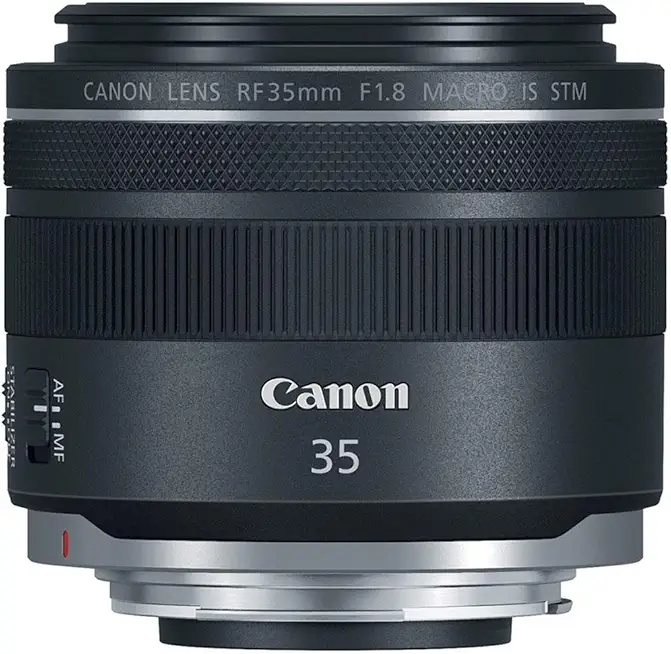
Canon RF 35mm F1.8 IS Macro STM
Compact wide-angle prime combining close-up macro capability, built-in stabilization, and sharp, low-light performance for travel and everyday creativity.
Check PriceThe Canon RF 35mm f/1.8 Macro IS STM is a versatile lens that shines when you want environmental portraits and full-body shots while still having the option to get intimate close-ups. Its 35mm field of view on a full-frame RF body lets you include context without obvious distortion, which is ideal for storytellers and on-location portrait work.
You get consistently sharp images with very pleasing bokeh at f/1.8, so subjects pop from their background even when shooting wider apertures. As a working photographer, that combination of sharpness and rendering makes it easy to achieve professional-looking results without fuss.
Where this lens really adds creative value is its macro capability — you can capture fine detail for headshot texture, accessories, or creative detail shots that complement a portrait series. Keep in mind, though, that autofocus can be slow for macro work, so for tight close-ups you may want to focus manually or plan for slower, deliberate shooting.
Practically speaking, it’s light and compact, which makes it excellent for travel, extended handheld sessions, and run-and-gun assignments. Built-in image stabilization is a big plus for handheld low-light shooting and for keeping shots steady when you’re not using a tripod.
One downside is that the lens is not weather-sealed, so if you shoot in wet or dusty conditions you’ll need to be cautious or use protective measures. Overall, this is a strong, multipurpose optic for RF shooters who want a 35mm that can do environmental portraits, full-body work, and useful macro close-ups without weighing them down.
- Sharp images with nice bokeh
- Macro functionality for close-up details
- Lightweight and compact
- Image stabilization
- Not weather-sealed
- AF can be slow for macro work
4. Canon EF 85mm f/1.8 USM

Canon EF 85mm F1.8 USM
Lightweight portrait lens offering fast autofocus, pleasing background separation, and excellent value for sharp portraits.
Check PriceThe Canon EF 85mm f/1.8 USM is a classic portrait lens for Canon DSLRs, prized for its affordability and reliable image quality. As a working photographer, I reach for it when I need a lightweight, no-fuss optic that consistently delivers flattering results.
In actual shoots it shines on headshots, full-body portraits, and event photography—situations where you want pleasing compression and subject separation without lugging a heavy lens. Users consistently praise its sharpness and the nice bokeh it produces, which gives portraits a clean, professional look.
Practically speaking, the lens is light and compact, so it’s easy to carry all day and quick to shoulder for unpredictable event work. Autofocus is fast and accurate in most conditions, which means you’ll catch fleeting expressions without hunting for focus.
There are a couple of trade-offs to be aware of. The lens is not weather-sealed, so I’d avoid it in steady rain or dusty conditions without extra protection. Also, while AF is generally excellent, it can be slow in very low light—so plan for a tripod, higher ISO, or a faster lens if you routinely shoot dimly lit venues.
Bottom line: if you want an affordable, portable 85mm that delivers sharp images and lovely out-of-focus backgrounds, this lens is a strong choice—especially for headshots, portraits, and event work where mobility and value matter most.
- Sharp images with nice bokeh
- Fast and accurate autofocus
- Lightweight and compact
- Excellent value for the price
- Not weather-sealed
- AF can be slow in very low light
5. Canon RF 50mm f/1.8 STM

Canon RF 50mm F1.8 STM
Affordable standard prime with smooth bokeh, compact design, and quiet focusing for everyday, low-light, and street photography.
Check PriceThe Canon RF 50mm f/1.8 STM is a practical, no-nonsense 50mm prime that I reach for when I want clean, natural-looking portraits without hauling heavy glass. It’s a favorite for full‑body and environmental portraits on RF bodies because it balances image quality with affordability. As a working photographer, I appreciate lenses that let me move fast and stay light; this one does both.
Image quality is impressive for the price. It delivers sharp images with nice bokeh, especially at f/1.8, which helps subjects pop from the background without demanding a huge budget. The rendering is neutral and pleasing, so skin tones and facial details come through naturally — great for clients who want flattering but honest results.
On the practical side it’s lightweight and compact, making it ideal for travel and handheld shooting when you need to be unobtrusive. Autofocus is fast and accurate in typical shooting conditions, so you won’t miss key moments during a session. Be aware it’s not weather-sealed, and the AF can be slow in very low light, so plan accordingly for rainy shoots or dim interiors.
Overall, this lens is a smart choice if you want a versatile, everyday portrait lens that won’t blow your kit budget. I’d recommend it to photographers who prioritize portability, value, and solid optical performance for environmental and half‑body portraits.
- Sharp images with nice bokeh
- Fast and accurate autofocus
- Lightweight and compact
- Excellent value for the price
- Not weather-sealed
- AF can be slow in very low light
Fixed Lenses vs Zoom Lenses
As a portrait photographer I split my kit between primes and zooms depending on the job. Primes typically offer wider maximum apertures — f/1.2 to f/1.8 — giving much shallower depth of field, creamier bokeh and stronger subject separation. That look is why many reach for a fast fixed lens.
Those wider apertures also improve low-light performance and let you isolate the subject from busy backgrounds. Using a prime forces you to move and compose, which trains your “viewing muscle” and produces more intentional framing. That discipline pays off faster than adding extra focal lengths.
The downside is lack of framing versatility when you cannot move. In tight spaces or during unpredictable moments you may need to switch lenses or miss shots. That practical limitation is the main compromise with fixed glass.
Zooms buy instant compositional flexibility and let you shift from group wide to tight headshots without swapping lenses. That adaptability is invaluable at weddings and events where movement and distance change constantly, keeping you from missing important moments. In short, zooms keep you nimble and ready for spontaneous interactions.
The trade-off is aperture and image character. Most zooms stop down to f/2.8 or smaller, which reduces background blur and hurts low-light performance compared with fast primes. There are high-end exceptions like the Canon RF 28–70mm f/2, but they’re still uncommon.
My simple rule is to match the lens to the situation. If you control the scene and want dreamy separation, pick a prime; if you need coverage, speed and adaptability, pick a zoom. When possible I carry one fast prime for portraits and a versatile zoom to cover the rest of the assignment so I don’t compromise either image quality or my ability to react.
Choosing Focal Length for Portraits
Focal length shapes perspective, compression and how features appear in your portraits. Choosing the right focal length is less about rules and more about matching the lens to the subject, space and mood you want. Think of it as the difference between being a close conversationalist and a respectful distance photographer.
Short focal lengths (35mm and below) pull the background in and exaggerate features if you get too close. Use them for environmental portraits, groups or full‑body shots when you want context and a sense of place. They’re also great when you can’t step far back or need to include surroundings as part of the story.
A 50mm on full‑frame gives a natural, life‑like perspective that feels familiar to viewers. It’s incredibly versatile for half‑body portraits and situations where you want the subject and some background context to sit comfortably together. If you’re working in modest space, 50mm is a reliable go‑to.
The 85mm range is the classic portrait sweet spot for a reason — it offers pleasing compression, minimal facial distortion and creamy subject separation. From headshots to three‑quarter portraits it lets you stand at a comfortable working distance while filling the frame. If flattering skin tones and a three‑dimensional pop matter, start here.
Longer focal lengths (100–135mm) increase compression and background blur, which can produce a very elegant, studio‑style look. They demand more shooting distance, so they work best in studios or open outdoor spaces. Use them when you want tight framing and a dreamy, distant background.
Practical rules to remember: avoid wide angles for close‑ups, use 35–50mm for environmental work, and choose 85–135mm for flattering, intimate portraits. Your final choice should balance subject comfort, available space and your creative intent. When in doubt, try a couple of focal lengths and see which one makes the subject look and feel best.
What People Ask Most
What is the best Canon lens for portrait photography?
There is no single best lens since the right choice depends on your style, subject, and budget. Many photographers favor an 85mm prime for classic headshots, while a 50mm is popular for versatility and environmental portraits.
Is a 50mm or 85mm lens better for portraits?
Both are excellent but serve different purposes: a 50mm gives a more natural, versatile view and works well for half‑body or environmental portraits. An 85mm offers stronger subject separation and is often preferred for tight headshots.
What focal length is best for portrait photography?
The best focal length depends on the type of portrait and how much background you want to include. Shorter focal lengths suit environmental and full‑body shots, while longer focal lengths flatter faces and create more background compression.
Are prime lenses better than zoom lenses for portrait photography?
Primes often offer wider maximum apertures and a shallower depth of field, which helps with low light and creamy bokeh. Zooms provide flexibility and quick framing changes, making them useful in dynamic or confined shooting situations.
Can I use a Canon 70-200mm lens for portraits?
Yes, a telephoto zoom like that can produce flattering compression and strong background separation for portraits. It typically requires more working distance but is very useful for headshots and outdoor portraits when space allows.
Which Canon lens gives the best bokeh for portraits?
Bokeh quality is influenced by aperture size, optical design, and focal length rather than a single model. Lenses with wider apertures and longer focal lengths generally produce smoother, creamier background blur.
What aperture should I use for portrait photography?
Choose a wider aperture when you want subject isolation and a blurred background, and stop down when you need more depth of field for multiple subjects or tighter focus across the subject. Adjust based on how much background detail you want visible.
Conclusion for Canon Portrait Lenses
This roundup looked at five Canon portrait lenses, outlined the practical trade-offs between primes and zooms, and offered clear focal-length guidance plus FAQs to help you decide.
Whether you care most about creamy bokeh, compact travel-friendly options, or framing flexibility, the article gives practical points you can apply when choosing gear for the portraits you want to make.
Use these considerations as a starting point: try lenses in the field, pay attention to perspective and working distance, and let your creative goals guide the final choice.
To keep improving your portrait technique and gear knowledge, explore more articles on our site for tips, comparisons, and real-world advice.
Have questions or want to share your experiences with these lenses? Leave a comment and we usually reply within a few hours.


0 Comments