

Ever wondered why a photograph of the same vase feels cinematic in one shot yet lifeless in another?
More often than not, it comes down to a single decision: the lens on your camera.
The right lens changes perspective and compression, altering how objects relate to one another in the frame.
It dictates depth of field, so you can blur a background into creamy isolation or render every texture tack-sharp.
Working distance and close-focus ability determine how intimate you can get without losing lighting control or casting unwanted shadows.
This round-up compares five lenses chosen specifically for still-life work, from budget-friendly primes to wide-angle, short-telephoto and true macro options.
Each has a role—whether you’re shooting tabletop food, jewelry, or botanical studies—and the right choice will shape your creative voice.
We tested lenses across different budgets and setups to focus on practical results rather than specs alone.
For every lens you’ll find an honest look at pros and cons, real-user feedback, and clear guidance on who will benefit most from it.
Expect candid observations about handling, working distance, and when a macro is worth the investment for extreme detail.
By the end you’ll know which optic matches your subject, style, and budget so you can make informed, creative choices.
1. Canon EF 50mm f/1.8 STM
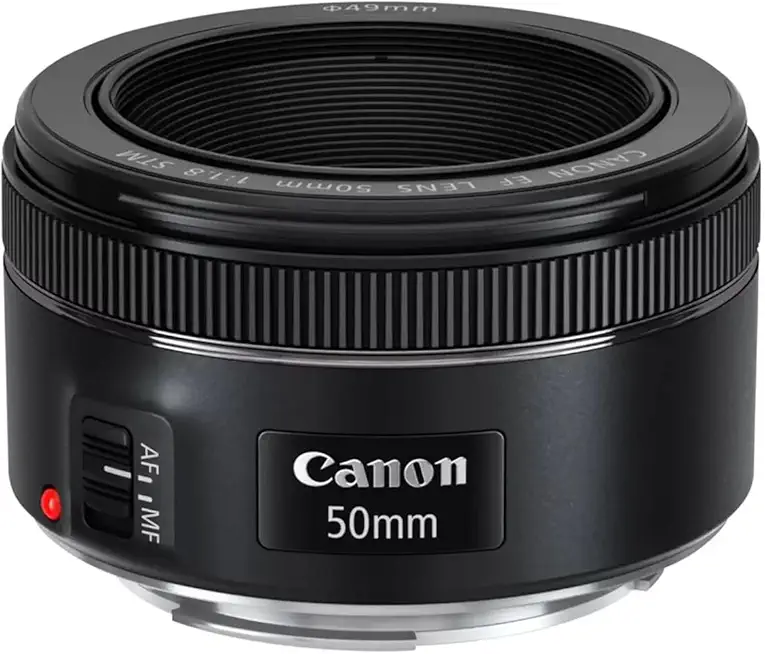
Canon EF 50mm f/1.8 STM
Affordable, lightweight standard prime delivering sharp images, creamy background blur and excellent low-light performance—perfect for portraits and everyday shooting.
Check PriceThe Canon EF 50mm f/1.8 STM is a staple in my kit for still life work. Its compact size and simplicity make it easy to position over a table or travel with to location shoots. It’s a lens that lets you focus on composition rather than fussing with gear.
Optically it shines where it counts for product and food shots. Stop it down to f/8–f/11 and you get tack‑sharp results across the frame, perfect for capturing textures and fine detail. At wider apertures the pleasant bokeh helps isolate subjects like single blooms or plated dishes.
Users praise it for durability and value, and I’ve seen photographers rely on it for years. It’s affordable enough to be a daily workhorse and versatile enough for flowers, food, portraits, and travel. Some still-life shooters even prefer manual focus for precise control when composing small arrangements.
There are a couple of practical limitations to keep in mind. The fixed 50mm focal length means you must physically move to reframe, which can be restrictive in tight tabletop setups. Also, the minimum focus distance is about 1.5 feet, so it won’t replace a true macro for life‑size closeups.
- Tack-sharp at f/8–f/11
- Affordable and durable — daily workhorse
- Pleasant bokeh for subject isolation
- Versatile for food, flowers, portraits, travel
- Fixed focal length limits framing in tight spaces
- Minimum focus distance ~1.5 feet — not a true macro
2. Sigma 35mm f/1.4 DG HSM Art

Sigma 35mm f/1.4 DG HSM Art for Canon
Ultra-high-resolution 35mm prime offering exceptional sharpness, cinematic bokeh and fast aperture for stunning landscapes, street and low-light photography.
Check PriceAs a studio shooter, I reach for the Sigma 35mm f/1.4 DG HSM Art when I need a wider, pristine look without sacrificing image quality. It’s a top-tier wide-angle prime known for its edge-to-edge sharpness and beautiful color, which makes composing larger still-life scenes—like tabletop sets or product groups—much easier.
The lens gives remarkably rich, accurate colors straight out of the camera, so you spend less time correcting tones in post. That reliable color rendering is a huge time-saver for product and food photography where color fidelity matters to clients.
Optically, it stays extremely sharp even at wide apertures, so you can work with selective depth of field while retaining detail across the frame. That lets you create airy backgrounds without losing critical texture on your subject.
Build-wise, the Sigma is solid and feels like a professional tool; it sits well on a tripod and survives regular studio use. Autofocus is fast and quiet, which is handy when you work on-location or need discreet, repeatable focus pulls during a shoot.
There are practical trade-offs. The lens is heavy and large compared with smaller primes, so it’s less convenient for long handheld sessions or travel-heavy days. Also, it isn’t a macro lens and has limited close-focusing ability, so you’ll need a dedicated macro if you want life-size detail.
Overall, if you’re a professional still-life, product, or food photographer looking for exceptional sharpness, color, and reliability in a wide-angle prime, this Sigma is hard to beat as a studio staple.
- Extremely sharp edge-to-edge even at wide apertures.
- Rich, accurate color rendition needing minimal post-processing.
- Sturdy, professional-grade construction.
- Fast, quiet autofocus for studio and location use.
- Heavy and large; bulky compared with smaller primes.
- Not a macro lens; limited close-focusing ability.
3. Sigma 85mm f/1.4 DG HSM Art

Sigma 85mm f/1.4 DG DN for Sony E
Portrait-length prime delivering dreamy bokeh, outstanding subject separation and razor-sharp detail for striking portraits and headshots.
Check PriceThe Sigma 85mm f/1.4 DG HSM Art is a short-telephoto that many of us reach for when we need subject isolation with exceptional image quality. It’s repeatedly praised for tack-sharp images, creamy bokeh, and excellent color — exactly the combination that still life and product shooters crave.
This lens shines in small setups where you want a clean separation between subject and background. It’s useful for portraits and detailed still life work where emphasis on texture and form matters more than capturing wide context.
Users report superb sharpness even wide open, which means you can work at shallow depths of field and still retain critical detail on your subject. The smooth, pleasing bokeh helps backgrounds dissolve away, making food, cosmetics, or small products read clearly and attractively in-frame.
In practice it’s very versatile: photographers use it for food, cosmetics, portraits, and even video/stop motion because of its rendering and consistency. It’s also noted as a dependable “workhorse” for stills and video thanks to snappy autofocus and consistent results.
Build quality is another strong point — robust, premium construction that stands up to professional use. That sturdiness reinforces its appeal to product and portrait photographers who prioritize sharpness, bokeh, and long-term reliability.
Do keep in mind the trade-offs: the lens is heavy and the large, bulky lens hood can be cumbersome in tight spaces. If you shoot long handheld sessions or frequently work in cramped setups, those practical limits matter and should factor into your decision.
- Superb sharpness even wide open
- Smooth, pleasing bokeh
- Versatile for food, cosmetics, portraits, video/stop motion
- Robust, premium build
- Heavy; handheld shooting tiring
- Large, bulky lens hood cumbersome in tight spaces
4. Canon EF 100mm f/2.8L Macro IS USM

Canon EF 100mm f/2.8L IS USM Macro
Professional L-series macro with image stabilization, true 1:1 magnification and ultra-sharp optics for detailed close-ups and nature photography.
Check PriceThe Canon EF 100mm f/2.8L Macro IS USM is a dedicated macro lens built for photographers who need true life-size detail. It offers genuine 1:1 magnification, built-in image stabilization, and L-series weather sealing—features that make it a top choice for extreme close-ups of small objects and textures.
In practice it shines on jewelry, food details, and botanical work thanks to outstanding sharpness and color fidelity. The focal length gives a comfortable working distance for lighting and helps avoid casting shadows when you’re lit close to the subject.
Autofocus is fast and the image stabilization makes handheld macro shooting far more usable, which speeds workflow in studio and on-location still life sessions. Users often call it a “creative powerhouse” because it handles both extreme close-ups and regular still-life compositions with professional-level optics and build.
It’s not without trade-offs: the lens is relatively heavy and large, so it’s less portable than smaller primes. Also expect a learning curve—getting pixel-perfect focus at high magnification takes practice and patience, especially when shooting shallow depth of field.
- True 1:1 life-size reproduction
- Effective image stabilization for handheld macro
- Outstanding sharpness and color fidelity
- Weather-sealed L-series build
- Heavy and large — less portable
- Requires practice to nail focus at high magnification
5. Tamron SP 90mm f/2.8 Di Macro VC USD

Tamron SP 90mm f/2.8 Di VC USD Macro for Nikon (FX)
Professional macro offering true 1:1 magnification, vibration compensation and crisp, high-contrast results for close-up, portrait and studio work.
Check PriceThe Tamron SP 90mm f/2.8 Di Macro VC USD is one of those lenses that feels made for still life work — it delivers true 1:1 magnification so you can reproduce tiny details life-size, which is priceless for food, jewelry, and botanical photography. Its effective VC (vibration compensation) makes handheld macro shooting practical, so you don’t have to be chained to a tripod for every close-up.
Optically the lens is praised for excellent sharpness both at macro distances and when used as a short telephoto, giving you crisp detail and texture without fuss. Autofocus is fast and quiet, which is helpful in studio setups where silence matters and on-location when you need to work quickly.
Build quality is solid and robust, so it stands up to regular use in a studio or field environment; that durability paired with its performance is why many see it as a more accessible alternative to pricier macro options. The 90mm focal length also gives a comfortable working distance, letting you light subjects without casting harsh shadows and keeping tools out of the frame.
There are a couple of real-world caveats: video shooters will notice focus breathing when stopping down, and the AF can be slightly slower in very low light, occasionally hunting in dim conditions. Overall, for budget-conscious professionals and enthusiasts who want reliable, sharp macro performance for still life and detail work, this Tamron is a highly practical choice that balances value, optics, and usable stabilization.
- True 1:1 magnification
- Effective VC for handheld macro
- Fast, quiet autofocus
- Excellent sharpness and robust build
- Noticeable focus breathing when stopping down
- Slightly slower AF in low light / occasional hunting
Choose the Right Lens
Choosing the right lens changes the story your still life tells. It sets perspective, working distance, and how much background you include. Decide what size of subject you’re shooting, how intimate you want the viewer to feel, and whether you want crisp texture or painterly blur before locking in a focal length.
Primes in the 35–50mm range give a natural perspective that works for most tabletop setups. A 50mm is great in tight spaces; a 35mm lets you show more context without stepping back too far. Both handle wide apertures for subject separation and look sharp when stopped down, with minimal distortion.
Short telephotos around 70–100mm compress the scene and create pleasing background blur. They also give you a comfortable working distance so lights and reflectors don’t crowd the subject. For small objects this often produces the most flattering proportions and is forgiving when you tweak composition.
Wide-angle lenses under 35mm are useful when environment or context matters. Get too close, though, and they’ll exaggerate proportions and introduce distortion. Use them for overheads, larger groupings, or when you want an editorial, expansive feel.
Aperture controls depth of field and mood. Wide apertures like f/1.8–f/2.8 give shallow focus and soft backgrounds; stopping down to f/8–f/16 preserves texture and clarity across a scene. On a tripod, stopping down and focus stacking are practical ways to get both tack-sharp detail and adequate depth, but be mindful of diffraction at very small apertures.
Finally, work methodically: mount the lens on a tripod, then move the camera a few inches rather than guessing focal choices. Experiment with angles and distances to refine composition and background separation, and pay attention to how each focal length affects shadowing from your lights. Over time you’ll settle on a handful of go-to focal lengths that suit your subjects and style.
When to Use Macro for Still Life
Reach for a macro lens when the story lives in the detail; it’s not just about making small things bigger, it’s about revealing texture, tiny structures, and the way light plays across surfaces. Macro gives you life-size (1:1) reproduction so petals, pastry glazes, woven threads, and jewelry settings can fill the frame without heavy cropping. I typically pull out a macro when texture should drive the composition or when a product needs honest, close-up scrutiny.
Macro optics focus much closer than standard primes, dramatically shortening the minimum focus distance and letting small subjects dominate the frame. That short working range translates into resolving surface details that non-macro lenses simply can’t reproduce at the same scale. You get true life-size capture on the sensor, which changes how you light and compose the shot.
Macro lenses are engineered for those near distances, so they deliver exceptional sharpness and color fidelity where it counts most. Opting for longer macro focal lengths — around 90–100mm — buys you extra working distance, which is invaluable for lighting, using reflectors, and keeping your camera or hands out of the frame. That breathing room also makes it easier to control specular highlights on metals and glossy foods.
Use macro to emphasize veins on leaves, the weave of a textile, gemstone facets, pollen on a stamen, or the crumb structure of baked goods; these are the moments macro excels at. Be mindful that depth of field collapses quickly as magnification increases, so stopping down to f/8–f/16 or focus-stacking becomes essential for usable depth. A sturdy tripod and careful lighting will often make the difference between a technically good macro and a visually compelling one.
If your goal is intimate, life-size detail, choose a true macro — non-macro primes simply can’t match the minimum focus distance or micro-detail reproduction. Lenses in the 90–100mm class, like the Tamron SP 90mm, Canon RF 100mm L, or Sony FE 90mm, strike an excellent balance of reach, working distance, and edge-to-edge sharpness. Use macro when texture and faithful reproduction are the story you want to tell.
What People Ask Most
What focal length is best for still life photography?
It depends on the subject size and the perspective you want. Standard focal lengths give a natural look while short telephoto lenses help isolate subjects and compress the scene.
Is a macro lens good for still life photography?
Yes, a macro lens is excellent for capturing fine textures and life-size detail in small subjects. It’s especially useful for jewelry, food close-ups, and botanical shots, though it isn’t required for all still life work.
Should I use a prime or a zoom lens for still life photography?
Primes often deliver superior optical quality and wider apertures for shallow depth of field, while zooms offer framing flexibility without moving the setup. Choose based on whether image quality or compositional convenience is your priority.
What aperture should I use for still life photography?
Use wide apertures for shallow depth of field and subject separation and narrower apertures for greater depth of field and detailed texture. Select the aperture that balances sharpness and the amount of background separation you want.
Do I need a tilt-shift lens for still life photography?
No, tilt-shift lenses are not necessary for most still life; they are helpful when you need precise control over the plane of focus or perspective. Standard, macro, and short-telephoto lenses will cover the majority of still life needs.
Which lenses give the sharpest results for still life photography?
High-quality prime lenses and dedicated macro lenses are typically the sharpest choices for still life. Stopping down slightly from the widest aperture often improves edge-to-edge sharpness.
What lens is best for food and still life photography?
The best lens depends on the composition and working distance you need; a versatile standard prime is great for general work, while short-telephoto or macro lenses are better for tight crops and fine detail. Consider how much background separation and close-focus capability you require when choosing.
Conclusion for Best Still Life Lenses
Choosing the right lens for still life comes down to subject size, the level of detail you want to capture, and the creative look you’re after, so match focal length and aperture to your composition and working distance.
Whether you opt for a versatile everyday prime, a wider perspective, a short-telephoto for tight subject isolation, or a dedicated macro for life-size detail, each choice trades reach, depth-of-field, and handling in predictable ways.
Keep practical factors front of mind: working distance for lighting and shadow control, aperture for depth-of-field versus sharpness, and whether true macro capability is required for fine textures.
If you found these comparisons useful, explore more of our site to sharpen your technique and gear selection—there’s more practical guidance and examples to help you improve.
Have questions or want to share your experience with a particular lens or setup? Leave a comment below and we’ll usually reply within a few hours.



0 Comments