
What tiny worlds are waiting to be discovered through a lens for a curious 10-year-old? This guide compares five microscopes that suit that eager age, summarizing real-world use, pros and cons, and the kinds of kids each one fits best for both home and classroom use. Whether they’re budding biologists or curious explorers, the right scope can change how they see the world.
We focus on portability, magnification, durability, educational value, and hands-on activities that actually keep kids engaged. Practical questions matter: can a child carry it on a nature walk, mount a slide without frustration, or capture images to share? Our aim is to match the hardware to a child’s attention span and budding skills.
Each model is judged by how it performs in everyday scenarios—backyard exploration, classroom projects, and weekend experiments. We note ease of use, safety, the true usefulness of included accessories, and whether the optics reveal exciting detail without overwhelming a beginner. Real-world testing and parent feedback shape every recommendation.
Want lightweight portability for field trips, or a sturdier scope for deeper study? This guide steers you toward the best fit for your child’s skill level and curiosity. Clear tests and plain explanations make decision-making simple.
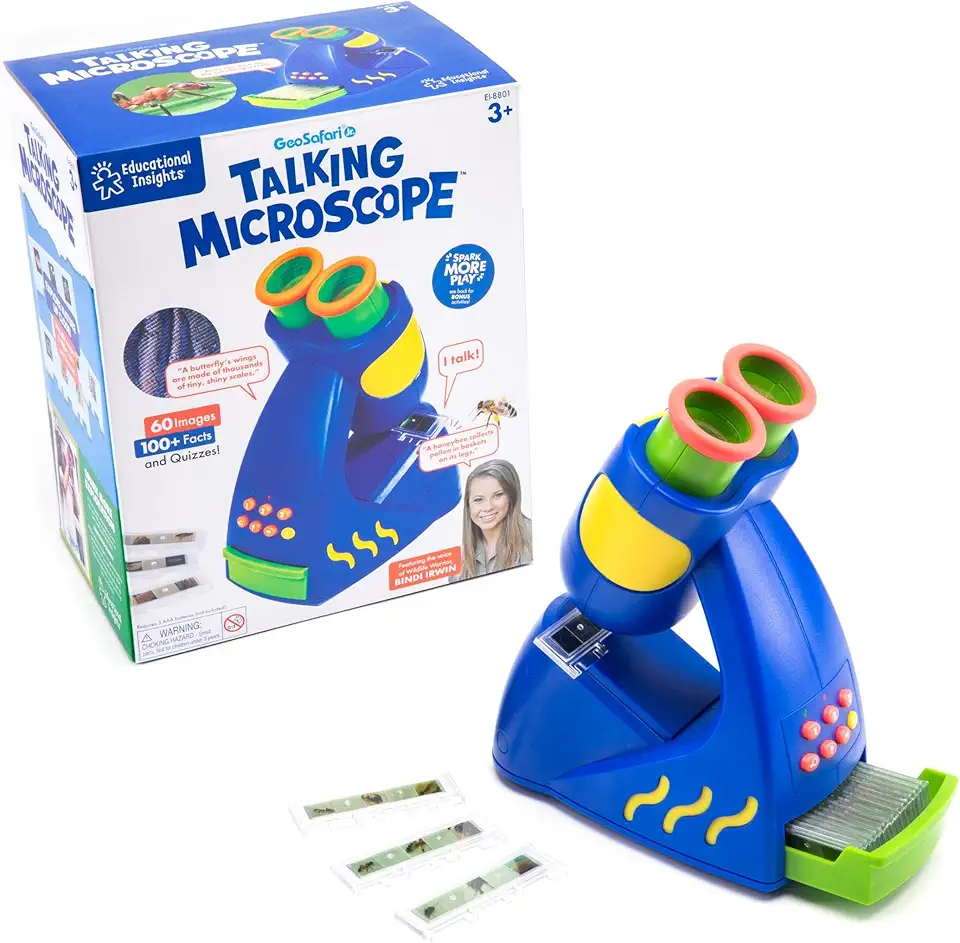
Educational Insights GeoSafari Jr. Talking Microscope featuring Bindi Irwin
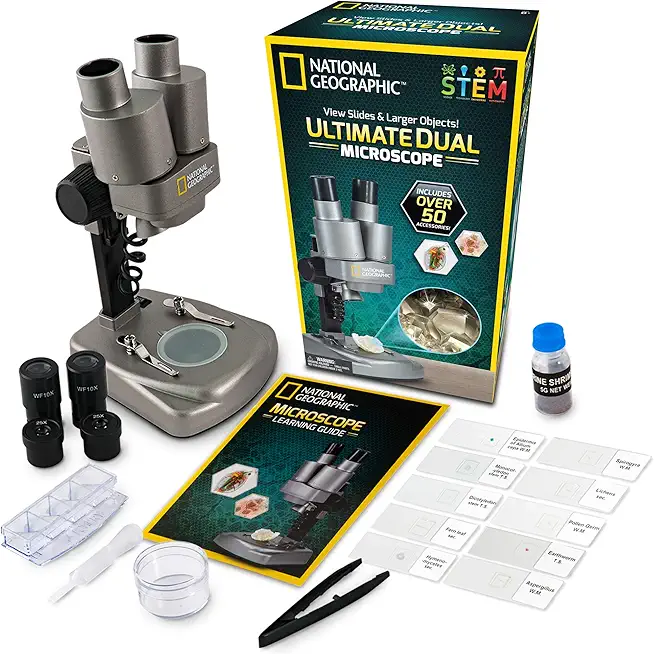
National Geographic Dual LED Microscope Science Kit 50+ pcs with 10 prepared slides and 10 blank slides
1. Pocket Scope for On-the-Go

Carson MicroBrite Plus MM-300 60x-120x LED Pocket Microscope
Ultra-portable LED pocket microscope offering 60–120× magnification, bright illumination, and easy focus for instant exploration of specimens anytime, anywhere.
Check PricePocket Scope for On-the-Go is a pocket-sized, LED-lit microscope offering 60x–120x magnification, built for quick looks at coins, plants, rocks, and minerals. Its design screams portability — you can slip it into a pocket and pull it out on nature walks or field trips.
In the field the unit shines — literally. The battery-powered LED helps in varying light conditions and keeps the view bright without extra gear. It’s ultra-compact and lightweight, so it feels more like a tool for exploration than a piece of lab equipment.
Focusing is simple: a basic zoom/focus mechanism lets kids dial in a clear view fast. There’s no stand, though, so it’s handheld-only; steady hands are essential for usable images. Think quick, informal observations rather than hours of lab work.
As a photographer I appreciate how the bright optics punch above the size and cost of the unit, delivering pleasing detail for casual subjects. Still, the 60x–120x range limits you to surface textures and larger cellular structures — you won’t be peering at bacteria or fine cell organelles.
This is a great fit for kids who love roaming outside and who can hold the unit still while they focus. It’s ideal as a companion for hikes, school trips, or backyard collecting; it’s not a replacement for a stationary compound microscope used in serious study.
- Ultra-compact and pocketable
- Easy focusing/zoom
- Bright optics for its size and cost
- Battery-powered LED ideal for fieldwork
- Requires steady hands to use
- Limited to lower magnification and casual use
2. Dual-LED Kids Microscope Set
National Geographic Dual LED Microscope Science Kit 50+ pcs with 10 prepared slides and 10 blank slides
Complete beginner science kit with dual LEDs, over 50 accessories, prepared and blank slides, plus tools to inspire microscopy and hands-on discovery.
Check PriceThe Dual-LED Kids Microscope Set feels like a bridge between a toy and a real instrument, and that’s exactly its strength for a 10-year-old. It’s recommended for ages 8–12, so it’s built to be robust enough for curious hands while still being approachable for young learners.
Optically it uses binocular optics, which give a genuine 3D depth perception that makes specimens feel tangible — great when you’re trying to see texture and layers in leaves or the structure of a quartz fragment. As a photographer, I appreciate how that stereo effect helps you “compose” what you’re observing and understand spatial relationships better than a single eyepiece.
The dual LED lighting is a practical highlight: one light for transmitted (thin, translucent) specimens and one for reflected (opaque) subjects. That versatility means kids can explore everything from prepared onion skin slides to small rocks without needing to swap equipment or struggle with lighting.
Out of the box it includes 35 prepared slides plus blank slides and experiment kits, so learning can start immediately and stay varied—useful for keeping a child engaged and for structured projects. The set gives a sturdy, “adult-like” feel which helps steady hands and encourages more serious observation, though the magnification is deliberately lower than advanced lab models.
If your child wants a meaningful, hands-on microscope experience that’s durable and educational, this Dual-LED set is a smart choice. If they crave ultra-high magnification for cells or microbiology, you might eventually move up later.
- Sturdy, adult-like construction
- Dual LED lights for translucent and solid specimens
- Binocular 3D viewing
- Includes 35 prepared slides and experiment kits
- Magnification lower than advanced lab scopes
- Higher price point
3. Advanced Binocular Lab Microscope

AmScope OMAX 40x-2000x LED Binocular Compound Microscope Double-layer Mechanical Stage Coaxial Coarse/Fine Focus
Professional-grade binocular compound microscope with 40–2000× magnification, LED illumination, precision double-layer stage, and coaxial coarse/fine focus for advanced laboratory work.
Check PriceThe Amscope OMAX 40x-2000x Lab LED Binocular Microscope is a metal-built binocular compound scope that reads like a pro tool for curious kids. With 40x–2000x magnification it reveals fine cell structures and microorganisms in crisp detail, so you can move from broad overviews to high-magnification close-ups without swapping instruments.
As a photographer, I appreciate the LED lighting with a dimmer — it gives control over contrast and brightness much like studio lights, helping you coax out texture in fungi, plant cells, or pond water critters. The USB camera compatibility is a game changer for documentation: capture, share, and compare images with ease for school projects or visual journals.
It’s built like a serious lab instrument, favored for home or school use because of its solid construction and optical clarity. The kit includes 100 glass slides and accessories, so you’re set to start exploring immediately and developing observational skills without hunting for extras.
That said, this scope is heavy and best used as a stationary bench instrument. Its complexity and very high magnification can overwhelm younger children, so expect to provide guidance at first. For a 10-year-old with a keen interest in biology who’s ready to dive deeper, this microscope is mostly a win — professional-grade performance with features that support both learning and image-based storytelling.
- Very high magnification (40x–2000x)
- Durable metal construction
- USB camera for image capture/sharing
- Includes 100 glass slides and accessories
- Heavy and less portable
- Complexity and high magnification may overwhelm younger children without help
4. Complete Kids Microscope Starter Kit

Celestron 44116 Kids Microscope
Durable, child-friendly microscope designed for young explorers with simple controls, safe optics, and fun introductory experiments to spark scientific curiosity.
Check PriceAs a photographer I look for clarity, build, and the ability to hold a scene — the Celestron Kids Microscope Kit delivers on all three for young explorers. Designed for ages 8–12, it balances approachable controls with optics clear enough to reveal fine textures in leaves, fabrics, and insect parts.
The kit feels sturdy in hand and stands up to typical child use, so it’s less likely to wobble during a careful focus or when framing a tiny subject. Its ease of use means a 7– or 8‑year‑old can start exploring comfortably, while the included experiment instructions help turn casual curiosity into deliberate observation.
From a visual standpoint the clear optics make it rewarding: details pop, and kids get immediate feedback that keeps them engaged. That makes it a great first step for children who want real results without the frustration of fiddly lab equipment.
Practical features matter for parents, too. The kit’s experiments and prepared slides give a guided learning path so children don’t have to invent projects from scratch. It’s an especially good match for beginners who want structure and hands‑on activities to spark ongoing interest.
Keep in mind this is an entry‑level choice: some kids may outgrow it as their skills and appetite for higher magnification grow. Also, while it’s simple, younger users may still need a little supervision to master focusing and slide handling.
- Sturdy construction
- Clear optics
- Includes slides and experiments
- Encourages hands-on learning
- Requires patience for focusing
- Some children may outgrow it
5. Interactive Talking Microscope for Kids
Educational Insights GeoSafari Jr. Talking Microscope featuring Bindi Irwin
Interactive talking microscope for kids with audio guidance, kid-safe optics, and educational prompts that teach identification, facts, and observation skills.
Check PriceAs a photographer I notice details others miss, and this Interactive Talking Microscope for Kids stands out for its playful, colorful design and kid-friendly feel. The talking function—two learning modes—gives it a narrated, hands-on quality that keeps young children engaged while they explore.
The unit’s simple operation and lower magnification are actually strengths for very young users. It’s built to suit developing fine motor skills and shorter attention spans, so focusing and handling feel intuitive rather than frustrating.
Durability is another plus: the scope’s robust, kid-proof design means it survives rougher handling and lively curiosity. The talking feature both educates and entertains, making early science feel like a story rather than a lesson.
For a 10-year-old this model can still be useful as an introduction, especially for beginners or for kids who respond well to audio guidance. However, if the child wants higher magnification or more detailed scientific observation, this toy-like scope may feel limiting and they may quickly outgrow it.
- Interactive audio teaching modes
- Easy to hold for small hands
- Durable, kid-proof build
- Encourages early interest in science
- Limited magnification
- More toy-like; less suitable for older kids wanting detail
What to Look For in Kids Microscopes
Think of a kids’ microscope like a camera for tiny worlds: good optics and steady light make the difference between a dull blur and a discovery that sings. Prioritize clear glass lenses over plastic—glass gives sharper contrast and holds up to cleaning. A modest magnification range up to about 400x is ideal; anything much higher can be dim and frustrating for a beginner.
Lighting is your composition. Models with both transmitted (bottom) and reflected (top) LED lighting let children examine translucent onion skin one minute and a beetle shell the next. LEDs stay cool, last longer, and avoid the heat and bulb fragility of older lamps.
Usability beats specs for this age. Look for a stable, weighted base, easy-to-turn coarse and fine focus knobs, and a simple stage with clips. Monocular microscopes are often easier to learn on, but binocular models add comfortable depth perception once a child is steady with focusing.
Durability matters. Choose a scope with metal or reinforced plastic parts, smooth knobs, and no sharp edges. Kits that include prepared slides, blank slides, pipettes, tweezers, and an illustrated guide speed the learning curve and keep kids engaged longer.
If capturing and sharing images is important, check for a built-in camera or a smartphone/USB adapter. Being able to photograph a diatom or pond critter turns a fleeting moment into a shareable piece of work—great for school projects and proud parents.
Finally, plan for care: a simple lens cloth, dry storage, and basic handling rules will keep optics clear and the scope usable for years. With the right balance of optics, lighting, and ease of use, a microscope becomes a tool that sparks curiosity rather than a gadget that frustrates.
Microscope Activities for Kids
Think of microscope work the way you’d approach a photo shoot: set the scene, control the light, and be gentle with your subject. Start with familiar prepared slides—onion skin, leaf cross-sections, insect wings—to teach framing and focus without the fuss of making mounts. Use the microscope’s light like studio lighting; transmitted light (from below) is great for thin, translucent specimens, while reflected light (from above) reveals surface texture on rocks and leaves.
Making wet mounts is where the real discovery lives. A drop of pond water on a slide can turn into a tiny ecosystem full of movement, while a thin strip of onion skin shows cell walls like a patterned fabric. Use plastic pipettes and tweezers, work on a flat surface, and always supervise when using stains such as iodine—stains highlight cell structures but require care and explanation.
Collect specimens like a nature photographer gathering props: tiny leaves, petal fragments, bits of soil, and strands of hair all reveal new worlds under magnification. Encourage comparison—line up a live pond drop next to a prepared slide and watch the difference between moving organisms and staged, stained samples. That contrast teaches observation more than words ever will.
Capture and document. A simple smartphone adapter or the built-in USB camera lets kids photograph discoveries to build a visual journal. Drawing observations is just as valuable; sketching trains the eye to notice detail and improves descriptive skills.
Finally, teach handling and care as part of the craft. Learn the parts, use the coarse knob first, then fine focus, clean lenses with lens paper, and store slides flat. With patient guidance, many 10-year-olds quickly move from supervised curiosity to confident young microscopists, armed with a notebook, a camera, and a sharper eye for the tiny wonders around them.
What People Ask Most
What is the best type of microscope for a 10-year-old beginner?
Choose a model that balances ease of use with durability and educational value, offering simple adjustments and a stable base. A microscope that feels “grown-up” but is rugged and comes with basic slides or guides usually helps sustain interest.
Should a 10-year-old use a compound or stereo (dissecting) microscope?
Pick based on what the child wants to study: stereo microscopes are easier for viewing larger, three-dimensional objects while compound microscopes are better for thin slides and cells. Starting with one type and adding the other later is a common approach as interests develop.
What magnification is appropriate for a 10-year-old’s microscope?
Moderate magnification up to around 400x is generally sufficient for plant cells, insect parts, and common specimens and tends to be easier to work with. Extremely high magnifications can be dim and frustrating for beginners without close supervision.
Are digital or smartphone-compatible microscopes good for kids aged 10?
Yes, digital or smartphone-compatible models can be very engaging because they make it easy to capture and share images. Ensure the camera attachment is simple to use and that the overall unit remains sturdy for regular kid use.
What features should I look for in a microscope for a 10-year-old?
Prioritize usability, safety, and educational accessories such as prepared slides and simple instructions. Look for sturdy construction, easy focus controls, reliable lighting with both reflected and transmitted options when possible, and clear optics for better images.
What specimens and activities are suitable for a 10-year-old using a microscope?
Begin with prepared slides and familiar items like onion skin, leaf cells, fabric fibers, and pond water samples, then progress to simple wet mounts and observational projects. Supervise any staining or handling of live specimens and encourage recording observations through drawings or photos.
How do I teach a 10-year-old to use and care for a microscope safely?
Start by naming the parts and demonstrating proper handling, focusing techniques, and slide preparation, then supervise practice sessions until they are confident. Emphasize gentle cleaning of lenses, safe storage, and adult help for delicate tasks or chemicals.
Conclusion: Best Microscopes for 10-Year-Olds
This roundup brings together practical reviews and user feedback to help you match a microscope to a 10‑year‑old’s curiosity, skill level, and learning goals.
Whether you want a pocketable scope for field trips, a sturdy kids’ kit for guided experiments, or a more advanced lab‑style instrument, the right choice balances usability, durability, and educational value.
Encourage hands‑on exploration with prepared slides, simple wet mounts, and supervised staining or pond‑water observations so children build skills and confidence as they grow.
Use this guide as a starting point: consider the child’s interest, how much adult support is available, and whether portability or higher magnification matters most for their projects.
If you want to improve your teaching or microscopy skills, read more articles on our site for tips, activity ideas, and buying guidance tailored to different ages and interests.
Have questions or want to share your experiences with a scope you bought? Leave a comment below and we usually reply within a few hours.


0 Comments