
Searching for the best mirrorless camera for intermediate photographer?
Whether you shoot portraits, street, travel, or short films, upgrading thoughtfully is the fastest way to lift your work.
This concise guide highlights five mirrorless bodies that strike a balance between performance and value.
You’ll also get clear advice on autofocus behavior, lens choices, and what to prioritize when buying next.
We focus on systems that reward learning and growth rather than gadgets that only impress on paper.
Expect real-world takes on autofocus reliability, handling, and how sensor format affects depth of field and low‑light performance.
No marketing fluff. Just practical trade-offs for intermediate shooters.
Autofocus, lens ecosystem, IBIS and ergonomics matter differently depending on your style.
A camera that nails portrait focus may not be the best choice for fast action.
We help you match strengths to the genres you shoot most.
You’ll learn which features improve keeper rates and which ones add complexity without clear benefit.
We also cover how to build a lens kit that grows with you, and when to choose APS‑C vs full frame.
Everything is aimed at photographers who already know the basics and want gear that lasts.
Read on for approachable recommendations and buying guidance that keeps image quality, autofocus, and long‑term value front and center.
By the end you’ll know which mirrorless path fits your craft and your budget.
1. Panasonic Lumix S5II and S5IIX Overview

Panasonic LUMIX S5II (DC-S5M2) Body
Compact full-frame mirrorless offering professional video tools, fast autofocus, and exceptional low-light performance for creators and hybrid shooters.
Check PriceThe Panasonic Lumix S5II and S5IIX are compact full‑frame hybrids that punch well above their price. As an intermediate shooter who juggles stills and video, you’ll appreciate how Panasonic balances pro video specs with practical handling.
Video is a standout here: 6K internal recording (up to 30p) gives you flexibility for high‑quality oversampled 4K and cropping. Autofocus has been markedly improved with reliable phase‑detect AF, so you spend less time rescuing frames and more time shooting.
For handheld work the IBIS is genuinely impressive and among the best for slower shutter speeds, which means more usable shots without a tripod. Color science is natural and pleasing straight out of camera, so your edit time shrinks and JPEGs often need little tweaking.
Ergonomics lean minimalist, with a clean control layout and a premium, weather‑sealed body that feels solid in the hand. If you prefer classic tactile dials or you want the widest native lens selection right now, note the tradeoffs: the S5II line favors a sleeker interface and sits on the still‑growing L‑mount ecosystem.
Bottom line: pick the S5II/S5IIX if you want a hybrid workhorse that excels at handheld shooting, high‑res video, and realistic color without breaking the bank. It’s a smart move for intermediates who prioritize video capability, dependable AF, and great IBIS in a robust body.
- 6K internal recording (high‑quality video)
- Reliable phase‑detect AF (markedly improved)
- Excellent IBIS for handheld shooting
- Natural, pleasing color science
- Lacks classic tactile dials
- L‑mount ecosystem still smaller than Sony E or Canon RF
2. Fujifilm X-T5 Overview

Fujifilm X-T5 Body
Retro-styled APS-C camera delivering high-resolution stills, tactile controls, and beloved film simulations for expressive photography.
Check PriceThe Fujifilm X-T5 is an enthusiast favorite because it blends tactile, analog-style controls with modern performance—perfect if you value handling as much as image quality. As an intermediate photographer you’ll appreciate how its design encourages deliberate shooting rather than button-mashing.
At the heart of the camera is a 40MP APS‑C sensor that delivers high image detail, which is especially useful for landscapes, portraits, and any situation where cropping or large prints matter. Fujifilm’s beloved film simulations and in-camera JPEG profiles make it easy to get pleasing results straight out of camera, saving time in post.
Handling is a strong suit: intuitive physical dials and a compact, travel-friendly form let you work quickly and enjoyably on the street or while traveling. The body is also robust with good weather sealing, so it stands up to real-world shoots.
Lens support is another practical advantage—there’s a broad, high-quality, and affordable X‑mount lens selection that gives you creative flexibility without stretching the budget. That ecosystem makes the X-T5 a smart system pick if you plan to grow your kit over time.
There are trade-offs to consider: the grip may feel small for larger hands during long shoots, and if your work relies on shooting fast action, the AF isn’t quite on par with the top full-frame hybrid systems. Overall, though, the X-T5 is mostly a photographer’s camera—excellent for stills-focused intermediates who prioritize image quality, handling, and a rich lens ecosystem.
- 40MP APS‑C sensor delivers high detail
- Beloved film simulations and JPEG profiles
- Intuitive physical dials; compact, travel-friendly form
- Broad, high-quality, affordable X‑mount lens selection
- Grip may feel small for larger hands during long shoots
- AF not quite on par with top full-frame hybrids for fast action
3. Nikon Z6 III Overview

Nikon Z6 III Body
Versatile full-frame mirrorless designed for low-light shooting, reliable in-body stabilization, and responsive autofocus for demanding professionals.
Check PriceThe Nikon Z6 III is a well-rounded full-frame body that balances speed, handling, and image quality—exactly what intermediate photographers often need when stepping up their work. Its stacked 24.5MP sensor produces detailed files with good dynamic range, so you get pleasing results straight out of the camera.
Handling is a real strength: comfortable ergonomics and an intuitive menu layout mean you can shoot for hours without fighting the controls. That practicality, combined with a durable, weather-sealed build, makes it a dependable choice for events and documentary work.
Autofocus on the Z6 III is fast and reliable, performing well in low light and with moving subjects. If you shoot portraits, street, or short-action sequences, the AF keeps your keeper rate high and reduces wasted frames.
Nikon’s natural color science is another plus—colors feel accurate and require less post-processing, which speeds up client delivery and keeps editing minimal. For intermediates who want a camera that simply gets you good images quickly, this is a meaningful time-saver.
There are a couple of practical trade-offs to consider: it has a single CFexpress B card slot, which limits on-card backup options for critical jobs, and battery life can mean carrying spares for full shooting days, especially if you use the camera for video. Overall, if you prioritize ergonomics, reliable AF, and straight-from-camera color, the Z6 III is a solid, mostly favorable step up.
- Comfortable ergonomics and intuitive menu layout
- Fast, reliable autofocus for low light and moving subjects
- Natural color science that reduces post-processing
- Durable, weather-sealed build
- Single CFexpress B card slot
- Battery life can require spares for all-day shoots
4. Sony A7 IV Overview
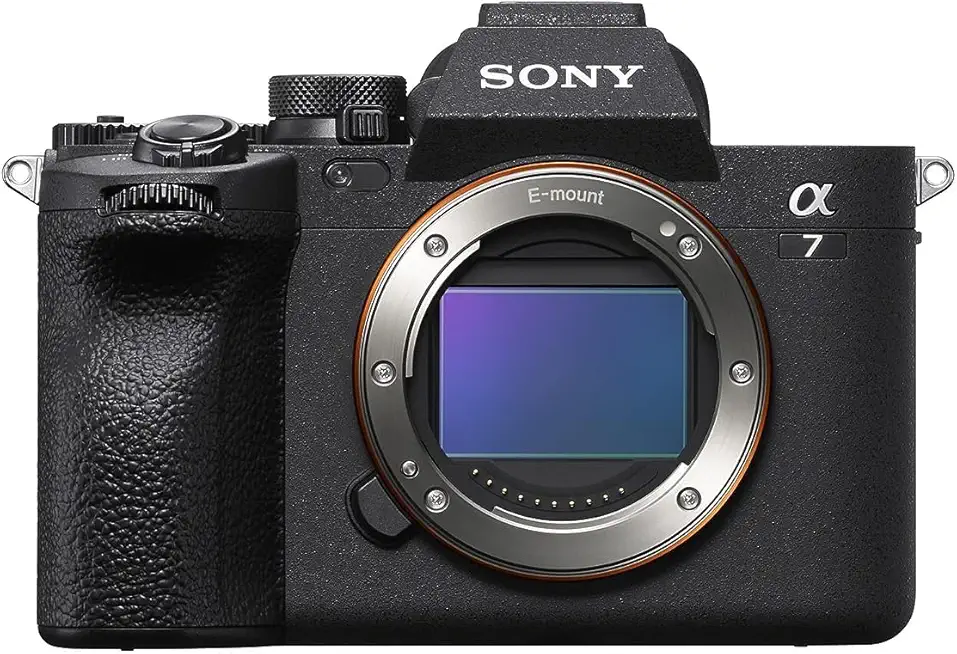
Sony Alpha 7 IV Body
High-performance full-frame hybrid with advanced autofocus, cinematic video capabilities, and excellent color science for photo and video creators.
Check PriceAs an intermediate shooter looking to step up to a true all‑rounder, the Sony A7 IV is hard to ignore. It pairs a 33MP full‑frame sensor with advanced, AI‑driven autofocus, giving you detailed files plus reliable subject detection that helps raise your keeper rate. The camera’s E‑mount also means you tap into the largest native and third‑party lens ecosystem, which matters as you expand your kit.
The autofocus is a standout — AI subject detection and tracking excel for people and animals, so it’s a great choice for portraits, events, and even casual wildlife work where subject recognition saves you time. The system’s consistency lets you concentrate on composition and timing rather than fighting the AF, which is a real productivity boost in fast-paced shoots.
It’s also a strong hybrid tool: 10‑bit 4K, S‑Log and other pro video tools give you headroom for grading and video projects without immediately outgrowing the camera. The body is robust and weather‑sealed, so you can keep shooting in mixed conditions and trust the build during demanding assignments. That said, some photographers find the handling and control layout less comfortable or intuitive, and Sony’s JPEG/color science is sometimes critiqued versus rivals — you’ll likely do a bit of color grading to get the look you prefer.
In short, if you want a versatile, future‑proof body with top‑tier AF, strong video features, and massive lens options, the A7 IV is mostly a win. If you prioritize out‑of‑camera color or prefer a different control feel, be prepared to tweak settings or spend time in post.
- 33MP full‑frame sensor
- AI‑driven subject detection AF (people & animals)
- 10‑bit 4K, S‑Log and pro video tools
- Huge E‑mount lens selection
- Handling/control layout can feel awkward
- JPEG/color science not as pleasing straight OOC
5. Fujifilm X-S20 Overview
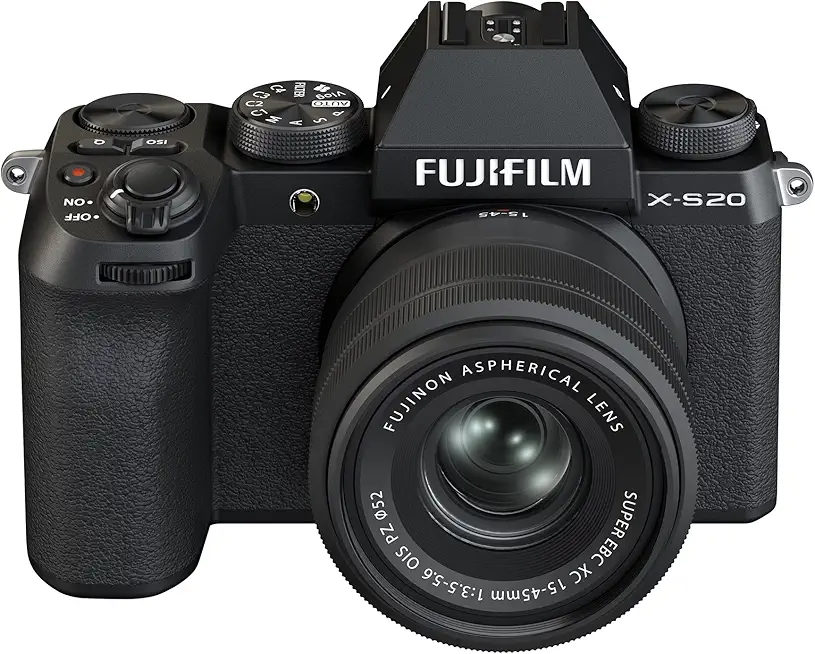
Fujifilm X-S20 with XC15-45mm Lens Kit
Compact, portable kit combining versatile standard zoom and a feature-packed body with flip screen, image stabilization, and creative film-like color profiles.
Check PriceThe Fujifilm X-S20 is a compact, versatile APS‑C hybrid designed squarely at content creators and intermediate photographers. It pairs a 26.1MP sensor with Fujifilm’s celebrated color science, so you get high-resolution stills and pleasing JPEGs straight out of camera.
One of the standout features is the effective 5‑axis IBIS, which makes handheld stills and run‑and‑gun video much more usable. Combine that stabilization with Fujifilm film simulations and in‑camera JPEG processing, and you’ll often deliver publishable images without heavy editing.
For vloggers and creators the X-S20 is thoughtfully equipped: a flip‑out touchscreen plus mic and headphone support lets you monitor audio and frame yourself easily. The body is highly portable and travel‑friendly, so it’s simple to carry all day for street work, travel, and social content.
There are trade‑offs to consider. Autofocus isn’t at the bleeding edge for fast action or wildlife work — it’s not as fast or reliable as Sony’s AI‑driven systems — so if you shoot sports or birds you might notice missed frames. Also, battery life can be limiting during long, video‑heavy days, so plan on extra batteries for full-day shoots.
Bottom line: if you’re an intermediate photographer or creator who values color, portability, and strong handheld performance for stills and video, the X‑S20 is a very attractive, practical choice. If your priorities are high‑speed subject tracking or marathon battery endurance, be prepared to accept those compromises.
- 26.1MP sensor delivers detailed images
- Effective 5‑axis IBIS for handheld work
- Strong film simulations and in‑camera JPEGs
- Flip‑out touchscreen with mic & headphone support
- AF not as fast/reliable as Sony’s AI systems
- Battery life needs extra batteries for long video days
Assessing Autofocus Performance
Autofocus is one of those things that quietly decides whether you go home with a handful of keepers or spend hours culling blurry shots. In dynamic situations — portraits with moving subjects, street photography, sports or wildlife — AF performance directly affects your sharpness and keeper rate, so don’t treat it as an afterthought.
Most modern mirrorless bodies use hybrid AF, combining phase-detection for speed with contrast-detection for fine precision. That balance gives you quick initial locks and accurate confirmation, which is why hybrid systems are the practical choice for a versatile kit that needs to handle both fast action and careful framing.
Continuous AF (AF‑C) is the mode you’ll live in for moving subjects. When evaluating cameras, look beyond top-line frame rates and check measures like “Perfect Focus Hit Rate” (how often the camera nails the exact focus point) and “Usable Focus Hit Rate” (how often the focus is acceptably sharp for printing or client delivery). A high usable rate is often more important than a theoretical perfect score.
AI-driven subject recognition and tracking has become a real game-changer for intermediate shooters. Reliable detection of people, eyes, animals, and vehicles reduces fumbling with focus points and lets you concentrate on composition. That said, test tracking in real-world conditions — crossing subjects, occlusions, and busy backgrounds — because algorithms still differ in how aggressively they switch targets.
Low-light AF performance is another practical splitter. Some cameras keep strong focus in dim scenes; others start to hunt. When you test a body, try dim indoor lighting, backlit subjects, and mixed lighting to see how consistently AF holds. Note whether the camera recovers quickly after a lost lock or whether it hunts and misses frames.
Bottom line: prioritize fast, accurate AF with strong continuous tracking and dependable low-light behavior. AI recognition is a valuable bonus for everyday reliability, but real-world testing — moving subjects, bursts, and low light — will reveal the autofocus you can trust day in and day out.
Choosing the Right Lenses
Choosing lenses is just as important as choosing a body. Lenses shape your look, control depth of field, and determine how comfortable you are shooting all day. Think of the camera as the brain and the lenses as the tools you use to execute your vision.
First, confirm mount compatibility. Your lens options are determined by the mount and sensor format. APS‑C systems give you smaller, lighter, and often cheaper glass; full‑frame gives you wider field of view options and more shallow depth of field, but usually at higher cost and weight.
For most intermediate shooters the smartest starting move is a versatile zoom. A 24–70mm (full‑frame) or an 18–140mm (APS‑C) covers portraits, travel, and everyday work. You get flexibility in one piece of glass, which reduces bag weight and lets you learn composition without constantly changing lenses.
Add a couple of primes as you refine your style. A 35mm and 50mm are classic choices for street, environmental portraits, and low‑light work. If you shoot portraits often, consider an 85mm or a fast 50mm. You don’t need an f/1.4 to get great results; modern f/1.8 or f/2 lenses are sharp, light, and budget‑friendly.
Don’t ignore third‑party makers like Sigma and Tamron. They expand options and often deliver excellent value. If you want to experiment with vintage character, adapters let you mount legacy glass, but research AF and stabilization compatibility first.
Pay attention to stabilization. If your body has IBIS, pairing it with a stabilized lens often yields the best handheld results. For long focal lengths, lens stabilization becomes more important than on short primes.
Build your kit with purpose: one solid zoom, two primes that match your preferred focal lengths, and a stabilized tele or portrait lens if needed. Buy used to stretch your budget and test lenses on your camera before committing. Match lenses to the stories you want to tell, and your shooting will improve faster than chasing the next body.
What People Ask Most
What is the best mirrorless camera for intermediate photographers?
There is no single best camera; the right choice depends on your shooting style and priorities. Focus on a body that offers reliable autofocus, a lens ecosystem you like, comfortable handling, and the features you use most often.
Which mirrorless camera brand is best for intermediate photographers?
No single brand is universally best—each has strengths in lenses, ergonomics, or specific features. Pick a brand that offers the lenses and support you need and whose handling and menus suit your workflow.
What features should an intermediate photographer look for in a mirrorless camera?
Look for dependable autofocus, good lens options, effective stabilization, and ergonomics that fit how you shoot. Consider battery life and video capabilities if those are part of your work.
Should an intermediate photographer choose full-frame or APS-C mirrorless?
Choose full-frame if you prioritize shallow depth of field and certain image quality traits, or APS-C if you prefer lighter, often more affordable lenses and a compact system. Base the decision on the types of subjects you shoot and how much gear you want to carry.
Which mirrorless cameras are best for portrait photography for intermediate users?
Pick a camera with accurate eye/face autofocus, pleasing color rendering, and access to short telephoto primes or portrait-friendly lenses. Comfortable handling and a lens lineup that delivers the look you want are more important than a single model name.
How many megapixels does an intermediate photographer need in a mirrorless camera?
Megapixels alone don’t determine image quality; sensor performance, dynamic range, and lens sharpness matter more for real-world results. Choose a resolution that balances detail with file size and workflow needs.
What lenses should intermediate photographers buy for a mirrorless camera system?
Start with a versatile zoom for general coverage and add one or two primes for low light and subject separation. Confirm mount compatibility, consider stabilized lenses if you use IBIS, and explore third‑party options for added value.
Conclusion for Intermediate Mirrorless Cameras
In short, pick the body that best matches your shooting priorities by weighing autofocus reliability, lens ecosystem, IBIS/stabilization, video needs, handling, and sensor format.
There are real trade-offs between speed, portability, and system growth, so prioritize what matters most to your genres and try gear in hand or via rental before committing.
If you want to sharpen your decision-making and shooting skills, explore more of our site’s guides and how‑tos to deepen your understanding and build a kit that grows with you.
Have a question or experience to share about a camera or setup—leave a comment below and we usually reply within a few hours to help you move forward.


0 Comments