
What if a single compact optic could reveal the details everyone else misses—day or night? Choosing the best monocular for surveillance is more than picking high magnification; it’s about clarity, reliability, and real-world usability when stakes are high.
In this ultimate guide I compare five monoculars built for surveillance across three categories: traditional optics, Gen 2 night-vision, and thermal imaging. Each category serves a different mission: close inspection, covert low-light work, or heat-signature detection through fog and smoke.
I evaluated real-world performance in urban perimeters, wooded watch points, and low-light stakeouts to separate marketing from meaningful capability. My focus was on image fidelity, detection range, ergonomics, battery life, and durability under stress.
This guide delivers candid, magazine-style reviews, clear trade-offs, and practical recommendations so you can pick the right tool for your needs. You’ll also get concise tips on handling, setup, and care to keep your optic dependable when it matters most.
1. Leica Monovid 8×20 Overview

Leica Monovid 8x20 Monocular with Leather Case
Compact pocket optic delivering crisp, high-magnification views with premium leather carrying case—ideal for travel, birding, and precision outdoor observation.
Check PriceThe Leica Monovid 8×20 is a pocket-sized optic that feels like a precision tool in the hand. Its 8x magnification and high-quality glass deliver sharp, high-contrast images with excellent color fidelity, especially in low light and mixed weather conditions.
One standout is the extreme close-focus capability — 25–30 cm with the attachment — which makes this monocular excellent for reading plates or inspecting small details at short range. As a photographer who often needs to confirm tiny visual cues, that close-focus range is genuinely useful.
Build quality is another area where the Monovid shines. The lightweight, durable aluminum housing is comfortable for extended handheld use, and the lens coatings are designed to preserve image quality in harsh environments.
It’s also weatherproof and submersible, so rain, fog, and even accidental immersion won’t immediately end a surveillance session. That reliability in the field matters when you can’t afford equipment failure during critical observations.
Two practical caveats: Leica’s premium optics come at a premium price, which can be a barrier for casual users. And because it’s compact, holding it steady for long surveillance periods can be tiring without support — use a monopod, tripod, or brace your elbows.
- Exceptional image clarity and color fidelity in low light.
- Extremely close focus (25–30 cm with attachment).
- Rugged, lightweight aluminum body.
- Superior lens coatings protect image quality.
- High price point limits accessibility.
- Compact size can be harder to hold steady for long periods.
2. AGM Night Vision Monocular PVS-14 NL1 Gen 2 Overview

AGM Global Vision PVS-14 NL1 Gen 2 Night Vision Monocular
Rugged military-grade night vision monocular offering clear low-light detection, hands-free compatibility, and reliable performance for tactical, surveillance, and nocturnal navigation.
Check PriceAs a professional photographer who often shoots dusk-to-dawn surveillance scenes, I respect the AGM Night Vision Monocular PVS-14 NL1 Gen 2 for its reputation. It’s regarded as a gold standard for night-vision in tactical and professional settings, and that shows in real use.
The unit delivers clear, detailed images in complete darkness, which makes it ideal for covert operations where ambient light is nil. Gen 2 tech produces a natural, high-resolution image easy to interpret, so target identification is more straightforward than with lower-grade intensifiers.
Build and reliability matter in the field, and this monocular stands up well. It’s reliable and durable, able to withstand rough handling and adverse weather, so you won’t shy away from uncomfortable or wet shooting conditions.
Operational comfort is often overlooked, but not here. The PVS-14 NL1 is comfortable for extended sessions with minimal eye strain, which is crucial when you need to maintain focus for long surveillance shifts.
There are practical trade-offs to note. It’s relatively heavy compared to other night-vision monoculars, so handheld fatigue or pack space can become issues on long stakeouts. Also, the image can appear slightly grainy on external displays, though this is less noticeable through the unit itself.
If your priority is authentic night performance, durability and long sessions of observation, this AGM delivers where it counts. If ultra-lightweight carry and flawless external streaming are must-haves, weigh those compromises against its proven field strengths.
- Outstanding night vision performance in pitch-black conditions.
- Durable construction for rough field use.
- Comfortable for extended sessions with minimal eye strain.
- Proven reliability in civilian and professional tactical applications.
- Relatively heavy compared to other night-vision monoculars.
- Image can appear slightly grainy on external displays (less noticeable through the unit).
3. Nocpix Vista H50R Thermal Monocular Overview

Pulsar Axion 2 Thermal Monocular
Advanced thermal imaging monocular revealing heat signatures through darkness, smoke, and foliage—perfect for hunting, search-and-rescue, and wildlife observation.
Check PriceThe Nocpix Vista H50R is a thermal monocular built for seeing what the eye cannot. It detects and tracks heat signatures in darkness, fog, and smoke, which makes it a reliable tool when visible light fails.
As a photographer who often scouts at odd hours, I appreciate the high-definition display. The H50R’s image stabilization also keeps frames steady when you’re moving, so targets stay identifiable without constant re-framing.
Battery life is another strong suit — long battery life supports extended surveillance sessions, so you won’t be swapping cells in the middle of a stakeout. That endurance lets you focus more on monitoring and composition, and less on power management.
What really helps in practical terms is the sensitive laser rangefinder. For surveillance or nighttime location work it gives quick, precise distance measurements so you can judge range and scale faster and plan your approach or documentation accordingly.
There are trade-offs to consider. The narrow viewing display limits field of view for quick scanning, so it’s less suited to sweeping large areas without deliberate panning. Also, heavily filtered images can affect natural scene appearance; thermal contrast is excellent for detection, but the visual output can feel less intuitive for contextual interpretation.
- Excellent thermal imaging across weather conditions
- Image stabilization reduces shake
- Long battery life for extended operations
- Sensitive laser rangefinder for accurate distance readings
- Narrow viewing display limits field of view
- Heavily filtered images affect natural scene appearance
4. FLIR Scout Pro Thermal Monocular Overview
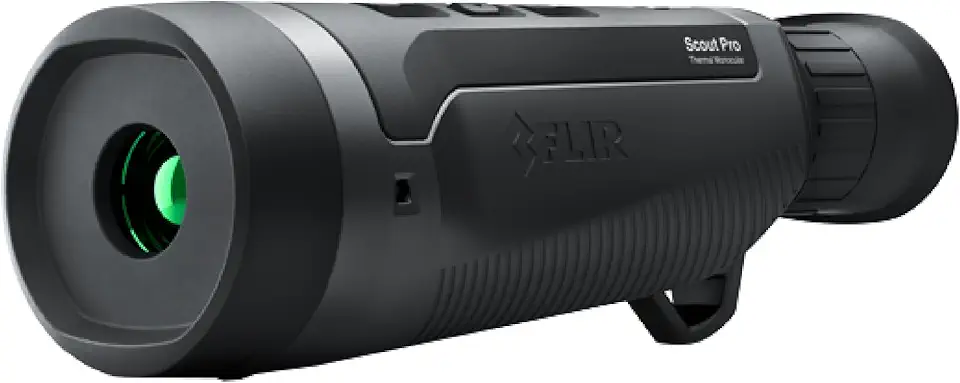
FLIR Scout Pro Thermal Monocular
Portable thermal monocular with high-resolution sensor and intuitive display, enabling fast target detection and situational awareness in complete darkness.
Check PriceAs a professional who often scouts locations at dawn and dusk, I appreciate a thermal monocular that gets you the sign quickly — the FLIR Scout Pro does that well. Its wide 32° field of view makes scanning large areas fast and intuitive, so you spend less time sweeping and more time identifying targets.
The unit feels solid in hand and is clearly built for rough handling and adverse weather, which matters when you’re out in unpredictable conditions. Ergonomics and simple menu navigation mean you can adjust palettes and settings under stress without fumbling, a real advantage during stakeouts or quick checks.
Image fidelity is consistent across lighting and weather, so you won’t be surprised by dramatic performance drops in fog or low light. That reliability makes it a dependable tool for both professional security work and amateur surveillance, especially when durability and ease of use top your list.
If you need long-range identification of small targets, note that the Scout Pro’s image quality isn’t as sharp as some premium long-range thermals. Also, battery life runs shorter than a few competitors, so plan for spare power if you expect extended shifts or prolonged overnight operations.
In short, pick this unit if you want fast area coverage, rugged build, and straightforward controls — it’s a practical, user-friendly thermal that excels at routine surveillance and fieldwork. If your priority is maximum range resolution or marathon battery endurance, consider those trade-offs before committing.
- Durable construction for rough handling and adverse weather.
- Wide field of view (32°) enables quick area scans.
- Intuitive controls suitable for high-pressure use.
- Reliable performance in varied conditions.
- Shorter battery life than some competitors.
- Image quality not as high as some premium models for distant targets.
5. Pulsar Axion 2 XQ35 Pro Thermal Monocular Overview
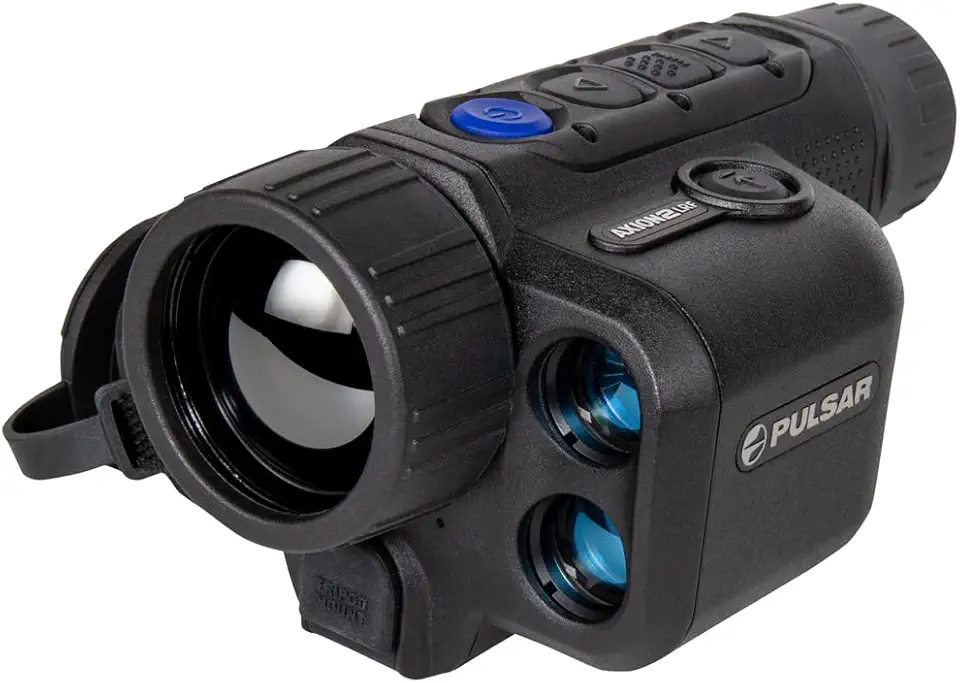
Pulsar Axion 2 LRF Thermal Monocular
Thermal monocular with built-in laser rangefinder for precise distance measurement, rapid target acquisition, and enhanced long-range hunting accuracy at night.
Check PriceThe Pulsar Axion 2 XQ35 Pro is clearly positioned as a professional thermal monocular for surveillance and security. Its advanced thermal imaging delivers clear, detailed images that make target identification at long distances straightforward. For anyone who needs reliable detection rather than just a glance, that clarity matters.
In the field the unit’s imaging helps separate subjects from clutter quickly. As a photographer I appreciate how the detail level aids interpretation — you can distinguish people, vehicles, and equipment more confidently. That capability translates directly into better situational awareness and cleaner documentation.
Build quality is another strong point: the Axion 2 XQ35 Pro is robust enough for harsh conditions. That durability means you can depend on it during extended outdoor operations without worrying about fragility. Equally useful are the comprehensive recording capabilities; you can capture footage for later review or evidence without extra gear.
Operationally the interface is intuitive and user-friendly, which reduces the learning curve during tense moments. Quick, logical controls let you acquire and lock onto targets faster than fiddly menus would. That ease of use is a real advantage when time and clarity count.
The main caveats are practical: it’s relatively expensive for casual users, and it uses a proprietary battery system that requires specific chargers or replacement packs. For security professionals, rescue teams, or serious observers this is mostly a non-issue. For hobbyists or budget buyers it could be a dealbreaker.
- Advanced thermal imaging with long-distance clarity
- Robust, reliable build quality
- Built-in recording features for documentation
- Intuitive controls and user-friendly interface
- Relatively expensive for casual users
- Proprietary battery system required
Monocular Use for Security and Surveillance
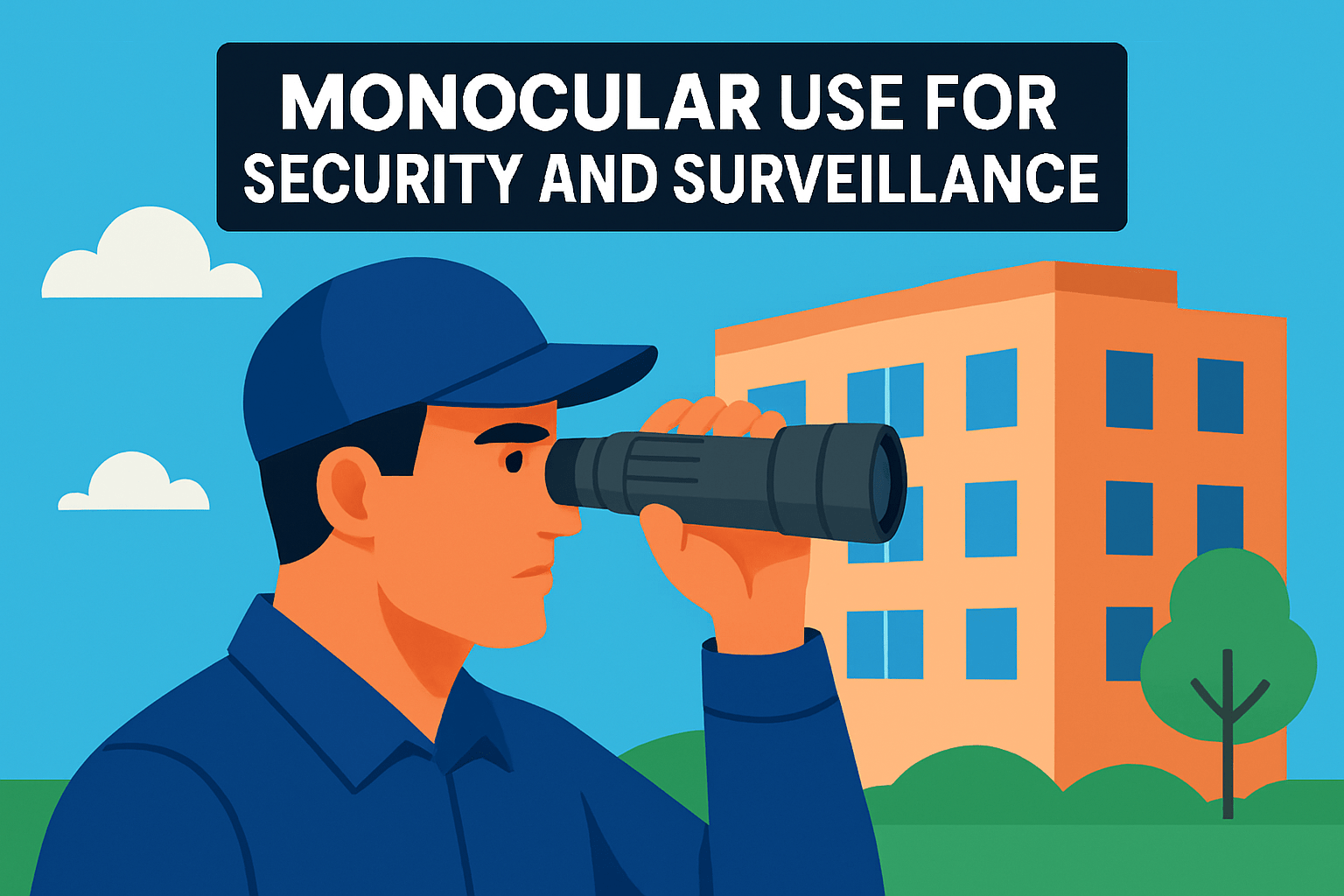
Surveillance through a monocular shares a lot with low‑light photography: steadiness, patience, and a good setup often make the difference between a useful observation and a missed detail.
Grip the monocular with both hands and tuck your elbows into your ribs to create a stable platform. Resting your forearms on a window sill or car roof dramatically reduces shake.
For long watches mount the unit on a tripod using the standard 1/4″ thread if available, or use a beanbag for improvised support. Even compact units feel far more stable when anchored.
Power up early and let sensors and image intensifiers stabilize before you start scanning. Adjust the eyepiece diopter to match your vision and use the objective for fine focus.
Treat digital zoom like cropping — useful in a pinch but expensive for clarity. Keep zooming conservative and move closer or use higher‑resolution units for critical ID work.
In very low light an IR illuminator can be invaluable, but use it sparingly since it drains batteries and can be detected by others. Never point night‑vision optics at bright lights; that risks tube damage.
With thermal units experiment with palettes — white‑hot, black‑hot or color — to see which highlights your target best, and rely on built‑in rangefinders or spot‑temp readouts to prioritise threats. Thermal excels in fog, smoke and other low‑contrast scenes where optics struggle.
If your monocular records, practise capturing short, steady clips to keep footage usable and save battery. Streaming to a phone is great for live monitoring but draws extra power and needs a secure connection.
Scan slowly and deliberately, pausing on anomalies to confirm identity before moving on. Combine the monocular with wider optics for sweeps and use close‑focus abilities to read plates or inspect details; that pairing helps professionals catch what others miss.
Monocular Maintenance and Care Tips
As a photographer I treat a monocular like any other prime lens — a little care repays you in crisp images and reliable performance. Routine maintenance keeps optics sharp and batteries ready when stakeouts run longer than planned.
Start every cleaning by removing loose dust with a soft brush or a rubber air blower; breathing on the glass only adds oils. Follow with a clean microfiber or lens pen and a few drops of dedicated lens solution, wiping gently from center outward, and avoid household cleaners or canned air aimed too close to coatings. Always replace lens caps when the unit is idle to prevent scratches.
Batteries are the most common failure in the field, so use fresh, high‑quality cells and never mix brands or chemistries in the same device. Remove batteries for long storage to prevent leakage, and for rechargeables follow the manufacturer’s charging guidance to avoid overcharging. I always carry at least one spare set and, for proprietary systems, a spare charger if space allows.
Store your monocular in a cool, dry hard case with silica gel packs and avoid sudden temperature swings that create internal condensation. When moving from cold to warm environments keep the device sealed in a plastic bag until it acclimates. After exposure to sand, salt, or moisture rinse and dry per the manufacturer’s instructions before stowing it away.
Regularly inspect threads, O‑rings and mounts for wear and listen for loose parts that can shift optical alignment. For thermal units run the recommended flat‑field correction or calibration, and for digital models keep firmware current to benefit from fixes and improvements. If you rely on the unit professionally, schedule annual bench servicing rather than attempting internal repairs yourself.
Never point night‑vision tubes at bright lights while powered, and switch the unit off when idle to conserve battery and avoid damage. Pack a small field kit — blower, lens cloth, lens pen, spare batteries and a silica pack — and you’ll shoot cleaner images and avoid most avoidable failures.
What People Ask Most
What should I look for in a monocular for surveillance?
Look for clear optics and reliable low-light or thermal performance. Also consider durability, comfortable handling, battery life, and mounting options.
What is the best magnification for a surveillance monocular?
Choose magnification that balances field of view with detail and handling. Higher magnification narrows the view and may require stabilization, while lower magnification gives wider situational awareness.
Are monoculars good for night surveillance?
They can be very effective when equipped with appropriate night-vision or thermal capabilities. Select the technology that matches covert needs and environmental conditions.
How far can a monocular see for surveillance purposes?
Effective detection distance depends on optical characteristics, sensor type, target size, and environmental conditions. Performance will vary widely with those factors.
Are monoculars better than binoculars for surveillance?
Monoculars are lighter, easier to use with one hand, and often more compact for quick or covert checks. Binoculars provide depth perception and more comfortable prolonged viewing, so the choice depends on the task.
What features make a monocular suitable for long-range surveillance?
Long-range suitability comes from clear optics, stable mounting or image stabilization, reliable power, and solid weatherproofing. Useful extras include rangefinding and recording or display capabilities.
How do I choose a monocular for covert surveillance?
Opt for a compact, quiet, and low-profile unit with efficient power consumption and minimal detectable illumination. Prioritize easy concealment, discreet handling, and the appropriate night or thermal capability for your needs.
Conclusion for Best Monocular for Surveillance
Choosing between optical, night‑vision and thermal monoculars is largely about trade‑offs: optics give color fidelity and close inspection, night‑vision excels in low‑light covert work, and thermal reveals heat signatures through smoke, fog, or darkness.
Match the device to your surveillance needs by weighing clarity, effective range, battery life, durability and ergonomics rather than chasing a single “best” model.
Consider how you will use the tool in the field—long sweeps, stationary observation, or rapid searches—and factor in mounting, stabilization and recording capabilities to support real workflows.
With the right priorities you can select a monocular that balances performance and practicality for your typical conditions, and using it correctly will make the biggest difference in results.
If you want to deepen your skills and equipment choices, explore more articles on this site to learn practical tips and comparisons that help you improve.
Have questions or experiences to share? Leave a comment below — we usually reply within a few hours.



0 Comments