

Which Nikon lens will finally make your footage look cinematic without forcing you to learn a new camera body or empty your wallet? With Nikon’s Z system growing every year, options multiply and trade-offs get confusing. The right glass can change the mood of a scene more than resolution ever will, so choosing wisely matters.
This guide narrows the field to five Nikon Z lenses chosen for common video needs and popular filming styles. We considered use cases from run-and-gun work to interviews, travel, creative short films, and detailed macro shots. You won’t find exhaustive specs here, just practical choices meant to cover the real-world demands of most shooters.
Across each lens we share strengths, honest real-world feedback, clear pros and cons, and buying criteria tailored to video workflows. Expect hands-on impressions and straightforward takeaways you can actually use on set. Our aim is to help you pick lenses that suit how you shoot, not just what’s popular on forums.
Whether you’re a vlogger, wedding shooter, or a narrative filmmaker, this roundup is written for practical use. We keep the language tight, the recommendations real, and the focus on matching focal length and features to your workflow and budget. Read on to find lenses that solve real problems and help your videos look the way you imagine them.
1. Nikon NIKKOR Z 50mm f/1.8 S

Nikon NIKKOR Z 50mm f/1.8 S
Sharp standard prime delivering creamy bokeh, fast low-light performance and precise autofocus.
Check PriceThe Nikon NIKKOR Z 50mm f/1.8 S is a superbly balanced standard prime for video, offering excellent optical quality at an affordable price. Its natural perspective and minimal distortion make it ideal for portraits and general-use storytelling where a true-to-life look matters.
On Nikon Z mirrorless bodies it delivers sharp results and a pleasing shallow depth of field thanks to the fast f/1.8 aperture. That wide aperture also helps in low light, letting you keep ISO down while isolating subjects with smooth background separation.
Autofocus is fast, reliable, and quiet — exactly what you want for run-and-gun shooting or interviews where you don’t want AF noise intruding on the audio. In practice the AF behavior is smooth and predictable, so you can concentrate on framing and performance instead of hunting for focus.
Handling is a highlight: the lens is lightweight and compact, making it easy to shoulder for long takes, use on gimbals, or swap in a hurry during events. The comfortable working distance and natural full-frame field of view let you position talent without distortion or awkward compression.
There are a couple of practical trade-offs to note. It’s a fixed focal length, so you must move to reframe shots rather than zoom, and there’s no built-in image stabilization — you’ll rely on camera IBIS or stabilization rigs for steady handheld footage.
For beginners through advanced shooters who prioritize sharpness, low-light capability, and a reliable, compact standard prime, this 50mm f/1.8 S is an excellent choice that punches above its price class.
- Excellent sharpness/image quality for the price
- Lightweight and compact; comfortable working distance
- Fast, quiet autofocus
- Natural full-frame field of view
- Fixed focal length requires moving to reframe
- No image stabilization; relies on camera IBIS or rigs
2. Nikon Z MC 105mm f/2.8 VR S

Nikon NIKKOR Z MC 105mm f/2.8 VR S
True 1:1 macro capture with image stabilization, exceptional sharpness and smooth background separation.
Check PriceThe Nikon Z MC 105mm f/2.8 VR S is a top-tier macro optic that also doubles as a short telephoto prime for portraits and detail work. Its f/2.8 aperture pairs with edge-to-edge sharpness and smooth bokeh to deliver images that really sing in both close-up and medium-telephoto applications.
If you need extreme close-ups, this lens is designed for you. It gives accurate subject isolation and beautiful background separation for portrait-style video. It’s also a versatile choice when you want a single lens that handles both macro sequences and tighter portrait framing.
In real shooting, the lens is impressive. I’ve seen flawless image quality on extreme close-ups, with textures and micro-details rendered cleanly. The control ring and small OLED display add real versatility for video work, letting you make quick adjustments without fumbling for menus.
Autofocus is accurate and quiet, which is essential when recording live sound. The VR system supplements body IBIS, improving handheld stability for those times you can’t use a tripod or gimbal. Build quality is solid too—weather-sealed and made for professional use.
Is it the right lens for you? For pros and serious enthusiasts who prioritize macro detail, dependable AF, and gorgeous bokeh, it’s a strong choice. Hobbyists on a tight budget might find the higher cost prohibitive. Also remember that f/2.8 won’t give the same low-light reach as faster f/1.8 primes, so if ultra-low-light performance is your priority, consider that trade-off.
- Superb macro sharpness and detail reproduction
- Effective VR for improved handheld stability
- Durable, weather-sealed construction
- Great portrait bokeh
- Higher cost may put it out of reach for hobbyists
- f/2.8 limits low-light potential compared with f/1.8 primes
3. Nikon Z 24-120mm f/4 S

Nikon NIKKOR Z 24-120mm f/4 S
All-in-one travel zoom offering constant aperture, reliable autofocus, and versatile focal range for landscapes, portraits, and events.
Check PriceThe Nikon Z 24-120mm f/4 S is the kind of all-around zoom I reach for when a shoot demands flexibility and reliability. It covers a useful mid-to-telephoto range with consistent sharpness and a constant f/4 aperture, which keeps exposure steady while you reframe during a take.
For run-and-gun formats like events and weddings, this lens shines: it’s built to be handled for long stretches thanks to balanced ergonomics. The zoom mechanism is smooth and well-damped, so pulling focal length during a scene feels deliberate and controlled rather than jerky.
Autofocus on this lens is fast and quiet, which matters for video where AF noise and hunting can ruin a clip. Color rendition is accurate and distortion is low, so footage requires less correction in post and looks natural straight out of camera.
If you prefer zooms to swapping primes, this lens gives you a huge range of framing options without interrupting a shoot. That said, if you obsess over pixel-level sharpness at the widest aperture, primes will beat it; some users also report slight softness at the long end on very large 8K sensors. For most documentary, event, and general-purpose video work the trade-offs are worth it.
- Flexible focal range covering many scenarios.
- Consistent f/4 avoids exposure shifts while zooming.
- Good AF performance.
- Relatively compact for its reach.
- Not as sharp wide-open as comparable primes.
- Slight softness at the telephoto end on very large 8K sensors.
4. Nikon NIKKOR Z 14-30mm f/4 S

Nikon NIKKOR Z 14-30mm f/4 S
Ultra-wide zoom with edge-to-edge sharpness, compact design and consistent f/4 performance for dramatic vistas and interiors.
Check PriceThe Nikon NIKKOR Z 14-30mm f/4 S is a purpose-built wide-angle zoom for Z-mount shooters who need an ultra-wide field of view without bulk. It stays sharp across the zoom and aperture range and features effective flare control, which is a huge win when shooting into bright windows or sunlit landscapes.
This lens is ideal for interiors, travel, landscapes, and wide-field vlogging — basically any situation where you want to capture more of the scene without lugging heavy glass. Its ultra-lightweight design makes it comfortable for handheld runs and keeps gimbal setups balanced and responsive.
In practice you’ll notice minimal distortion and strong flare resistance, so your wide establishing shots read clean and professional. Autofocus is quick and silent, which translates to fewer audible hunting artifacts and smoother pulls during filming.
From 14mm to 30mm you get creative framing options: dramatic ultra-wide context at 14mm and more natural wide views toward 30mm, all while retaining edge-to-edge sharpness. The lens also controls focus breathing well, so focus transitions look natural in footage — an important detail for narrative or vlog work.
If you prioritize portability, consistent sharpness, and reliable AF on a mirrorless rig, this lens is a strong choice. Be aware of the trade-offs: f/4 won’t give the low-light headroom or background separation of faster primes, and 14mm naturally introduces some ultra-wide perspective distortion that you’ll need to use intentionally.
- Versatile wide-angle range
- Lightweight and well balanced on mirrorless bodies
- Edge-to-edge sharpness
- Effective AF and focus-breathing control
- Some users prefer a faster aperture for low-light or more bokeh
- More perspective distortion at 14mm inherent to ultra-wide framing
5. Nikon NIKKOR Z 85mm f/1.8 S

Nikon NIKKOR Z 85mm f/1.8 S
Portrait-focused short-telephoto producing silky bokeh, exceptional subject isolation and fast, accurate autofocus for stunning headshots.
Check PriceThe Nikon NIKKOR Z 85mm f/1.8 S is a highly regarded prime for portrait and cinematic video, prized for its beautiful bokeh, sharp images, and excellent subject separation. As a teleprime it gives a flattering perspective that helps subjects pop from the background without looking compressed.
Image quality holds up wide open at f/1.8, so you can confidently shoot in lower light and maintain a shallow depth of field for that cinematic look. The lens produces stunning background blur while keeping the subject crisp and detailed.
Autofocus is fast and quiet, which makes it well suited to run-and-gun interview work and narrative shoots where unobtrusive AF matters. Real-world feedback highlights smooth focus transitions and minimal focus breathing — a real plus for clean focus pulls in video.
Handling is compact and reasonably light for handheld use, and the lens is weather-sealed for dependable performance outdoors or in less-than-ideal conditions. That build quality, combined with its optical strengths, makes it a dependable go-to for portrait, interview, and narrative videographers seeking shallow depth of field and a flattering telephoto look.
Be mindful that it’s a fixed focal length, so you’ll need to physically reframe rather than zoom, and there’s no in-lens stabilization. If your camera has IBIS or you use a gimbal, you’ll be able to maximize the lens’s potential; otherwise, consider stabilization workflows for steadier handheld footage.
- Stunning background blur and sharpness
- Image quality holds up wide open at f/1.8
- Fast, quiet AF with smooth focus transitions
- Compact, reasonably light and weather-sealed
- Fixed focal length requires reframing
- No image stabilization in lens
Choosing the Right Focal Length for Video
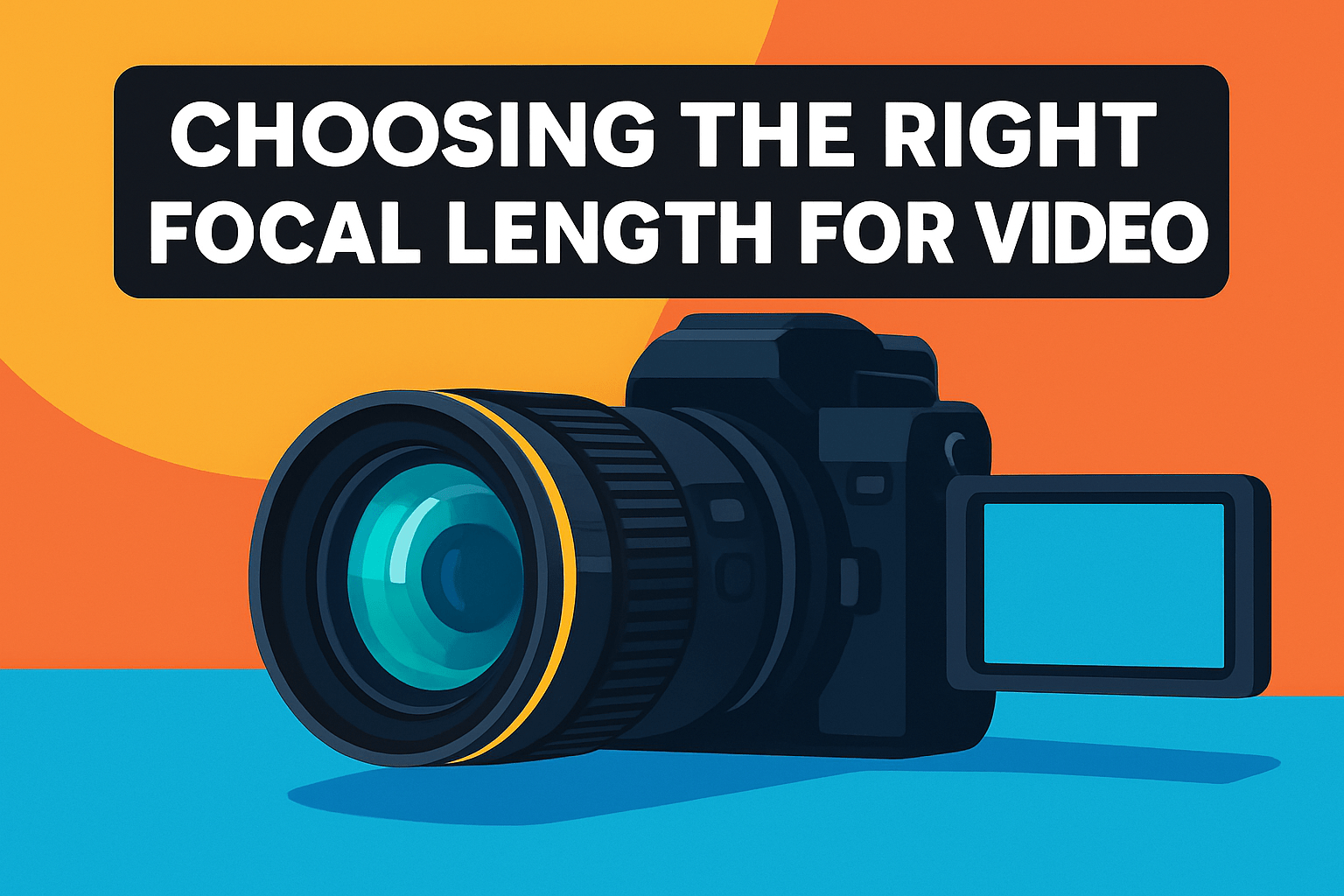
Focal length—the millimeter number on your lens—controls how much of a scene you capture and how large subjects appear. Shorter numbers give a wider field of view; longer numbers narrow the frame and magnify the subject.
If you want to show environment and context, reach for 14–35mm. Those lenses are perfect for landscapes, establishing shots, interiors and run-and-gun vlogging. They let you squeeze a lot into the frame and are lifesavers in tight spaces.
For a natural look that reads like the human eye, work around 35–50mm. This range is ideal for interviews and general shooting, and 35mm is often my go-to for seated interviews because it balances subject and surroundings.
When you need subject isolation, move into the 70–200mm territory. Telephoto focal lengths let you pull intimate close-ups from a distance and render shallow depth of field for cinematic separation. Use them for portraits, reaction shots and dramatic close-ups.
Composition still matters—use the rule of thirds to place eyes and interest points. Wider lenses give more depth of field and keep more of the scene acceptably sharp. Longer lenses naturally produce a shallower depth of field, which is one of the easiest ways to control your look without changing aperture.
Don’t lock yourself to a single focal length for an entire scene. Start wide to establish place, then cut to standard and telephoto for mid-shots and close-ups to build visual variety and pacing. Mixing lenses—or zooming thoughtfully—makes edits feel intentional and cinematic.
Practically, I shoot interviews at 35mm or 50mm, documentaries with 24/35mm for wides and 50/85mm for close-ups, travel and landscapes with 14–24mm, and portraits often at 85mm for flattering shallow DOF. These pairings cover most situations and give you a reliable starting point on set.
Key Lens Features for Video
Lenses shape the look and the workflow of your videos more than almost anything else. The specific features a lens brings can make a shoot effortless or a headache. Think about how you actually work—handheld, on a gimbal, in tight interiors, or doing detailed macro—and choose features that match that reality.
Image stabilization is a game-changer for handheld and low‑light work. Nikon’s VR can buy you up to four stops of hand‑holdability and often removes the need for a gimbal on short moves. If your camera has IBIS, lens VR is still valuable for telephoto and macro where tiny shakes are magnified.
Aperture controls both exposure and mood. Fast primes (f/1.8 and wider) let you shoot in dim light and create pleasing background separation, but they demand precise focusing. Constant‑aperture zooms prevent exposure shifts while you zoom and are a dependable compromise for long, unpredictable shoots.
Primes typically give cleaner optics, lighter weight, and better low‑light performance—perfect for interviews and cinematic close‑ups. Zooms win when speed matters, letting you reframe quickly without swapping glass at events or documentaries. Most kits benefit from one fast prime and one reliable zoom to cover most scenarios.
Focus behavior matters more than many realize. A smooth, well‑damped manual focus ring lets you perform clean focus pulls, while silent, accurate AF is a boon for run‑and‑gun and talking‑head work. Also check for minimal focus breathing and predictable AF so your shots stay usable when you rack focus or cut between lenses.
Finally, don’t underestimate build and convenience features. Weather sealing, solid mechanics, control rings, usable filter threads for NDs, and handy displays speed up work on set and protect your investment. Prioritize stabilization, aperture range, AF character, and durability based on how and where you actually shoot.
What People Ask Most
What are the best Nikon lenses for shooting video?
Choose lenses that match your shooting style, such as wide-angle for environments, standard primes for natural perspective, and telephoto or macro for subject isolation and details. Prioritize reliable autofocus, suitable aperture for your light conditions, and stabilization if you shoot handheld.
Which Nikon lenses are best for vlogging and run-and-gun video?
Lightweight wide-angle zooms or compact wide primes are ideal because they capture more of the scene and are easy to handle on the move. Look for lenses with quiet autofocus and good flare control to keep footage clean while recording handheld or on a gimbal.
What Nikon lens is best for low-light video and indoor shooting?
Fast primes with wide maximum apertures are the usual choice because they let in more light and create a shallower depth of field for a cinematic look. Combine them with in-body stabilization or support gear if your lens lacks built-in stabilization.
Which Nikon prime lenses are recommended for cinematic video?
Primes that deliver pleasing bokeh, strong subject separation, and minimal focus breathing are preferred for cinematic work. Smooth manual focus rings and quiet autofocus also help achieve clean focus transitions during takes.
What Nikon zoom lenses are best for video production?
Versatile zooms with constant aperture and smooth, well-damped zoom action suit run-and-gun and event work because they let you reframe quickly without swapping lenses. Reliable autofocus and balanced handling make long shoots easier and more consistent.
Are Nikon Z-mount lenses better for video than F-mount lenses?
Z-mount lenses are designed for mirrorless bodies and often offer compact designs, modern autofocus performance, and features that pair well with current video workflows. Whether they are better depends on your camera system and whether native mount advantages matter for your shooting style.
Which Nikon lenses offer the smoothest autofocus and image stabilization for video?
Lenses advertised with silent autofocus motors and VR stabilization tend to perform smoothly for video, reducing audible AF noise and helping handheld footage stay steady. Actual performance varies by model, so prioritize lenses known for quiet AF and integrated stabilization when filming without a tripod.
Conclusion for Best Nikon Lenses for Video
Whether you shoot interviews, run-and-gun, portraits, or close-ups, this roundup is meant to make it easier to match lens strengths to real-world video needs across wide, standard, portrait, macro, and all‑around zoom categories.
Focus on the features that matter most to your workflow—focal length, stabilization, aperture and autofocus behavior—so your choices support the look and reliability you need on set.
When possible, try lenses on your own body or rent before you buy to confirm handling, balance, and how they integrate with your camera and stabilization tools.
If you want to keep improving your craft, explore more of our articles for practical tips, comparisons, and workflow ideas to build confidence with lenses and shooting styles.
Have questions or want to share your experience with a setup—leave a comment below and we usually reply within a few hours.




0 Comments