
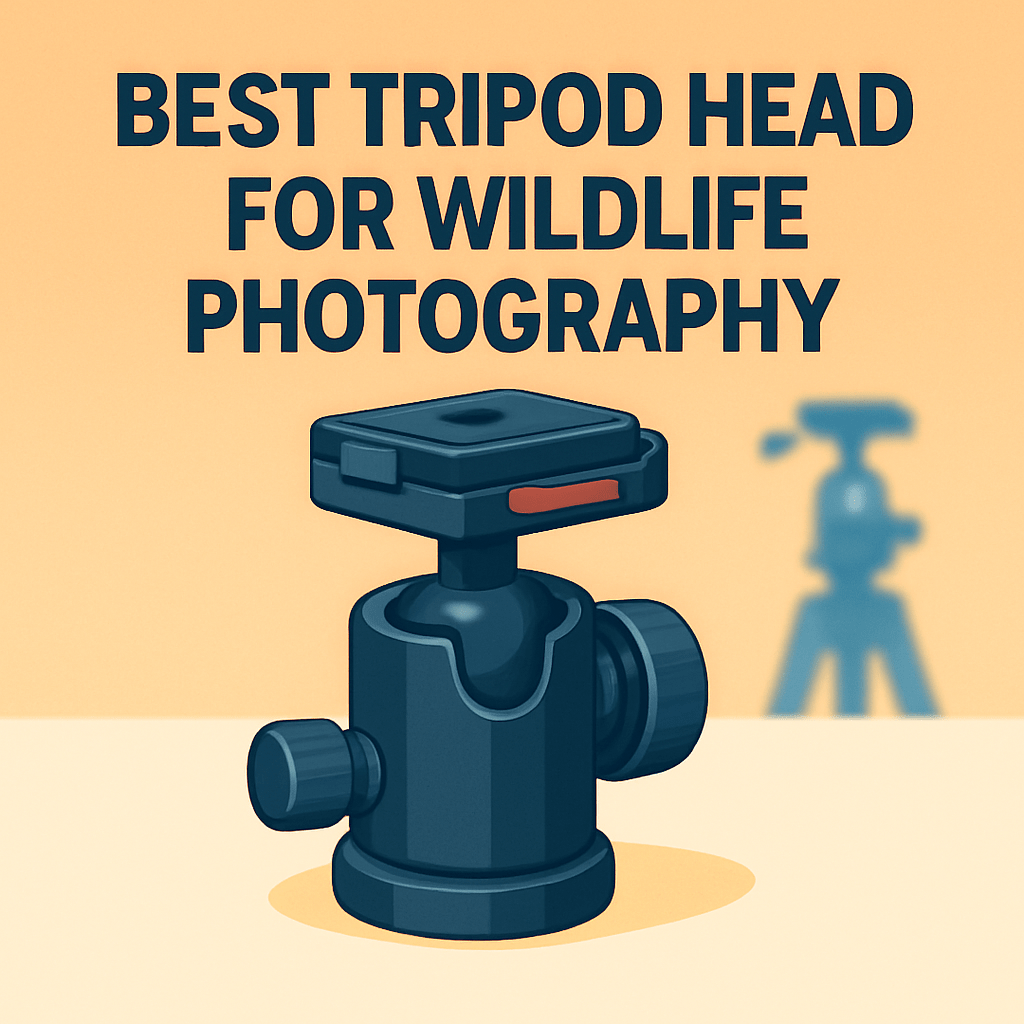
Ever missed the decisive wingbeat because your tripod head couldn’t keep up? One second of hesitation and an iconic image vanishes. Wildlife photography demands gear that moves as fast and smoothly as your eye.
This guide zeroes in on the five best tripod heads for wildlife photography. Each pick is aimed at helping you lock onto birds in flight, skittish mammals, and sudden bursts of action. Expect concise, practical guidance to match gear to shooting style.
Smoothness and fluidity topped our checklist because tracking is everything. Load capacity and rock‑solid stability follow, since heavy camera and lens combos must stay perfectly balanced. We also weighed durability, weight and portability, and options for tighter budgets.
Gimbal heads often shine with long super‑telephotos, while ball heads bring versatile performance for mixed shooting. Ergonomics, quick adjustments, and secure mounting systems also matter in the field. This guide highlights those tradeoffs so you can choose with confidence.
Whether you stalk raptors from a cliff or hike into fog‑choked marshes at dawn, the right head changes your results. Read on to discover five thoughtfully chosen heads and which one will keep pace with your subjects. Make the most of every encounter by matching performance to your priorities.

Manfrotto MT055XPRO3 055 Aluminum 3-Section Tripod with Horizontal Column
1. Really Right Stuff PG-02 Mk2 Gimbal

Really Right Stuff PG-01 Pano-Gimbal Head with Leveling Base
Precision-engineered panoramic gimbal delivering silky smooth tracking and exact leveling for heavy telephoto lenses, ensuring stable, repeatable framing.
Check PriceThe Really Right Stuff PG-02 Mk2 Gimbal is, in my experience, arguably the best gimbal for wildlife work, especially when you’re shooting with 600mm–800mm super‑telephoto lenses. It’s a multi‑piece design that breaks down small for travel while retaining a rugged, professional feel.
On the job the pan and tilt control are exceptional, giving very smooth, fluid movement that makes tracking fast birds and mammals far less fatiguing. The head accepts a pan‑control arm for video and pairs cleanly with leveling heads and L‑plates for a tailored setup.
Once you’ve balanced your camera and lens the PG‑02 Mk2 becomes rock solid; the stability and balance are obvious the moment you start shooting. The movement is so fluid that manual follow‑focus and panning feel natural and predictable, even on unpredictable subjects.
This head is clearly built for heavy super‑telephoto lenses that need effortless tilt and pan, and yet it stays compact enough to pack into luggage or a larger field bag. Many pros I know choose this model for that combination of portability and capacity.
Be aware it does carry a premium price and isn’t necessarily plug‑and‑play for beginners; you’ll get the most out of it once you’ve learned to balance and fine‑tune the head. If you routinely work with long glass and value buttery tracking and customization, this head is usually worth the investment.
- Outstanding smoothness and fluidity in pan and tilt movements
- Compact and easy to pack despite large lens capacity
- High customization with add‑ons (pan control arm, leveling head)
- Durable and built for professional heavy usage
- High cost
- Requires some experience to balance and use all features optimally
2. Leofoto PG-1 Gimbal

LEOFOTO PG-1 + LB-65 Gimbal Head with 65mm Leveling Base
Robust support system with large-diameter leveling base for effortless fluid movement, secure balance, and quick adjustments during intense wildlife or sports shoots.
Check PriceThe Leofoto PG-1 Gimbal is remarkable for its capacity‑to‑weight ratio, supporting up to 25 kg while weighing only about 1 kg. Its skeletal, precision‑engineered build gives you serious load capacity without the bulk most heavy gimbals bring.
In the field the PG‑1 moves very smoothly, which makes it a strong choice for super‑telephoto work and fast wildlife tracking. The fluid motion helps you keep subjects in frame with minimal fuss once you find the balance point.
It’s designed to be highly portable, so the lightweight construction really reduces carrying fatigue on long hikes and multi‑hour blinds. A camo finish option also helps keep your setup low‑visibility when stalking skittish subjects.
Small practical touches matter: the large ergonomic adjustment knobs are easy to use even with gloves on, and the aluminum alloy construction with precision machining feels built to last. That combination of materials and machining gives you durability without a weight penalty.
Be aware the PG‑1 is visually minimalistic — it’s engineered for efficiency more than visual heft. Some photographers who prefer a chunkier, more “industrial” feel may find it too spartan, and there is a learning curve to get perfect balance across different lenses.
If you want a gimbal that sacrifices nothing in payload but keeps your pack light, the Leofoto PG‑1 is a very attractive option. Plan a little time to practice balancing and you’ll have a smooth, travel‑friendly head that performs reliably in real wildlife situations.
- Supports up to 25 kg
- Weighs ~1 kg
- Smooth, fluid operation for quick tracking
- Large ergonomic knobs usable with gloves
- May feel too minimalistic for some users
- Learning curve to achieve perfect balance
3. Manfrotto 055 Tripod With Horizontal Column
Manfrotto MT055XPRO3 055 Aluminum 3-Section Tripod with Horizontal Column
Versatile aluminum tripod with horizontal column for low-angle and macro compositions; sturdy, lightweight, and fast to set up for studio or field.
Check PriceAs a working wildlife photographer I reach for the Manfrotto 055 when I want a rock‑solid platform that still offers flexibility in the field. It’s commonly paired with a ball head for wildlife use and its carbon fiber construction balances lightness with rigid support for heavy super‑telephoto lenses.
The real selling point is the horizontal center column — you can swing the column out for overhead shots or awkward angles without relocating the whole tripod. That makes it great for shooting from vehicles, low hides, or getting a different viewpoint quickly.
Setup and adjustments are straightforward thanks to the Quick Power flip locks and multiple leg‑angle options. Those features let you change height and stance fast on uneven ground, which is useful when subjects are moving unpredictably.
In practice the 055 feels very sturdy and stable with long glass, so it’s a good match if you routinely use heavy lenses and need dependable support. At the same time, be mindful that extending the center column can introduce some vibration and slightly reduce overall stability with very heavy setups.
If you prize versatility and dependable carbon‑fiber build, the Manfrotto 055 is a strong choice for wildlife work — especially when you want the option of unconventional shooting angles without packing extra gear. If you consistently mount the heaviest super‑telephotos, you might prefer to avoid prolonged use with the center column deployed.
- Very sturdy and stable with heavy lenses
- Horizontal center column for angle versatility
- Quick Power flip locks for fast adjustments
- Durable carbon fiber construction
- Center column can introduce vibration when extended
- Reduced stability with very heavy lenses
4. K&F Concept 360° Gimbal Budget Option

K&F Concept 360 Degree Panoramic Gimbal Tripod Head with 1/4-inch Quick Release Plate
Full-rotation panoramic head enabling seamless 360° stitching, rapid one-quarter-inch quick release compatibility, ideal for landscapes and virtual tours.
Check PriceThe K&F Concept 360° Gimbal Budget Option is a surprisingly capable budget gimbal built from machined aluminum with an anti-oxidation coating, and it supports up to 20 kg payload while offering full 360° rotation. For photographers on a budget who still need robust support and panorama capability, it’s an attractive option that won’t break the bank.
In the field the large adjustment knobs are comfortable and easy to use, which helps when you’re wearing gloves or working in cold conditions. Movements are mostly smooth, though you’ll notice they’re slightly stiffer than higher‑end heads — tracking is good, but not as buttery as premium units.
There are a couple of practical details to be aware of: the short Arca‑Swiss plate slightly limits how far you can shift balance, and the horizontal adjustment feature can confuse beginners at first. Despite those quirks, the head reliably supports heavy setups and the full 360° rotation makes composing panoramas or following fast subjects straightforward.
If you’re an amateur or budget‑conscious shooter who wants a solid, heavy‑duty gimbal for wildlife or landscape panoramas, this K&F offers excellent value and dependable performance. If you demand the absolute smoothest motion or need maximum fine balance range, you might eventually step up, but for most practical shooting it delivers great utility for the price.
- Solid machined‑aluminum build
- Supports up to 20 kg payload
- Full 360° rotation for panoramas/tracking
- Great value for money
- Not as buttery smooth as premium heads
- Short Arca‑Swiss plate and fiddly horizontal adjust
5. Benro Carbon Fiber Gimbal
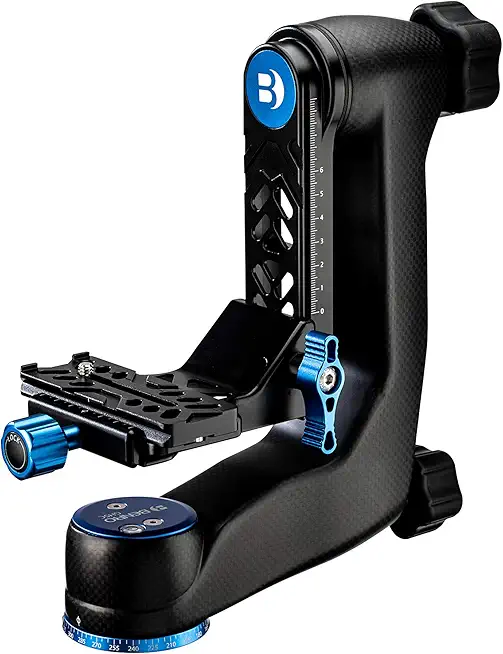
Benro GH5C Gimbal Head with PL100LW Plate
Heavy-duty gimbal delivering rock-solid balance and fluid tracking for large glass; quick plate mounting and secure locking for confident, precise shots.
Check PriceThe Benro Carbon Fiber Gimbal is a premium, lightweight option built around a carbon fiber structure yet engineered to handle heavy payloads. It’s aimed at shooters who need professional support without lugging an overly heavy rig.
What stands out first in the field is the buttery smooth operation and excellent build quality. The gimbal’s fluid balancing and panning make tracking fast animals noticeably easier, so subjects don’t jerk out of frame when you follow them.
Because it’s designed to reduce carrying weight while maintaining professional support, it’s frequently recommended for long wildlife trips where every gram matters. You’ll feel the reduced fatigue on multi-hour stakeouts or long hikes to blinds.
The finish and construction are built for the outdoors, offering good weather and corrosion resistance. That durability means less worry when you’re working in damp, salty, or dusty environments.
There are some trade-offs to accept. It’s more expensive than typical aluminum gimbal heads, so it’s an investment rather than an impulse buy.
Also, the balance adjustment process can be a bit fiddly at first, especially if you’re swapping lenses or plates in the field. Once dialed in, though, it stays predictable and smooth for the duration of a shoot.
If you prioritize buttery pan and tilt, high capacity, and lower carry weight, this Benro gimbal is mostly a strong choice. For photographers who travel light but still run big glass, it strikes a very useful balance.
- Lightweight carbon fiber construction
- Outstanding smoothness in pan and tilt
- High capacity with less carrying fatigue
- Good weather and corrosion resistance
- More expensive than aluminum heads
- Balance adjustment can be fiddly
Choosing a Tripod Head for Wildlife

Choosing the right tripod head will shape how you work in the field. If you mostly use heavy super‑telephotos, opt for a gimbal — it lets the lens pivot naturally and track birds or mammals with minimal effort. For mixed shooting or travel, a sturdy ball head can be more versatile.
Smoothness matters more than flashy features. A head that moves with predictable resistance makes it easier to follow erratic subjects. Test pan and tilt under load before you buy so you don’t discover stickiness while a bird is in your viewfinder.
Always check load capacity and add a safety margin. Match the head’s rated payload to your camera, lens, and accessories, and allow at least 20–30% extra so the head won’t sag when you add a battery grip or teleconverter. A well‑balanced setup tracks far better and reduces strain on the locking knobs.
Ergonomics are surprisingly important on long sits and windy days. Big, grippy knobs that work with gloves, easy‑to‑reach quick‑release plates, and intuitive controls keep you ready for sudden action. Small design details speed up every reaction and save missed frames.
Weight and portability are tradeoffs you’ll live with. Carbon fiber heads and frames shave kilos for long hikes, but premium alloys often feel rock‑solid on the salt flats or in a windstorm. Decide whether you’ll carry the kit daily or mostly drive to locations.
Compatibility matters. Make sure the head mates with your tripod legs and uses a plate system you trust, like Arca‑Swiss variants. Mismatched threads or a short plate can ruin balance and make fast adjustments awkward.
Durability is non‑negotiable outdoors. Corrosion‑resistant finishes and tight machining hold up under rain, sand, and grit. Think long term — a reliable head is cheaper than replacing a ruined shot or a gear failure.
Finally, try before you commit. Mount your heaviest lens, balance it, and practice smooth pans and tilts. The right head should feel like an extension of your body — once you find that, tracking fast wildlife becomes far more rewarding.
Tracking Fast Wildlife With a Tripod Head
Tracking fast wildlife with a tripod head is as much about rhythm as it is about equipment. A well‑set gimbal lets the lens float with the animal, so your hands and body simply guide rather than fight the motion. Spend a minute to balance the camera and lens on your head until tilt and pan move with minimal friction — that small effort pays off when a bird or fox ducks in and out of cover.
Before you press the shutter, watch the animal and pick movement cues. Birds often telegraph takeoff; mammals give body language that hints at direction. Leave breathing room in the frame in the direction you expect them to go. That extra inches of space gives you time to accelerate the pan without cutting off the subject.
Use your whole body when panning. Keep your feet shoulder‑width apart and rotate from the hips, not just the arms. Tuck your elbows in and let the tripod head do the smoothing. If your head has a pan‑control arm or adjustable damping, use it — small resistance can turn jittery motion into buttery tracking.
Match your camera settings to the action. Continuous AF and high frame rates are essential for fast subjects; aim for shutter speeds in the neighborhood of 1/1000s or faster for small birds in flight. Back‑button AF helps maintain focus while you compose and track.
Practicalities matter: large, glove‑friendly knobs make on‑the‑fly tension tweaks feasible in cold weather. Re‑balance whenever you change lenses or add a 1.4×/2× extender. And finally, practice. The first few sessions feel awkward, then muscle memory and small head‑adjustments take over, and your tripod head becomes an extension of your intent rather than an obstacle.
What People Ask Most
What type of tripod head is best for wildlife photography?
Gimbal heads are usually the best choice for large telephoto lenses and fluid tracking of moving subjects. Ball heads can be more versatile for mixed shooting but may not offer the same smooth tracking for heavy setups.
Should I use a gimbal head or a ball head for wildlife photography?
Choose a gimbal if you use heavy telephoto lenses and need effortless pan and tilt for tracking. Opt for a ball head if you want a lighter, more general-purpose solution for varied shooting styles.
Is a gimbal head better for bird photography?
For bird photography with long lenses, a gimbal head typically makes tracking and framing much easier due to its balanced support. Smaller lens setups or quick handheld work may still favor other head types.
How do I choose a tripod head for a heavy telephoto lens?
Look for a head that offers strong load capacity, stable support, and smooth movement that matches your lens weight. Also consider durable construction, ergonomic controls, and compatibility with your tripod and mounting plates.
What features should I look for in a tripod head for wildlife photography?
Prioritize smoothness and fluidity, reliable locking mechanisms, comfortable adjustment knobs, and rugged build quality for outdoor use. Portability and compatibility with your camera and lens system are also important.
Can I use a fluid head for wildlife photography?
Fluid heads can be excellent for wildlife video because they provide damped, smooth pans and tilts. For heavy telephoto stills work, however, gimbals or sturdy ball heads are often more practical.
How do I mount and balance a long lens on a tripod head for wildlife shots?
Attach the lens via its tripod collar or an L‑plate and position the lens so the center of mass sits over the head’s support point. Make incremental adjustments until the setup stays level and moves smoothly with minimal resistance.
Conclusion for Best Wildlife Tripod Heads
Choosing the right tripod head is one of the quickest ways to lift your wildlife work — the right balance of smoothness, capacity and portability directly improves your ability to track and freeze fast subjects.
This roundup covered the spectrum: a premium gimbal for heavy super‑telephoto work, a high capacity yet lightweight skeletal gimbal for long treks, a carbon‑fiber gimbal that trims carry weight without sacrificing fluidity, a versatile tripod with a horizontal column and ball head for odd angles, and a budget 360° panoramic gimbal that punches above its price.
When deciding, prioritize buttery smooth pan/tilt action, reliable load capacity, rugged build quality, and a weight you can realistically carry into the field, while ensuring the head matches your tripod and quick‑release system.
If you want to keep sharpening your technique and gear knowledge, explore more articles on the site to find practical tips and comparisons that fit your shooting style.
Have questions or want help picking the best head for your kit? Leave a comment below — we usually reply within a few hours and are happy to help.



0 Comments