
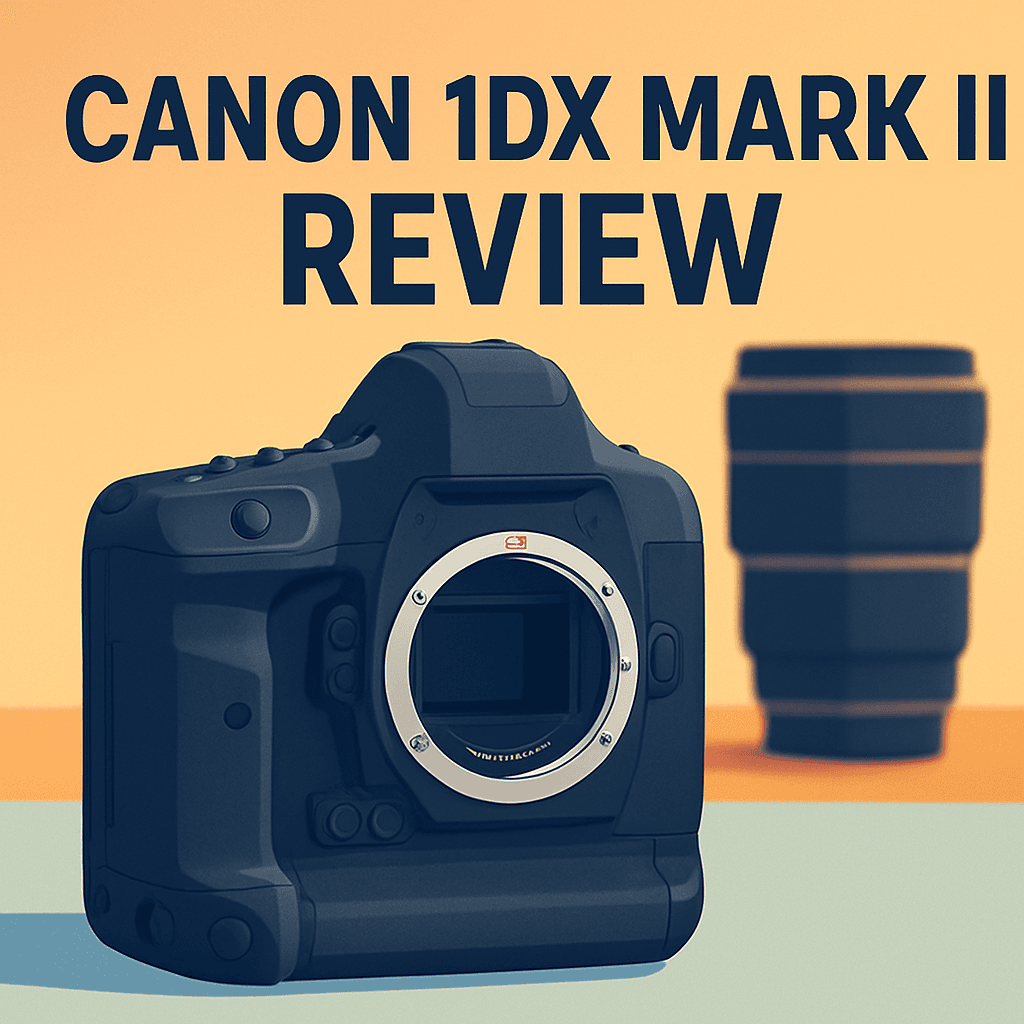
Want a camera that helps you nail decisive moments?
This canon 1dx mark ii review takes a working pro’s view.
It’s aimed at action, wildlife, and editorial shooters who need speed and reliability.
I’ve put it through real assignments to see how it holds up.
I’ll focus on real-world handling, AF behavior, burst performance, and low-light usability, so if you want a practical, no-fluff guide to whether this body fits your work, keep reading.

Canon EOS-1D X Mark II Camera
Blazing continuous shooting and responsive AF combine with rugged, weather-sealed construction and outstanding high‑ISO performance to capture decisive moments in sports, wildlife, and fast-paced professional assignments with confidence.
Check PriceThe Numbers You Need
| Spec | Value |
|---|---|
| Sensor | 20.2 MP full-frame CMOS |
| Continuous shooting | Up to 14 fps (mechanical shutter) |
| ISO sensitivity | 100–51,200 (expandable to 50–409,600) |
| Autofocus system | 61-point High-Density Reticular AF, all cross-type points |
| AF coverage | Wide area with advanced tracking |
| Video recording | 4K UHD at 60 fps |
| Image processor | DIGIC 6+ |
| Viewfinder | Optical pentaprism with approx. 100% coverage |
| Monitor | 3.2-inch LCD, approx. 1,620,000 dots, fixed |
| Shutter speed range | 1/8000 to 30 seconds |
| Build | Magnesium alloy body, weather-sealed |
| Storage media | Dual CompactFlash (CF) slots, UDMA 7 compatible |
| Drives | SA/AF with mirror lock-up; silent shooting modes |
| Weight | Approx. 1340 grams (body only) |
| Battery | LP-E19 rechargeable lithium-ion battery |
How It’s Built
In my testing the body feels built like a proper workhorse — solid, confidence-inspiring, and ready to be used in rough conditions. That means you can keep shooting in the rain or on dusty fields without worrying about every little splash. One thing I really liked was how secure everything feels in your hands; the grip and control layout let you shoot fast without fumbling.
The optical viewfinder is a real highlight in the field. I found it clear and direct for tracking fast action, with minimal blackout between frames so you don’t miss the moment. The thing that could be better is the fixed rear screen, which makes low-angle or awkward compositions harder for beginners and pros alike.
On the practical side, the dual card slots gave me peace of mind during jobs — I used them for backup and overflow so I never worried about losing files. The pro-style battery kept the camera running through long events, though the whole package is on the heavier side when paired with big lenses. Expect to feel it after a full day of handholding.
The shutter and drive modes are sensible and durable in real use. I used mirror lock-up and the quiet modes when needed to cut vibration or sound during delicate situations. For someone starting out, the build means fewer surprises and more focus on getting the shot.
In Your Hands
In the field the Canon EOS-1D X Mark II feels built for immediacy and relentless pace. Its rapid continuous shooting lets me chase decisive sequences — a sprint finish or a frantic flock — with confidence while the camera’s processor keeps menus and playback responsive even during heavy runs. Startup and handling are predictably instant when seconds count.
The full-frame sensor finds a pragmatic balance between resolution and speed, delivering files that are flexible for editorial layouts and forgiving enough for cropping into the action. Images come out with clean tonal transitions and usable detail straight from the body, which speeds retouching and shortens delivery times on tight assignments.
For hybrid shooters the high-frame-rate video is genuinely useful: motion is smooth and lends itself to believable slow-motion cuts that enhance storytelling for sports and events. It doesn’t replace a dedicated cinema camera, but it reliably supplements stills work when you need motion without a complicated workflow.
Daily reliability is where this camera earns its keep: dual card bays allow straightforward redundancy and practical offload strategies, and the optical viewfinder gives rock-solid composition and tracking confidence. Small features like mirror lock-up and quiet shooting prove their worth in quiet ceremonies or anytime minimizing vibration and distraction matters.
The Good and Bad
- Up to 14 fps mechanical continuous shooting for action
- 61-point all cross-type AF with wide coverage and advanced tracking
- 4K UHD at 60 fps for fluid motion capture
- Magnesium alloy, weather-sealed build for demanding environments
- Fixed rear LCD limits flexibility for unconventional shooting angles
- Heavy body (approx. 1340 g) may fatigue some shooters over long sessions
Ideal Buyer
If your daily grind is freezing split‑second motion, the Canon EOS-1D X Mark II is built for you. Sports, motorsports, and wildlife shooters who demand 14 fps, pro‑grade AF, and a weather‑sealed magnesium‑alloy chassis will find its speed and durability essential.
Photojournalists, wire shooters, and event pros will value the dual CompactFlash slots for instant redundancy, the LP‑E19 battery stamina, and a shutter that won’t quit in rain or dust. It’s a workhorse for tight deadlines and long days where every frame can be assignment‑critical.
Hybrid shooters who need dependable 4K/60p capture but prioritize stills will appreciate the camera’s video chops without sacrificing burst performance. Use it when smooth slow‑motion and robust autofocus matter more than the newest internal codecs or card standards.
Existing Canon pros with a shelf of L glass and entrenched workflows will find instant familiarity in handling and AF behavior, making this an easy, reliable upgrade. If you want the bleeding edge in AF tracking, lighter kit, or CFexpress throughput, look elsewhere; but for decisive moments under pressure the 1D X Mark II remains a consummate pro tool.
Better Alternatives?
We’ve already walked through the Canon 1D X Mark II in detail — how it handles, how its autofocus behaves, and why many pros still trust it for fast action and tough shoots. It’s a proven workhorse for sports, wildlife, and news, but it isn’t the only game in town.
If you’re thinking about something newer, faster at tracking, or just different in workflow, here are three real-world alternatives I’ve used that make sense depending on what you shoot and how you work.
Alternative 1:

Canon EOS-1D X Mark III Camera
Next-generation autofocus precision, accelerated processing and expanded low-light sensitivity deliver unmatched tracking accuracy, faster frame rates, and refined image quality for demanding sports, action, and editorial professionals who require absolute reliability.
Check PriceI’ve shot long soccer matches and fast-moving motorsports with the 1D X Mark III, and the thing that hits you first is the autofocus. It locks and holds better than the Mark II in tricky scenes, so you end up with more keepers in a run. The buffer and card handling also let you keep shooting longer without waiting, which matters when a sequence matters more than single frames.
Where the Mark III can be worse for some shooters is size of files and complexity. The images are bigger and the camera offers more video and connectivity options, so you’ll need faster cards and more storage. If you don’t use the extra video features or need internal RAW, that added hassle and cost may not help your day-to-day stills work.
Buyers who should pick the 1D X Mark III are hybrid shooters and pros who need the best tracking and are ready to pay for faster workflows. If you need top-level autofocus, longer sustained bursts, or better video, it’s the clear step up over the 1D X Mark II. If you mainly want a simple, proven stills body, the Mark II still makes sense.
Alternative 2:

Nikon D6 Camera
Purpose-built for pro shooters, it offers ultra-reliable autofocus tracking, rapid continuous shooting, robust weather-sealed durability, and intuitive controls—ensuring consistent, high-quality results under intense newsroom, sports, and wildlife pressure.
Check PriceI’ve used the Nikon D6 in the same stadiums I used the Canon, and its AF tracking is rock solid in chaotic scenes. It feels very steady on subjects that change direction, and its handling and wired/FTP workflow can shave minutes off an editorial turnaround. For newsroom work, that reliability and the way it integrates into a fast workflow are huge wins over the Mark II.
Compared to the 1D X Mark II, the D6 can feel different in color and lens behavior — if you already own Canon glass, switching brings a learning curve and extra expense. The D6 also doesn’t push video the way newer Canon models do, so if you need heavy hybrid video/stills work, it may fall short for that part of your job.
The Nikon D6 fits shooters who want absolute reliability in action and news work and who value fast, dependable file delivery. Sports and editorial photographers who prioritize tracking and a proven workflow will like it. If you’re tied to Canon lenses or need advanced video features, the Mark II (or Canon’s newer bodies) may be a better match.
Alternative 3:

Nikon D5 Camera
Legendary low-light capability and steadfast autofocus make this body ideal for action and wildlife photographers, pairing durable construction and long battery life with refined image quality for demanding, pro-level assignments.
Check PriceThe Nikon D5 is a real workhorse I’ve used for late-night games and dim ceremony shoots. Its low-light files are forgiving and the battery life keeps you shooting when other bodies need a swap. In very dark venues, it often gives you more usable frames than the Mark II without pushing ISO to impractical levels.
Where it falls short versus the 1D X Mark II is in modern AF refinements and some workflow features. The D5’s autofocus is reliable but not as modern-feeling as newer bodies, and its video features and card options aren’t as advanced. If you need cutting-edge tracking or internal video codecs, the D5 shows its age.
The D5 is best for photographers who shoot a lot in low light and want a rugged, dependable camera that just keeps working. If you find a good used D5, it’s great value for weddings, indoor sports, or long editorial days. But if you want the newest AF tricks or hybrid video capabilities, look to later models or other brands.
What People Ask Most
Is the Canon 1D X Mark II still worth buying?
Yes — if you need a rugged, fast pro DSLR with excellent AF and high burst rates at a lower price than newer models; if you want the latest mirrorless features and future-proofing, consider newer bodies instead.
How does the Canon 1D X Mark II compare to the original 1D X?
The Mark II adds higher resolution, faster continuous shooting, improved AF and much better low-light performance plus 4K video, making it a meaningful upgrade over the original.
What are the pros and cons of the Canon 1D X Mark II?
Pros: rock-solid build, blazing 14 fps shooting, class-leading AF and battery life; cons: heavy, older DSLR tech with fewer modern mirrorless conveniences like IBIS and advanced subject-tracking.
Is the autofocus performance on the Canon 1D X Mark II good for sports and wildlife?
Yes — its 61-point AF system and excellent tracking make it very reliable for sports and wildlife, though newer mirrorless systems may edge it in subject-recognition tracking.
Does the Canon 1D X Mark II shoot 4K video and what are its video capabilities?
Yes — it records 4K video with pro-level controls, but expect large files, shorter record limits and fewer modern codecs and AF features compared with current mirrorless cameras.
What is the low-light performance and ISO range of the Canon 1D X Mark II?
Very good — the full-frame sensor and dual processors deliver clean images at high ISO; native range is roughly ISO 100–51,200 (expandable much higher), with usable results well into the mid-to-high ISOs depending on noise tolerance.
Conclusion
As a working pro, the Canon EOS-1D X Mark II remains an unapologetically purpose-built flagship, delivering blistering speed, rock-solid durability and an autofocus system you can bet on in chaos. Its video chops include 4K/60p for smooth motion when you need it. Those qualities make it a camera designed to capture decisive moments rather than chase specs.
That focus comes with trade-offs: the fixed rear screen and legacy card format limit flexibility and future-proofing. The body’s heft and conservative expansion of high-ISO settings mean you’ll feel the weight on long assignments and should temper expectations in extreme low light. None of these are fatal flaws, but they are real considerations for the working pro.
Choose the 1D X Mark II if you’re a sports, wildlife or editorial shooter who needs uninterrupted bursts, dependable tracking and a camera that survives rough conditions. If you prioritize the latest AF refinements, modern card standards, lighter rigs or internal RAW video, newer models deserve a hard look. Budget-conscious pros who value proven handling will find its strengths still translate to paid work.
In short, this canon 1dx mark ii review concludes the camera is a field-proven tool that still earns its keep for photographers who prioritize capturing decisive moments under pressure. It’s not the flashiest option on the market, but as a reliable workhorse it remains hard to beat.
Canon EOS-1D X Mark II Camera
Blazing continuous shooting and responsive AF combine with rugged, weather-sealed construction and outstanding high‑ISO performance to capture decisive moments in sports, wildlife, and fast-paced professional assignments with confidence.
Check Price




0 Comments