
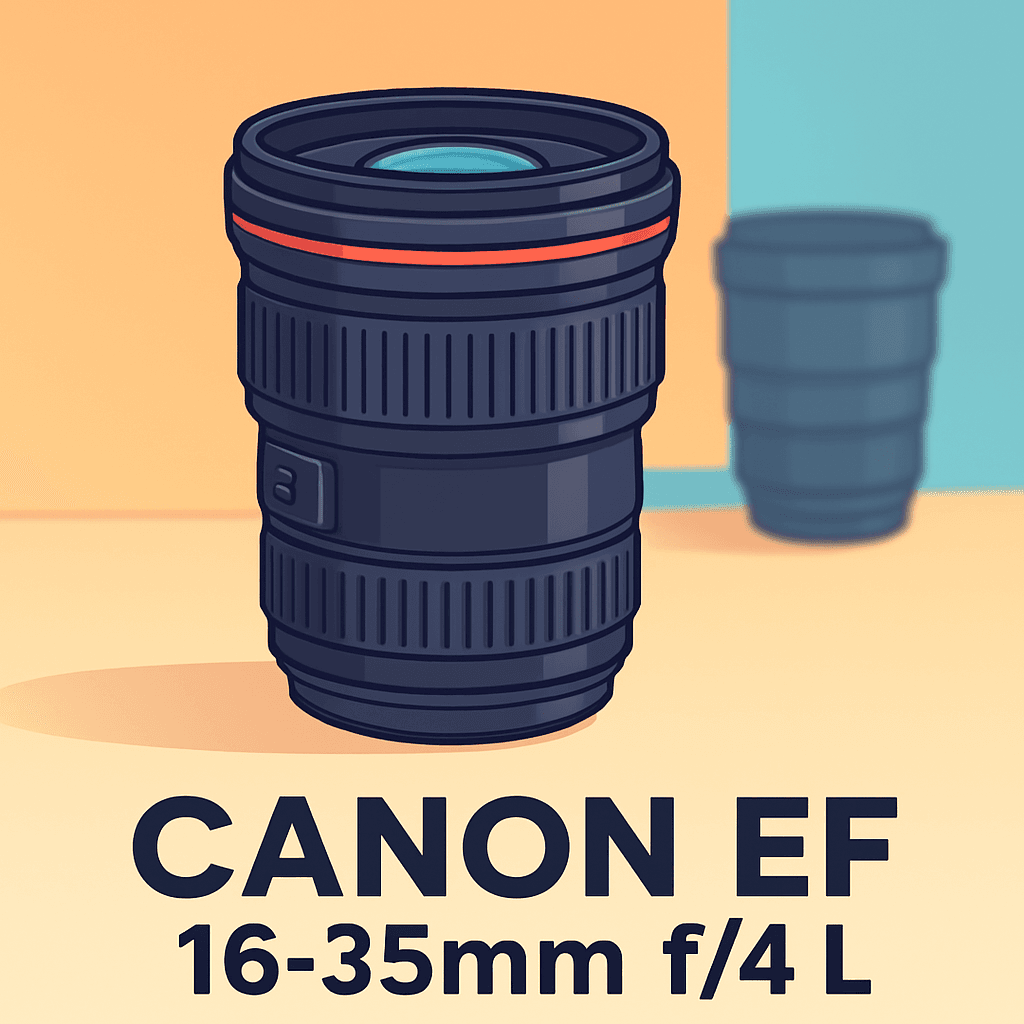
Wondering if the Canon EF 16-35mm f/4L is the travel-friendly ultra-wide that’ll actually improve your handheld shots?
I spent weeks field-testing it across rain, rooftops and mountains, so I know how it behaves in real shoots.
It’s aimed at shooters who need stabilized, weather‑sealed wide-angle reach without the bulk of faster f/2.8 glass.
That means steadier low-light handholding, consistent exposure while zooming, and easier filter use for landscapes, architecture and on-the-go work.
I’ll walk through build, real-world handling, sharpness, autofocus and practical trade-offs versus faster rivals—Make sure to read the entire review as I dig into when this lens shines and when it doesn’t, so keep reading.

Canon EF 16-35mm f/4L
Lightweight L-series ultra-wide zoom delivering edge-to-edge sharpness, high contrast, and faithful color reproduction. Designed for landscapes, architecture, and travel, it offers dependable performance and weather resistance in challenging conditions.
Check PriceThe Numbers You Need
| Spec | Value |
|---|---|
| Lens Mount | Canon EF |
| Focal Length | 16-35mm |
| Maximum Aperture | f/4 (constant across zoom range) |
| Lens Type | Wide-angle zoom |
| Image Stabilization | Yes, Optical Image Stabilizer (IS) |
| Autofocus | Ultrasonic Motor (USM) |
| Lens Construction | 16 elements in 12 groups |
| Minimum Focus Distance | 0.28 meters (28 cm) |
| Filter Size | 77mm |
| Maximum Magnification | 0.24× |
| Aperture Blades | 7 (circular aperture) |
| Weight | Approximately 615 grams |
| Dimensions | Approx. 83.5mm diameter × 94.5mm length |
| Weather Sealing | Yes, dust and moisture resistant (L-series build) |
| Compatible Sensor Format | Full-frame and APS-C (with crop factor) |
How It’s Built
In my testing the Canon EF 16-35mm f/4L feels like a proper L-series lens — solid, sealed, and built to handle weather without worrying. I liked the reassuring gasket at the mount and the tough, matte finish that shrugged off dust and drizzle. That build gave me confidence shooting in rough outdoor conditions.
On a full-frame body it balances surprisingly well and never felt front-heavy or awkward during long walks. I found it light enough to carry all day without tiring my shoulders, which matters when you’re hiking or running from one viewpoint to the next. For travel shooters this balance is a real win.
The control layout is straightforward and friendly to beginners. The zoom ring is smooth and nicely damped, while the focus ring has a shorter throw than I’d prefer for precise manual tweaks. If I had one gripe it’s that the manual focus feel could offer a bit more travel for fine adjustments.
I also appreciated the standard screw-in filter compatibility and the included hood that locks on solidly in the field. That practical touch means you can use common circular filters without buying a special system, which is great for learners building their kit on a budget.
The aperture uses a circular multi-blade design, which I found gives pleasing background rendering and decent sunstars when stopped down. Overall the lens feels well thought out and easy to live with whether you’re starting out or working professionally.
In Your Hands
In the field the Canon EF 16-35mm f/4L’s image stabilizer is immediately noticeable—handheld framing stays steady and keeper rates improve in dim, ambient light where a tripod isn’t an option. The stabilizer tames small shakes through the zoom range, making handheld horizon-level landscapes and slow-pan cityscapes feel more confident. For run-and-gun shooting the steadier viewfinder and smoother live-view framing are genuine workflow benefits.
The constant f/4 aperture gives exposure consistency while zooming, so re-composing between wide and short wide doesn’t force sudden exposure changes or surprise highlights. The trade-off is obvious in subject isolation: you won’t get the same shallow separation a faster lens can yield, but you gain compositional freedom without compensating for brightness as you zoom. That predictability is a practical advantage for landscape and travel work.
From dramatic, sweeping seascapes to cramped interiors the focal range delivers usable perspectives, and on cropped sensors the field of view tightens into a comfortable wide-angle that still feels expansive. The lens also allows close foreground emphasis thanks to a near-focusing ability, which helps create depth and scale in wide compositions. Those foreground-to-background transitions are where the lens really shines for evocative environmental shots.
Built to be used outdoors, the weather-resistant finish and modest heft make it easy to carry all day without fatiguing quickly; it feels like a tool you can trust on a damp ridge or windy rooftop. Optical behavior in everyday shooting is well controlled—flare is handled respectfully in backlit scenes while a touch of vignetting and wide-angle distortion is apparent in extreme frames but easily managed in-camera or in post. Overall it’s a reliable, travel-ready performer that balances stability and practical wide-angle versatility.
The Good and Bad
- Optical Image Stabilizer (IS) for handheld stability at a constant f/4
- L-series build with dust and moisture resistance
- Manageable size/weight for travel and long shooting days (~615 g)
- 77mm front filter thread—easy use of common filters
- Close focus (0.28 m) and useful 0.24× magnification for foreground emphasis
- Full-frame and APS-C compatibility
- Consistent exposure across the zoom range (constant f/4)
- f/4 aperture limits subject isolation and raw light intake versus f/2.8 alternatives
- Not as wide as some ultra-wides that reach 15mm
- 7-blade aperture may influence the character of out-of-focus rendering and sunstars compared to designs with more blades
- Those prioritizing low-light action or astrophotography may prefer faster glass per Alternatives
Ideal Buyer
The Canon EF 16-35mm f/4L is a sweet spot for travelers, landscape shooters and architects who prize stability and practicality over outright aperture speed. Its constant f/4 and built-in IS make handheld low-light panoramas and tight interiors far more manageable. The 77mm filter thread keeps graduated and polarizing workflows simple.
Event and documentary shooters who rely on ambient light will appreciate the stabilization during long, on-the-move days. You trade some subject isolation versus f/2.8 glass, but keeper rates improve when a tripod isn’t an option. The L-series build also inspires confidence in unpredictable conditions.
APS-C users get a versatile ultra-wide-to-normal field of view while keeping the option to step up to full-frame bodies later. That flexibility makes this lens a smart one-body-one-lens choice for hybrid shooters. Close-focus capability also helps when foreground drama matters.
Choose this lens if you value weather-sealed reliability, manageable weight and consistent exposure throughout the zoom. It’s ideal for travel kits where filters, stability and predictable handling matter most. If you prioritize maximal low-light speed or extreme ultra-wide reach, look to faster or wider alternatives instead.
Better Alternatives?
We’ve gone through what the Canon EF 16-35mm f/4L brings to the table: a useful ultra-wide range, constant f/4, and built-in stabilization that really helps when shooting handheld in low light. If you like the idea of a weather-sealed, travel-friendly L-series lens with a normal 77mm filter thread, it’s a strong choice. But no single lens fits every need, so let’s look at a few real alternatives you might consider.
Below I’ll point out what each alternative does better and where it gives up ground compared to the 16-35 f/4L, and who I’d recommend each one to based on how they handle and shoot in the field.
Alternative 1:
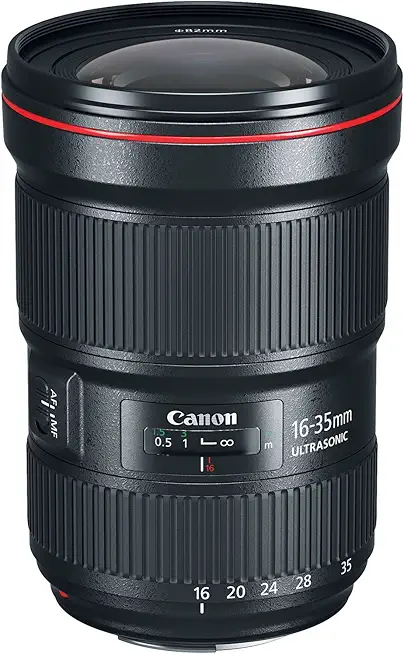
Canon EF 16-35mm f/2.8L III
Professional-grade ultra-wide zoom with a bright maximum aperture for superior low-light capability and subject separation. Modern optical design minimizes aberrations and flare, producing crisp, high-resolution images for demanding shooters.
Check PriceThe 16-35mm f/2.8L III is the obvious pick when you need more light. I’ve used it at dim receptions and on moonlit landscapes where the extra stop of aperture made a real difference—cleaner shots at lower ISOs and easier subject separation when you want a little background blur. In short, it beats the f/4L for low-light work and for that slightly punchier look in images.
Where it falls short against the 16-35 f/4L is weight, size, and the lack of image stabilization. The f/2.8 III is heavier in the bag and gets tiring on long walks. Because it doesn’t have IS, you’ll need faster shutter speeds or higher ISO for handheld low-light shooting, whereas the f/4L’s IS often lets me keep the shutter slower and still get keepers.
Choose the f/2.8 III if you shoot weddings, indoor events, or night skies and need that extra brightness and outright sharpness wide open. If you travel light and rely on stabilization for hand-held work, or you value the 77mm filter thread and lighter feel, the f/4L still makes more sense.
Alternative 2:

Canon EF 17-40mm f/4L
Accessible wide-angle zoom that balances image quality and value. Robust construction and weather sealing support outdoor work, while consistent optics deliver pleasing detail and color for landscapes and events.
Check PriceThe 17-40mm f/4L is a workhorse I’ve taken on trips where weight and cost mattered. It’s smaller and cheaper than the 16-35 f/4L, and that matters if you’re packing light or putting a second lens on a backup body. In real shooting I found it fine for landscapes and travel shots, and it pairs well with a compact tripod or when you don’t need the extra 1mm of width.
Compared with the 16-35 f/4L, the 17-40 gives up a touch of width (17mm vs 16mm) and a bit of corner sharpness and control over distortion. You’ll notice it more in tight interiors or when shooting dramatic foregrounds where every millimeter of view counts. It also lacks IS, so handheld low-light shooting is tougher than with the 16-35 f/4L.
If you’re on a budget, shoot travel or landscapes and want something reliable without the latest optics, the 17-40 is a sensible choice. It’s a good pick for someone who values lighter gear and lower cost over the absolute best corner-to-corner performance.
Alternative 3:
Canon EF 17-40mm f/4L
Classic full-frame wide zoom offering portability and reliable performance. Smooth autofocus, generous field of view and solid build make it an excellent everyday lens for travel, documentary, and environmental portraiture.
Check PriceSeen as an everyday tool, the 17-40mm still shines. I’ve used it for street and documentary work where I wanted a simple, unobtrusive wide zoom. It’s quick to focus, doesn’t draw attention, and its smaller size keeps the camera balanced for long handheld shoots. For many shooters it’s the “grab-and-go” wide lens that won’t slow you down.
Against the 16-35 f/4L, the 17-40 is easier to carry and cheaper, but it won’t deliver the same edge-to-edge sharpness or the slightly wider view at 16mm. The lack of IS is another real difference — if you rely on stabilization to pull off slow shutter handholds, the 16-35 f/4L will make more keepers for that style of shooting.
Pick the 17-40 if you want a dependable, compact wide zoom for travel, daily work, or as a second lens that won’t weigh you down. If you need the latest optics, a 16mm field of view, or built-in stabilization, then the 16-35 f/4L remains the better all-round choice.
What People Ask Most
Is the Canon EF 16-35mm f/4 L image stabilized?
Yes — the EF 16-35mm f/4L IS includes optical image stabilization to help handheld shots at slower shutter speeds.
How sharp is the Canon EF 16-35mm f/4 L?
Very sharp in the center and excellent stopped down around f/8–f/11, with edges slightly softer wide open at the widest focal length.
Is the Canon EF 16-35mm f/4 L good for landscape photography?
Yes — its wide angles, strong sharpness when stopped down, and weather resistance make it an excellent landscape lens.
How does the Canon EF 16-35mm f/4 L compare to the 16-35mm f/2.8 L?
The f/2.8 version gives a faster aperture and better low-light performance, while the f/4 IS is lighter, cheaper, and adds image stabilization with comparable sharpness stopped down.
Is the Canon EF 16-35mm f/4 L compatible with full-frame and APS-C Canon cameras?
Yes — it’s an EF-mount full-frame lens that also works on APS-C bodies, where it gives a roughly 25.6–56mm equivalent field of view.
Is the Canon EF 16-35mm f/4 L weather-sealed?
Yes — it has L-series dust and moisture resistance (including a gasket at the mount), but you should still avoid heavy rain without extra protection.
Conclusion
The Canon EF 16-35mm f/4L is a rare blend of L-series toughness and practical stabilization, built for photographers who shoot wide and shoot a lot. It doesn’t chase headline aperture numbers; instead it delivers consistent exposure and confident handheld framing in situations where mobility and weather resistance matter.
In the field I reached for it when I needed a dependable, travel-friendly ultra-wide that accepts common filters and lets me keep shooting without a tripod. Its ergonomic balance and sealed finish make it a workhorse for landscapes, architecture, interiors and documentary runs where comfort and reliability trump marginal gains in speed.
That focus on practicality is also the lens’s main compromise. If your work demands the shallowest backgrounds, the cleanest low-light performance, or the ultimate ultra-wide reach, faster or wider alternatives make compelling cases.
For most shooters who value handheld stability, durability and predictable results over absolute aperture speed, this lens is an excellent, no‑nonsense choice. If you need more speed, a lower price, or an extra degree of ultra-wide, consult the Alternatives section; otherwise you’ll find few lenses that balance real‑world usability and L‑series refinement so cleanly.
Canon EF 16-35mm f/4L
Lightweight L-series ultra-wide zoom delivering edge-to-edge sharpness, high contrast, and faithful color reproduction. Designed for landscapes, architecture, and travel, it offers dependable performance and weather resistance in challenging conditions.
Check Price


0 Comments