
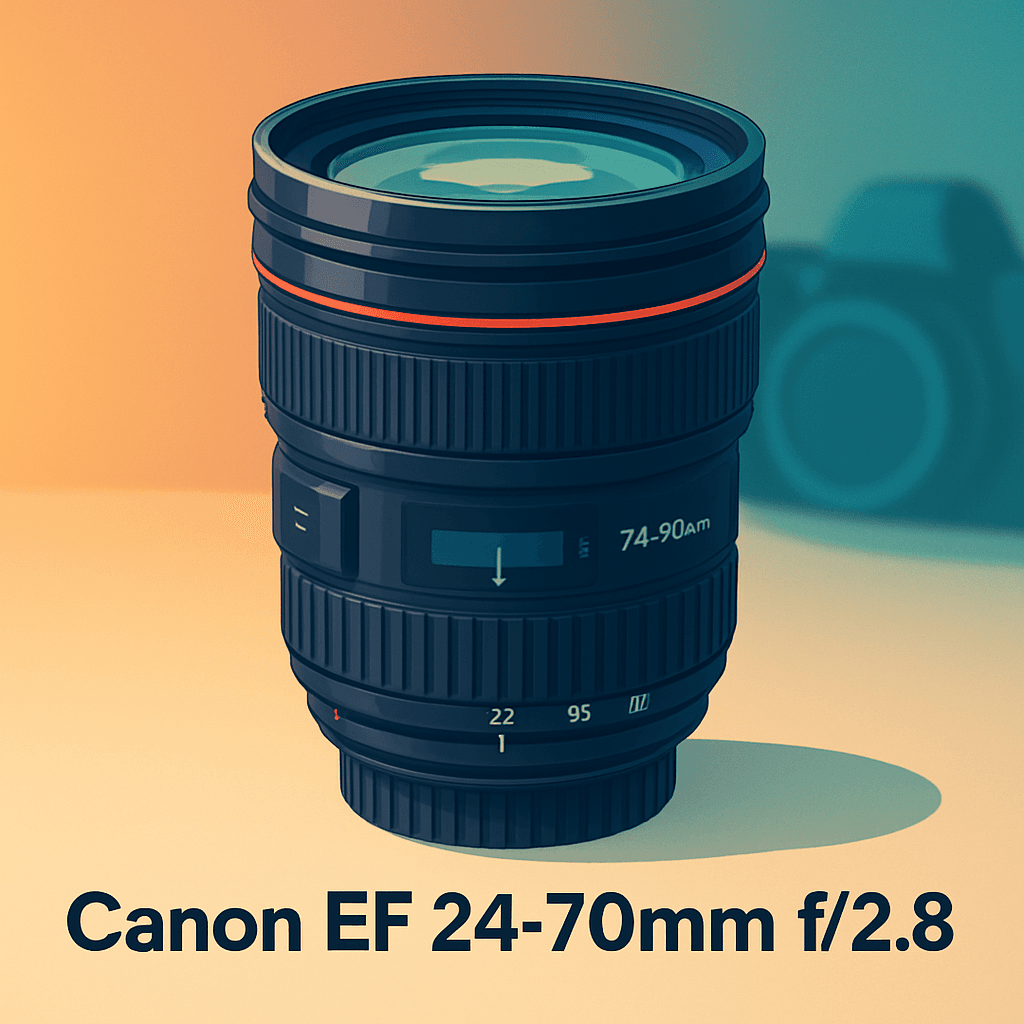
Want a single lens that can handle weddings, travel, and portraits without constant lens changes?
The Canon EF 24-70mm f/2.8L is Canon’s pro-grade standard zoom that aims to do just that, offering a constant wide aperture and rugged L-series build for real-world shooting.
It’s built for EF-mount full-frame shooters, while APS-C bodies get a tighter, short-tele feel, and it doesn’t include image stabilization so you’ll lean on technique or a stabilized body.
I’ve run this lens through real shoots to see how its handling and low-light payoffs hold up today, and I’ll walk through strengths, trade-offs, and where rivals might pull ahead — keep reading.

Canon EF 24-70mm f/2.8L
Professional-grade standard zoom delivering exceptional sharpness, fast constant aperture for low-light and shallow depth control, robust weather-sealed construction and reliable autofocus—ideal for weddings, portraits and everyday photo assignments.
Check PriceThe Numbers You Need
| Spec | Value |
|---|---|
| Focal length | 24-70 mm |
| Maximum aperture | f/2.8 constant |
| Lens mount | Canon EF |
| Lens series | L-series (professional grade) |
| Optical construction | 18 elements in 13 groups |
| Image stabilization | No (relies on camera body) |
| Minimum focusing distance | 0.38 m (1.25 ft) |
| Filter size | 82 mm |
| Aperture blades | 9 (rounded diaphragm) |
| Autofocus motor | Ultrasonic Motor (USM) |
| Weather sealing | Yes (dust and moisture resistant) |
| Maximum magnification | Approximately 0.24x |
| Lens weight | Around 805 g (1.77 lbs) |
| Dimensions (diameter x length) | Approximately 88.5 mm x 113 mm |
| Compatible camera format | Full-frame and APS-C (with crop factor) |
How It’s Built
In my testing the Canon EF 24-70mm f/2.8L feels every bit like a pro lens. It’s solid and built to take a beating, and the weather sealing actually makes a difference when you’re shooting in drizzle or dusty conditions. That confidence means you can keep working when others are packing up.
The zoom and focus rings are smooth and positive, so dialing in framing or pulling focus feels natural. On my full-frame bodies it balances nicely, but on smaller bodies it leans a bit forward. For beginners that means think about your camera pairing or bring a strap to reduce wrist fatigue.
I liked the overall toughness and tactile quality the most — it feels like gear you can rely on day after day. One thing that could be better is the size and weight; after a long event you’ll notice it in your bag. That heft does help with steady shots on a tripod, but it’s a trade-off for handheld comfort.
The front thread accepts large filters, which I found handy for landscapes and polarizing work. Practical note for beginners: those bigger filters cost more and take more room in your kit, so plan your filter workflow before a shoot. Carrying a compact filter kit or a good pouch saves time and hassle.
After using it for a while I found the build gives beginners a forgiving, dependable tool to learn with. Pair it with a solid body and basic support like a strap or monopod, and you’ll get reliable performance in real-world shoots. It’s a lens that feels like it was made for work.
In Your Hands
The Canon EF 24-70mm f/2.8L’s constant wide aperture is central to its appeal, giving dependable low-light performance and predictable depth-of-field control across the zoom range. That steady brightness makes metering and exposure decisions simple during fast-moving shoots, and helps isolate subjects without swapping lenses.
Because it lacks optical stabilization, handheld work depends on technique and your camera body—raising ISO, choosing a braced stance, or moving to a monopod or tripod when the light drops. In practice that trade-off is manageable for seasoned shooters, but it does change how you plan run-and-gun assignments and all-day shoots.
The USM autofocus is quick and hush‑quiet, locking confidently for portraits, events, and travel work while keeping pace with documentary shooting rhythms. A useful close‑focusing range lets you grab details and tighter framings without reaching for a macro, and on full‑frame bodies the lens covers the classic environmental-to-short-tele range, with APS‑C cameras giving a noticeably tighter, portrait‑oriented field.
For video the absence of stabilization means handheld footage benefits from a gimbal, in‑body stabilization, or a steadier rig and more deliberate camera movement. In the field I found contrast and flare controlled most of the time, though strong backlight rewards a hood and mindful angle choices; the lens’s heft and larger filter size also require a practical approach to carry and filter workflows on long assignments.
The Good and Bad
- Constant f/2.8 aperture across 24–70 mm
- L-series build quality; weather sealed
- USM autofocus (fast, quiet)
- 9-blade rounded aperture for smoother bokeh
- No image stabilization; relies on technique or stabilized bodies
- Heavier, larger design (approx. 805 g; 82 mm filters)
Ideal Buyer
If you shoot Canon EF and want a true pro-grade standard zoom, the Canon EF 24-70mm f/2.8L is built for you. Its constant f/2.8 and L-series weather sealing suit pros who prize consistent exposure and rock-solid reliability. Choose this lens if you’re comfortable managing shutter speed and ISO rather than relying on in-lens stabilization.
This is a go-to for full-frame event, documentary, and portrait shooters who need one lens to cover wide environmental frames through short telephoto headshots. APS-C users who prefer a short-tele bias and robust build will also find it useful for tighter framing. The lens’ close-focus ability and smooth nine-blade aperture make it handy for detail and subject isolation without swapping glass.
If you routinely lug gear all day, be ready for the weight and the 82mm filter workflow, which is ideal for pros who already use large filters. It really shines when paired with a stabilized body, a monopod, or disciplined handholding technique. The rugged ergonomics and dependable USM AF reward photographers who work fast in mixed conditions.
A classic choice for shooters who value Canon L ergonomics and a characterful rendering over the latest optics or built-in stabilization. If your priority is absolute corner-to-corner sharpness or native IS, compare it to the Mark II or third-party stabilized options first. Otherwise, this lens is a versatile, durable workhorse that performs where it counts.
Better Alternatives?
We’ve covered the Canon EF 24-70mm f/2.8 L and what it brings to the table: a solid, weather-sealed pro zoom with a true f/2.8 across the range and that reassuring L-series feel. For a lot of shooters it’s a reliable workhorse, but there are other lenses that solve some of its limits or push the performance further.
If you want sharper files, built-in stabilization for handheld work, or simply a different balance of price versus features, the options below are the ones I’ve used in the field and can recommend depending on what you shoot and how you work.
Alternative 1:
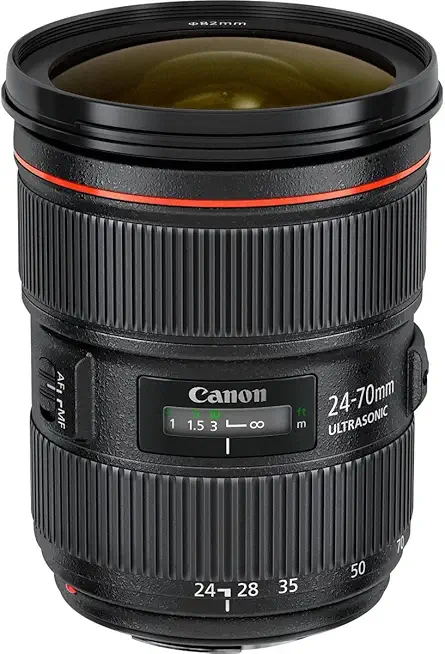
Canon EF 24-70mm f/2.8L II
Refined second-generation professional zoom offering superior edge-to-edge resolution, advanced coatings to reduce flare, faster focusing and durable construction—optimized for demanding event and commercial photography where fine detail and consistency matter.
Check PriceI used the Mark II a lot when I needed the cleanest, sharpest images from a 24–70 look. Compared to the original EF 24-70mm f/2.8 L, the Mark II gives noticeably crisper shots across the frame, especially in the corners at wider settings. In real shoots that means less time fixing softness in post and more reliable files for big prints or tight commercial crops.
Where it’s worse than the original is mostly in feel and cost. The Mark II can feel a touch more clinical to some eyes — less of the “character” that some shooters liked in the older lens — and it can be pricier. Like the original, it still doesn’t have built-in stabilization, so you’ll rely on fast shutter speeds or a stabilized body for steady handheld work.
If you’re a pro doing weddings, events or commercial work where edge-to-edge sharpness and faster, more reliable AF matter, you’ll prefer the Mark II. It’s the pick when consistency and the cleanest possible files are your priority and you want to stay fully in the Canon ecosystem.
Alternative 2:
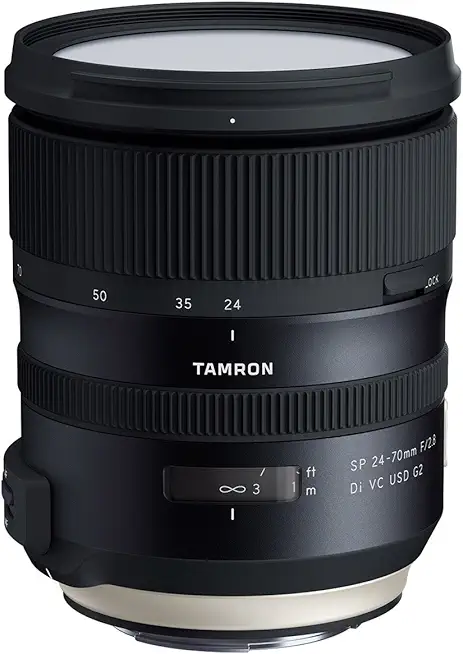
Tamron SP 24-70mm f/2.8 Di VC USD G2 Canon EF
Premium standard zoom with built-in image stabilization, ultra-fast stepping autofocus, and refined optical design delivering crisp detail and smooth bokeh; moisture-resistant build makes it a versatile tool for hybrid shooters.
Check PriceThe Tamron G2’s biggest real-world advantage over the Canon EF 24-70mm f/2.8 L is the built-in VC stabilization. I’ve shot handheld weddings and low-light receptions with the Tamron and the VC gave me usable shots at slower shutter speeds where the Canon without IS would have needed a bump in ISO or a faster shutter. That stabilization changes how you work in tough light.
On the downside the Tamron doesn’t have Canon’s L-series weather sealing level or the same brand-level AF predictability on every body. In my experience it focuses quickly and smoothly most of the time, but sometimes you may need to check focus on demanding tasks or do a tiny AF tweak on certain camera bodies. Also, while its center sharpness is very good, some corners may not match the Mark II on the absolute highest-resolution work.
This lens is for shooters who want that extra help handheld: run-and-gun wedding shooters, documentary photographers, and hybrid video/photographers who need stabilization and good optics at a lower price. If you value steadier handheld shooting and price-to-performance, the Tamron is a strong, practical choice.
Alternative 3:
Tamron SP 24-70mm f/2.8 Di VC USD G2 Canon EF
Updated-generation zoom that pairs steady handheld performance with a bright constant aperture, producing sharp center-to-edge clarity, reliable close-focus capability and responsive autofocus—an excellent, cost-conscious option for working photographers.
Check PriceThinking of the Tamron again from the standpoint of everyday work, it’s a flexible, sensible tool. In the field I found its close-focus ability and smooth bokeh useful for quick detail shots and portraits without swapping lenses. The stabilized kit lets you shoot in conditions where the original Canon would force you to raise ISO or hire extra lighting.
What it doesn’t do as well as the Canon EF 24-70mm f/2.8 L is match the L-series ruggedness and the super-steady autofocus feel you get from native Canon pro lenses on some bodies. Build and weather resistance are good for most trips, but if you abuse gear in harsh conditions I still trust Canon’s L sealing more. Also, if absolute corner-to-corner perfection on ultra-high-res sensors is your job, you might see small differences versus the top Canon variants.
If you’re a working photographer who needs a practical, cost-conscious lens that makes handheld low-light shooting easier, this Tamron is worth considering. It’s aimed at people who value stabilization and everyday shooting versatility over the brand-name pro badge and who want a lot of performance for the money.
What People Ask Most
Does the Canon 24-70mm f/2.8L have image stabilization (IS)?
The EF 24-70mm f/2.8L versions do not have IS; only certain newer RF 24-70mm f/2.8L models include image stabilization.
What is the difference between the Canon 24-70mm f/2.8L Mark I and Mark II/III?
The Mark II is a major optical upgrade with better sharpness, coatings, and faster AF compared with the Mark I; “Mark III” generally refers to newer mirrorless RF variants that add refinements like IS and updated optics.
Is the Canon EF 24-70mm f/2.8L weather-sealed?
Yes, as an L-series lens it has dust and moisture sealing around the mount and controls, but it’s not fully waterproof—avoid heavy immersion.
How sharp is the Canon 24-70mm f/2.8L at f/2.8?
Center sharpness at f/2.8 is good for most uses, but corners are a bit softer until you stop down to f/4–f/5.6.
Is the Canon 24-70mm f/2.8L good for wedding and portrait photography?
Yes—its versatile zoom range and constant f/2.8 make it a go-to for weddings and portraits, offering reliable low-light performance and pleasing background separation.
Will the Canon EF 24-70mm f/2.8L work on APS-C (crop sensor) Canon cameras?
Yes, EF lenses mount on APS-C bodies and will give an effective field of view of about 38–112mm, making it great for portraits and tight shots on crop bodies.
Conclusion
The Canon EF 24-70mm f/2.8L is still a workhorse for pros who need a constant f/2.8, L-series toughness and fast USM autofocus. It delivers dependable handling, weather resistance, and a characterful look that suits events and documentary work, though its heft is noticeable on long walks. The trade-off is clear: no built-in image stabilization, so technique and support matter.
Optically it remains serviceable, with rendering that many shooters still favor over newer, clinical alternatives. But if absolute cross-frame sharpness and micro-contrast are mission-critical, the Mark II pulls ahead—especially on very high-resolution bodies. Expect to balance that optical gap against the original’s feel and proven reliability.
My recommendation is straightforward: pick the Canon EF 24-70mm f/2.8L if you prioritize rugged build, consistent aperture and a familiar rendering, and you can manage handheld technique or rely on a stabilized body. If you need every stop of image sharpness or faster, more reliable AF for run-and-gun work, consider the Canon Mark II. If built-in stabilization is a must, the third-party stabilized zooms are worth a hard look for handheld low-light shooting and travel.
Canon EF 24-70mm f/2.8L
Professional-grade standard zoom delivering exceptional sharpness, fast constant aperture for low-light and shallow depth control, robust weather-sealed construction and reliable autofocus—ideal for weddings, portraits and everyday photo assignments.
Check Price

0 Comments