
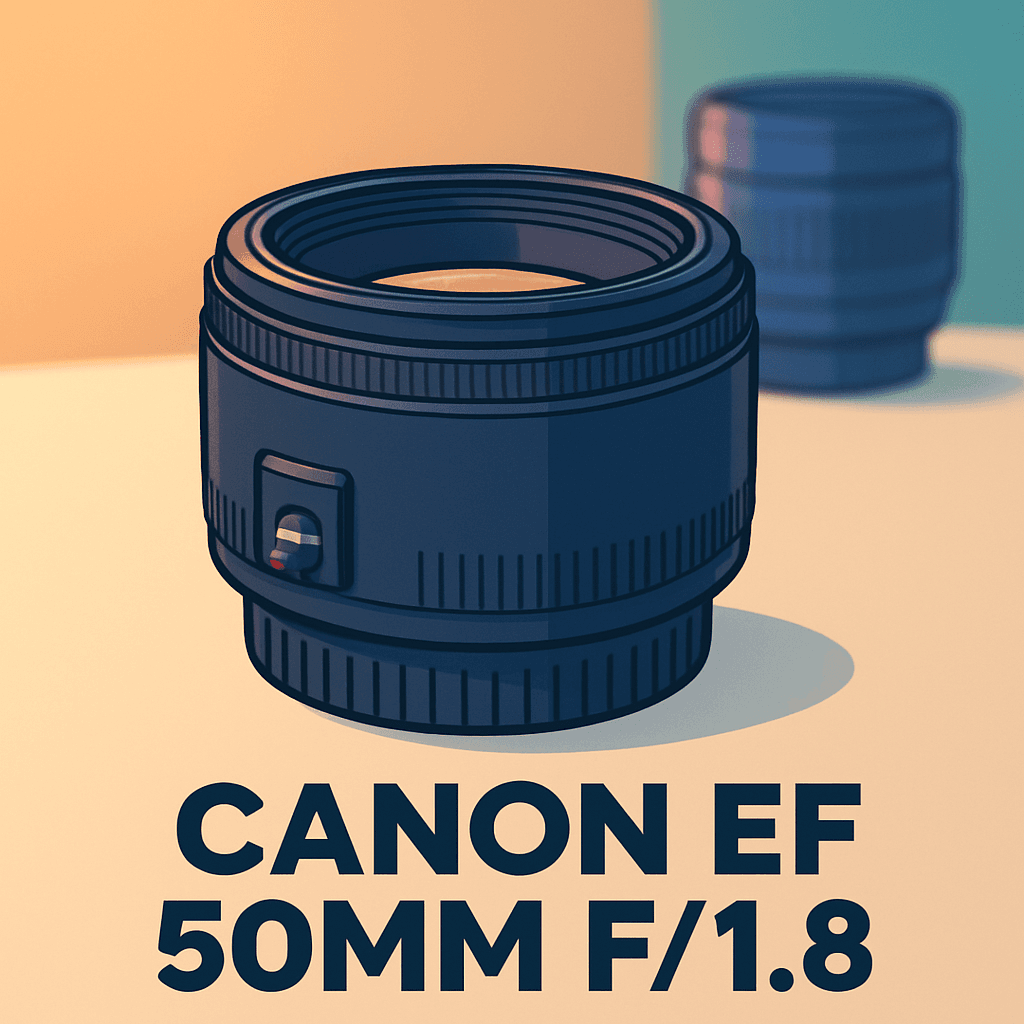
Want to get noticeably better images without buying an expensive lens?
The Canon EF 50mm f/1.8 STM is a tiny, fast standard prime that’s useful on both full-frame and APS-C bodies, offering easy subject separation and low-light reach.
It’s the kind of lens that’s great for portraits, street work, travel and casual video, and after field-testing it on real shoots I looked closely at handling, autofocus and sharpness.
If you’re after an affordable go-to 50mm for everyday shooting, this review will help you decide if the tradeoffs are worth it. Make sure to read the entire review as the details might surprise you — keep reading.
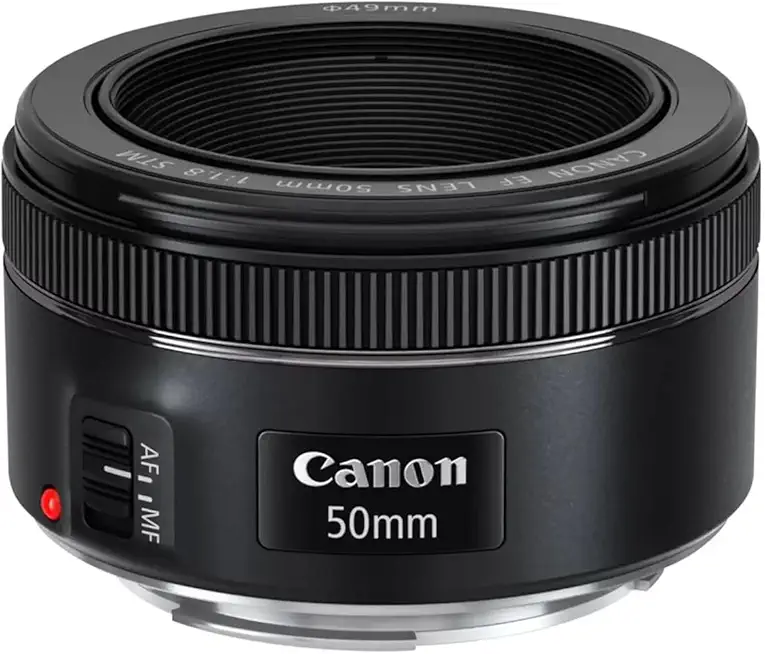
Canon EF 50mm f/1.8 STM
Compact, lightweight 50mm prime delivering crisp images and fast f/1.8 low-light capability. Quiet, smooth autofocus makes it ideal for street photography and run-and-gun video where portability matters.
Check PriceThe Numbers You Need
| Spec | Value |
|---|---|
| Mount | Canon EF |
| Focal length | 50mm |
| Maximum aperture | f/1.8 |
| Lens type | Standard prime |
| Autofocus motor | STM (Stepping Motor) |
| Minimum focusing distance | 0.35 m (1.15 ft) |
| Maximum magnification | 0.21x |
| Optical construction | 6 elements in 5 groups |
| Diaphragm blades | 7 (rounded) |
| Filter thread size | 49 mm |
| Image stabilization | None |
| Compatible sensor formats | Full-frame; APS-C (1.6x crop) |
| Weight | Approximately 160 g (5.6 oz) |
| Dimensions (diameter × length) | ~69.2 mm × 39.3 mm |
| Aperture range | f/1.8 to f/22 |
How It’s Built
In my testing the Canon EF 50mm f/1.8 STM felt delightfully small and light. It balances nicely on smaller Canon bodies and is one of those lenses you hardly notice until you want to shoot. For real-world use that means you’ll carry it more and miss fewer shots.
The metal mount sat snugly on my cameras with no wiggle and the fit felt consistent frame to frame. I liked that it clicked into place with confidence — good news for beginners who don’t want to worry about play. It feels secure even during quick lens changes.
The front is compact and takes easy-to-find filters, so adding an ND or polarizer is simple when needed. One thing I’d change is that a hood doesn’t come in the box, which means you’ll want to buy one to avoid flare. Not having it included is a small annoyance.
The short barrel makes the focus ring narrow and manual focusing feels a bit cramped compared with longer primes. In my testing autofocus handled most situations fine, but if you like slow, precise manual tweaks you’ll notice the limits. Overall it’s plenty robust for daily use, just not a tank.
In Your Hands
On a full‑frame body the Canon EF 50mm f/1.8 STM reads like a classic “normal” lens — natural perspective that works equally well for portraits, street scenes and everyday reportage. Mount it on an APS‑C body and that same field tightens into a short-teleplay, making it an easy go‑to for headshots, cropped environmental portraits and detail work.
That bright f/1.8 aperture is the real practical advantage: in dim interiors and at dusk it routinely pulls usable shutter speeds and keeps ISOs in a comfortable range, while giving photographers pleasing subject separation when you want it. When scenes call for sharper depth across multiple faces or landscapes, a couple of stops of stopping down quickly yields more forgiving depth of field.
Up close the lens handles casual product and food shots with confidence, rendering texture and color cleanly without pretending to be a macro specialist. It gets you into comfortable working distances for tabletop work, but extremely tiny subjects will still demand a true close‑up optic.
In video the STM motor translates to smooth, relatively silent focusing in live view, which is handy for run‑and‑gun clips and talking‑head work. The lack of optical stabilization means handheld shooters should brace, use higher shutter speeds, or lean on gimbals and tripods for the steadiest results.
In real world use this 50 is a flexible, carry‑everywhere prime: portraits, street and family moments sing, indoor ambient light behaves better, and casual product shots are reliable. Just be mindful of the stabilization omission and the need to stop down for group shots or when you need edge‑to‑edge sharpness.
The Good and Bad
- f/1.8 maximum aperture for low-light and subject separation
- Very light and compact (~160 g; ~39.3 mm length) for everyday carry
- STM focus drive for smooth, video-friendly behavior
- Affordable and compatible with full-frame and APS-C Canon EF bodies
- No image stabilization
- AF drive is STM rather than ring-type USM, prioritizing smoothness over the fastest snap focus
Ideal Buyer
If you want a lightweight, fast prime that covers portraits, street and everyday shooting, the Canon EF 50mm f/1.8 STM is an obvious pick. It’s small enough to carry all day and fast enough to pull usable frames in low light without hauling big glass. Beginners upgrading from a kit lens and experienced shooters looking for a compact second lens both get huge practical value and a forgiving learning curve for creative shooting.
Full‑frame shooters get a classic 50mm perspective that’s ideal for environmental portraits, family snapshots and street work. On APS‑C bodies the 1.6x crop turns it into a short tele that tightens composition for headshots and detail work. Video creators and hybrid shooters benefit from the STM’s smooth, quiet autofocus for live view and run‑and‑gun filming, especially in quiet interiors.
This lens is especially right for value‑focused buyers who accept the tradeoffs — no image stabilization and an STM drive instead of USM — in exchange for tiny size, low weight and a price that won’t sting. It excels for travel, everyday carry, casual food or product shots, and quick family moments where fuss-free handling matters most. Pick it when portability and real‑world versatility beat the last stop of bokeh or pro‑level build.
Better Alternatives?
We’ve looked closely at the Canon EF 50mm f/1.8 STM — why it’s such a great, light, and cheap go-to lens for portraits, street, and everyday low-light work. It gives a lot of bang for the buck, but some shooters want more: a creamier blur, faster focus, tougher build, or higher resolution for prints and crops.
Below are three common alternatives I’ve used in the field. Each one trades something against the 50/1.8 STM — I’ll point out what each does better and where the tradeoffs lie, and who is likely to prefer them.
Alternative 1:

Canon EF 50mm f/1.4 USM
Fast-aperture 50mm prime offering brighter f/1.4 exposure for beautiful subject separation and smoother bokeh. Robust focusing motor yields quick, reliable autofocus for portraits, events, and low-light shooting.
Check PriceThe Canon 50mm f/1.4 USM gives you an extra stop of light over the 50/1.8, and you see that in real shooting. At f/1.4 you can get much shallower depth of field — heads and eyes really pop against a soft background — and it helps when you need lower ISO or slower shutter in dim rooms. The USM focus feels firmer and faster on a DSLR, so for weddings or events where quick, decisive focus matters, it’s a clear step up from the STM.
That said, the 1.4 is heavier and pricier. Wide open it’s a touch softer and can show a bit more vignetting and color fringing than the 50/1.8; many times I stop to f/2–f/2.8 for crisper results. For video, the STM on the 50/1.8 is smoother and quieter, so the 1.4 isn’t always the best choice if run-and-gun video is your focus.
If you shoot portraits, events, or low-light work and want that extra shallow look with faster AF, the 50/1.4 USM is worth it. If you travel light, shoot a lot of video, or are watching your budget, the 50/1.8 STM will serve you better.
Alternative 2:

Canon EF 50mm f/1.4 DG HSM Art
Premium 50mm prime engineered for exceptional sharpness, contrast, and edge-to-edge clarity. Fast aperture produces luxurious bokeh and precise rendering, perfect for professional portraits, commercial work, and studio use.
Check PriceThis high-performance 50mm (the Art-style design) stands out for sheer image quality. In the studio and on high-megapixel bodies it delivers much crisper files, richer midtone contrast, and very pleasing out-of-focus rendering compared with the 50/1.8. When I shot product and headshot work with it, the detail and tonality were noticeably better for big prints and tight crops.
The tradeoffs are obvious in the field: it’s heavier and much bigger, and it shows up when you’re walking around all day. It’s also more expensive, and on some cameras you may need to check autofocus calibration — on a few bodies I had to tweak focus to get the best results. For casual shooting or travel, the 50/1.8’s small size and low weight still win.
Choose this if you’re a studio, commercial, or pro portrait shooter who wants the best straight-out-of-camera detail and a luxurious look for prints or client work. If you primarily need a light, cheap walkaround lens, stick with the 50/1.8 STM.
Alternative 3:
Canon EF 50mm f/1.4 DG HSM Art
High-performance 50mm prime combining advanced optics with rich color and micro-contrast for lifelike images. Solid build and refined focus control deliver consistent results for discerning photographers and demanding shoots.
Check PriceThis take on a high-end 50mm emphasizes color and micro-contrast. In practical shoots I noticed skin tones look a touch more pleasing and there’s a three-dimensional feel to images that the 50/1.8 doesn’t quite match. If you want the lens to give you a distinct “look” and reliable color for client work, this one delivers more often than the simpler 50/1.8.
Again, the cost and size go up. You’ll carry more weight, and you’ll pay for that extra performance. Also, for quick handheld low-light video, the STM 50/1.8 still wins because it’s lighter and its focus motor is built for smooth live-view moves. The high-performance lens is more about image quality than convenience.
Pick this if you’re a discerning photographer who prints large, sells work, or needs very consistent color and rendering for clients. If you mostly want an inexpensive, pocketable 50mm for everyday use, the 50/1.8 STM remains the smarter, lighter choice.
What People Ask Most
How sharp is the Canon EF 50mm f/1.8?
Very sharp in the center even at f/1.8; edges and corners are softer wide open but improve a stop or two down (f/2.8–f/4).
Is the Canon EF 50mm f/1.8 worth buying?
Yes — it’s one of the best value lenses for beginners and pros who want great low-light and portrait performance on a budget.
What is the difference between the Canon EF 50mm f/1.8 STM and the older EF 50mm f/1.8 II?
The STM adds a quieter, smoother stepping AF motor, a better manual focus ring and improved build quality; the II is cheaper but has noisier AF and more basic construction.
Can the Canon EF 50mm f/1.8 be used on APS-C (crop sensor) Canon cameras?
Yes — on APS-C it gives roughly an 80mm equivalent field of view, which is great for headshots and short-teleportrait work.
Is the Canon EF 50mm f/1.8 good for portrait photography?
Yes — the focal length and wide f/1.8 aperture deliver pleasing subject isolation and creamy bokeh for portraits, especially head-and-shoulder shots.
Does the Canon EF 50mm f/1.8 have image stabilization?
No — neither the STM nor the II version has image stabilization, so rely on faster shutter speeds or body stabilization if needed.
Conclusion
As a go-to budget prime, the Canon EF 50mm f/1.8 STM nails the essential tradeoffs: excellent image character for everyday shooting, very small footprint, and a focusing motor that plays nicely with live view and video. It’s the kind of lens you buy to make your kit lighter and your photos cleaner without breaking the bank.
In the field it shines on portraits, street work, and dusk interiors where subject separation and responsiveness matter. The STM gives smooth, quiet autofocus for casual video and keeps you from fighting noise in quiet rooms. You’ll appreciate how effortless it is to carry and use.
There are compromises worth calling out. Lack of image stabilization means you’ll need to brace or raise shutter speeds for steady handheld shots, and STM trades peak speed for smoothness compared with higher-end AF systems. Also, it isn’t a macro tool and some situations demand stopping down or switching lenses.
I recommend the Canon EF 50mm f/1.8 STM to photographers who prioritize light weight, low cost, and strong everyday performance. If you need the absolute shallowest background or faster, more decisive AF, look toward the 50/1.4 family; if ultimate portability is king, a 40mm pancake is a compelling alternative. For most shooters, this lens is an unbeatable balance of value and practicality.
Canon EF 50mm f/1.8 STM
Compact, lightweight 50mm prime delivering crisp images and fast f/1.8 low-light capability. Quiet, smooth autofocus makes it ideal for street photography and run-and-gun video where portability matters.
Check Price



0 Comments