

Want to know if the Canon EOS Rebel XSi Camera can actually improve your image quality?
I’ll focus on what matters most to photographers shooting stills, not spec lists you won’t use.
We’ll prioritize handling, autofocus, image quality and usable ISO performance, and note that this body doesn’t record video — it’s a stills-first camera.
I’ll cover design and ergonomics, real-world performance, sensor output, noise behavior, pros and cons, and realistic alternatives; I’ve run it through real shoots to see how it behaves in practice.
If you shoot portraits, landscapes, or everyday moments and favor straightforward controls, you’ll want to read this. Make sure to read the entire review as I unpack where it shines and where its compromises show up — keep reading.

Canon EOS Rebel XSi Camera
Compact DSLR delivering dependable image quality and responsive controls for photographers learning the craft. Comfortable grip, optical viewfinder, and versatile lens compatibility make it a reliable companion for everyday shooting.
Check PriceThe Numbers You Need
| Spec | Value |
|---|---|
| Sensor | 12.2 MP APS-C |
| Image Processor | DIGIC III |
| ISO Range | 100–1600 (expandable to 3200) |
| RAW Support | Yes |
| Autofocus Points | 9-point |
| Continuous Shooting Speed | 3.5 fps |
| Shutter Speed Range | 1/4000s – 30s |
| Flash Sync Speed | 1/200s |
| Viewfinder | Pentamirror, 95% coverage |
| Live View | Yes |
| LCD | 3.0″ TFT, 230,000 dots |
| Storage | SD/SDHC |
| Battery | LP-E5 Lithium-ion |
| Weight | 475 g (body only) |
| Dimensions | 129 x 98 x 62 mm (body only) |
How It’s Built
In my testing the Canon EOS Rebel XSi feels refreshingly light and easy to carry all day. It slips into a small bag without hogging space, so you end up shooting more and complaining less. That makes it a friendly companion for street walks and weekend outings.
The optical viewfinder is bright and comfortable to use, but it doesn’t show the entire scene at the edges, so I learned to watch my framing. The rear screen is large and great for composing, yet its low resolution makes fine-focus judging a bit uncertain. For beginners that means using live view or taking a quick test shot when critical focus matters.
I found the grip very comfortable and the main controls fall naturally under your fingers, which helps when you’re learning exposure. The top and rear dials let you tweak settings quickly without digging through menus. The menus themselves are simple and not intimidating for someone just starting out.
The battery and card slots are easy to access during a shoot, so swaps are painless when you need them. The body is mostly plastic but feels solid and balances nicely with everyday lenses; I really liked that built-in balance for handheld shooting. One thing that could be better is the viewfinder coverage and screen sharpness for pixel-peeping and precise framing.
In Your Hands
The autofocus lives up to the camera’s modest heritage: a concentrated cluster of AF points around the center that nails focus on static subjects and behaves reliably under indoor lighting, but it can feel conservative when tracking erratic movement. Single-shot focusing is predictably accurate; continuous tracking asks for patience and careful framing. For portraits and everyday shooting it inspires confidence, while fast-paced sports can expose its limits.
Continuous shooting is pragmatic rather than ecstatic — it captures casual bursts of action like kids and pets without drama, but the camera’s breathing room shrinks quickly when you work in RAW. For sequences where every frame matters, lean on JPEGs for longer runs; for decisive single moments, RAW gives you the headroom you’ll appreciate in post. The real-world trade-off is manageable for hobbyists and family shooters.
The shutter and flash combo is versatile for typical daylight and fill-flash scenarios, easily freezing mid-action in well-lit situations and allowing for pleasing ambient balance with a little exposure juggling. Built-in flash is useful for subtle fill rather than dramatic lighting, so expect to use off-camera light or reflectors when you want cleaner, more controlled results. Overall it’s practical and straightforward.
Live View is a welcome option for tripod work, macro setups and alternative compositions, but it isn’t the fastest route to autofocus — it excels with deliberate, static subjects. The rear screen makes composing simple scenes effortless, though critical manual-focus tasks feel better with focus aids or a live histogram. For studio and tabletop work it’s perfectly serviceable.
Day‑to‑day responsiveness feels solid: startup and shutter lag are unobtrusive and menus move at a steady pace, even if they don’t race. The camera’s JPEG engine produces pleasant straight-from-camera images, but RAW remains the smarter choice when you need latitude for highlights and shadow recovery. In practical shooting the combination of reliable handling and RAW flexibility is its strongest asset.
The Good and Bad
- 12.2 MP APS-C sensor with RAW support for flexible post-processing
- Live View for tripod work and alternative compositions
- 3.5 fps continuous shooting for casual action sequences
- 1/4000s maximum shutter and 1/200s flash sync cover common daylight and flash scenarios
- 3.0″ rear LCD provides a large viewing area
- SD/SDHC storage; lightweight 475 g body aids portability
- No video recording capability
- ISO tops at 1600 (expandable to 3200), limiting very low-light flexibility
- 3.0″ LCD resolution at 230,000 dots makes fine focus checking less precise
- 9-point AF system with limited point count/coverage compared to newer designs
- Pentamirror viewfinder with 95% coverage means edges not fully visible in-frame
- No built-in Wi‑Fi/NFC
Ideal Buyer
If you pride yourself on shooting stills and have no use for video, the Canon EOS Rebel XSi Camera is a straightforward, stills‑first DSLR that delivers classic handling and image control. It’s particularly well suited to beginners and self‑taught photographers who want a tactile learning tool to master exposure, composition, and manual focus. The simple control layout and optical viewfinder reward deliberate framing and encourage better technique.
This camera shines for shooters who work in good light or controlled settings — portrait sessions, landscapes, travel in daylight, and classroom assignments — where keeping ISO moderate preserves clean detail. With a 12.2MP APS‑C sensor and RAW support you get flexible files for editing and modest cropping without overthinking megapixels. Its light 475 g body and straightforward menus make it easy to carry and operate for long walks and shoot days.
Think of it as an affordable learning platform, a reliable second body for an enthusiast, or a starter kit for a student on a budget. Skip it if you need modern AF coverage, built‑in sharing, or video features that speed up live‑view work. For photographers who value image craft over connectivity and who will work within its ISO and autofocus limits, the XSi is a charming, cost‑effective companion.
Better Alternatives?
We’ve already gone over the Canon EOS Rebel XSi and how it behaves in real shoots, so now let’s look at a few real alternatives. These are cameras I’ve used in the field and that give different practical gains — better high‑ISO, live‑view shooting, or easier sharing — depending on how you like to work.
Below I’ll point out what each one really does better and where it falls short compared with the XSi, and who will get the most out of each choice. I’ll keep the focus on how they feel to use on a shoot, not just the numbers on a spec sheet.
Alternative 1:
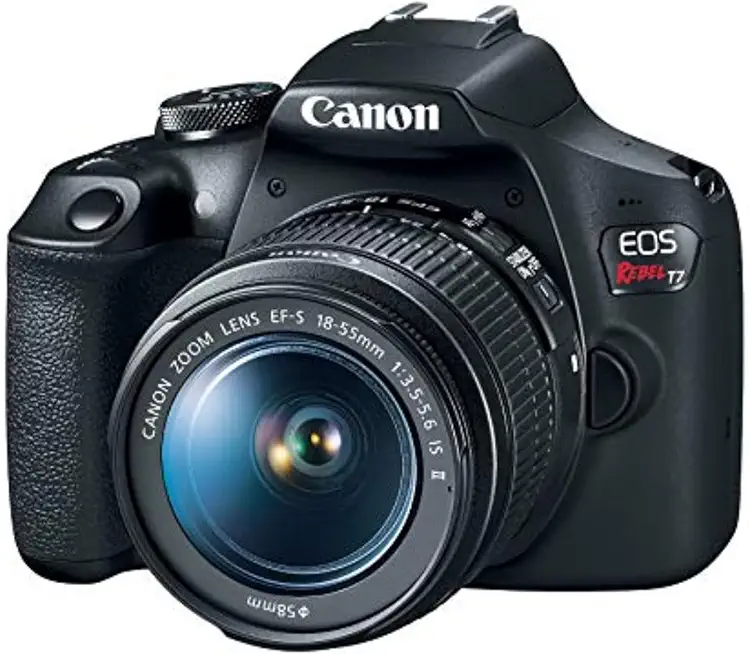
Canon EOS Rebel T7 Camera
Entry-level DSLR with straightforward menus and helpful creative modes, producing sharp photos and Full HD video. Built-in Wi‑Fi simplifies sharing, while durable construction supports confident shooting in varied conditions.
Check PriceIn real use the Canon EOS Rebel T7 gives you cleaner files and higher resolution than the XSi, which means nicer prints and more room to crop. I liked being able to shoot at higher ISO with less worry, and having Full HD video and built‑in Wi‑Fi made it easy to hand footage or photos over to a client right away. For everyday shooting it feels like a clear modern step up.
Where it falls short versus the XSi is in handling and autofocus speed for fast action. The T7 still uses a basic 9‑point AF system in the viewfinder, so when I chased kids or pets it didn’t lock on any faster than the XSi. Live‑view focus is also slow compared with Canon’s newer Dual Pixel AF cameras, so composing on the rear screen can feel sluggish.
Buyers who will like the T7 are casual shooters and beginners who want better image quality and easy sharing without learning a lot of new controls. If you want a modern camera for family photos, travel snaps, or quick client work and don’t need fast continuous AF, the T7 is a sensible, simple upgrade from the XSi.
Alternative 2:

Canon EOS 250D Camera
Ultra-light, compact body paired with a large articulating touchscreen for intuitive framing and vlogging. Smooth autofocus and long battery life let creators capture crisp stills and smooth movies on the go.
Check PriceThe Canon EOS 250D (SL3) is the one I reach for when I want a small, easy camera that still handles like a modern tool. Its flip-out touchscreen and strong live‑view autofocus (Dual Pixel AF) make composing on the screen and shooting video much more pleasant than the XSi. In real shoots I found focusing in live view to be fast and reliable, so I used it more for events and run‑and‑gun work.
What it doesn’t beat the XSi at is solid, chunky handling for long lens work — the 250D’s grip is small, and on long shoots my hand got tired sooner than it did with larger bodies. Also, while it offers 4K, that mode has compromises in autofocus and a crop, so for most of my real shooting I stuck with 1080p. Compared with the XSi, low‑light stills are better, but the viewfinder AF coverage is not a massive leap forward for fast action.
Choose the 250D if you want modern live‑view performance, a friendly touchscreen, and a lightweight body for travel or vlogging. It’s great for creators who shoot a lot of video or for hobbyists who want fast, usable autofocus on the rear screen without carrying a big DSLR.
Alternative 3:
Canon EOS Rebel T7 Camera
Designed for beginners wanting dependable results, this camera balances simplicity with image quality, offering effective low-light performance, guided shooting modes, and easy smartphone pairing for fast upload-ready photos.
Check PriceComing back to the T7 with a different eye: I’ve used it on longer trips where battery life and simple controls matter. It gives you consistent JPEG colors straight out of camera and a reliable shooting experience when you don’t want to fuss with settings. The guided modes and easy phone pairing make it fast to get shareable photos after a shoot, something the XSi cannot do on its own.
On the downside, the T7’s buttons and menus are simplified compared with the XSi’s older layout, so if you liked the XSi’s more tactile controls you might miss them. The T7’s autofocus in the viewfinder still isn’t great for fast sports or erratic subjects, so in those scenes the XSi and its familiar handling can feel just as usable. Live‑view and screen-based focus remain the T7’s weaker points.
Pick this T7 if you’re a beginner who wants dependable results, easy sharing, and a camera that stays out of your way. It’s a good choice for family photographers, travelers who upload straight to social media, and anyone moving up from older DSLR models who values simple, predictable performance.
What People Ask Most
Is the Canon EOS Rebel XSi a good camera?
Yes — it’s a solid older entry-level DSLR that still delivers good still-image quality, but it lacks modern features like live view, video, and strong high-ISO performance.
How many megapixels does the Canon EOS Rebel XSi have?
It has a 12.2‑megapixel APS-C CMOS sensor.
Does the Canon EOS Rebel XSi have live view?
No — the XSi does not include live view.
Can the Canon EOS Rebel XSi shoot video?
No — the XSi does not record video.
What is the difference between the Canon EOS Rebel XSi (450D) and the Canon EOS Rebel T1i/500D?
The T1i/500D adds a higher-resolution sensor plus live view and HD video recording, while the bodies and lens compatibility remain largely the same.
What lenses are compatible with the Canon EOS Rebel XSi?
The XSi accepts Canon EF and EF‑S mount lenses, with EF‑S specifically made for its APS‑C sensor and EF lenses also fully usable.
Conclusion
The Canon EOS Rebel XSi Camera is, at heart, a stills-first DSLR that rewards photographers who prioritize handling, color and RAW latitude over bells and whistles. It delivers a straightforward, tactile experience that encourages better exposure and compositional habits. At the same time its lack of video, limited high‑ISO headroom and dated conveniences mean it won’t satisfy everyone.
If you shoot primarily in good light and want an affordable body that teaches fundamentals, the XSi remains a sensible choice. If you need cleaner low‑light files and basic modern features, step up to a newer Rebel like the T7, or choose the SL3 for genuinely better live‑view autofocus and video. If battery life and out‑of‑camera JPEGs are priorities, the Nikon D3500 is a practical alternative.
In short, the XSi offers clear stills value for a specific kind of shooter: patient, technique‑first photographers who prefer good glass to gadgetry. It’s not the right pick for videographers, heavy low‑light shooters or anyone who demands instant sharing and modern AF performance.
To extract the most from the Canon EOS Rebel XSi Camera, shoot RAW, keep ISO conservative and expose deliberately to protect highlights. Pair the body with a sharp prime or a steady zoom, use a tripod or fill flash when necessary, and let lens choice and composition carry the image rather than relying on the sensor to rescue marginal shots.
Canon EOS Rebel XSi Camera
Compact DSLR delivering dependable image quality and responsive controls for photographers learning the craft. Comfortable grip, optical viewfinder, and versatile lens compatibility make it a reliable companion for everyday shooting.
Check Price



0 Comments