
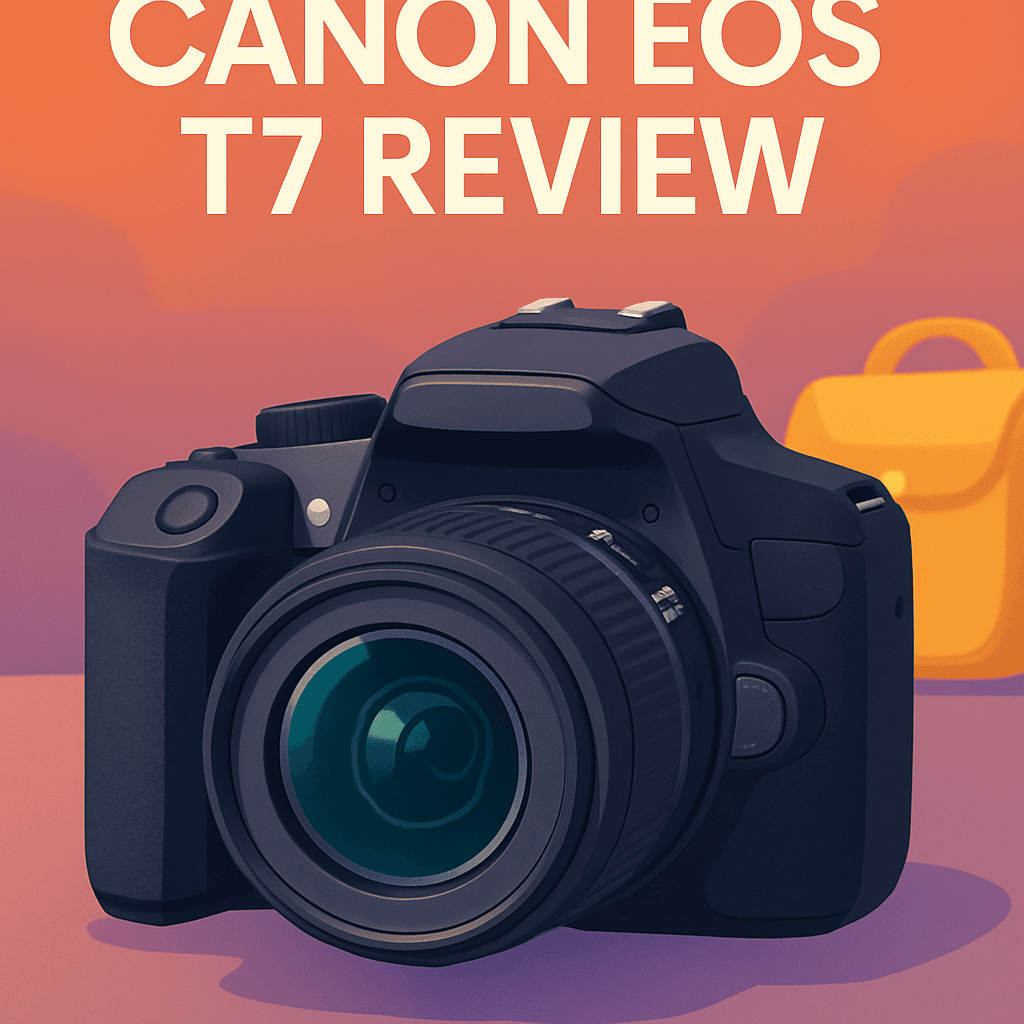
Want a camera that makes your snapshots pop with those warm, natural skin tones you see in magazines?
You’re not alone.
That’s where the Canon EOS Rebel T7 Camera comes in.
I personally field-tested the Canon EOS Rebel T7 Camera and compared it with a couple of close rivals.
It’s aimed at new photographers and casual shooters learning the ropes.
It’s simple to use and delivers pleasing daytime images with that classic Canon color.
Built-in sharing features make it easy to post or remote-control shots.
That’s a real-world win.
This camera suits absolute beginners, students, and hobbyists learning the basics.
You’ll get usable results without feeling overwhelmed.
It’s forgiving while you practice composition and exposure.
There’s a clear trade-off: autofocus struggles in Live View and it’s not great in dim light.
That limits action shots and late-night shooting.
So know the limits before you buy.
I found one simple trick that helps images pop.
Keep reading to see it for the Canon EOS Rebel T7 Camera — it may change your photos drastically.

Canon EOS Rebel T7 Camera
Entry-level DSLR with a 24.1MP sensor, built-in Wi‑Fi, Full HD 1080p video, intuitive controls, and reliable autofocus—perfect for beginners seeking easy-to-use, affordable image quality and dependable performance.
Check PriceThe Numbers You Need
| Spec | Value |
|---|---|
| Sensor | 24.1MP APS-C CMOS (effective) |
| Image processor | DIGIC 4+ |
| ISO range | 100–6400 (expandable to 12800) |
| Autofocus | 9-point AF system with single cross-type center; AI Servo; Live View face detection (contrast‑detect) |
| Continuous shooting | 3.0 fps |
| Video recording | Full HD 1080p at 24/25/30 fps; HD 720p at 60/50 fps |
| Rear LCD | 3.0" fixed TFT, approx. 920,000 dots (4:3); non-touch, non-articulating |
| Viewfinder | Optical pentamirror, approx. 95% coverage |
| Lens mount | Canon EF / EF‑S compatible |
| Connectivity | Built-in Wi‑Fi and NFC for sharing and remote control |
| Battery life | CIPA-rated approx. 500 shots per charge |
| Body construction | Traditional DSLR shape, plastic construction for reduced weight |
| Image stabilization | None (no in-body stabilization) |
| Microphone input | None (no external mic input) |
| High-ISO performance | Noticeable noise from ISO 800–1600; grain increases past ISO 3200 |
How It’s Built
In my testing the Canon EOS Rebel T7 Camera wears the classic DSLR shape you expect, and it feels familiar the moment you pick it up. The body is mostly plastic, which keeps the overall weight down so I could walk around shooting for hours without a sore shoulder. That lighter build is something I really liked—it’s forgiving for beginners and easy to toss into a bag for weekend trips.
I found the control layout is refreshingly simple and made getting started painless; buttons are where your hands expect them and the grip is comfy for long shoots. For a new photographer that means you can focus on framing and exposure without hunting through menus, which is great when you’re learning. What could be better is the lack of extra dials and shortcuts—once you get more confident you might miss faster, more direct controls.
The rear screen is fixed and not touch-sensitive, so composing at odd angles or shooting selfies is more awkward than on newer models. There’s some basic weather protection, but I wouldn’t trust it in a downpour—light drizzle is fine, heavy use in rough conditions is not. Overall the T7’s design is honest and approachable, which helps beginners get shooting right away.
In Your Hands
The Canon EOS Rebel T7 turns heads with sharp, pleasing JPEGs and that familiar Canon color science—skin tones are particularly flattering. In bright, controlled light the files look clean and ready for print or social sharing.
Dynamic range is respectable for an entry model, holding highlight detail and recovering shadows when exposure is dialed in. You’ll get the best results shooting where light is generous.
Push into dimmer environments and grain becomes more prominent, which limits how far you can stretch exposure without visible noise. Low‑light autofocus also tends to hunt, so indoor shooting requires patience or a fast lens.
Autofocus through the optical viewfinder is dependable for static subjects and beginners learning composition. Live View and video autofocus are contrast‑based and noticeably slower, making moving subjects a challenge.
For casual videography the camera produces usable clips, but the experience is constrained by the lack of advanced video features—there’s no higher‑resolution recording, external mic input, flip screen, or in‑body stabilization. That makes it better suited to short, simple clips rather than ambitious video projects.
Built‑in Wi‑Fi and NFC smooth the workflow for quick transfers to a phone for editing or sharing, which is a boon for social shooters. The simple controls and broad EF/EF‑S lens compatibility make it an approachable platform for learning and expanding your kit over time.
The Good and Bad
- Excellent image quality in good light
- Classic Canon color science with flattering skin tones
- Beginner-friendly operation and straightforward controls
- Built-in Wi-Fi and NFC for quick sharing and remote control
- Slow autofocus in Live View and only 9 AF points
- Noticeable noise at higher ISOs and weak low-light performance
Ideal Buyer
The Canon EOS Rebel T7 Camera is ideal for absolute beginners stepping into DSLR photography. It’s a forgiving platform for learning exposure, aperture, shutter speed and basic manual controls without overwhelming menus. The simple layout and Canon’s pleasant color science make getting pleasing results fast and encouraging.
Casual shooters who prioritize stills in daylight and travel photographers on a budget will appreciate its sharp JPEGs and long battery life. Students and hobbyists experimenting with composition, lenses and workflow will like the EF/EF‑S lens options and built‑in Wi‑Fi for quick sharing. Its lightweight, traditional DSLR handling is comfortable for extended use and classroom settings.
Avoid the T7 if your work demands fast action, low‑light performance or advanced video features. The dated 9‑point AF and sluggish Live View hunting limit sports and moving subjects, while noise above ISO 800 hampers dim environments. Video creators will miss 4K, a mic input and a flip screen for vlogging.
In short, buy the T7 as a first camera to learn solid fundamentals and make attractive daytime stills without breaking the bank. If you need modern autofocus, superior low‑light capability or professional video tools, look toward newer mirrorless options.
Better Alternatives?
We’ve already gone over what the Canon EOS Rebel T7 does well: solid daytime JPEGs, easy controls, and a friendly price for beginners. But if you find the T7’s slow live-view AF, lack of 4K, or dated features holding you back, there are a few modern cameras that fix those pain points in different ways.
Below are three cameras I’ve used in real shoots that I think make good alternatives depending on what you want to do differently — more modern autofocus, better video, or a smaller, lighter body for travel. I’ll tell you where each one beats the T7, where it falls short, and the kind of buyer who’ll get the most out of it.
Alternative 1:

Canon EOS R100 Mirrorless Camera
Compact, lightweight mirrorless featuring a high-resolution sensor, responsive autofocus, vari-angle touchscreen, and crisp 4K/Full HD video recording—ideal for content creators and travelers wanting professional-looking results without the bulk.
Check PriceI’ve used the Canon EOS R100 on city walks and short trips, and the first thing you notice is how much snappier the autofocus and touch screen feel compared with the T7. In real shooting the R100 locks on faster in live view and video, so moving subjects are less likely to make you miss the shot. The flip-out screen and 4K video are big wins if you want to shoot vlogs or handheld clips without extra gear.
Where it’s worse than the T7 is in battery life and lens choices if you already own EF/EF-S glass. The mirrorless body is lighter and more modern, but that often means shorter shooting time between charges. Also, while Canon’s RF lens family is growing, you don’t have the same instant, wide selection of cheap EF-S lenses unless you use an adapter.
Buyers who will prefer the R100 are content creators, travelers, or beginners who want a small, modern camera with better autofocus and video than the T7. If you value compact size and an easy-to-use touchscreen over long battery life and a huge used-lens market, this is a clear step up.
Alternative 2:

Nikon Z50 Mirrorless Camera
APS-C mirrorless optimized for enthusiasts: sharp 20.9MP images, fast hybrid autofocus, 4K UHD video, comfortable grip, and customizable controls that grow with your skills—perfect for everyday shooting and travel.
Check PriceI shot a weekend of portraits and street work with the Nikon Z50 and its autofocus and handling felt like a leap forward from the T7. The Z50’s autofocus in live view and video is far more reliable for moving subjects, and the built-in electronic viewfinder gives you a real-time preview of exposure and color. The grip and controls also feel more grown-up, which helps when you’re learning more advanced techniques.
Compared to the T7, the Z50 wins on autofocus, video, and overall speed, but it’s not perfect. You’ll pay more, and the native lens lineup for Nikon’s DX mirrorless is smaller than Canon’s long-standing EF/EF-S selection — though it’s getting better. Also, if you prefer an optical viewfinder, the Z50’s electronic viewfinder takes some getting used to.
The Z50 is best for enthusiasts who want a camera that will grow with them — someone who plans to shoot more video, action, or travel and wants better autofocus and handling than the T7. It’s a good pick if you’re ready to spend a bit more for smoother real-world performance.
Alternative 3:
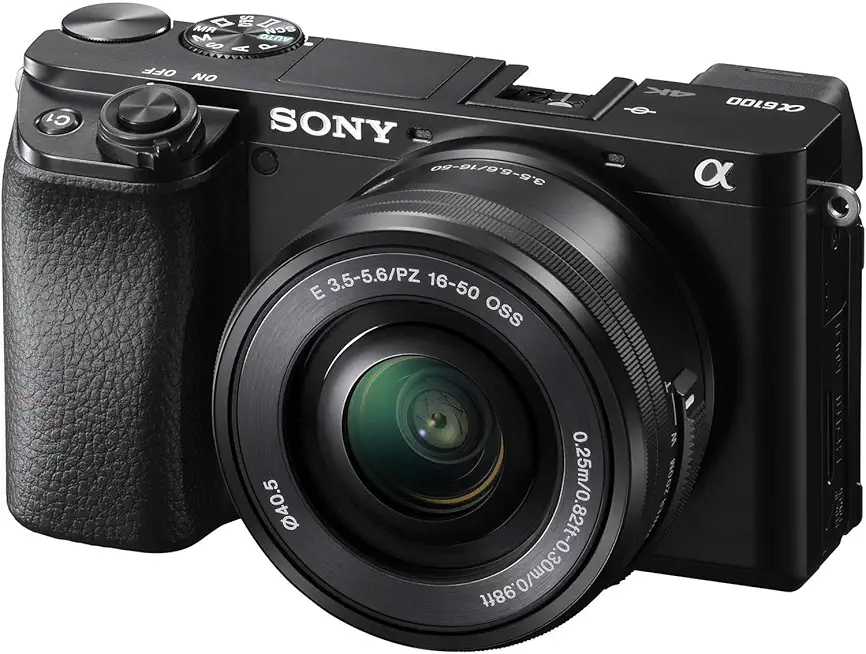
Sony Alpha A6100 Mirrorless Camera
Fast, versatile mirrorless offering snappy real-time tracking autofocus, high-resolution APS-C sensor, 11 fps continuous shooting, and 4K video—designed for creators and action shooters who demand speed and clarity.
Check PriceI’ve used the Sony A6100 for action shooting and small events, and the real-time tracking autofocus is the feature that stands out next to the T7. If you photograph kids, pets, or street scenes where subjects move unpredictably, the A6100 will catch far more keepers. It’s also quicker for burst shooting and does 4K video without the live-view hunting you see on the T7.
On the downside versus the T7, the A6100’s battery doesn’t last as long in the field, and its menu system can be a bit fiddly at first. The camera is very compact, which is great for travel, but some people miss the more solid DSLR feel and long battery life of the T7. Also, while Sony’s lens choices are excellent, adapting older EF lenses is an extra step.
Choose the A6100 if you need speed and tracking — action shooters, vloggers, and travelers who want a small, fast camera will love it. If you care more about long battery life or already own a pile of Canon EF/EF-S lenses, the T7 might still make more sense.
What People Ask Most
Does the T7 shoot 4K video?
No. It records Full HD 1080p and HD 720p only.
Is there a microphone input for better audio?
No. The camera lacks a mic input.
How many autofocus points does it have?
It uses a 9-point AF system with a single cross-type center point.
Is the rear screen articulating or touch-enabled?
No. The rear LCD is fixed and not touch-enabled.
What is the battery life per charge?
The CIPA-rated battery life is approximately 500 shots.
Are lenses interchangeable?
Yes. It’s compatible with Canon EF and EF‑S lenses.
Conclusion
The Canon EOS Rebel T7 is, at heart, a straightforward entry-level DSLR that earns its keep with dependable stills and that familiar Canon color rendering. It’s an easy camera to live with and learn on, producing images that look pleasing straight out of the camera when lighting is kind. For beginners who want a low-stress introduction to exposure and composition, it’s hard to beat the simplicity and image character.
What it gives up in modern conveniences it makes up for in approachability and lens options; the handling, viewfinder experience, and wireless sharing are all tuned for a first camera owner. But there are real compromises: autofocus and low-light capability feel dated, and video features do not meet the needs of creators who demand flexibility or advanced performance. Those limitations mean it can frustrate shooters who quickly outgrow basic scenarios.
In short, the Rebel T7 represents solid value as a starter tool and learning platform, especially for daytime photographers and students. Serious low-light shooters, action photographers, or video-first creators should look to newer designs. If your priority is learning photography affordably and enjoying classic Canon color, the T7 remains a very pragmatic choice.
Canon EOS Rebel T7 Camera
Entry-level DSLR with a 24.1MP sensor, built-in Wi‑Fi, Full HD 1080p video, intuitive controls, and reliable autofocus—perfect for beginners seeking easy-to-use, affordable image quality and dependable performance.
Check Price



0 Comments