
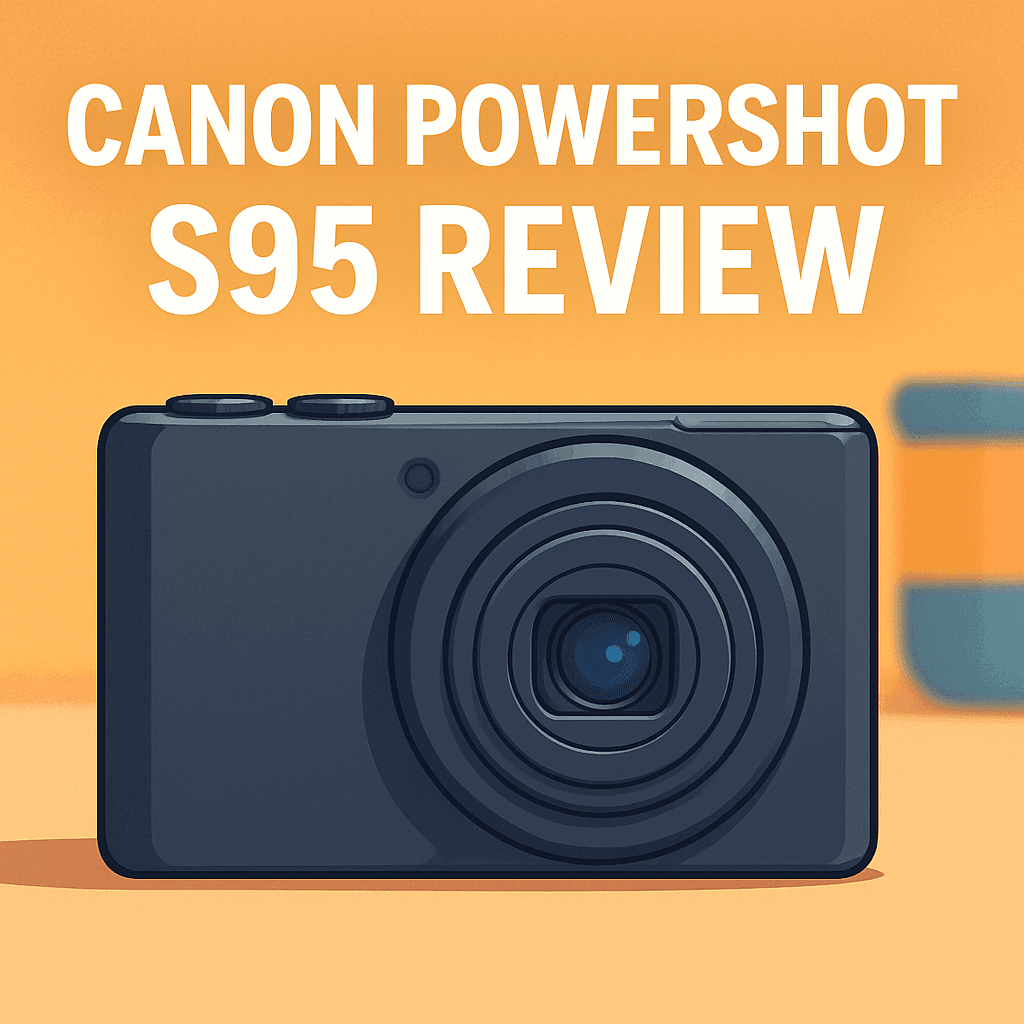
Want better images without hauling a DSLR? Curious if a tiny camera can still satisfy a photographer’s needs?
The Canon PowerShot S95 Camera aims to deliver manual controls and RAW in a true pocketable body. After shooting compacts for years, I jumped at testing it in real situations.
It’s great for travelers and street shooters. You get tactile controls and RAW flexibility without bulk.
Expect a bright wide aperture, stabilization, PASM modes and the handy lens ring for fast exposure tweaks. Those real-world tools matter more than headline specs when you’re on the move.
Be upfront: video tops out at 720p, there’s no hot shoe, and storage is SD/SDHC only. If you need modern hybrid features, this isn’t your one-stop camera.
I’ll walk through handling, low-light performance, image quality, and where the S95 still shines compared with newer compacts. Make sure to read the entire review as you’ll want the shooting tips and sample comparisons — keep reading.

Canon PowerShot S95 Camera
Ultra-compact enthusiast camera delivering bright optics, manual controls, RAW capture, and superb low-light performance; pocket-friendly design with intuitive handling and fast response for travel, street, and everyday photography.
Check PriceThe Numbers You Need
| Spec | Value |
|---|---|
| Sensor | 1/1.7″ CCD |
| Resolution | 10.0 MP |
| Lens | f/2.0–4.9, 28–105mm (35mm equivalent) |
| ISO | 80–3200, expandable to 12800 |
| Image stabilization | Yes |
| RAW support | Yes |
| LCD | 3.0″, 460K dots |
| Manual controls | Yes (PASM modes) |
| Aperture ring | Yes (ring around lens) |
| Video | 720p HD |
| Hot shoe | No |
| Built-in flash | Yes |
| Storage | SD/SDHC (not SDXC) |
| Optical zoom | 3.8x |
| Dimensions | 99.8 x 58.4 x 29.5 mm |
| Weight | 193 g (with battery) |
How It’s Built
In my testing the Canon PowerShot S95 Camera disappears in a pocket and feels far less intimidating than most cameras. The metal-and-plastic body has a tight, low-profile feel that makes it great for stealthy street shots. That small size means you actually bring it everywhere.
The controls are where it wins — the aperture/control ring around the lens is satisfying and quick to use. I found PASM modes and RAW support easy to reach, so changing exposure on the fly felt natural. One-handed shooting is realistic, though larger hands will need a moment to get used to the tiny buttons.
The rear screen is clear enough for composing and quick checks, but it won’t replace careful review on a computer. In my testing I relied on zooming in and the histogram to confirm focus and exposure. For beginners that means learn to trust the camera and shoot RAW when possible.
The built-in flash is handy for fill light, but the lack of a hot shoe limits expansion if you want off-camera lighting. What I really liked was the tactile lens ring — it made creative control fun. What could be better is the modest screen and accessory limits, which feel old-school today.
In Your Hands
In everyday use the Canon PowerShot S95 feels like a true pocket companion — small enough to carry without thinking, yet ready when a moment presents itself. Its short wide-to-tele reach covers most street, travel, and social needs, though you learn quickly it’s a compact compromise rather than a long-zoom tool.
Low-light shooting is where the S95 surprises: a bright wide end and built-in stabilization let you grab usable handheld images in dim conditions that would trash many point-and-shoots. Push the sensitivity too far, however, and grain becomes a practical limiter, so RAW conversion and conservative exposure choices are key to clean results.
Manual controls and RAW support give you DSLR-style control in a tiny body, and the tactile lens ring makes aperture and exposure adjustments feel immediate and instinctive. I found a simple custom setup—aperture priority with modest exposure compensation—lets me react quickly to changing scenes with one hand.
Video is straightforward and best thought of as casual clips rather than a primary feature, while the built-in flash acts as emergency fill but won’t replace an off-camera lighting setup. Together they keep the camera focused on stills-first use.
On dusk streets, family gatherings indoors, travel snapshots, and tabletop detail shots the S95’s balance of handling, controls, and stabilization boosts keeper rates when you favor the wide end. At the tele end you’ll trade reach for light, so staying wide often yields more consistent results unless you add support or flash.
The Good and Bad
- Very compact and lightweight for true pocket carry
- Fast f/2.0 aperture at wide end helps in low light
- Full manual controls (PASM) and RAW support
- Image stabilization for steadier hand-held shots
- Small 1/1.7″ CCD sensor with 10MP limits modern flexibility
- Video limited to 720p HD
Ideal Buyer
If you crave a true pocket camera that still puts exposure control in your hands, the Canon PowerShot S95 is made for you. It gives real PASM dialing and RAW capture in a package that disappears into a jacket or small bag. For photographers who prioritize deliberate stills over video bells and whistles, it’s a delightful compromise.
Travelers and street shooters who value discretion and a fast wide-angle aperture will find the S95 especially appealing. The bright f/2.0 wide end and image stabilization make dusk streets, cafés, and museum interiors far more shootable than other pocket point‑and‑shoots. Just know the 28–105mm reach and modest tele aperture mean you’ll favor wide-to-normal framing in low light.
Creatives who love tactile tools will appreciate the lens-mounted control ring and simple stills‑first workflow. RAW files reward patient processing, so if you enjoy nudging tone and color in post you’ll get the most from this little CCD sensor. It’s fantastic for table‑top detail, candid family moments, and travel diaries where size and feel matter.
This isn’t the camera for shooters who require 4K video, external flash systems, SDXC compatibility, or the latest AF tracking. If you’re comfortable trading those modern conveniences for true pocketability and hands‑on control, the S95 remains an elegant, purpose‑driven choice.
Better Alternatives?
We’ve gone through what makes the Canon PowerShot S95 a great little camera: true pocket size, a tactile control ring, and that fast f/2.0 wide lens that still holds up for street and travel work. But the S95 is an older design, and many shooters ask what else they should consider if they want better low-light, faster autofocus, or modern video features.
Below are three compact cameras I’ve used in the field that offer clear trade-offs. I’ll tell you what each one does better and where the S95 still wins, and who will prefer each option so you can pick the right tool for your shooting style.
Alternative 1:
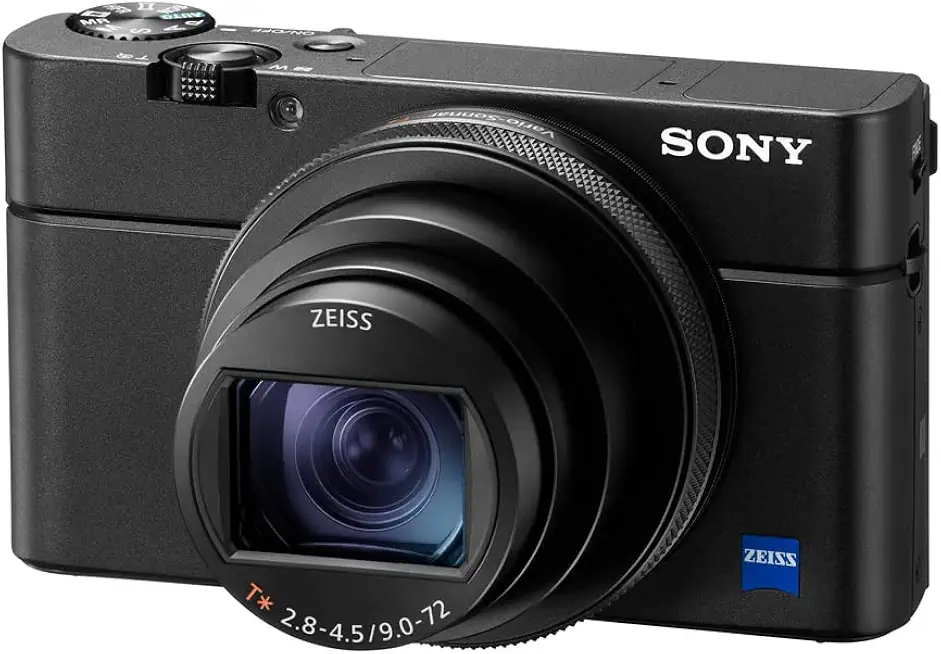
Sony RX100 VII Camera
High-performance 1-inch-sensor compact offering long-reach zoom, lightning-fast autofocus, and silky 4K video; ideal for vloggers and travelers who demand professional-level speed and image quality in a pocketable body.
Check PriceI’ve carried the Sony RX100 VII on trips where I needed speed and reach in a small package. Compared to the S95, the RX100 VII gives you far better autofocus — it locks and tracks faces and moving subjects reliably, so you get more keepers when people are walking or kids are running. The image quality in low light is also noticeably better thanks to its larger sensor, so you can push ISO further without losing as much detail.
Where the S95 still shines is in sheer simplicity and that brighter wide lens. The S95’s f/2.0 wide end makes it easier to get a clean handheld shot in dim interiors without bumping ISO, and its physical control ring feels more direct for quick changes. The RX100 VII is a little bulkier and more complex to use when you just want a tiny, no-fuss camera in your pocket.
Who should pick the RX100 VII: photographers who need fast autofocus, long zoom reach, and modern video (4K) in a single compact. If you shoot travel, street action, or hybrid stills and video and don’t mind spending more or carrying a slightly larger camera, this is the better fit than the S95.
Alternative 2:
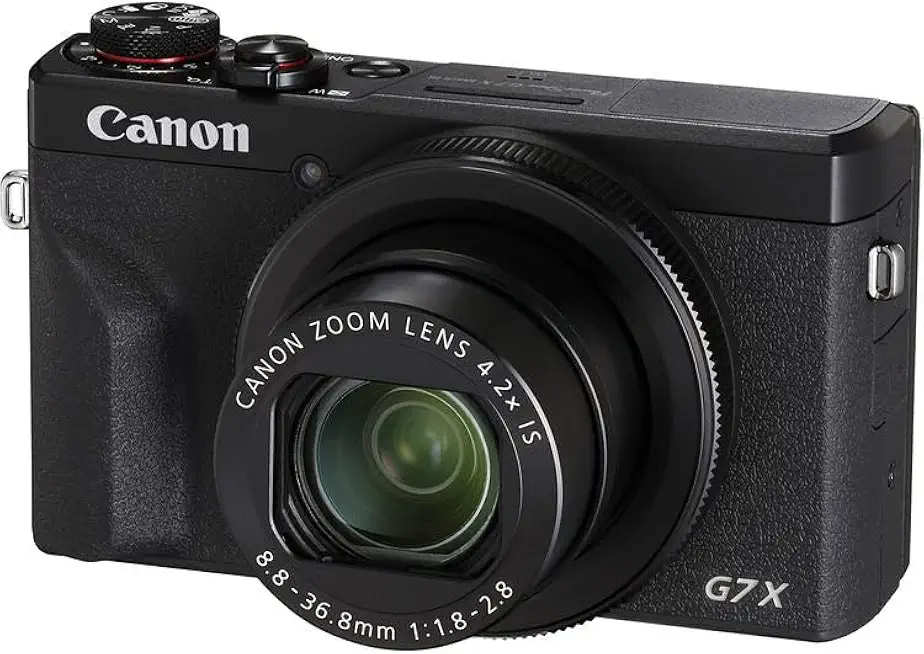
Canon PowerShot G7 X Mark III Camera
Vlogger-friendly 1-inch-sensor powerhouse with bright lens, flip-up touchscreen, livestreaming and 4K recording capabilities; compact, straightforward controls and excellent low-light rendering for content creators on the move.
Check PriceI used the G7 X Mark III for both quick street shoots and vlogging, and it felt like a modern take on the S95’s idea: small, simple, but with much better low-light performance and video. Against the S95, the G7 X III gives you a larger sensor and a brighter overall image, so portraits and indoor shots have nicer background blur and cleaner shadows. The flip-up screen and 4K video are big steps up for anyone shooting clips or live streams.
Downsides vs the S95 are real in day-to-day shooting: the Canon is a bit bigger in the pocket, and its autofocus—while good for stills—is not as rock-solid for fast action as the Sony. You also lose some of the S95’s old-school tactile feel; the lens ring on the S95 is something I miss when I want quick, physical control without digging through menus.
Who should pick the G7 X Mark III: content creators, vloggers, and travelers who want a small camera that handles both stills and modern video well. If you care about livestreaming, selfie-style shooting, or smoother 4K clips but still want a camera that slips into a coat pocket, this is a strong choice over the S95.
Alternative 3:
Canon PowerShot G7 X Mark III Camera
Compact creator's tool delivering crisp imagery, bright aperture for shallow depth-of-field, uninterrupted 4K recording and vertical video support; lightweight build and simple controls let you shoot confidently anywhere.
Check PriceTaking the G7 X Mark III out for street portraits and social work, I appreciated how easy it was to get pleasing blur and subject separation compared with the S95. The larger sensor lets you isolate subjects more naturally, which is great for food, portraits, and short commercial shoots. The camera also supports vertical-friendly recording and uninterrupted 4K clips, which the S95 simply can’t match for today’s social workflows.
What it doesn’t do as well as the S95 is stealth and lens reach. The G7 X III is less pocketable-feeling and its zoom tops out shorter than the S95’s tele end in practical reach, so if you rely on a small, discreet camera with a bit of extra tele reach, the S95 can still be more useful. Battery life during heavy video use is another place the S95’s simplicity can win—you won’t get long run times on non-stop 4K without extra power.
Who should pick the G7 X Mark III (again): photographers and creators who prioritize modern video features, shallow depth of field, and easy vertical/social shooting over the pure pocket stealth and tactile controls of the S95. If you make a lot of quick video content and want better stills than the S95, this camera hits a good middle ground.
What People Ask Most
Is the Canon PowerShot S95 a good camera?
Yes — it’s one of the best pocket compacts of its time with a fast f/2 lens, strong controls, and very usable low‑light performance for a small sensor.
What are the differences between the Canon PowerShot S90 and S95?
The S95 refines the S90 with improved image processing, slightly better high‑ISO performance, and small ergonomic and responsiveness upgrades.
Does the Canon PowerShot S95 shoot RAW?
Yes — the S95 records RAW (CR2) files so you can do full post‑processing.
How is the image quality on the Canon PowerShot S95?
Very good for a 1/1.7″ sensor compact: sharp and well‑colored at low ISOs, but noise becomes noticeable at higher ISO settings.
Does the Canon PowerShot S95 have full manual controls?
Yes — it offers full PASM modes and manual control over aperture, shutter speed, and exposure compensation.
How does the Canon PowerShot S95 compare to the Sony RX100?
The RX100 wins on image quality and dynamic range thanks to a larger 1″ sensor, while the S95 is smaller, more pocketable, and usually cheaper.
Conclusion
The Canon PowerShot S95 Camera is a rare compact that actually invites photographers to shoot, not fiddle. Its genuinely pocketable body, tactile control ring, true manual modes and RAW support make it a small camera with grown‑up intentions. It’s an honest tool for photographers who value touch and immediacy.
It shines at wide angle, where the bright lens and stabilization deliver usable hand‑held shots in dim light. But its small sensor and limited tele aperture blunt flexibility as light fades. Video and accessory limitations remind you this is a stills‑first tool.
If you prize stealthy carry, fast wide‑end shooting and direct controls, the S95 still makes strong sense. If modern autofocus, larger sensors or 4K video matter, newer compacts are better investments.
In real‑world street, travel and family scenarios the S95 rewarded me with punchy colors, pleasing sharpness at the wide end and a high keeper rate for candid work. It falters on reach and in very low light, so consider it a purpose‑built companion or secondary camera. Buy smart: pick it for its unique blend of size and manual control, not as an all‑around replacement for today’s hybrid compacts.
Canon PowerShot S95 Camera
Ultra-compact enthusiast camera delivering bright optics, manual controls, RAW capture, and superb low-light performance; pocket-friendly design with intuitive handling and fast response for travel, street, and everyday photography.
Check Price



0 Comments