
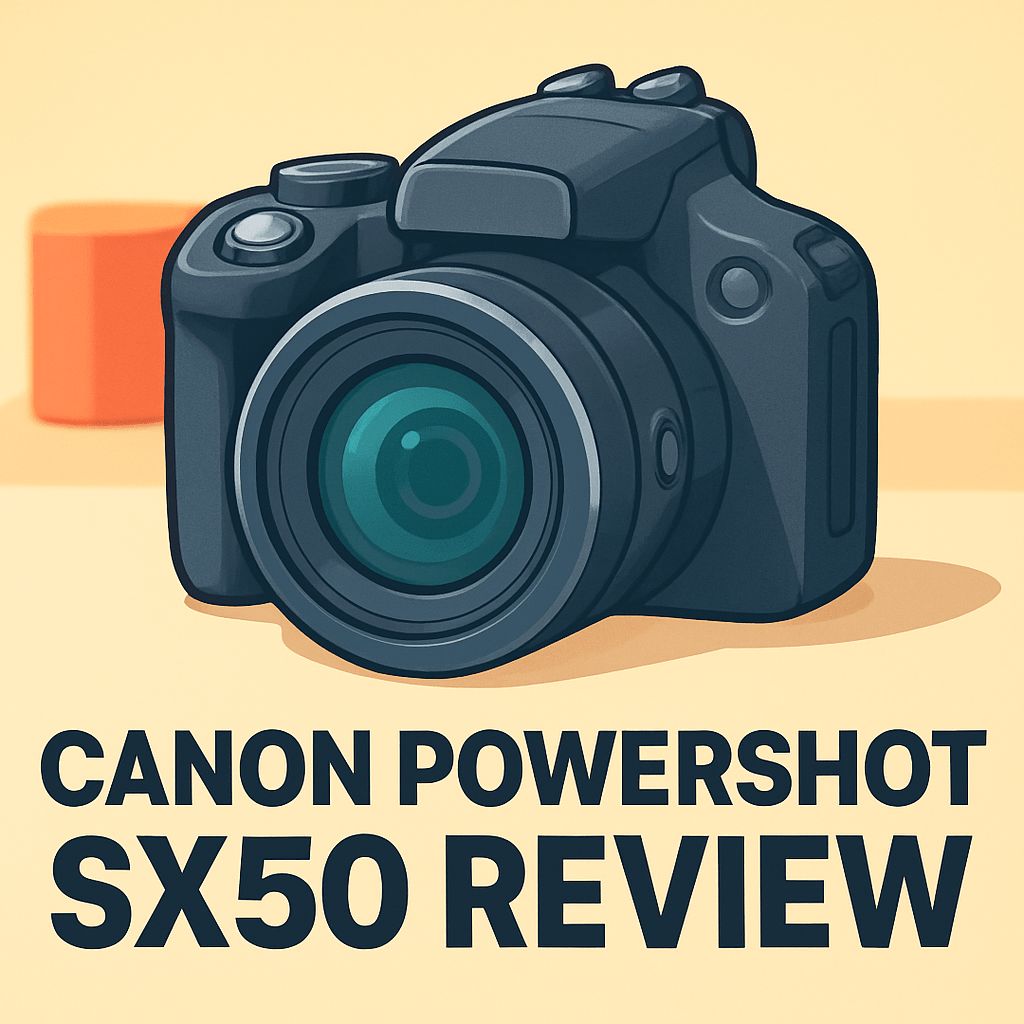
Want one camera that stretches from wide landscapes to distant subjects — is this canon powershot sx50 review the answer for you?
The Canon PowerShot SX50 HS Camera is a bridge camera with a massive 50x optical zoom and full manual controls, and it’s aimed at shooters who want one versatile body.
I’ll focus on whether that reach and optical IS deliver in real-world shooting, how the EVF and vari‑angle LCD help, and image quality across zoom and ISO.
After time in the field with the SX50, I tested handheld tele stability, distant subject acquisition, low‑light use and Full HD video. I’ll spell out pros and cons, so keep reading.

Canon PowerShot SX50 HS Camera
Compact bridge camera with 50x optical zoom and intuitive controls, delivering long-range versatility, image stabilization, and rich JPEGs for travel, wildlife, and everyday telephoto shooting in a portable body.
Check PriceThe Numbers You Need
| Spec | Value |
|---|---|
| Sensor | 12.1 MP |
| Lens | 50x optical zoom (24–1200mm equivalent) |
| Image Stabilization | Optical |
| ISO Range | 100–6400 |
| Shutter Speeds | 1–1/4000 sec |
| Continuous Shooting | Up to 2.2 fps |
| Viewfinder | Electronic |
| LCD | 2.8″ vari-angle |
| Video | Full HD (1080p) |
| Manual Controls | Yes |
| Memory | SD / SDHC / SDXC |
| Connectivity | HDMI, USB |
| Battery Life | Up to 300 shots |
| Weight | Approximately 583 g |
| Dimensions | 123.5 × 92.5 × 105.5 mm |
How It’s Built
In my testing the Canon PowerShot SX50 HS Camera feels like a true bridge camera — solid in the hand and ready for long walks. The grip is reassuring and the body balances well most of the time. At the longest reach it can tip the scale toward the front, so two hands feel safer.
I found the button and dial layout thoughtful and approachable for beginners learning manual control. Dedicated controls make exposure changes quick and predictable. One thing that could be better is some buttons are a bit small for big fingers, which slows you down in fast moments.
The electronic viewfinder is surprisingly usable out in bright light and the vari-angle LCD is a joy for low or high shooting angles. The hinge feels firm without flopping, so you can compose confidently from awkward positions. Menus are clear and getting into manual modes is straightforward.
Ports like HDMI and USB are where you expect them, and the camera takes standard memory cards. Battery access is simple in the field, but expect heavier EVF or video use to drain power faster than casual shooting.
Overall the build feels durable and the zoom and dials move smoothly in everyday use. I really liked the flexible LCD and EVF combo for composing, and I’d like a bit more tactile room on the controls for big hands. For beginners this body teaches good camera habits without getting in the way.
In Your Hands
Out of the gate the SX50 feels deliberate rather than lightning-fast: startup is brisk, but shot-to-shot pacing and continuous-frame shooting are best described as measured, and you’ll notice a short recovery pause after a run of frames. In everyday use that translates to a camera that rewards thoughtful composition more than frantic action sequences.
Autofocus is pleasantly quick at the wide end, locking onto static subjects with confidence, but it softens as you push the long reach — small, distant subjects can prompt hunting and slower acquisition. In dim light the AF system becomes cautious, so expect more misses on moving targets unless you slow the scene down or switch to manual focus.
The optical stabilization is one of the SX50’s real-world strengths, allowing surprisingly steady handheld shots at long focal lengths and making many distant scenes usable without support. Panning is handled well for casual video and tracking, though the IS occasionally resists intentional camera motion, which can affect smoothness during deliberate pans.
Battery life is solid for a day of casual shooting but the EVF and prolonged video capture accelerate drain, so a spare cell is smart for full-day outings. Full HD video delivers good detail for web and home use; autofocus during recording is workable but can hunt and audio is fine for ambient sound but limited for interviews.
For travel, outdoor events and distant wildlife it’s a versatile all-in-one: handheld at moderate reaches it shines, while critical long-tele work benefits from a monopod or tripod to maximize keeper rates. Patient technique and steady support turn the SX50’s strengths into reliably sharp results.
The Good and Bad
- Massive fifty-times optical zoom covering twenty-four to twelve hundred millimetres in one camera
- Optical image stabilization that aids handheld telephoto work
- Vari-angle two point eight inch LCD and electronic viewfinder for flexible composition
- Full manual controls for exposure, useful for learning and precise shooting
- Modest burst rate up to two point two frames per second for action sequences
- ISO ceiling of six thousand four hundred with noticeable noise and reduced detail at higher sensitivities
Ideal Buyer
Buyers who crave reach without the baggage of lens kits will love the Canon PowerShot SX50 HS Camera. Its 24–1200mm equivalent zoom is perfect for birders, safari travelers, and sports fans who need to get close fast. If you want distant-subject capability in a single, pocketable bridge body, this camera delivers that core promise.
Travelers and hobbyists who value flexibility over speed will find the EVF plus the vari‑angle LCD incredibly useful. Full manual controls let keen amateurs learn exposure and composition without carrying a bag of glass. For day-long walkabouts, casual wildlife work, and photo essays where swapping lenses is impractical, the SX50 strikes a practical balance.
This isn’t a pro-level action rig, so fast continuous shooters and low‑light specialists should look elsewhere. But if your output is web galleries, social sharing, and modest prints—plus Full HD video for family and travel clips—the SX50 is a smart, all‑in‑one choice. It’s for photographers who prize convenience, reach, and creative control in a single package.
Better Alternatives?
We’ve already dug into the canon powershot sx50 review and seen what that 50x bridge camera can do in the real world: long reach, usable stabilization, a handy EVF and a flip LCD with full manual controls. The SX50 is a great all‑in‑one for travel and distant subjects, but some shooters want more reach, newer video features, or a lower price.
Below are three practical alternatives I’ve used in the field. For each I’ll say where it clearly beats the SX50, where it falls short, and what kind of buyer will be happiest with it. These notes come from real shooting — handheld telephoto work, travel days, and chasing birds and events.
Alternative 1:

Canon PowerShot SX60 Camera
High-powered travel zoom offering 65x optical reach, electronic viewfinder, and flexible exposure controls; ideal for distant subjects, birding, and handheld telephoto work with responsive autofocus and solid ergonomics.
Check PriceThe SX60 is the closest step up from the SX50 that I’ve used. In real shooting it gives you more reach (65x vs 50x) and a noticeably easier time finding small subjects at distance. Autofocus feels a bit quicker and more stable when you’re hunting a small bird or a boat on the water, and the handling is a touch more refined when the lens is extended.
Where it loses to the SX50 is mainly size and weight — the SX60 is bulkier and feels heavier on long walks. It also keeps the same small sensor family, so image noise and softness at very long zoom remain limits you’ll hit, just pushed a little further out thanks to the longer range.
Pick the SX60 if you want more reach and slightly better AF for wildlife or sports but still want the convenience of a single, all‑in‑one body. If you’re okay carrying a bit more weight for extra focal length, this is a sensible upgrade from the SX50.
Alternative 2:

Canon PowerShot SX70 Camera
Next-generation superzoom delivering versatile long-range capture, advanced autofocus, and 4K video; lightweight yet feature-packed, it balances creative control with convenient connectivity for travel, events, and wildlife photography.
Check PriceThe SX70 feels like a modern rethink of the same idea. In my hands it gives smoother autofocus and better tracking than the SX50, and the 4K video (and modern processing) turns handheld clips into more usable footage straight out of camera. Wireless transfer and newer menus also make it easier to shoot and share while traveling.
On the downside, the SX70 still uses a small sensor, so you won’t get dramatic jumps in low‑light IQ over the SX50. Some of the tactile controls are a bit different, so if you love the older dial layout of the SX50 you might miss that direct feel. Overall image character is cleaner thanks to newer processing, but not a substitute for a larger‑sensor camera.
Choose the SX70 if you want an up‑to‑date superzoom with better video and easier connectivity for trips and events. It’s a good pick for vloggers or travelers who want long reach plus modern AF and sharing tools without swapping lenses.
Alternative 3:

Panasonic LUMIX FZ80 Camera
Affordable superzoom with extensive telephoto reach and 4K photo/video tools, designed for enthusiasts seeking creative framing, fast burst modes, and steady handheld shooting for travel and wildlife.
Check PriceThe Panasonic LUMIX FZ80 is the budget champ I’ve taken on many trips. It gives a very long reach for the money and useful 4K photo tools that help grab fast moments. For casual wildlife and travel shooting I found the stabilization strong enough for handheld tele work and the burst modes handy for fast action.
Compared to the SX50 the FZ80 is cheaper and offers similar — sometimes longer — reach, but image quality at higher ISOs is softer and noisier. Autofocus can be hit-or-miss on small moving targets, and the body feels more plastic. You trade some refinement and image polish for affordability and features.
If you’re budget‑minded and want a big zoom to try birding, travel, or moon shots without breaking the bank, the FZ80 is a sensible pick. If you need the best handling, lowest noise, or the most reliable AF out of the three, stick with the Canon options instead.
What People Ask Most
Is the Canon PowerShot SX50 a good camera?
It’s a capable superzoom for hobbyists who want massive reach and easy handling, but image quality and low-light performance lag behind cameras with larger sensors.
How many megapixels does the Canon PowerShot SX50 have?
It has 12.1 effective megapixels.
What is the zoom range of the Canon PowerShot SX50?
The SX50 offers a 50x optical zoom, roughly 24–1200mm in 35mm equivalent.
Does the Canon PowerShot SX50 shoot in RAW?
Yes, it can record RAW (Canon .CR2) files for more editing flexibility.
Is the Canon PowerShot SX50 good for wildlife or bird photography?
The long zoom is excellent for distant subjects, but slower autofocus and the small sensor limit performance on fast action and in low light.
How does the Canon PowerShot SX50 compare to the SX60 HS?
The SX60 is the newer model with higher resolution, a longer 65x zoom and improved autofocus, so it’s generally the better choice if you want more reach and better handling.
Conclusion
The Canon PowerShot SX50 HS Camera remains a compelling single‑body solution for photographers who want dramatic reach without swapping glass. It pairs that extraordinary tele capability with dependable stabilization, a flexible vari‑angle LCD and an EVF, plus full manual controls and usable Full HD video. In short, it delivers a lot of practical capability in one package.
In real use the SX50 impressed where it matters: handheld telephoto shots are frequently salvageable thanks to the stabilization, and the ergonomics encourage careful framing at long focal lengths. Autofocus is serviceable for stationary and slow subjects but can lag at extreme reach and in dim light. Image quality is strongest at lower sensitivities and wider angles, while video is fine for general use but not cutting‑edge.
The tradeoffs are clear and unavoidable: it’s not built for high‑speed action, high‑ISO heroics, or marathon battery days under heavy EVF and video use. If you need modern autofocus, 4K video or wireless conveniences, newer models and competitors offer compelling upgrades. For many shooters, however, the SX50’s balance of reach and manual control still represents very solid value.
If you buy one, shoot RAW when possible, favor the EVF for long‑range work, keep ISO low, and use a monopod or tripod for critical tele shots. Bring a spare battery, use slower shutter speeds with steady technique, and rely on manual exposure to wrestle the best results from this versatile bridge camera.
Canon PowerShot SX50 HS Camera
Compact bridge camera with 50x optical zoom and intuitive controls, delivering long-range versatility, image stabilization, and rich JPEGs for travel, wildlife, and everyday telephoto shooting in a portable body.
Check Price


0 Comments