
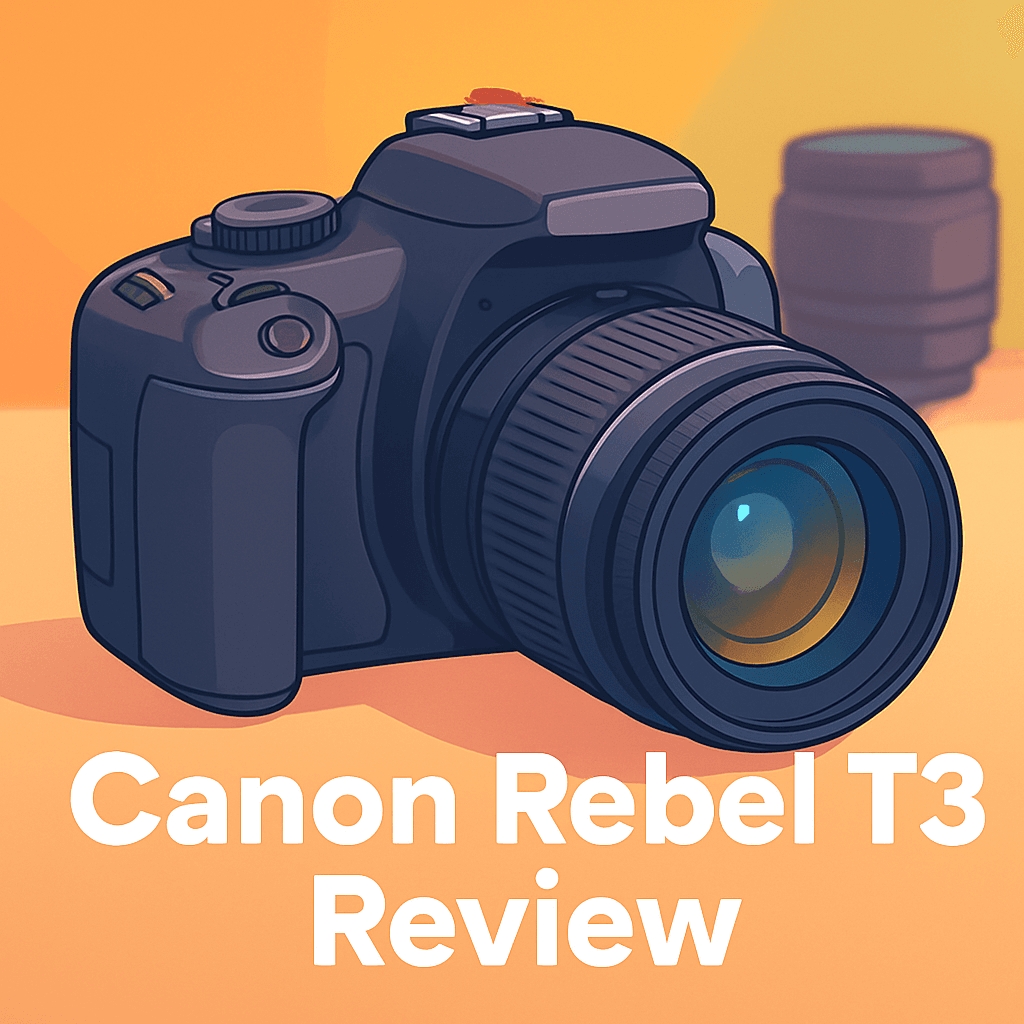
Want better photos and a true DSLR feel?
This hands-on review covers the Canon EOS Rebel T3 Camera, Canon’s entry-level DSLR, which I took into the field.
If you’re a beginner, student, or family shooter, this might be for you.
Expect a simple DSLR with long battery life and wide lens choices, but basic video and AF.
I’ll cover handling, image quality, performance, and alternatives.
Details on who should buy and which alternatives make sense are coming — keep reading.

Canon EOS Rebel T3 Camera
Compact, entry-level DSLR delivering reliable image quality and straightforward controls for newcomers. Durable body, optical viewfinder, and basic creative modes make it an ideal starter kit for learning composition and exposure.
Check PriceThe Numbers You Need
| Spec | Value |
|---|---|
| Sensor | 12.2 MP APS-C |
| Processor | DIGIC 4 |
| Video Resolution | 720p HD |
| Lens Mount | EF/EF-S |
| Image Stabilization | None built-in |
| Autofocus Points | 9 |
| ISO Range | 100-6400 |
| Shutter Speeds | 1/4000s to 30s |
| Continuous Shooting | 3 fps |
| Memory Cards | SD/SDHC/SDXC |
| Viewfinder | Optical |
| Screen Type | Fixed LCD |
| Screen Size/Resolution | 2.7″ 230,000 dots |
| Weight | About 1.1 lbs |
| Battery Life | Approx. 700 shots |
How It’s Built
In my testing the Canon EOS Rebel T3 Camera felt pleasantly lightweight and easy to carry with a kit zoom on a day out. One thing I really liked was how it didn’t tire my shoulder after hours of shooting, so you can actually enjoy family outings without feeling bogged down. That makes it a solid grab-and-go option for beginners and students.
The fixed LCD is small and a little soft for picky image review, so I found myself using the optical viewfinder most of the time. The viewfinder gives you that classic DSLR shooting feel and helps save battery when you’re out all day. In practice that meant quicker timing and less fumbling with Live View when light changed.
Controls are simple and very friendly for people learning the basics, and the grip sits comfortably in hand. One thing that could be better is more direct control dials for changing settings fast — you’ll do a bit more menu work than on higher-end bodies. After using it for a while I appreciated the straightforward layout but wished for one or two extra shortcuts.
There’s no weather sealing, so I treated it with basic care in rain or dusty spots during my tests. The lens mount felt sturdy, and it uses standard memory cards and a strap for secure handling. For beginners that means sensible durability and a gentle learning curve without scary fiddly bits.
In Your Hands
In everyday shooting the Canon EOS Rebel T3’s autofocus feels uncomplicated and reliable for portraits, still life, and typical family moments. It locks subjects cleanly under good light, but it strains with fast, erratic motion and in low‑light scenes where hunting becomes noticeable. The camera’s continuous shooting pace is modest — perfectly usable for casual action but not designed for extended sports sequences.
Shutter response and exposure handling deliver the kind of predictability beginners appreciate: snappy enough for daylight scenes and flexible enough for intentional long exposures. Metering tends to be conservative in high‑contrast situations, so you’ll lean on exposure compensation or RAW to rescue highlights and deepen shadows. Overall responsiveness is steady, with only occasional delays when switching modes or reviewing images.
Battery life is a practical strength — you can comfortably get through a day of family outings or a class shoot without constant swaps, though bringing a spare is wise for marathon sessions. Media support is simple and reliable; using a good SD card smooths capture and file transfers and keeps buffer hiccups to a minimum. Handling in the field rewards basic habits: steady stance, lens choice for stabilization, and mindful card/battery management.
Video capabilities are suited to casual HD clips: quick travel footage, birthday snippets, or practice vlogs, but not for polished, high‑resolution production. Live View is handy for awkward angles, yet the optical viewfinder remains the quickest, most battery‑friendly way to frame in bright conditions. Best real‑world tests include daylight portraits, indoor ambient light scenes, landscapes, and short bursts of kid‑or pet‑action to understand the camera’s practical limits.
The Good and Bad
- Optical viewfinder for a classic DSLR shooting experience
- Long battery life (approx. 700 shots)
- Lightweight body (~1.1 lbs) for all-day carry
- EF/EF-S lens compatibility with broad system access
- 12.2 MP resolution limits cropping flexibility versus modern cameras
- 720p video only; no 1080p or higher
Ideal Buyer
If you’re learning the craft or buying your first interchangeable-lens camera, the Canon EOS Rebel T3 Camera is a practical classroom and family-room companion. It’s affordable, straightforward, and built to teach fundamentals without overwhelming menus or gadgetry. Students and newcomers will appreciate its gentle learning curve and predictable results.
Photographers who prize the tactile pleasures of an optical viewfinder and marathon battery life get a lot for little cost. The T3 favors hands-on composition, familiar DSLR ergonomics, and all-day shooting over headline specs. It nudges you to hone exposure, framing, and lens choice rather than chase megapixels.
Casual shooters—parents, travelers, and everyday documenters—will like the lightweight body and access to Canon’s broad EF/EF‑S lens ecosystem. If you mainly shoot portraits, landscapes or snapshots and don’t require high-resolution crops or 1080p video, the T3 delivers reliable images and simple handling. Keep in mind you’ll rely on lens-based stabilization for low light.
The camera also makes a smart, budget-friendly second body for photographers building a system over time. If you already own Canon glass or plan to invest in lenses, the T3 is an economical way to learn and shoot. However, if fast AF, modern connectivity, or higher-resolution files are must-haves, consider newer options instead.
Better Alternatives?
We’ve already walked through the Canon EOS Rebel T3 and what it does well and where it falls short. If you like the T3’s basic DSLR feel but want more speed, higher resolution, or easier sharing, there are a few other cameras I use that make different trade-offs in real shooting.
Below I’ll point out three solid alternatives I’ve shot with side-by-side to the T3. I’ll explain what each one does better in real shoots, where it still comes up short, and the kind of buyer who’ll get the most from it.
Alternative 1:

Canon EOS Rebel T7 Camera
Modern beginner-friendly DSLR with higher-resolution sensor, intuitive menus, and reliable autofocus for sharp results. Built-in Wi‑Fi and Full HD video help capture and share everyday moments effortlessly.
Check PriceI’ve used the Rebel T7 as a hands-on step up from the T3. The photos come out noticeably sharper and you can crop more without losing much detail, so it’s better for travel or family shots where you want some extra room to reframe. The built-in Wi‑Fi makes it easy to send pictures to a phone on the spot, which I appreciate at events when people want copies fast.
What it doesn’t fix is the camera’s basic focus and burst speed—when I chased moving kids or pets the T7 still felt like an entry-level DSLR, not a sports camera. The screen is still simple and non‑articulating, so composing from odd angles isn’t any easier than on the T3. In short: better stills and sharing, but not a big leap in action handling.
Buyers who should pick this one are beginners who want cleaner shots and easy phone sharing but don’t need fast continuous shooting. If you like the T3’s feel but want better everyday image quality and simpler wireless transfer, the T7 is a practical, low-risk upgrade.
Alternative 2:

Nikon D3500 Camera
Lightweight, pocketable DSLR delivering impressive image quality and long battery life—perfect for travel and learning photographers. Simple controls and steady handling encourage exploration of manual shooting techniques.
Check PriceI’ve carried the Nikon D3500 on trips and it feels lighter and quicker in everyday shooting than the T3. The images have more resolution and cleaner results at higher ISO, so low-light family moments or dusk landscapes look better straight out of the camera. The battery lasts forever in real use, so I worry less about running dry on long shoots.
The trade-offs are real: switching to Nikon means different lenses, so if you already own Canon EF/EF‑S glass you’d lose that compatibility without adapters. The D3500 also keeps things simple with fewer external controls, so if you like changing settings fast by feel you might miss direct dials. For action work it’s a bit snappier than the T3, but it’s still an entry-level body.
Pick the D3500 if you want better image quality and long battery life in a very light package, and you’re okay buying into Nikon’s lens world. It’s great for travelers, students, and anyone who wants nicer files with a camera that disappears in a bag.
Alternative 3:
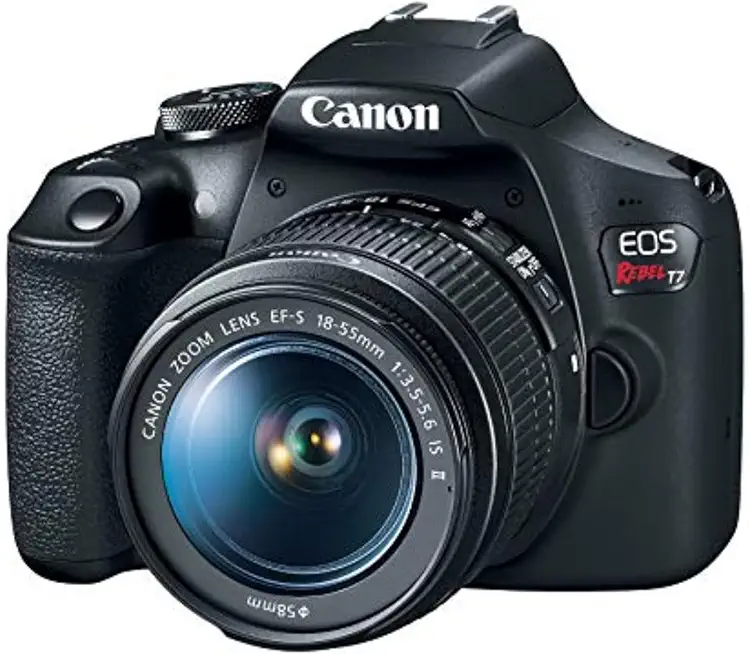
Canon EOS Rebel T7 Camera
Affordable, easy-to-use DSLR offering crisp detail and responsive shooting—ideal for families and hobbyists. Robust autofocus, scene modes, and wireless connectivity speed up sharing and creative experimentation.
Check PriceThis version of the Rebel T7 is one I’ve handed to family members for weekend shoots. It’s forgiving to use, with scene modes that often get a good shot without much fiddling. The autofocus and responsiveness feel more modern than the T3 in everyday use, so portraits and casual action tend to come out better without extra effort.
Where it still falls short compared to higher-end bodies is in tough light and fast action—the autofocus isn’t a pro system and the burst rate won’t keep up with serious sports. The body still feels very plastic and the screen is modest, so if you care about handling or want a big, bright live view you’ll notice the limits. It’s an upgrade in usability and image clarity, not a step into pro territory.
If you’re a family shooter or hobbyist who wants nicer photos without learning a lot of new controls, this T7 option fits well. It’s for people who want better results than the T3 but still want the same Canon lens choices and a simple shooting experience.
What People Ask Most
Is the Canon Rebel T3 worth buying in 2026?
Only if you find a very cheap used unit for learning or as a backup; otherwise newer used DSLRs or mirrorless cameras give much better value and features.
How is the image quality of the Canon Rebel T3?
Image quality is decent at low ISOs for web use and small prints thanks to its 12MP sensor, but detail, dynamic range, and noise control lag behind modern cameras.
Is the Canon Rebel T3 good for beginners?
Yes, it’s simple and rugged for learning basic exposure and composition, but beginners wanting video, better autofocus, or connectivity should consider newer entry-level models.
How does the Canon Rebel T3 compare to the Canon Rebel T5/T6?
The T5/T6 offer marginal improvements in resolution, processing, and low‑light performance, so they’re generally the better pick if prices are similar.
What lenses are compatible with the Canon Rebel T3?
The T3 accepts Canon EF and EF‑S lenses natively; EF‑M (mirrorless) lenses won’t work without an adapter.
How is the low-light/ISO performance of the Canon Rebel T3?
Low‑light performance is weak by today’s standards—usable up to about ISO 400, but images get noisy and lose detail above ISO 800, so use fast lenses or good lighting.
Conclusion
The Canon EOS Rebel T3 is a sensible, no-frills entry-level DSLR that does what it sets out to do: teach you the basics and reliably capture everyday moments. It isn’t flashy, nor does it chase specs. For beginners who want straightforward operation and an optical shooting experience, it delivers.
Its chief virtues are practical: a traditional optical viewfinder, excellent battery endurance, access to Canon’s broad lens ecosystem, and a light, easy-to-carry body. That combination makes it a comfortable learning platform and a dependable travel companion. Operation is uncomplicated, which helps newcomers focus on composition.
On the flip side, the T3 is intentionally modest—image resolution, video capability, autofocus sophistication and burst performance lag behind modern rivals. The fixed, low-resolution rear screen and lack of in-body stabilization are notable compromises. Serious shooters or creators who demand higher fidelity will feel those limits quickly.
My verdict: pick the T3 if you prize simplicity, optical viewfinder feel, and lens access over headline specs. If you want more pixels, faster AF/bursts, modern connectivity or stronger video features, consider one of the newer alternatives. It remains a solid, affordable stepping stone into DSLR photography.
Canon EOS Rebel T3 Camera
Compact, entry-level DSLR delivering reliable image quality and straightforward controls for newcomers. Durable body, optical viewfinder, and basic creative modes make it an ideal starter kit for learning composition and exposure.
Check Price

0 Comments