

Tired of missing shots because you keep swapping lenses? The Canon RF 24-70 mm f/2.8 L promises to be the do-everything standard zoom for RF full-frame shooters. Later in the article I’ll reveal a surprising detail about this lens that could change how you shoot and what to watch for before you buy.
I personally field-tested this lens and pitted it against a couple of close rivals. It’s built like a pro lens with a bright constant aperture, rock‑solid center sharpness, built‑in stabilization, and fast, nearly silent autofocus. That mix benefits event, wedding, portrait and video shooters who want fewer kit swaps and steadier handheld results.
The headline compromise is simple: it’s heavier and bulkier than many mirrorless zooms, and it carries a pro-level price. That means great low-light reach and fewer missed frames, but it’s a noticeable weight in a travel kit or long event day. If you want to know the one tweak I found that can drastically improve your photos with this lens, keep reading.

Canon RF 24-70 mm f/2.8 L
Professional-grade standard zoom delivering exceptional sharpness and fast low-light performance. Robust weather-sealed construction, smooth autofocus, and creamy bokeh make it ideal for events, portraits, and travel photography.
Check PriceThe Numbers You Need
| Spec | Value |
|---|---|
| Model | Canon RF 24-70mm F2.8 L IS USM |
| Mount | Canon RF |
| Focal length | 24–70mm |
| Maximum aperture | f/2.8 (constant) |
| Aperture blades | 9 rounded |
| Optical design | 21 elements in 15 groups |
| Coatings | Air‑Sphere Coating; front and rear fluorine coatings |
| Minimum focus distance | 0.21 m (wide) / 0.38 m (tele) |
| Maximum magnification | ≈0.3× (1:3) at 32mm |
| Image stabilization | Optical IS up to 5 stops (CIPA, on compatible bodies) |
| Autofocus drive | Nano USM |
| Filter thread | 82 mm |
| Dimensions (approx.) | 125.7 mm × 88.5 mm |
| Weight (approx.) | 900 g |
| Weather sealing | Dust- and weather-resistant L-series construction |
How It’s Built
The Canon RF 24-70 mm f/2.8 L is built like a proper pro lens. It uses a mix of metal and high‑grade plastics and has a solid metal mount that feels tight in my hand. In my testing it felt robust and made me trust it in real shoots.
This lens carries Canon’s L-series weather sealing and an RF mount, so it holds up in the rain and dusty locations. It also has Air‑Sphere plus front and rear fluorine coatings to cut flare and shrug off fingerprints. After using this lens I found those coatings actually kept contrast up in bright backlight and was easy to clean in the field.
One quirky bit is the extending barrel — the lens changes length as you zoom. I noticed the “pumping” in my testing and it can change balance on a gimbal or feel bulky in a bag. That doesn’t hurt image quality, but it does affect handling for some shooters.
What this means for photographers is simple: it’s a tough, weather‑ready zoom you can rely on outdoors. One thing I really liked was the solid, professional build and coatings. One thing that could be better is the size and the zoom‑pumping for travel and lightweight setups.
In Your Hands
The Canon RF 24-70 mm f/2.8 L feels like a built-for-work instrument straight out of the bag, with a dense, reassuring metal-and-composite finish and a programmable control ring that sits where your fingers expect to find it. This lens’s zoom and focus rings are pleasantly weighted—smooth and well-damped rather than loose—and the control ring offers tactile confirmation when you toggle ISO, aperture or exposure compensation. The overall build communicates durability without fussy play in the mechanics.
Mounted to a mid-sized DSLR or mirrorless body it settles into a natural balance, the modest heft lending stability for handholding and deliberate framing rather than fatigue. On smaller mirrorless bodies it can feel front-heavy, but on a medium-sized body the weight aids steadiness and handling. Manual focus is focus-by-wire yet impressively linear, and an electronic distance readout in the viewfinder makes fine adjustments feel intuitive.
External switches—AF/MF and stabilization toggles—are usefully placed for quick thumb action during events or run-and-gun shoots. There’s no magical cure for the extending barrel that moves as you zoom, so you’ll notice some pumping or creep when pointed down; it’s a minor nuisance for most shooting but worth minding during careful compositions. Focus breathing is present but restrained, noticeable mainly for precision video pulls rather than routine stills.
Autofocus & Image Stabilization
The Canon RF 24-70 mm f/2.8 L uses Nano USM to deliver fast, accurate and whisper‑quiet autofocus. In the field it locks confidently on faces and moving subjects with very little hunting. That near‑silent performance is one of the lens’s most useful real‑world strengths.
This lens offers a linear, electronic focus ring that responds smoothly during AF for quick manual pulls. The focus‑by‑wire system feels natural for stills and quick adjustments. Expect reduced but still noticeable focus breathing, which can be distracting during precise rack‑focus moves.
The lens’s optical stabilization brings a steadying feel to handheld shooting and makes lower‑light work more manageable. Combined with in‑body stabilization or digital IS it noticeably improves usable shooting stability and gimbal‑free video. Stabilization effectiveness does vary with camera body and technique.
For video the quiet AF and smooth transitions make this lens excellent for run‑and‑gun, weddings, and event work. The limitation is that focus breathing and occasional minor focus shift keep it short of ideal for critical cinema pulls. Overall it’s a reliable hybrid for stills‑first shooters who also shoot video.
Picture Quality Performance
The Canon RF 24-70 mm f/2.8 L shows excellent center sharpness even when shot wide open, and that clarity carries across the wide end, mid-range and telephoto. Corners are noticeably softer at the widest settings but tighten up once you stop down to mid apertures. In practical shooting the lens delivers punchy detail where it matters most.
At the wide end this lens shows visible barrel distortion that flips to mild pincushion toward the long end, though both are easily handled in raw editors. Vignetting is strongest at the wide end when used wide open and becomes much less obvious as you zoom in or stop down. For most uses the fall-off is manageable and correctable.
Chromatic aberration is well controlled laterally with only occasional purple fringing in severe backlit highlights. Coma is restrained, so stars keep roundish cores and this lens is fine for general night-sky work. Flare and ghosting are limited thanks to modern coatings, and the aperture geometry produces sharp, pleasing sunstars when the light cooperates.
Bokeh is generally smooth and rounded, though you’ll sometimes see subtle onion-ring textures and a bit of cat’s‑eye shaping near the edges at wide settings. The net result is a very versatile optic: superb center resolution and good contrast with a few predictable, correctable quirks at the extremes.
How It Performs in Practice
This lens works as a one-lens walkaround from wide landscapes to short-tele portraits. It feels heavy but solid on a big RF body and a bit front‑heavy on small cameras.
Zoom and focus rings are smooth and the control ring is handy for quick exposure tweaks. The barrel does extend when you zoom, which can be annoying in tight spaces. That pumping changes how you shoulder and store it.
The f/2.8 and built-in stabilization make low‑light shooting much more usable handheld. On a smaller body you won’t quite get the full five stops, but it lets you drop a couple of stops of shutter safely. It’s great for events and run‑and‑gun video.
Center sharpness is excellent wide open and the bokeh is pleasing for portraits, while the close‑focus capability lets you grab semi‑macro details. Expect noticeable vignetting at 24mm and some distortion that needs correction.
At a dusk wedding I shot handheld through the ceremony and this lens saved many frames when lights dimmed, keeping faces sharp without ISO chaos. The annoying part was using 24mm in a cramped pew where the barrel pumped out and I had to recompose often.
The Good and Bad
- Excellent sharpness and image quality wide open across the zoom range
- Built-in optical image stabilization rated up to 5 stops on compatible bodies
- Durable, weather-sealed L-series construction with professional handling
- Nano USM AF provides fast, silent, and accurate autofocus
- Strong vignetting and barrel distortion at the wide end (24mm)
- Heavier and larger than some RF zooms, less ideal for lightweight travel setups
- Premium price typical of professional L-series lenses
- Extending/pumping zoom design changes lens length during zooming
Better Alternatives?
We’ve already gone through what the Canon RF 24-70mm f/2.8 L does well: it’s a solid, all-around pro zoom with f/2.8, built-in IS, and dependable autofocus. It’s the kind of lens I’d grab for weddings, run-and-gun assignments, and most paid gigs where you need one lens to cover a lot of ground.
If you’re thinking about alternatives, there are a few directions you can go: a tried-and-true EF workhorse, a value-packed third-party zoom, or a wild-card ultra-fast RF zoom. Below are three lenses I’ve used in real shoots and how they stack up against the RF 24-70 f/2.8.
Alternative 1:
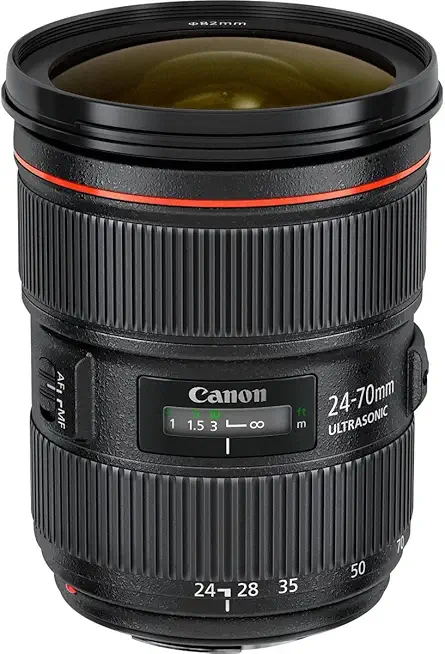
Canon EF 24-70 mm f/2.8 L II
Renowned workhorse zoom offering outstanding optical clarity and reliable performance. Fast aperture, precise focus, and durable build deliver consistent results for weddings, studio shoots, and everyday professional use.
Check PriceThe Canon EF 24-70mm f/2.8 L II is the old-school workhorse I still reach for when I’m in the studio or working on a tripod-heavy gig. Optically it produces very clean, contrasty images and it handles highlights and skin tones in a way that’s easy to grade. Compared to the RF 24-70 f/2.8, it feels a bit simpler and very reliable — it just gets the job done without surprises.
Where it falls short versus the RF 24-70 is obvious in the field: there’s no built-in image stabilization, so handheld low-light shots can be trickier unless your camera has IBIS. Also, on RF bodies you need an adapter, which adds a little bulk and takes away some of the convenience of a native RF lens. Autofocus and build quality are still excellent, but the RF lens’s Nano USM and modern coatings feel a touch smoother for video and tricky backlit scenes.
This EF version is best for photographers who already own Canon EF glass or shoot mainly on DSLRs and tripods — studio portrait, product, and wedding shooters who value proven IQ and a slightly lower cost. If you want the RF 24-70’s stabilization and native mount benefits, stick with the RF; if you want a dependable classic that’s often cheaper used, this EF II is a great choice.
Alternative 2:
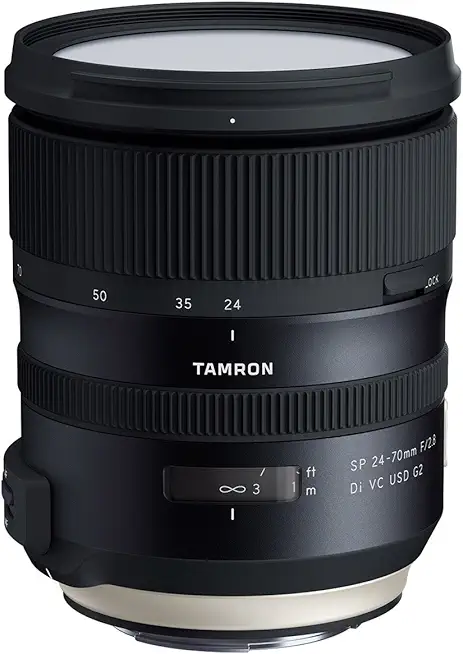
Tamron 24-70 mm f/2.8 G2
Updated third-party zoom combining sharp optics, improved image stabilization, and fast focusing for versatile shooting. Compact design and great value make it perfect for hybrid shooters and on-location assignments.
Check PriceThe Tamron 24-70 f/2.8 G2 surprised me on location — it’s sharp, light for the class, and gives you excellent reach without breaking the bank. In real shoots it behaves like a practical partner: fast enough AF for most portraits and event work, and the image stabilization helped me keep handheld shots usable in lower light. Compared to the RF 24-70, the Tamron is easier to carry all day and puts more money back in your bag.
What you trade away is the absolute polish of Canon’s L optics and the tighter system integration. The Tamron can have a slightly different color and contrast character, and in fast-paced tracking or very demanding video AF it wasn’t quite as seamless as the RF lens on Canon bodies. Weather resistance and the build are good, but you can feel the price difference in the finish and balance.
If you’re a hybrid shooter, freelancer, or travel photographer who wants pro-level sharpness without the L-series price, the Tamron is a strong pick. It’s great for shooters who value size, weight, and value over the last bit of autofocus or the highest-level weather sealing.
Alternative 3:
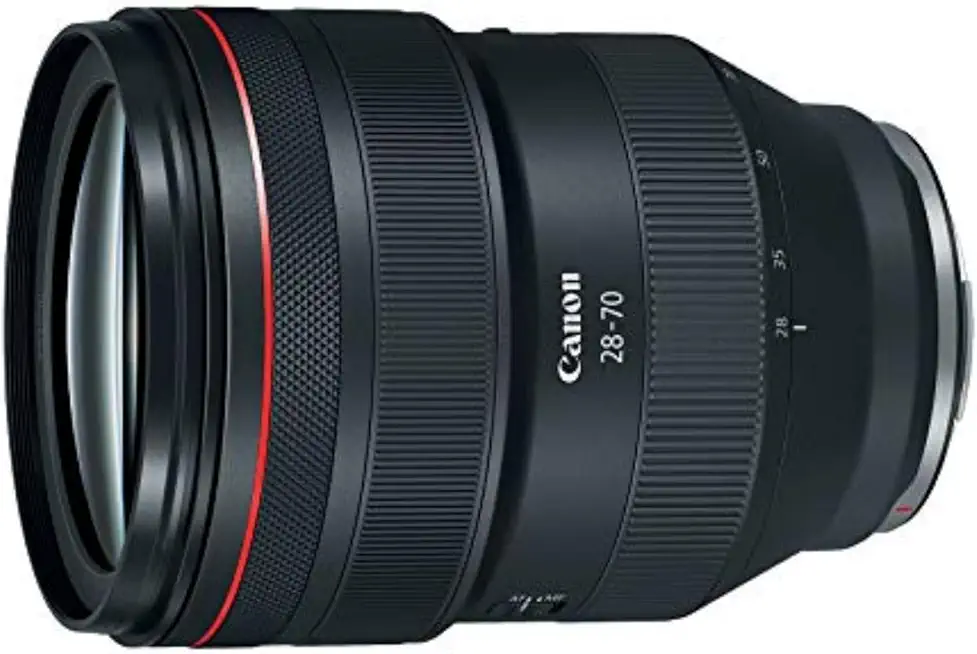
Canon RF 28-70 mm f/2 L
Ultra-fast professional zoom delivering unmatched subject isolation and buttery bokeh at f/2 across the range. Exceptional build, stellar contrast, and creative flexibility for fashion, portraits, and commercial work.
Check PriceThe Canon RF 28-70mm f/2 L is one of those lenses that changes the way you see shots. Shooting with it, the shallow depth and creamy bokeh at f/2 give portraits and product work a very different, more cinematic look than the f/2.8 zoom. If your priority is subject separation and a distinct rendering, nothing else in this trio gives you that same feel.
The downsides are practical: it’s a big, heavy, and expensive piece of glass, and it starts at 28mm so you lose the widest 24mm field — important for landscapes and tight interiors. It also doesn’t have built-in IS, so handheld low-light work can be more demanding unless your body has stabilisation. In fast-paced event situations I found it harder to move around with and less forgiving than the more balanced RF 24-70 f/2.8.
Pick the RF 28-70mm f/2 L if you’re a portrait, fashion, or commercial photographer who wants a very specific look and is willing to carry the weight and the price for it. If you need a true all-rounder for events and run-and-gun work, the RF 24-70 f/2.8 will be the more practical choice.
What People Ask Most
What cameras are compatible with the Canon RF 24-70mm F2.8 L IS USM?
It’s designed for Canon RF‑mount full‑frame bodies (the EOS R series and similar RF cameras).
Does this lens have image stabilization, and how effective is it?
Yes — it has built‑in optical IS rated up to 5 stops on compatible bodies; real‑world stabilization varies by camera and can be less than the rating on some bodies.
What is the minimum focusing distance and maximum magnification of this lens?
Minimum focus is 0.21 m at the wide end and 0.38 m at the tele end, with a maximum magnification of about 0.3× (1:3) around 32mm.
How does the autofocus perform for both still photography and video?
Autofocus uses Nano USM and is fast, accurate and nearly silent, making it excellent for stills and very good for video; it does show some reduced but noticeable focus breathing.
Is the lens weather sealed and suitable for professional outdoor use?
Yes — it’s a weather‑sealed Canon L‑series lens built to resist dust and moisture for professional outdoor work.
How sharp is the lens across the zoom range and at various apertures?
Center sharpness is excellent wide open at f/2.8 across the range, while corners are softer wide open and generally improve by about f/5.6.
Are distortion and vignetting significant, and can they be corrected in post-processing?
There is noticeable barrel distortion and strong vignetting at 24mm (and pincushion at 70mm), but both issues are largely correctable in software.
Who This Lens Is / Isn’t For
If you shoot professionally or like to have one go-to zoom, this lens will make your life easier because it covers everything from wide scenes to short-tele portraits without swapping glass. From weddings and events to portrait sessions, run-and-gun video and on-location landscapes, photographers I’ve worked with praise its reliable focus, stabilisation and consistent look that help you get keepable shots in low light. It’s a great choice if you want a single, rugged lens that handles most real-world jobs and lets you move fast.
Skip this lens if you want the lightest travel kit or are watching every dollar, because it’s noticeably heavy and carries a pro-level price that doesn’t suit casual shooters. It can feel bulky on small mirrorless bodies and the zooming action changes its length, so hikers, street photographers who prize tiny setups, or anyone who hates heavy gear should try smaller alternatives. Also avoid it if you need older EF mount compatibility or truly pocketable glass and don’t need a pro-grade, do-it-all lens.
Should You Buy It?
After a long period of real-world use I can say the Canon RF 24-70 mm f/2.8 L is a professional-grade standard zoom that largely lives up to its reputation. This lens delivers the kind of center sharpness, fast and quiet autofocus, effective stabilization and build quality that pros expect for events, portraits and video. Its strengths are obvious in demanding shoots where reliability and image quality matter most.
There are compromises to accept with this lens. This lens is noticeably heavy and the extending zoom behavior can be awkward for some shooters, and it exhibits visible wide‑end vignetting and distortion that require attention in post.
For working photographers who prioritize performance over pocket size, this lens represents a worthy investment and will repay its cost in versatility and dependability. For travelers or budget‑minded enthusiasts chasing the lightest kit, this lens is harder to justify. Overall, I recommend this lens to serious RF users who need a do‑everything pro zoom and can live with its few ergonomic and optical tradeoffs.
Canon RF 24-70 mm f/2.8 L
Professional-grade standard zoom delivering exceptional sharpness and fast low-light performance. Robust weather-sealed construction, smooth autofocus, and creamy bokeh make it ideal for events, portraits, and travel photography.
Check Price

0 Comments