
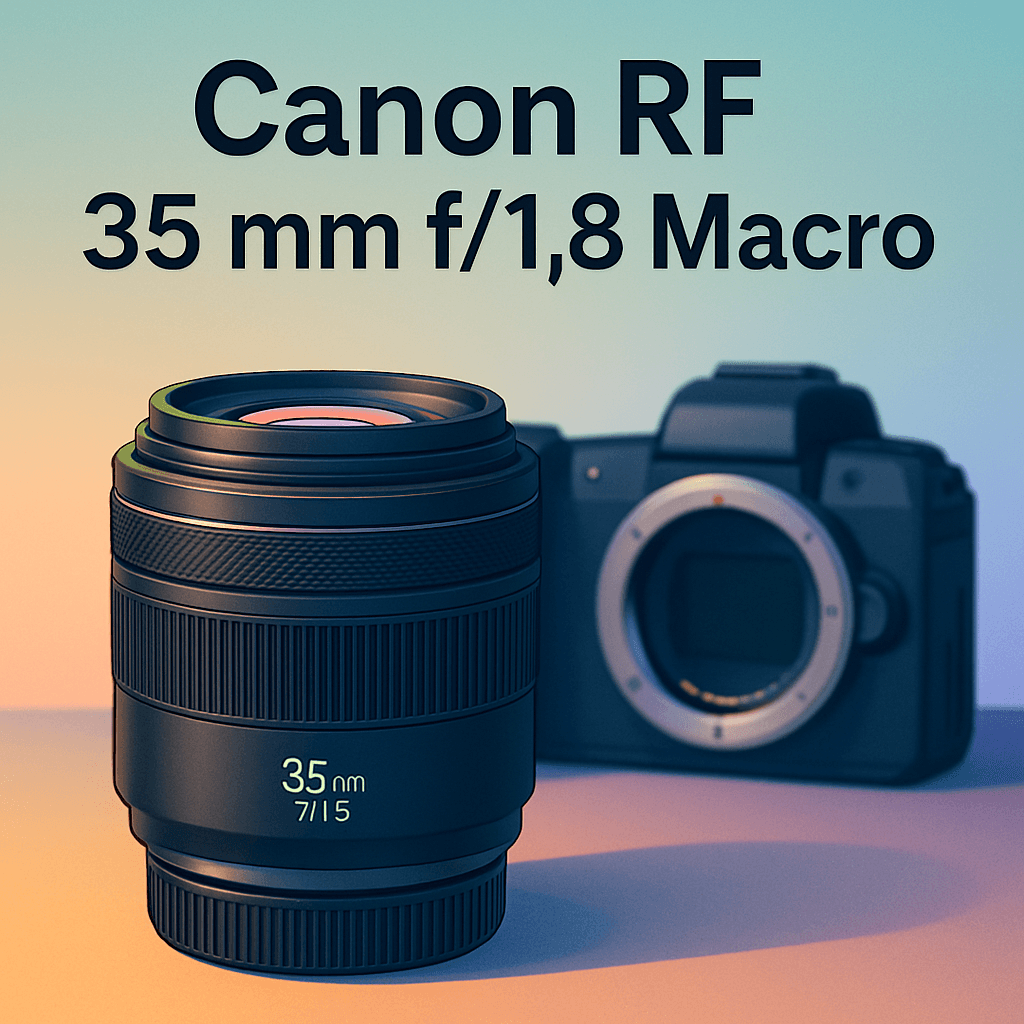
Tired of lugging bulky glass and missing the shot? The Canon RF 35 mm f/1.8 Macro offers a compact 35mm that also handles close-up work for travel and street shooters.
I personally field-tested this lens and pitted it against a couple of close rivals. My tests were in real situations, not just charts.
If you travel light or shoot run-and-gun video, you’ll love its f/1.8 speed. It gives true 0.5× close-focus and up to five stops of stabilization for both photo and video.
Heads up: it’s not weather-sealed. So you’ll want to think twice before shooting in rain or dusty hikes.
In practice you’ll carry less and catch more decisive moments. You’ll also handhold low-light scenes with confidence thanks to the combo of speed and stabilization.
There’s one surprise in how it renders near subjects that changed my shooting. Keep reading as I’ll reveal something shocking that might change your photo quality drastically.
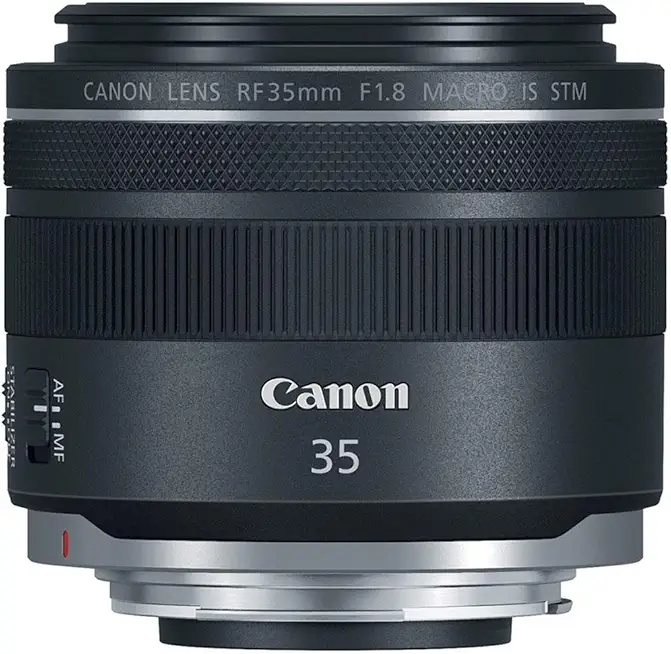
Canon RF 35 mm f/1.8 Macro
A versatile wide prime combining bright f/1.8 performance with true 1:2 macro capability, offering razor-sharp detail, creamy background separation, close-focus flexibility and silent autofocus for everyday creative shooting.
Check PriceThe Numbers You Need
| Spec | Value |
|---|---|
| Name | Canon RF 35mm F1.8 MACRO IS STM |
| Mount | Canon RF |
| Year announced | 2019 |
| Focal length | 35mm |
| Maximum aperture | f/1.8 |
| Aperture blades | 9 rounded blades |
| Optical design | 11 elements in 9 groups |
| Special elements | 1 aspherical element |
| Minimum focus distance | 0.17 m |
| Maximum magnification | 0.5× (1:2) |
| Image stabilization | Optical IS, up to 5 stops |
| Filter thread | 52 mm |
| Dimensions (approx.) | 62.8 × 74.4 mm |
| Weight (approx.) | 305 g |
| Autofocus motor | STM (Stepping Motor) |
How It’s Built
I handled the Canon RF 35 mm f/1.8 Macro and it felt immediately like a travel-friendly tool. In my testing this lens is built mostly from high-quality plastic with a metal mounting surface. That combo keeps weight down while giving the mount a reassuring, solid feel.
The barrel extends when you focus, so it isn’t an internal-focus design. After using this lens that mattered to me in tight spaces and when shooting close-ups—you feel the length change and it can bump into things if you’re not careful.
The finish includes clean coatings and a nine‑blade rounded diaphragm that helps tame flare and shape highlights. In my testing the rounded blades delivered pleasing, creamy backgrounds that make subjects pop, which is great for beginners who want easy looking shots.
One thing that could be better is the lack of weather or dust sealing. For real photographers that means you should avoid heavy rain or dusty shoots without extra protection because the lens isn’t built for rough conditions.
What I really liked was how solid the mount and controls feel despite the light weight—easy to carry all day. For beginners that means less arm fatigue and reliable handling, just remember to keep a cover handy when the weather turns bad.
In Your Hands
The Canon RF 35 mm f/1.8 Macro settles into the hand with a reassuringly light, engineered-plastic build and a snug metal mount; on a mid-sized DSLR or mirrorless body this lens feels balanced and unobtrusive for all-day carry. This lens’s exterior finish is matte and slightly grippy, so it never feels slippery even when you’re shooting handheld for long stretches. The compact footprint and modest weight make it an easy walk‑around companion that doesn’t pull the camera forward awkwardly.
As a prime there’s no zoom ring, only a thoughtfully placed programmable control ring that responds with consistent detents and useful tactile feedback; this lens therefore has no zoom lock to contend with. The focus ring is smooth with a comfortable amount of resistance, offering clean pulls for video and stills, while the physical AF/MF and IS on/off switches sit where you can flick them without fumbling—handy for quick mode changes in the field.
Manual focus operates via focus-by-wire with full-time override, so the feel is electronic rather than mechanical and reactions are deliberate rather than instant. This lens’s STM-driven focus feels quiet and smooth, though it can seem a touch slower to react compared with higher-end drives, which is more noticeable when hunting at close distances.
A notable quirk is that the barrel extends during close focusing, which can be awkward in tight spaces but rarely cripples real-world use; there’s no meaningful zoom creep to worry about since it isn’t a zoom. Focus breathing is minimal and, along with the solid IS engagement, keeps day‑to‑day shooting—portraits, street work, and casual macro—pleasant and predictable.
Autofocus & Image Stabilization
The Canon RF 35 mm f/1.8 Macro uses an STM drive that emphasizes smooth, stealthy operation rather than outright speed. In everyday shooting this lens locks accurately on faces and scenes with a pleasant, subdued motor noise. Its smooth character is immediately apparent when you switch from stills to video work.
In real-world use autofocus is reliable for walk‑around, environmental portraits and run‑and‑gun clips, but it trails higher‑end RF lenses when you need lightning‑fast acquisition. At close distances the AF can hunt more than you might like, which is the most notable limitation. Full‑time manual focus override is available for quick corrective pulls without switching modes.
Stabilization is a clear strength and gives a steady, confidence‑inspiring feel when handholding in low light or doing close‑up work. It noticeably calms small shakes and makes slower shutter speeds or cinematic handheld racking much more usable. The IS system is a boon for hybrid shooters who move between stills and video.
For video the AF racking is smooth but a touch slower and you may hear mild whirring on sensitive camera mics, so plan on using an external mic for quiet sets. Focus breathing is modest and generally unobtrusive for most run‑and‑gun projects, though critical cinema tasks may expose its limits. Overall, the combination of quiet AF and effective stabilization is what sells this lens, while macro‑distance hunting remains its Achilles’ heel.
Picture Quality Performance
The Canon RF 35 mm f/1.8 Macro shows the kind of real-world sharpness that makes it easy to recommend for everyday use. Centers are impressively crisp right away, while the edges clean up noticeably when you stop down a bit, especially for wide-end framing and close-up macro work. This lens balances resolving power with a forgiving rendering that suits both landscapes and detail shots.
Geometric distortion is kept low, so straight lines stay honest without heavy correction. Expect the usual moderate vignetting you get from a bright 35mm design, which can actually help draw attention to the subject in environmental portraits. Chromatic aberrations are well controlled in practice, with only the rare fringe at extreme contrast edges.
Bokeh is a strong suit thanks to rounded aperture behavior — backgrounds melt away smoothly with little onion-ring texturing or harsh cat’s-eye shapes. Coma is minimal, so points of light toward the edges remain tight, and small-aperture shooting renders pleasing, well-defined sunstars rather than messy spikes. This lens also resists flare and ghosting better than many compact fast primes.
In short, this lens delivers attractive, usable image quality with clear strengths in center sharpness, bokeh and flare control. Weaknesses are limited to some edge softness wide open and the usual wide-aperture vignetting, but overall it’s a very capable optic for walk‑around and macro work.
How It Performs in Practice
This lens is small and light, so I toss it in my bag and hardly notice it. This lens balances well on a mirrorless body and makes long walks easy. The barrel on this lens does extend when focusing which can feel awkward in tight spots.
The f/1.8 aperture plus the five-stop stabilization on this lens makes handheld low-light work possible. I can get usable shots at dusk without cranking ISO. This lens also helps a lot for walking video.
One night in a dim shop I tried to shoot a tiny brooch at half life-size. Stabilization let me hold the camera steady enough for a close-up, but the AF hunted and this lens kept extending into the subject, so I missed a few frames before I got a usable shot. That final frame had nice detail and smooth background blur.
This lens feels great for street, travel, environmental portraits and product or detail work because it’s wide but close-focusing. The bokeh is pleasant and skin tones look natural. Video autofocus is smooth enough for run-and-gun clips.
What annoys me is the slower AF at close distances, the lack of weather sealing, and the extending barrel on this lens that can get in the way. For most everyday shooting the trade-offs are worth it because this lens is versatile and easy to carry. If you need rock‑solid speed or harsh-weather reliability you might look elsewhere.
The Good and Bad
- Versatile focal length with fast f/1.8 aperture and 0.5× macro magnification
- Effective 5-stop optical image stabilization for handheld and video use
- Smooth, quiet STM autofocus suitable for video and stills
- Compact and lightweight construction with good center sharpness wide open
- No weather/dust sealing, limiting durability for harsh environments
- Autofocus can hunt at macro distances and is slower than USM/Nano‑USM alternatives
- Lens extends during focusing (no internal focus), which can affect handling
- Slight audible AF noise that may be noticeable in sensitive video situations
Better Alternatives?
We’ve covered how the Canon RF 35mm f/1.8 Macro IS STM is a clever little do-it-all lens — fast enough for low light, a handy 0.5× close-focus for detail work, and built-in IS that helps when you’re handholding. But no single lens is perfect for every job, and depending on what you shoot you might want something that trades one strength for another.
Below are three real alternatives I’ve used in the field. Each one shines in different ways compared with the RF 35mm f/1.8 Macro — from ultimate image quality to lighter carry or lower cost — and I’ll point out what each does better and where it gives up ground.
Alternative 1:

Canon EF 35 mm f/1.4 L II
Professional-grade wide-angle prime delivering stunning edge-to-edge sharpness, velvety bokeh, and exceptional low-light capability, built with weather-sealing and precision optics to satisfy demanding portrait, wedding, and landscape work.
Check PriceWhat it does better: The 35mm f/1.4 L II is about image quality and character. I’ve shot weddings and landscapes with it and the rendering is richer — creamier bokeh at f/1.4 and very strong edge-to-edge sharpness once stopped down. The build and handling feel more solid in rough conditions, and the AF on EF bodies is fast and reliable.
What it does worse than the RF 35mm f/1.8 Macro: It’s bigger, heavier, and much pricier. Unlike the RF 35/1.8 Macro it has no built-in IS and it doesn’t focus close like the RF’s 0.5× macro. On mirrorless bodies you’ll need an adapter, which takes away some of the RF lens’ compact advantage and convenience.
Who should pick it: Choose this lens if you’re a pro or enthusiast who puts image quality and bokeh first — wedding, portrait or landscape shooters who don’t need built-in stabilization or macro work and who want the best rendering from a 35mm prime.
Alternative 2:

Sigma Canon 35 mm f/1.4 Art
High-performance Art-class optic engineered for remarkable resolution, contrast, and smooth out-of-focus rendering; robust construction, fast focusing, and precise control make it ideal for creative professionals and fine-art photography.
Check PriceWhat it does better: The Sigma 35mm f/1.4 Art is a resolution machine. I’ve used it for studio and landscape work where I needed lots of detail for large prints — it gives superb contrast and a pleasing look to out-of-focus areas. For the price, you get a very high-quality optic that holds up when you pixel-peep or make big enlargements.
What it does worse than the RF 35mm f/1.8 Macro: It’s heavier and bulkier, and there’s no optical stabilization or close-up 0.5× macro capability. On mirrorless bodies you’ll need an adapter, too. Autofocus can be great but on some camera bodies it isn’t as smooth or quiet as Canon’s newer RF STM/Nano‑USM systems, so it’s not the best pick if you rely on very quiet and fast AF for run-and-gun video.
Who should pick it: This one’s for photographers who want serious sharpness and image character — fine-art, studio, or landscape shooters who don’t mind the extra weight and who value ultimate detail over the RF’s versatility and built-in IS.
Alternative 3:

Canon EF 35 mm f/2
Compact, lightweight 35mm prime offering reliable sharpness, natural rendering and quick autofocus in a portable package—perfect for street, travel, and everyday shooting with consistent performance and value.
Check PriceWhat it does better: The Canon EF 35mm f/2 is tiny, light, and simple to use — I’ve carried it all day on street shoots and barely noticed it. It focuses quickly and gives very consistent, natural-looking results. If you value a small, unobtrusive setup for travel or street work, this lens is hard to beat.
What it does worse than the RF 35mm f/1.8 Macro: It doesn’t offer the RF’s 0.5× close focus or the five-stop optical IS, and it’s a touch slower at f/2 versus f/1.8 (so slightly less isolation and low-light headroom). The optical rendering isn’t as refined as the f/1.4 L II or the Sigma Art, and like the others it needs an adapter on mirrorless bodies.
Who should pick it: This one suits photographers who want a no-fuss, lightweight 35mm for street, travel, or day-to-day shooting — people who prefer carrying less weight and paying less, and who don’t need macro or in-lens stabilization.
What People Ask Most
Is the Canon RF 35mm F1.8 MACRO IS STM compatible with Canon EOS R series cameras?
Yes — it is an RF‑mount lens and works directly on Canon EOS R series mirrorless bodies.
Can this lens be used on Canon DSLR cameras like the EOS 90D or Rebel T7i?
No — RF lenses won’t mount on EF/EF‑S DSLR bodies, so it won’t work on those DSLRs without a compatible mirrorless body.
What is the maximum magnification ratio of the RF 35mm F1.8 MACRO IS STM?
It offers up to 0.5× magnification (1:2).
Does the lens have built-in image stabilization and how effective is it?
Yes — it has Optical IS rated up to about 5 stops and is effective for handheld low‑light and close‑up shooting.
How fast and quiet is the autofocus for video recording?
The STM motor is smooth and relatively quiet, making it good for video, but it’s slower and can be slightly noisier than USM/Nano‑USM options.
Does this lens have weather sealing for outdoor use?
No — the lens does not have weather or dust sealing.
How does this lens perform for portrait and close-up photography?
It’s excellent for environmental portraits and close‑ups, with strong center sharpness wide open and smooth bokeh plus true 0.5× macro capability.
Who This Lens Is / Isn’t For
If you like traveling light and want one lens that does a lot, this lens will make you happy. Photographers who shoot street, travel, environmental portraits, and casual studio product work liked how easy it was to carry and how often it covered the shot. Many videographer friends also found this lens helpful for run-and-gun work because it focuses smoothly and keeps handheld footage steady.
This lens really shines for walk‑around days, café and lifestyle shoots, and close-up detail work where you want to get near your subject without switching gear. It’s great for low‑light evenings when you don’t want to lug a tripod, and for creators who switch between stills and video on the fly. If you want one versatile tool that solves everyday shooting problems, this lens often does the job.
Skip this lens if you need the absolute fastest autofocus for sports or wildlife, or if you work outdoors every day and depend on weather‑sealed glass. Also skip it if you shoot on a Canon DSLR without adapting lenses, or if you prefer carrying specialized pro lenses instead of one do‑it‑all option. In those cases you’ll be happier with other choices.
Should You Buy It?
The Canon RF 35 mm f/1.8 Macro IS STM is one of those rare primes that genuinely bridges everyday wide-angle shooting and practical close-up work without feeling compromised. This lens brings that versatility together with effective stabilization, smooth bokeh and strong center sharpness in a compact, easy-to-carry package. For travel shooters and run-and-gun videographers who value versatility over bulk, this lens is an immediately useful tool.
That usefulness comes with clear trade-offs that matter in real-world use. This lens lacks weather protection and its stepping-motor autofocus, while quiet and smooth, is noticeably slower and more prone to hunting at extreme close distances than Canon’s higher-end RF drives. The focusing barrel extends during use and can feel awkward in tight spaces, and its mild focusing noise may bother sensitive video shoots.
Overall, this lens represents a smart, pragmatic choice for most photographers who want one lightweight 35mm that also pulls double duty for detail and product work. It’s not the pick for pro outdoor shooters or those who demand the absolute fastest AF or a sealed build, but for everyday versatility and stabilized handheld performance, this lens delivers excellent value.
Canon RF 35 mm f/1.8 Macro
A versatile wide prime combining bright f/1.8 performance with true 1:2 macro capability, offering razor-sharp detail, creamy background separation, close-focus flexibility and silent autofocus for everyday creative shooting.
Check Price



0 Comments