

Tired of shaky mirrorless footage ruining your best shots?
I personally field-tested the DJI Ronin SC Gimbal and compared it with a couple of close rivals. I’m an award-winning photographer and journalist who tested it on real shoots.
If you shoot travel videos, run-and-gun projects, or solo vlogs, it’s built to make your footage buttery smooth and save your back. Its top strengths are light weight, long battery life, and smartphone integration, but it still can’t handle heavy DSLR and telephoto combos. That tradeoff matters if you like big lenses or heavy rigs.
We’ll focus on real-world payoffs like steadier walk-and-talks, quicker setups, and longer shooting days. If you want cleaner results you didn’t expect, keep reading — I’ll reveal something shocking about the DJI Ronin SC Gimbal that might change your photo quality drastically. I’ll also point out small tricks that cut setup time and improve motion tracking for cleaner footage.
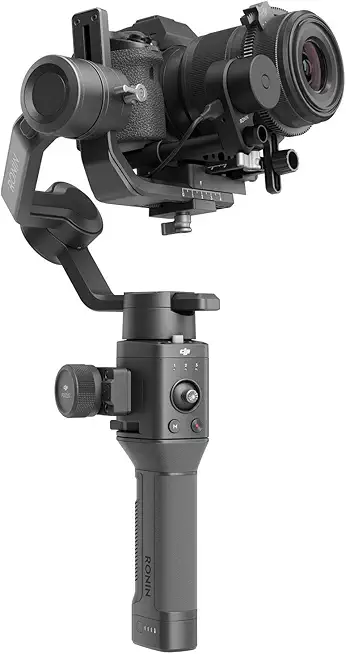
DJI Ronin SC Gimbal
Ultra-light 3-axis stabilizer engineered for mirrorless cameras delivers buttery-smooth cinematic motion, effortless balancing, intelligent shooting modes, and intuitive app control—ideal for run-and-gun filmmakers and travel videographers seeking professional results.
Check PriceThe Numbers You Need
| Spec | Value |
|---|---|
| Type | 3-axis motorized gimbal stabilizer |
| Maximum payload | Supports mirrorless cameras up to 2.0 kg (4.4 lbs) |
| Weight | Approx. 1.1 kg (2.4 lbs) |
| Dimensions (folded) | 220 × 200 × 75 mm |
| Dimensions (unfolded) | 370 × 165 × 150 mm |
| Battery capacity | 2450 mAh LiPo (18650 cells) |
| Battery runtime | Up to 11 hours |
| Charging time | Approximately 2.5 hours |
| Max controlled rotation speed | 180°/s (pan, tilt, roll) |
| Pan rotation range | 360° continuous |
| Tilt rotation range | -90° to +145° |
| Roll rotation range | ±30° (controlled) |
| Connectivity | Bluetooth 5.0; USB-C (charging & camera control) |
| Supported app platforms | iOS 9+ and Android 5.0+ |
| Mounting threads | 1/4″-20 and 3/8″-16 |
How It’s Built
In my testing the DJI Ronin SC Gimbal feels surprisingly solid while staying light enough to sling over a shoulder all day. The high-grade materials give it a confidence-inspiring heft without wearing you out on long shoots. For real-world use that means you get a tool that travels well and won’t fight you when you’re moving fast.
I found the one-handed grip and mechanical locks on each axis to be genuinely handy. After using it for a while I could lock the axes, slide the quick-release plate on, and rebalance in no time — perfect for beginners who want less fiddling. That setup makes lens swaps and packing up between locations way less stressful.
The physical controls are spaced nicely, with a joystick, a record button, a front trigger, and a mode button that get you going without opening the app. Multiple mounting threads let you add a mic or light quickly, so you can build a small run-and-gun rig without hunting for adapters. In practice that means more time shooting and less time rigging.
What I really liked was how fast it gets you from camera-on to rolling thanks to the locks and plate. One thing that could be better: the buttons are a bit small and fiddly if you’re wearing gloves or in a rush. Even so, beginners will appreciate how approachable the whole build feels.
In Your Hands
The DJI Ronin SC Gimbal smooths out handheld motion so walking shots and run‑and‑gun sequences look cinematic with minimal fuss. Its three‑axis stabilization makes pans and tilts feel fluid and forgiving, even during brisk movement.
ActiveTrack via the smartphone app reliably keeps subjects framed, turning a single operator into a one‑person production team. When mounted on a tripod, Force Mobile lets you steer the gimbal remotely with phone motion for creative camera moves without touching the rig.
Switching to Sport mode wakes the motors for faster response when you need to follow sudden action, and it does so without introducing jitter into typical clips. Built‑in shooting tools like time‑lapse, motion‑lapse and panorama expand creative options straight from the app, saving setup time on location.
All‑day battery endurance and the app’s auto‑calibration and motor auto‑tuning mean fewer interruptions and fewer manual tweaks between camera setups. The quick‑release mounting and intuitive balancing make changing lenses and cameras straightforward, keeping you shooting instead of fiddling.
In practice the Ronin SC shines with lightweight mirrorless bodies, cutting handheld fatigue on travel shoots and solo gigs, while heavier DSLR or long telephoto setups feel constrained. Rolling‑shutter artifacts and motor noise are minimal in most captures, which keeps footage looking clean and professional.
The Good and Bad
- Lightweight and highly portable
- Long battery life
- Advanced subject tracking and strong app integration
- Easy balancing with quick-release mounting system
- Limited payload capacity (max 2.0 kg)
- Not ideal for heavier camera-and-lens combinations
Ideal Buyer
Serious mirrorless shooters who value light, fast gear will appreciate the DJI Ronin SC Gimbal. It trades raw payload for portability and nimble handling, delivering steady shots for smooth handheld motion. If your camera and lens stay under the 2.0 kg limit, it’s an ideal everyday tool for documentaries and short-form content.
Travel videographers will like the compact folded size and nearly full-day battery life. Mechanical locks and a quick-release plate make airport swaps and layovers less stressful. The lightweight frame keeps shoulder and hand fatigue to a minimum on long treks.
Solo creators and vloggers get practical one-handed control and fast setup for run-and-gun shooting. ActiveTrack and Force Mobile give smartphone-driven framing and remote follow that simplify solo work. Integrated time-lapse and panorama modes add creative options without hauling extra gear.
This gimbal isn’t for big DSLRs or heavy telephoto rigs that exceed the 2 kg ceiling. Professionals who need higher payloads should consider larger stabilizers, which cost more and weigh more. For anyone shooting mirrorless on the move, the Ronin SC Gimbal hits the sweet spot between mobility and capability.
Better Alternatives?
We’ve covered what the DJI Ronin SC does well: light weight, long battery life, and easy app features that make run-and-gun mirrorless shooting smooth. If you want a different kind of feel or need to solve specific shooting problems, there are other tools worth considering.
Below are three alternatives I’ve used in the field. I’ll tell you where each one shines compared to the Ronin SC, where it falls short, and what kind of shooter would choose it.
Alternative 1:
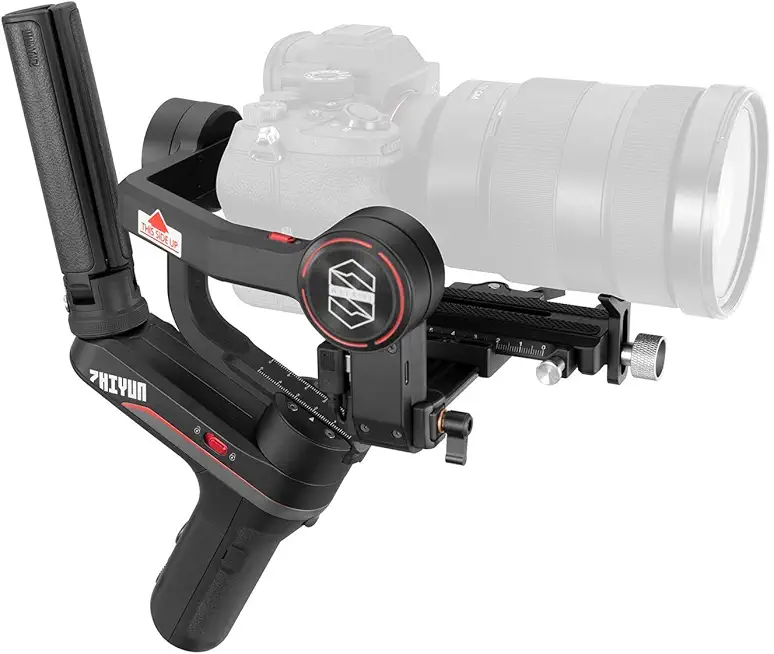
Zhiyun Weebill S Gimbal
Heavy-duty handheld stabilizer with powerful motors and refined payload capacity provides rock-steady tracking, ergonomic sling handling, rapid transition between modes, long battery life, and advanced timelapse features for storytelling.
Check PriceThe Zhiyun Weebill S felt like upgrading from a compact car to a small truck when I needed to carry heavier lenses. It handles bigger mirrorless bodies and small DSLRs more confidently than the Ronin SC, and in real shoots the motors fight less when I pan quickly or tilt under load. The sling-style grip also makes long handheld takes less tiring and the timelapse and motion features are robust for planned storytelling shots.
What it does worse than the Ronin SC is size and speed of setup. It’s bulkier in the bag and takes a little longer to balance, so it’s not as handy for travel or quick run-and-gun scenarios where the Ronin SC really shines. Also, for small mirrorless rigs the extra strength is overkill—you trade portability for power.
If you regularly use heavier lenses, shoot weddings, short films, or do a lot of tracking with a larger kit, the Weebill S is the pick. If you prioritize the lightest possible setup for all-day handheld walking work, you’ll still prefer the Ronin SC. I’ve kept the Weebill S for jobs where weight and stability matter more than quick packing.
Alternative 2:

DigitalFoto Ares Z Axis Spring Handle
Z-axis spring handle dampens vertical shake and absorbs bumps for smoother gimbal footage, offering adjustable tension, lightweight construction, ergonomic grip, and straightforward mounting—perfect for run-and-gun shoots and stabilized walking shots.
Check PriceThe DigitalFoto Ares Z Axis spring handle is not a full gimbal—it’s an add-on that takes away the vertical bounce when you walk. I’ve clipped it under various gimbals and handheld rigs and noticed fewer head-bob steps and much smoother staircase runs. Compared to the Ronin SC, it doesn’t replace any axis control, but it fixes a very specific nuisance that motors don’t always catch: vertical shock.
Where it falls short versus the Ronin SC is obvious: it won’t stabilize pan, tilt, or roll by itself. It’s also another piece to carry and mount, and tension tuning takes a few tries to get right for each camera weight. It can’t offer the tracking or app features the Ronin SC has—it’s purely mechanical damping.
If you’re a documentary shooter, wedding photographer, or solo operator who walks a lot and already uses a gimbal, this is a cheap, light way to improve walking shots without buying a larger gimbal. I used it on crowded events where I couldn’t slow my pace and it made the footage look much more professional. Don’t buy it expecting a full replacement for the Ronin SC—think of it as an upgrade for smoother steps.
Alternative 3:
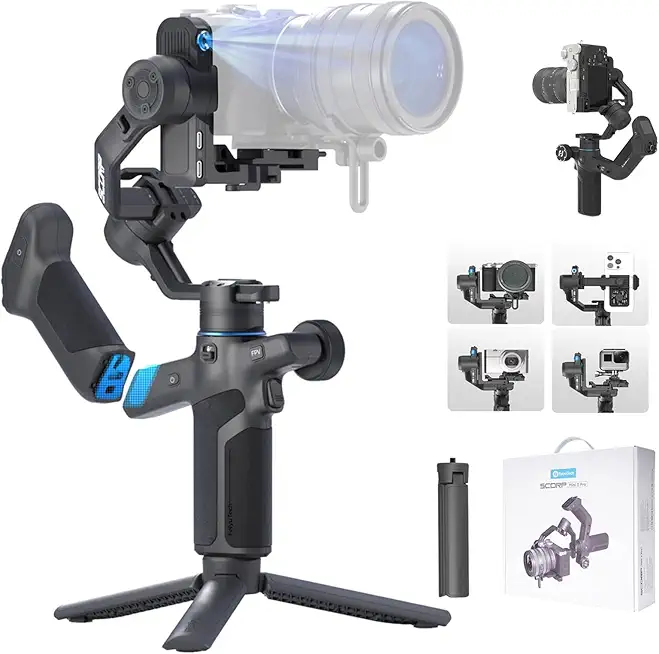
FeiyuTech SCORP Mini 3 Pro Gimbal
Pocket-sized 3-axis stabilizer tailored for compact cameras and smartphones: fast setup, portrait/landscape switching, gesture control, creative shooting modes, and compact folding design for creators on the move.
Check PriceThe FeiyuTech SCORP Mini 3 Pro impressed me for travel and quick vlogs. It folds small, sets up fast, and feels weightless compared to the Ronin SC. For smartphone creators and people using tiny mirrorless cameras, it’s faster to pull out and get rolling. I liked the portrait/landscape flip and the gesture controls when I needed quick social clips on the fly.
What it does worse than the Ronin SC is its limits with heavier cameras. Try to mount a larger mirrorless body with a substantial lens and the motors start to struggle—shots aren’t as clean under fast moves and the battery life and build feel less robust. The tracking and app features are also simpler, so you lose some of the polish you can get from the Ronin ecosystem.
Pick the SCORP Mini if you’re a travel vlogger, influencer, or anyone who shoots mostly with phones or small cameras and wants a pocketable solution. If your work involves heavier kit or longer studio sessions, the Ronin SC will still be the more reliable tool. I use the SCORP Mini on day hikes and quick street shoots where every ounce and inch of space counts.
What People Ask Most
What cameras are compatible with Ronin-SC?
Supports most mirrorless cameras under 2 kg, including Sony A6000/A7 series, Canon EOS M50/M6, Panasonic GH4/GH5, Nikon Z50, Fujifilm X-T3, and others.
How long does the battery last?
Up to about 11 hours per full charge, though actual runtime depends on usage and conditions.
Can the gimbal do 360° rotation?
Yes — it offers continuous 360° pan rotation; roll is typically limited to ±30° in controlled mode (some notes reference 360° roll capability).
What is the maximum payload?
Rated for mirrorless cameras up to 2.0 kg (4.4 lbs).
How much does the Ronin-SC weigh?
About 1.1 kg (2.4 lbs), roughly 41% lighter than the Ronin-S.
Is the Ronin-SC good for travel and run-and-gun?
Yes — its compact, lightweight design and long battery life make it well suited for travel, run-and-gun shooting, and solo creators using mirrorless cameras under 2 kg.
Conclusion
The DJI Ronin SC is a compact, no‑nonsense gimbal built for mirrorless shooters who value portability and intuitive app‑driven features. It nails handheld stabilization and streamlines a quick travel workflow. If you shoot light and move fast, it’s an obvious choice.
Its lightweight, modular design makes it effortless to carry and rig. The quick‑release mounting and one‑handed operation speed up setup and shooting. App‑driven tools like subject tracking and remote control expand creative options.
Its chief limitation is payload capacity; heavier cameras and long telephoto lenses push it beyond its comfort zone. Users who demand extreme payload or multi‑operator cinema rigs will need a beefier option. Minor motor noise and occasional rolling‑shutter quirks surface in certain setups, but rarely cripple results for run‑and‑gun work.
For solo creators, travel videographers and vloggers who keep kits light, the Ronin SC delivers exceptional value. It balances solid construction, long runtime and responsive software into a package that lets you shoot more and fuss less. If your work needs maximum payload or heavy‑duty cinema features, look elsewhere; otherwise it’s a smart, practical buy you can trust.
DJI Ronin SC Gimbal
Ultra-light 3-axis stabilizer engineered for mirrorless cameras delivers buttery-smooth cinematic motion, effortless balancing, intelligent shooting modes, and intuitive app control—ideal for run-and-gun filmmakers and travel videographers seeking professional results.
Check Price

0 Comments