
Want to know if the Canon EOS 4000D Camera is the right first DSLR for you?
It’s built for beginners and casual travel or family shooters who want simple controls and an optical viewfinder.
I’ll cover handling, image quality, autofocus, video and practical pros and cons. Make sure to read the entire review — it might change your first-DSLR pick; keep reading.

Canon EOS 4000D Camera
Entry-level DSLR offering easy controls, 18MP sensor, and built-in Wi‑Fi for quick sharing. Lightweight body with intuitive menu system, ideal for beginners learning photography and capturing crisp everyday moments.
Check PriceThe Numbers You Need
| Spec | Value |
|---|---|
| Sensor | 18 MP (APS-C CMOS) |
| Viewfinder | Optical (pentamirror) |
| LCD | 2.7″ fixed, 230K dots |
| Autofocus | 9-point TTL (center cross-type) |
| ISO range | 100–6400 (expandable to 12800) |
| Shutter speed | 1/4000s max (mechanical) |
| Continuous shooting | 3 fps |
| Video | Full HD 1080p @ 30 fps |
| Storage | SD/SDHC/SDXC (single slot) |
| Connectivity | Wi‑Fi (no built-in Bluetooth or NFC) |
| Battery | LP-E10 (up to 500 shots/charge, CIPA) |
| Dimensions | 129 x 101.6 x 77.1 mm |
| Weight | 436 g (body only) |
| Lens mount | Canon EF/EF-S |
| Image processor | DIGIC 4+ |
How It’s Built
In my testing the Canon EOS 4000D is a proper entry-level DSLR — small, light, and easy to toss in a day bag. It balances well with the kit zoom and even better with a small prime, so I shot more while carrying less. I liked the portability.
The EF/EF‑S mount gives access to Canon’s huge lens lineup, and swapping to a sharp prime really lifts image quality. The optical viewfinder is pleasant for framing, but the rear screen is tiny and low-res. That screen could be better for checking focus.
Controls are simple and friendly for beginners, and the grip is comfortable for short shoots. I found changing AF points and ISO a bit fiddly at first, so expect a short learning curve. In practice you’ll use the center point most of the time.
There’s a single card slot and Wi‑Fi for transfers — in my testing Wi‑Fi worked for quick sharing but felt slow to pair. Battery life got me through a typical day, but I always carried a spare on longer outings. For beginners this keeps things straightforward, but know the limits.
In Your Hands
Out in the field the Canon EOS 4000D feels like a sensible, no‑nonsense tool rather than a speed demon; menus and shot-to-shot responsiveness are perfectly usable for everyday shooting but never snappy. You won’t get instant bursts of images, so the camera invites a more deliberate approach to framing and timing that suits learning photographers. Startup and basic menu navigation are straightforward, which keeps the focus on composing rather than fiddling with settings.
When it comes to action, the camera handles casual moments—kids at play, pets chasing a ball—well enough if you anticipate the peak of the action. Sustained bursts reveal the limits: keep sequences short and use the central focus area for the best keep rate. For fast sports or long continuous sequences you’ll notice the system’s conservative pace, but for everyday candids it’s acceptable.
Low‑light shooting calls for restraint; push the sensitivity high and JPEGs will show noise reduction trade‑offs, while RAW files give you more room to recover shadows at the cost of extra processing. In practice, a brighter lens or available light is the easiest way to improve results indoors without relying on flash. Skin tones and color are pleasant straight from camera at modest sensitivities, but grain becomes more evident as conditions darken.
Video is serviceable for quick clips and casual vlogging, though autofocus during recording is steady rather than silky smooth and there are no high‑frame‑rate options. The built‑in Wi‑Fi lets you transfer images on the go but pairing can be fiddly and transfers aren’t instantaneous. Battery life and single‑card workflow are fine for a day out if you manage clips and stills carefully, and a spare battery is a sensible companion for longer shoots.
The Good and Bad
- EF/EF-S lens ecosystem compatibility
- Optical viewfinder shooting experience
- Compact, lightweight body for daily carry
- Battery rated up to 500 shots (CIPA)
- 2.7″ fixed, 230K-dot LCD limits reviewing and live view usability
- Basic 9-point AF with only center cross-type; limited coverage and tracking confidence
Ideal Buyer
If you’re stepping up from a smartphone and want the tactile pleasure of an optical viewfinder, the Canon EOS 4000D is built for you. It’s aimed at true first‑time DSLR users who prefer simple menus, a comfortable grip, and straightforward shooting over bells and whistles. The camera teaches fundamentals without intimidating features.
For casual family and travel photographers who mostly shoot in daylight, this body is an easy companion. Its compact footprint and compatibility with Canon’s vast EF/EF‑S lens lineup mean you can carry less and still get great results when the light cooperates. Expect solid JPEGs straight out of camera and a familiar Canon color signature.
Budget‑minded learners who plan to upgrade lenses rather than bodies will get the most value here. Swap the kit zoom for a sharp prime and you’ll noticeably lift image quality on the 18MP sensor. Basic 1080p video is fine for home clips and social posts, but don’t buy this as a video‑first tool.
If you frequently shoot low light, fast action, or want a modern touchscreen/live view experience, look elsewhere. But if you want an affordable, no‑nonsense DSLR that helps you master exposure, composition, and lens choices, the EOS 4000D is a sensible, economical starting point.
Better Alternatives?
We’ve gone through what the EOS Rebel T100 (Canon EOS 4000D) does well and where it falls short. It’s a true budget DSLR that teaches the basics, but if you want nicer files, better handling, or longer battery life, there are a few easy steps up that won’t force you into a whole new system.
Below are three alternatives I’ve used in real life. I’ll tell you what each one does better and worse than the 4000D, and who I’d recommend it to based on actual shooting time with each body.
Alternative 1:

Canon EOS 2000D Camera
Beginner-friendly DSLR with high-resolution imaging, reliable autofocus and versatile shooting modes. Robust battery life and built-in connectivity let you capture stunning portraits and landscapes while learning creative techniques.
Check PriceI used the 2000D as a daily travel camera and it gives you noticeably better image files than the 4000D. Shots look sharper straight out of camera and you have more room to crop, so it’s easier to get tight headshots or detail crops without switching lenses. The rear screen and menu feel less cramped than the tiny screen on the 4000D, so reviewing and tweaking shots in the field is less painful.
Where it doesn’t beat the 4000D is in speed and handling extremes: you still get the same basic AF coverage and modest burst speed, so for fast kids’ sports you won’t see a big jump. The files are larger too, so you’ll need a bigger memory card and more storage. Build-wise it’s still lightweight plastic, so don’t expect any ruggedness upgrade.
This is the one I’d point a beginner to who wants cleaner, more usable photos without leaving Canon lenses behind. It’s for people who shoot travel, family portraits, and everyday scenes and want better-looking JPEGs and easier on-camera reviewing without a big learning curve.
Alternative 2:

Nikon D3500 Camera
Compact, user-focused DSLR combining a 24MP sensor with fast, accurate autofocus and excellent battery life. Guided shooting modes help new photographers create sharp, vibrant images with minimal setup.
Check PriceThe Nikon D3500 felt different in the hand and different in results when I used it for a full weekend shoot. In real shooting the D3500 gives cleaner low-light shots and a longer battery life, so you can be out a full day shooting without worrying about a spare cell. The grip and button layout make long walks and handheld shooting more comfortable than the cheap, boxy feel of the 4000D.
Where it’s worse for some users is ecosystem and workflow: if you’ve invested in Canon lenses, switching to Nikon is a hassle. The D3500 also keeps things simple rather than adding modern video or touchscreen comforts, so if you want live view autofocus or easy phone transfers you may miss some conveniences found on newer Canon models.
Pick the D3500 if you’re mainly a stills shooter who values battery life, comfortable handling, and cleaner shots at higher ISOs. It’s a great choice for travel photographers and beginners who want solid results out of camera and don’t mind switching systems to get them.
Alternative 3:
Canon EOS 2000D Camera
Affordable DSLR designed for newcomers, featuring detailed image quality, simple controls, and helpful automatic modes. Lightweight design and easy sharing options make it perfect for travel and daily use.
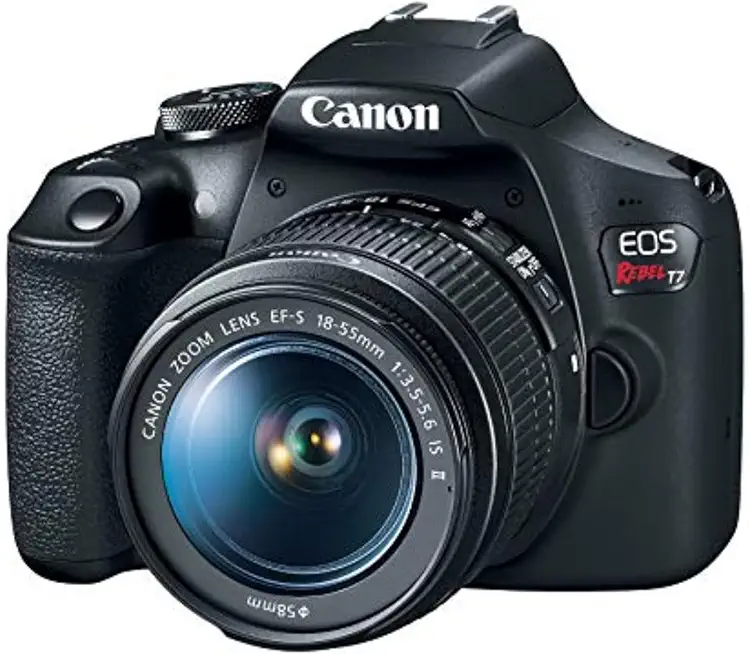
Check PriceThis other listing of the Canon 2000D behaves a lot like the first one I described: you get better detail and nicer JPEGs than the 4000D, and the camera feels a bit more polished during a shoot. I used it on a few family sessions and found framing and focus review easier thanks to the larger screen and clearer menus compared to the 4000D’s tiny LCD.
But it still falls short of a big step up in autofocus or burst speed, so for action work the difference is modest. It’s also still an entry-level body, so video and live view AF aren’t dramatically better than the 4000D’s—you won’t get pro-level features. In short, you trade small improvements in image quality and comfort for slightly bigger file sizes and a small bump in price.
Choose this version if you want the Canon look and lens choices but need a cheaper path to better pictures than the 4000D. It’s good for students, hobbyists, and travelers who want a straightforward camera that produces nicer photos without changing their shooting habits.
What People Ask Most
Is the Canon EOS Rebel T100 (4000D) a good camera?
It’s a basic, budget DSLR that delivers decent image quality for beginners but uses older tech and has limited features compared with newer cameras.
How does the Canon EOS Rebel T100 compare to the Canon EOS Rebel T6/T7?
It’s essentially a stripped-down, lower-cost version of the T6/T7 with a similar 18MP APS-C sensor but cheaper build, a lower-resolution screen, and fewer ports and features.
What are the specs of the Canon EOS Rebel T100?
Key specs: 18MP APS‑C sensor, DIGIC 4+ processor, 9‑point AF, ISO 100–6400 (expandable), 3 fps burst, 1080p/30fps video, 2.7″ low‑res LCD, accepts EF/EF‑S lenses and uses SD cards.
Is the Canon EOS Rebel T100 good for beginners and photography students?
Yes — it’s affordable and simple, making it good for learning the basics, but its limitations may push enthusiasts to upgrade sooner.
What lenses are compatible with the Canon EOS Rebel T100?
It accepts all Canon EF and EF‑S lenses, and most third‑party EF/EF‑S lenses; EF‑S lenses are a better fit size‑ and price‑wise for the crop sensor.
Does the Canon EOS Rebel T100 have built‑in Wi‑Fi or NFC?
It has built‑in Wi‑Fi for image transfer via Canon’s mobile app, but it does not include NFC or Bluetooth.
Conclusion
The Canon EOS 4000D Camera is a no‑frills DSLR that covers the essentials: an optical viewfinder, access to Canon’s huge lens ecosystem, and straightforward stills and video capture for everyday use. In practical shooting it rewards good light and careful technique, producing pleasing results when you favor lenses and composition over camera tricks. That focus on fundamentals is also its weakness — the camera gives up screen refinement, autofocus sophistication, burst speed and editing headroom found in newer rivals.
It’s a smart buy for first‑time DSLR owners and budget‑conscious photographers who want to learn exposure, framing and lens choices without an intimidating feature set. If your work involves fast action, difficult low‑light situations, or you demand advanced live‑view and video tools, you’ll be happier stepping up to a more modern body. Think of the 4000D as a capable schoolroom camera rather than a one‑camera‑does‑everything solution.
Practical tips: fit a sharp prime as your first upgrade to dramatically improve perceived detail and low‑light usability. Keep ISO conservative and spend time getting exposure and focus right in the viewfinder for the cleanest files. Carry a spare battery, use the camera’s wireless sharing for fast social delivery, and accept that with sensible lenses and technique the Canon EOS 4000D Camera still delivers real photographic value.
Canon EOS 4000D Camera
Entry-level DSLR offering easy controls, 18MP sensor, and built-in Wi‑Fi for quick sharing. Lightweight body with intuitive menu system, ideal for beginners learning photography and capturing crisp everyday moments.
Check Price

0 Comments