
Want to lift your image quality into medium format while keeping the freedom to shoot handheld and on location?
I’ve spent days shooting portraits, landscapes and product work with the Fujifilm GFX 50S II, so you’ll get hands-on impressions, not just spec recitals.
If you’re a portrait, studio, product or landscape shooter who values resolution, IBIS-backed handheld usability and weather-sealed reliability—but don’t need sports-level burst rates—this review is for you. Make sure to read the entire review as I dig into handling, image quality, autofocus and workflow—keep reading.
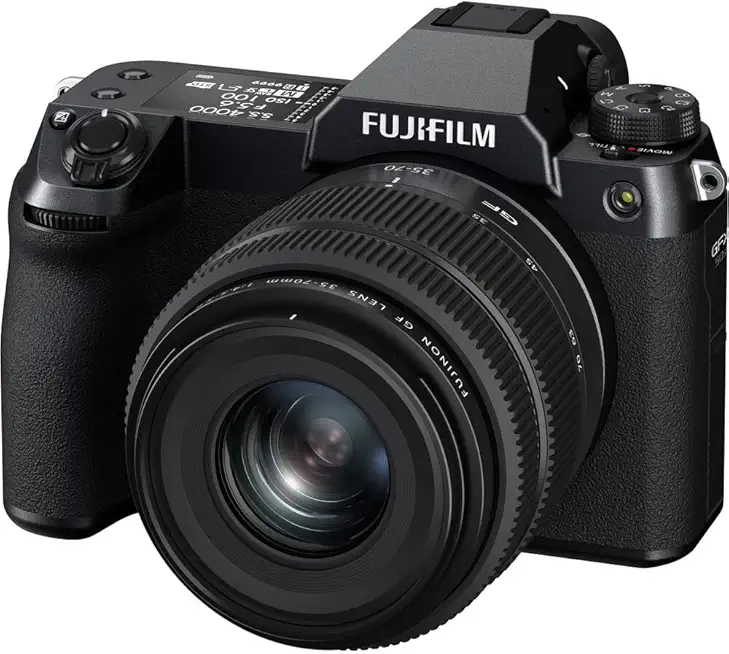
Fujifilm GFX 50S II Camera
Compact medium-format mirrorless delivers 51-megapixel sensor with class-leading dynamic range, built-in image stabilization, and intuitive controls—ideal for studio, portrait, and landscape photographers seeking rich tonality and exceptional detail.
Check PriceThe Numbers You Need
| Spec | Value |
|---|---|
| Sensor | 51.4 MP medium format |
| In-body image stabilization (IBIS) | Yes |
| Lens mount | Fujifilm G-mount |
| ISO range | 100–12,800 (expandable to 50–102,400) |
| Shutter speed | 1/4000 to 60 seconds |
| Continuous shooting speed | Up to 3 fps |
| Autofocus | Hybrid AF with phase and contrast detection |
| Viewfinder | 3.69M-dot OLED EVF |
| LCD screen | 3.2-inch tilting touchscreen, 2.36M dots |
| Video resolution | 4K UHD up to 30 fps |
| Weather sealing | Dust and moisture resistant |
| Storage media | Dual SD card slots (UHS-II compatible) |
| Body weight | Approx. 900 g (with battery and memory card) |
| Battery life | Approx. 450 shots per charge (CIPA) |
| Connectivity | USB-C, Wi-Fi, Bluetooth |
How It’s Built
In my testing the Fujifilm GFX 50S II Camera feels solid and well-balanced with G-mount lenses. It’s heavier than a mirrorless I’d grab for travel, but the weight sits nicely when paired with a typical prime. That balance makes handheld shooting less tiring than you’d expect.
I really liked the weather sealing. After shooting in drizzle and dusty trails I never worried about the body or glass. For beginners that means you can take it on location without overthinking every shot.
The EVF is clean and bright in low light, which made manual focusing feel natural in my testing. The tilting touchscreen is great at waist level and on tripods. One thing that could be better is the lack of a fully articulating screen for awkward angles and self-shooting.
Dual card slots gave me peace of mind during client work and made handing off files easier. USB-C tethering and wireless transfers worked solidly in the studio, though I recommend carrying spare batteries or a USB power bank for long location days. Small power habits go a long way.
The grip is comfortable even with heavier lenses on front, and I liked how customizable the buttons felt for studio pacing. For beginners that means you can set up a workflow that keeps you shooting instead of fumbling through menus.
In Your Hands
The GFX 50S II feels deliberate rather than frenetic—continuous shooting is modest, great for catching subtle expressions but not aimed at high‑speed sports. The shutter’s top end means you’ll sometimes need an ND filter when shooting wide‑open in bright sun.
IBIS is a genuine game‑changer for medium‑format handheld work, letting you use slower shutter speeds and avoid a tripod more often without sacrificing sharpness. That freedom nudges lens choices toward high‑resolution primes and trims setup time on location.
For hybrid shooters the camera delivers clean, high‑resolution clips for behind‑the‑scenes video and interviews, but handling and menus remind you it’s built for stills. You get basic, practical retime and focus tools, though cine‑focused features are limited.
Dual card slots and sensible buffer behavior make studio runs and client delivery smoother, while the battery will get you through a full day with smart power management and a spare. Tethering and wireless transfers are reliable in both studio and location use.
In real shoots it shines on portraits, product, landscape and architecture where resolution and tonal range pay dividends, and IBIS narrows the gap between handheld and tripod shots. Low‑light interiors become far more manageable with careful exposure choices, and the EVF plus tilting screen keep composition flexible in the field.
The Good and Bad
- 51.4 MP medium format CMOS image quality
- In-body image stabilization (IBIS) for handheld medium-format shooting
- Weather sealing for dust and moisture resistance
- Dual UHS-II SD slots for redundancy and speed
- Up to 3 fps burst rate limits action coverage
- Approx. 900 g body weight adds heft for travel and long handheld sessions
Ideal Buyer
The Fujifilm GFX 50S II is for photographers who prioritize image quality and tonality above all else. Its 51.4‑MP medium‑format sensor and natural color rendering make it a go‑to for portraits, studio work, product shoots and landscapes. The camera rewards deliberate, detail-driven shooting.
IBIS changes the game for medium format by making handheld portraits and interior work far more practical. Weather sealing and a reassuring build mean you can rely on it for location jobs in mixed conditions. Dual UHS‑II slots and solid battery life keep client deliverables secure and your workflow uninterrupted.
In the studio the GFX 50S II pairs well with G‑mount primes and tethered workflows, while the high‑resolution EVF and tilting touchscreen simplify precise composition. Lens balance and ergonomics feel right for longer sessions, so you spend more time making images and less time battling the rig.
It’s less ideal for sports, wildlife, or anyone who needs aggressive burst rates and rapid tracking. Likewise, if ultra‑compact or ultra‑light travel is your priority, smaller systems are smarter choices. For a photographer seeking medium‑format detail with real handheld usability, this camera strikes a rare balance.
Better Alternatives?
We’ve gone deep into what the Fujifilm GFX 50S II delivers and why it’s such a strong medium-format choice for portraits, landscape, and studio work. If you like the balance of high resolution, IBIS, and weather sealing, that camera is hard to beat—but it’s not the only way to get that medium-format look.
Below are a few real-world alternatives I’ve shot with. I’ll tell you what each one does better and worse than the 50S II, and the kind of photographer who will get the most from it. These notes come from handling them on shoots, not just reading spec sheets.
Alternative 1:
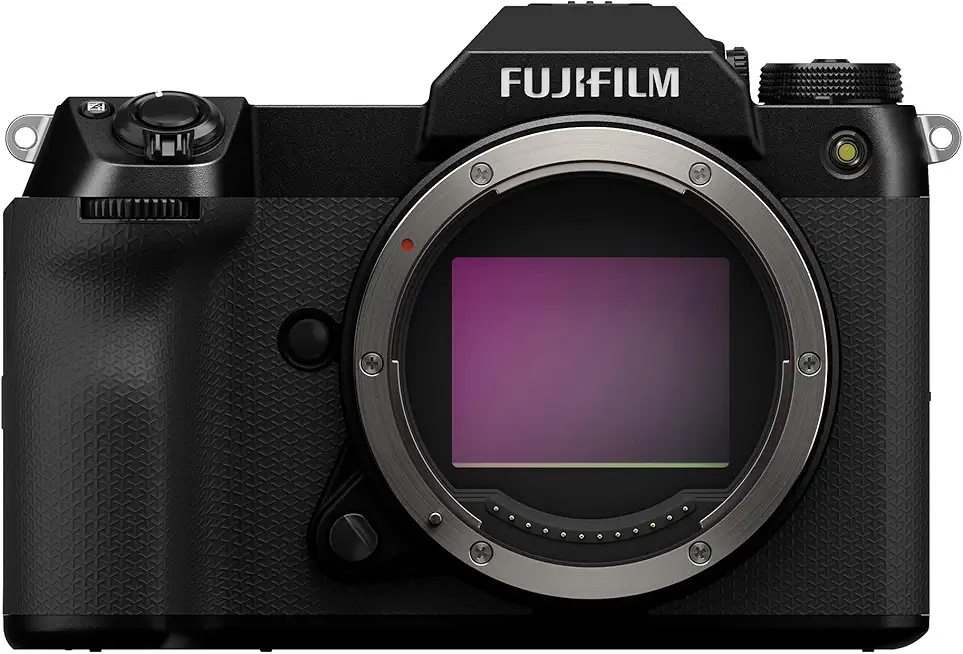
Fujifilm GFX 100S II Camera
Ultra-high-resolution medium-format body with 102MP sensor, advanced autofocus and 5-axis stabilization combine for breathtaking detail and reliable performance, enabling large prints and meticulous commercial, fine-art, and landscape work.
Check PriceI’ve used the GFX 100S II on landscape and studio jobs where every tiny detail mattered. Compared to the 50S II, it gives you a lot more resolution and finer detail. That extra detail makes a real difference when you want huge prints or need to crop in tight and still retain skin or texture detail. Autofocus also feels a touch snappier in tricky light, which helped me pin focus on small eyes or fine edges more often.
The trade-offs are practical. The 100MP files are larger and slower to move through my computer and card workflow, so I ended up needing faster cards and more storage. Lenses show more of their flaws at 100MP, so you need sharper glass and better technique to get the best results. In the field it can feel a little more demanding—tripod use and careful support mattered more than they did on the 50S II.
Who should pick it? If you shoot commercial, large fine-art prints, or landscapes where resolution is king, the 100S II is worth the extra effort. If you value ease of use, faster editing, and lighter storage needs, stick with the 50S II instead.
Alternative 2:

Fujifilm GFX 50R Camera
Rangefinder-styled medium-format camera pairs 51-megapixel image quality with a slim, quiet body and tactile controls—perfect for street, travel, and documentary photographers who prioritize discreet handling and tonal depth.
Check PriceI’ve taken the GFX 50R on travel and quiet portrait shoots where being low-key mattered. Compared with the 50S II, its slim, rangefinder-style body is much easier to carry and draws less attention on the street. The shooting experience feels more intimate and deliberate; the quieter handling helped with candid portraits and working in museums or quiet locations.
Where it falls short vs. the 50S II is in stabilization and some modern conveniences. The 50R lacks the newer in-body stabilization, so handheld low-light work becomes harder and I found myself reaching for a tripod sooner. Autofocus and some handling features also feel a bit older, so for fast-paced studio work the 50S II is more comfortable and reliable.
If your priority is portability, discretion, and medium-format image quality without needing IBIS, the 50R is a great pick. It’s especially good for travel, street, and documentary shooters who want that medium-format tone in a slimmer, quieter package.
Alternative 3:
Fujifilm GFX 50R Camera
Slim, wallet-friendly medium-format solution emphasizes portability and image quality, delivering abundant dynamic range, rich color rendition, and a peaceful shutter for intimate portraits and thoughtful environmental captures.
Check PriceUsing the 50R again but from a value and portrait angle, I liked how calm and simple it felt compared to the 50S II. The shutter and overall operation encourage a slower pace—great for quiet portraits, landscapes where you want to think about composition, and shoots where you don’t need the latest bells and whistles. The color and tonal quality are still excellent, so your final files look rich straight out of the camera.
The downside is the same practical one: no IBIS and fewer modern features, so low-light handheld shooting is more limited than on the 50S II. You also trade off some ergonomic comfort when using big, heavy lenses; the slim body doesn’t balance large glass as well, so longer sessions can feel tiring.
Pick this version of the 50R if you want medium-format looks on a tighter budget and you favor portability and a quiet, deliberate shooting style. It’s a smart choice for portrait photographers who work mainly with controlled light, or travelers who want medium-format image quality without carrying a heavier 50S II kit.
What People Ask Most
Is the Fujifilm GFX 50S II worth the price?
Yes—if you want true medium-format image quality and wide dynamic range in a relatively compact, modern body it’s a strong value; skip it if you need top-tier AF speed or advanced video features.
How does the Fujifilm GFX 50S II compare to the GFX 50R and GFX 100S?
The 50S II improves on the 50R with IBIS, better ergonomics and updated AF while keeping the same 51MP sensor, whereas the 100S offers higher resolution, faster performance and stronger AF for action and low light.
What are the main differences between the GFX 50S II and the original GFX 50S?
The 50S II adds in-body image stabilization, a newer processor, improved AF and a lighter, more refined body design compared with the original 50S.
How is the image quality and dynamic range of the GFX 50S II?
Outstanding—the 51MP medium-format sensor delivers exceptional detail, rich color and very wide dynamic range ideal for landscapes, portraits and high-end commercial work.
Is autofocus on the GFX 50S II reliable for portraits and action?
Autofocus is very reliable for portraits and moderate subject movement, but it isn’t as fast or consistent for fast-action sports as high-end full-frame systems or the GFX100S.
What lenses are recommended for the GFX 50S II?
Start with the GF 63mm f/2.8 for portraits, the GF 32-64mm f/4 as a versatile walkaround, and the GF 110mm f/2 for tight portraits; the GF 45mm and wider or longer GF zooms cover landscape and specialty needs.
Conclusion
The Fujifilm GFX 50S II is, in my view, the most sensible medium-format tool for photographers who want a genuine medium-format look without surrendering modern handling. It combines high-resolution stills performance with in-body stabilization, a confident weather-resistant build, and a clear EVF and tilting touch LCD that make compositing and focus checks pleasant. That blend of traits makes it unusually usable for handheld portrait, studio, and landscape work.
It isn’t without tradeoffs. Modest burst capability and a limited top shutter speed keep it out of the running for fast action and sports, and the camera’s substantial presence rewards deliberate, measured shooting rather than constant pace. Video is perfectly adequate for behind-the-scenes and interview clips, but it remains firmly a stills-first instrument.
For portrait, product, studio, and landscape shooters who prioritize tonal fidelity, image quality, and dependable location performance, the 50S II strikes a practical balance. Dual card slots and dependable battery endurance make it reliable on client jobs, and the stabilization meaningfully widens handheld possibilities so you don’t always need a tripod.
If you require ultra-high pixel counts, a slimmer rangefinder form, or a specific brand color signature, look to the alternatives. For most photographers who value pro-level medium-format results with sensible ergonomics and real-world usability, the Fujifilm GFX 50S II is a convincing, pragmatic choice I’d recommend.
Fujifilm GFX 50S II Camera
Compact medium-format mirrorless delivers 51-megapixel sensor with class-leading dynamic range, built-in image stabilization, and intuitive controls—ideal for studio, portrait, and landscape photographers seeking rich tonality and exceptional detail.
Check Price

0 Comments