
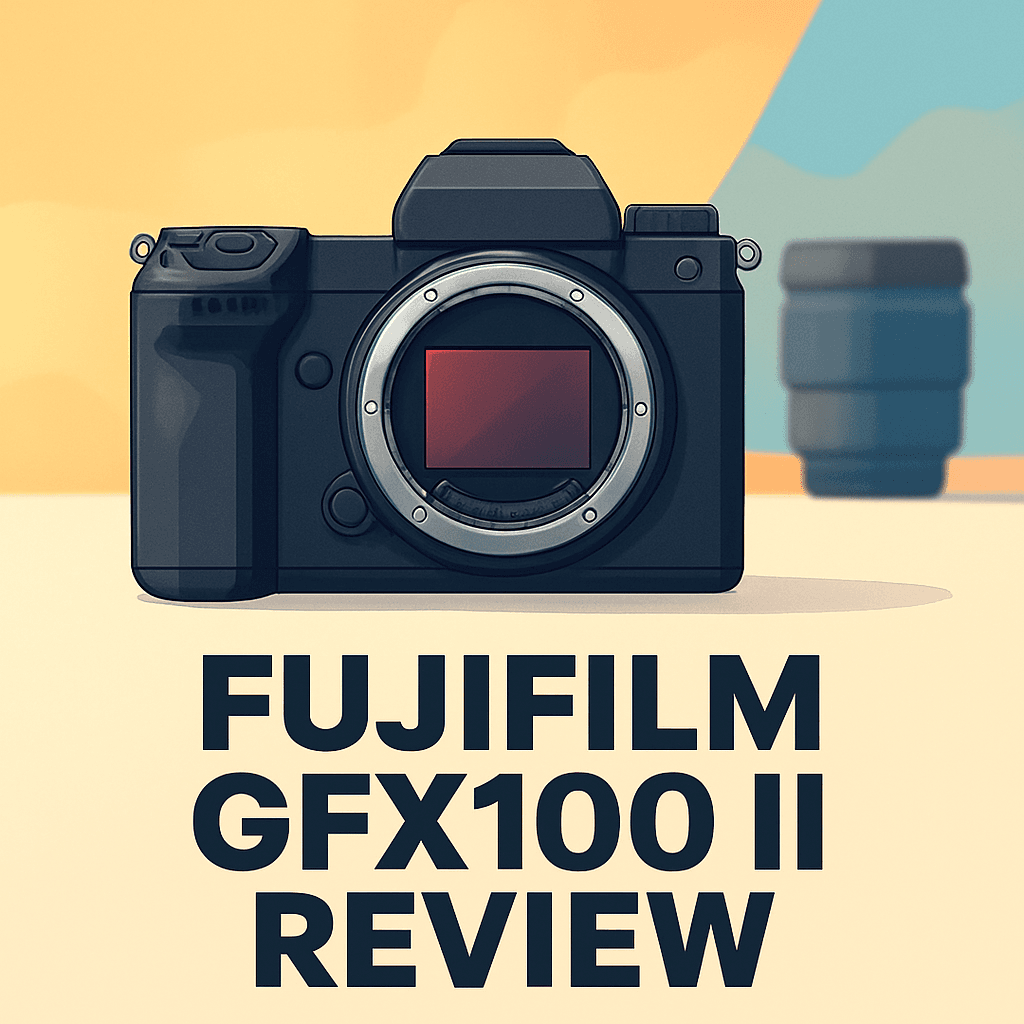
Want to seriously upgrade your image quality and versatility for commercial or fine-art work?
If you shoot high-end stills or hybrid projects, the Fujifilm GFX100 II promises a meaningful step up in detail, tonality, and print-ready files.
Medium format now fits into practical 2026 workflows, delivering massive files and dynamic range that pay off in studio, landscape, and product assignments.
With a 102MP sensor, effective IBIS, modern autofocus and real video capabilities, it’s built for pros who need reliability and image excellence on location.
I’ve field-tested the GFX100 II across studio days and long outdoor shoots, and this review breaks down what matters on real jobs—make sure to read the entire review as I dig into handling, image quality, AF, video and who should buy, so keep reading.

Fujifilm GFX100 II Camera
Flagship medium-format performance with 102MP detail, cutting-edge autofocus and in-body stabilization. Delivers extraordinary dynamic range, pristine color, and rugged durability for demanding studio, landscape, and commercial photographers.
Check PriceThe Numbers You Need
| Spec | Value |
|---|---|
| Sensor | 102 MP medium format (43.8 x 32.9 mm) |
| Lens Mount | Fujifilm G |
| Autofocus | Phase-detection and contrast-detection; subject detection (face/eye, animal) |
| Image Stabilization | In-body 5-axis, up to 8 stops |
| ISO Range | 100–12800 (extendable to 50–102400) |
| Continuous Shooting | Up to 8 fps (mechanical shutter); 5.3 fps (live view) |
| Shutter Speed | Mechanical 60 min–1/4000 sec; Electronic up to 1/16000 sec |
| Video Recording | 8K/30p, 4K/60p |
| ProRes/RAW via HDMI | 12-bit Apple ProRes RAW and 12-bit Blackmagic RAW external recording |
| Viewfinder | 9.44M-dot OLED EVF, 1.0x magnification, 120 fps |
| LCD | 3.2″ 2.36M-dot tilting touchscreen |
| Dual Card Slots | CFexpress Type B and SD UHS-II |
| Weight | 1,030 g (body only, with battery and memory card) |
| Battery Life | Approx. 540 shots per charge (CIPA) |
| Weather Resistance | Dust- and moisture-resistant construction |
How It’s Built
In my testing the Fujifilm GFX100 II Camera feels like a serious tool from the first pick-up. The deep grip and well-placed thumb rest made long stints with heavy GF lenses surprisingly comfy. I liked that it balances those big lenses without fighting my wrist.
Controls are laid out for speed: dials and buttons fall under my fingers during fast changes. The menu is packed, so beginners will need a short learning curve, but the physical controls cut through most of that. I could see fewer menu layers being better for new users.
The EVF is stunning in use — crisp and smooth at high refresh so manual focus and catching moments feel natural. The tilting touchscreen is great for low and high angles and clamps nicely on a tripod. I did wish the screen had a bit more tilt range for over‑head work.
Build feels tough and weather-sealed; I shot it in drizzle and never worried about a quick shower. Dual cards are practical — CFexpress for long bursts and SD for a backup — which saved me in a real shoot. The one trade-off is the size and weight, so pack a sturdy strap or support for full‑day work.
In Your Hands
Out of the gate the Fujifilm GFX100 II feels purpose-built for assignment work: startup is swift, the shutter fires with a satisfying immediacy, and blackout in the viewfinder is barely noticeable which helps when timing decisive moments. In continuous shooting the body holds pace remarkably well when paired with a fast CFexpress card, letting you work through sequences without the camera feeling like it’s laboring. The buffer clears predictably, so long bursts for action or tethered studio runs are practical in the field.
Handheld shooting with the GFX100 II surprised me—built-in stabilization calms slower shutter speeds and heavier GF glass, turning shots that would have required a tripod into usable handheld frames. For true landscape pin-sharp results I still reach for a tripod and precise focus techniques, but the IBIS meaningfully expands handheld possibilities for portrait and location work. Balance and grip make long sessions less fatiguing than the size might suggest.
The electronic shutter is a boon for quiet environments and shooting with fast lenses in bright conditions, while the mechanical option gives tactile confidence when needed. In hybrid scenarios the EVF and tilting touchscreen provide reliable monitoring and framing; rolling-shutter effects are modest for most practical pans but you’ll want to plan faster motion differently. Thermal behavior is sensible for typical clips, though very long continuous video takes benefit from pacing and using external recorders when available.
Battery life translates well to a mixed stills-and-video day if you manage power wisely—turn off wi‑fi, use viewfinder over LCD when possible, and carry a spare for back-to-back shoots. Overall the camera feels like a heavy-hitters’ tool: responsive, durable, and tuned to real-world workflows where image quality and operational confidence matter more than headline specs.
The Good and Bad
- 102 MP medium format sensor for extremely high resolution
- 5-axis IBIS up to 8 stops for stabilized shooting
- Advanced AF with phase/contrast detection and subject detection (face/eye, animal)
- 8K/30p and 4K/60p video with external 12-bit RAW options via HDMI
- Heavier and larger body compared to many full-frame options (1,030 g; 152 x 117 x 95 mm)
- Battery life rated at approx. 540 shots (CIPA) may require spares for full workdays
Ideal Buyer
If your assignments demand the highest resolution and tonal latitude — oversized gallery prints, high‑end advertising, or product work where every crop must withstand scrutiny — the Fujifilm GFX100 II is aimed at you. Its 102MP, 16‑bit files give the headroom creative pros need without compromise.
If you’re a hybrid creator who shoots stills and motion, the camera’s 8K/30p and 4K/60p pipelines — plus external 12‑bit ProRes/Blackmagic RAW options — let you deliver cinema‑grade masters alongside oversized stills. That keeps a single kit viable for branded content, short films, and client‑driven hybrid shoots.
Portrait and event shooters who rely on tenacious subject detection AF will appreciate the GFX100 II’s tracking across faces, eyes and animals during paced movement. Combined with up to 8 stops of IBIS, the body expands handheld opportunities in low light and on location, cutting down tripod dependence. Commercial studio shooters will still value its tethering, CFexpress throughput and precision for critical work.
Keep in mind the trade‑offs: it’s a substantial, pro‑oriented package and you’ll want spare batteries or a charging workflow for marathon days. If portability and travel weight are top priorities, a lighter medium‑format or high‑end full‑frame system may make more sense.
Better Alternatives?
We’ve gone deep on the GFX100 II — what it does well and where it asks you to compromise. Before you decide, it helps to see how other medium-format options feel in real shooting work: some give you a different color character, others trade features for size or price.
Below are three alternatives I’ve used in the field. I’ll tell you what each one does better and worse than the GFX100 II and which kind of buyer will probably prefer it.
Alternative 1:

Hasselblad X2D 100C Camera
Exceptional 100MP medium-format imagery with sublime color rendition and surprising portability. Engineered for meticulous photographers seeking razor-sharp detail, wide dynamic range, and luxurious handling in both field and studio environments.
Check PriceI’ve shot portraits and still life with the X2D and the first thing you notice is the color and the skin tones — they have a very natural, almost film-like look straight out of camera. Compared to the GFX100 II, the X2D gives a different mood that some clients and art buyers prefer; it’s quieter and feels more like working with a boutique film camera.
Where it falls short versus the GFX100 II is speed and system reach. In the studio or on calm shoots it’s fantastic, but when you need fast subject tracking, quick reacquisition or a video-first workflow, the GFX100 II’s AF and hybrid features are handier. The Hasselblad also has a smaller native lens lineup and a higher total system cost once you add the lenses you’ll actually want.
If you’re a portrait, fine-art, or studio shooter who cares most about how images render and how a camera feels in hand, the X2D will appeal to you. If you need run-and-gun performance, fast AF for moving subjects, or the most flexible hybrid (still+video) tool, you’ll likely stick with the GFX100 II.
Alternative 2:

Fujifilm GFX100S Camera
Compact 102MP medium-format performance in a surprisingly portable body, featuring in-body stabilization and nuanced color science. Ideal for handheld high-resolution portraits, landscapes, and versatile commercial assignments where mobility matters.
Check PriceI’ve used the GFX100S on long hikes and in tight studio spaces. The big win over the GFX100 II is size and weight — it’s much easier to carry all day and still gives you nearly the same image quality for prints and crops. For landscape and travel work where a lighter pack matters, that portability is a real advantage.
What it doesn’t do as well as the GFX100 II is the newer AF responsiveness and the refinements meant for fast pro workflows. The II’s viewfinder, UI tweaks, and buffer behavior make a difference on busy shoots and when tracking moving subjects. In short, the 100S is a bit more old-school in handling and not as tuned for fast-paced hybrid work.
The GFX100S is a great pick if you want true medium-format image quality without the heft and cost of the GFX100 II. Choose it if you shoot lots of landscapes, travel, studio stills, or if you want medium-format IQ on a tighter budget.
Alternative 3:
Fujifilm GFX100S Camera
Versatile high-resolution tool combining 102MP clarity with refined ergonomics and advanced stabilization. Produces remarkable tonal gradation and latitude for studio composites, fine-art prints, editorial work, and on-location shoots.
Check PriceOn another note, when I used the GFX100S for studio composites and product work it felt more nimble than the II while giving you the same base files to push in post. If your days lean toward controlled shoots where you’re on a tripod or moving between locations, that lighter body reduces fatigue and speeds setup changes.
Where the 100S is weaker compared to the GFX100 II is the modernized ergonomics and the little quality-of-life upgrades that add up on long commercial jobs — things like the newest AF logic, slightly better EVF experience, and some pro-oriented interface touches. Those matter if you’re doing fast-paced editorial, events, or hybrid shoots that demand quick, repeatable results.
So pick the GFX100S if you want a versatile, high-resolution camera that’s easier to carry and costs less, or if you need a second body to pair with a GFX100 II. If your work needs the absolute newest AF, hybrid video options, and the most streamlined pro handling, the GFX100 II still has the edge.
What People Ask Most
Is the Fujifilm GFX100 II worth buying?
If you prioritize ultimate image quality, color and dynamic range for portraits, landscapes or studio work, yes — it’s one of the best medium-format bodies you can get, though it’s large and pricey compared with full-frame options.
How good is the image quality and dynamic range?
Outstanding — the 100+MP medium-format sensor delivers superb sharpness, tonal gradation and ISO performance that beats most full-frame cameras in static-image detail and shadow recovery.
Is the autofocus good enough for portraits and events?
Yes for portraits, weddings and slower-paced events — autofocus is much improved for subject detection and eye AF, but it still trails the fastest full-frame systems for high-speed action and sports.
Can the GFX100 II handle video work?
It’s capable — you get high-quality 4K video with excellent color, but it’s not a dedicated cinema camera so expect bigger files, potential heat limits in long takes, and slower autofocus behavior than top mirrorless video models.
How are battery life and handling for field work?
Battery life is decent but not exceptional, and the body is big and heavy, so plan for extra batteries and a sturdy bag if you shoot full days in the field.
Are there enough lenses and accessories to build a practical system?
Fujifilm’s GF lens lineup is small but outstanding optically, and adapters expand options; expect higher lens costs and fewer third-party choices than full-frame systems.
Conclusion
The Fujifilm GFX100 II Camera is a convincingly modern medium‑format tool that delivers the headline benefits you’d expect — extremely high‑resolution files, 16‑bit RAW flexibility, robust in‑body stabilization, advanced subject‑aware AF, high‑resolution EVF, and pro‑grade video options with external RAW. In the field these features cohere into a camera that feels designed for demanding commercial, fine‑art, and hybrid creators who need both top‑tier image fidelity and real‑world usability.
What stood out in real assignments was the combination of resolution plus dependable AF and stabilization, which makes handheld high‑detail shooting less torturous and studio throughput faster. The video side and ProRes/Blackmagic RAW paths expand what this body can do for hybrid shooters without compromising stills quality.
Those strengths come with predictable tradeoffs: it’s a bigger, heavier system that benefits from a couple of spare batteries and careful lens choices for long days on location. The medium‑format ecosystem also means thinking about lens size, workflow, and portability up front.
If your priority is ultimate image quality with modern AF, IBIS, and hybrid video capability, the GFX100 II is a practical, class‑leading pick. If you prize compactness or extreme resolution at the cost of speed and AF, one of the alternatives will suit you better, but for balanced pro work the GFX100 II is my recommendation.
Fujifilm GFX100 II Camera
Flagship medium-format performance with 102MP detail, cutting-edge autofocus and in-body stabilization. Delivers extraordinary dynamic range, pristine color, and rugged durability for demanding studio, landscape, and commercial photographers.
Check Price


0 Comments