
Want a single lens that makes landscapes, interiors and travel video look noticeably wider and more professional?
The Fujifilm XF 10–24mm F4 R OIS WR aims squarely at X‑system shooters who need a stabilized ultra‑wide for architecture, interiors, landscapes and run‑and‑gun video, and I took it into rain, tight rooms and long hikes during testing.
In this review I’ll cover handling and build, AF and real‑world performance, image quality across the range, how the OIS behaves, plus strengths, limitations and sensible alternatives you might consider.
Tests include handheld and tripod work, stills and video, close‑focus checks, filter use and weather exposure, so you’ll get practical takeaways—Make sure to read the entire review as I break down where this lens shines and where it doesn’t, keep reading.

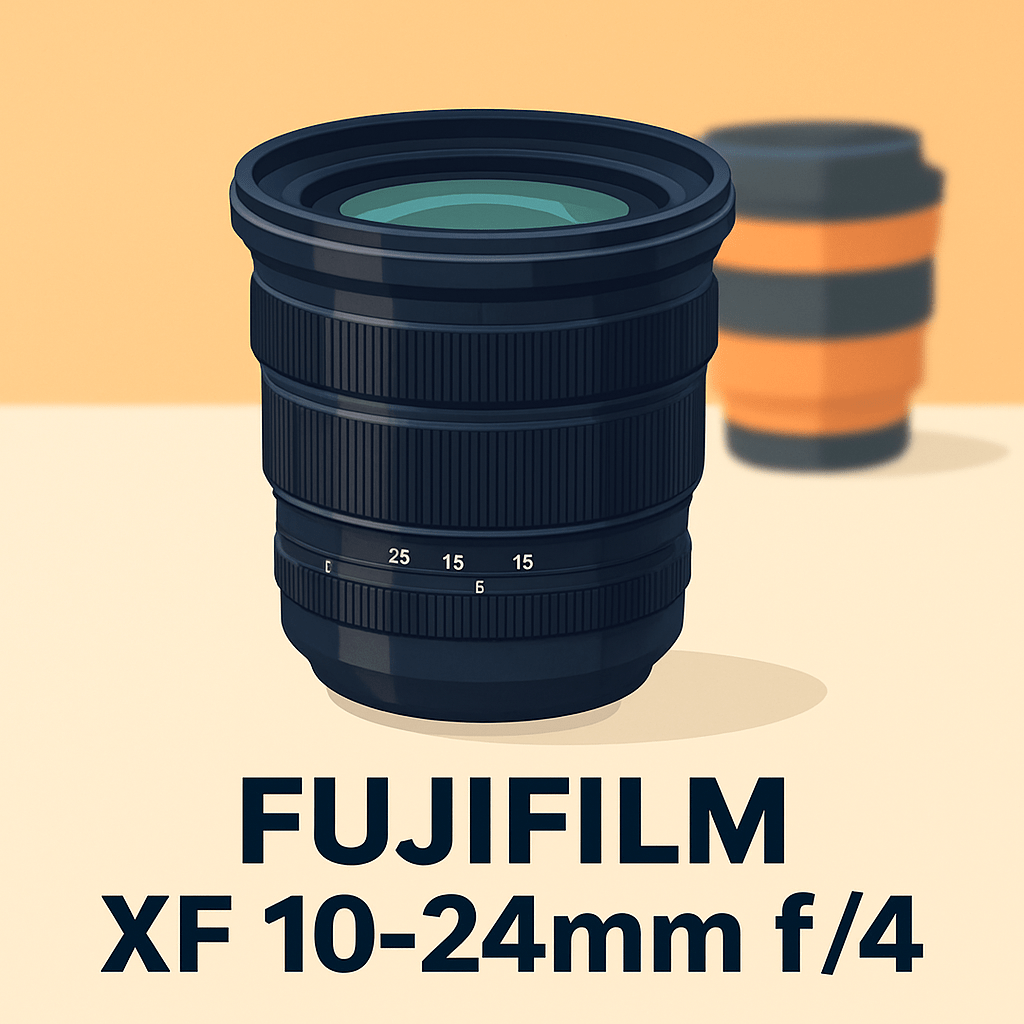
Fujifilm XF 10-24mm F4 R OIS WR
Versatile ultra-wide zoom delivering expansive perspectives and edge-to-edge sharpness, constant f/4 performance, built-in stabilization and rugged weather sealing—ideal for landscapes, architecture and immersive travel imagery in challenging conditions.
Check PriceThe Numbers You Need
| Spec | Value |
|---|---|
| Focal length | 10–24 mm |
| Full-frame equivalent | 15–36 mm |
| Maximum aperture | f/4 (constant) |
| Lens mount | Fujifilm X |
| Image stabilization | Optical Image Stabilization (OIS) |
| Aperture blades | 9 (rounded) |
| Weather resistance | Dust- and moisture-resistant |
| Filter size | 72 mm |
| Minimum focus distance | 24 cm |
| Maximum magnification | 0.16x |
| Weight | 385 g |
| Length | 87 mm |
| Lens construction | 14 elements in 10 groups |
| Special elements | 3 aspherical, 1 extra-low dispersion |
| Autofocus | Super Silent linear motor |
How It’s Built
In my testing the Fujifilm XF 10-24mm F4 R OIS WR feels surprisingly compact for a true ultra‑wide zoom. Mounted on both small and larger X bodies it stayed balanced and never felt front‑heavy, so it’s easy to carry all day or sling on a strap and walk for hours. That comfort makes it a great choice if you’re just getting into landscape or travel shooting.
The zoom and focus rings are smooth with just the right resistance, so zooming feels deliberate and manual focus is predictable when you need it. Aperture changes are handled electronically and felt precise during my shoots, though the aperture ring’s detents are a bit light and can be nudged by accident. For beginners that means you’ll get reliable control, but keep a finger on the ring when moving around.
Filter handling is one of the design wins—using a polarizer or ND filter is straightforward thanks to the common thread size, which made my landscape workflow much easier. The weather‑resistant build gave me confidence shooting in drizzle and dusty trails without worrying, so you can keep shooting when conditions aren’t perfect.
Overall the finish and fit feel solid and thoughtfully laid out, and I really liked how pocketable it is for an ultra‑wide zoom. If there’s a downside it’s the minor aperture ring sensitivity and a wish for it to be a touch lighter for long hikes. Still, for beginners this lens is friendly, dependable, and easy to live with in the field.
In Your Hands
The Fujifilm XF 10‑24mm F4 R OIS WR covers the sweet spot from true ultra‑wide to a useful wide, making framing for landscapes, interiors and architecture effortless without constantly swapping glass. Its constant f/4 delivers predictable exposure and consistent depth rendering across the zoom, which is a real boon for handheld shooting and run‑and‑gun video work.
Autofocus driven by Fujifilm’s Super Silent linear motor feels swift, accurate and extremely quiet — ideal for hybrid stills and video use. In challenging low‑contrast or backlit scenes it can be a touch conservative but normally locks cleanly, and the close‑focus capability is genuinely practical for near‑subject wide shots, though it’s not a substitute for a macro lens and shows a hint of field curvature at the closest distances.
Ergonomically it sits nicely on smaller X bodies and remains comfortable on larger ones, with well‑damped zoom and focus rings that are easy to operate even with gloves. The hood stays put and filter handling is straightforward, and I encountered minimal zoom creep during a mix of shoulder‑level and downward shooting.
Built‑in stabilization changes the day‑to‑day usability; handheld low‑light frames and walking video are noticeably steadier, and the lens behaves smoothly on gimbals with little micro‑jitters. For travel, interiors and architectural work it proved to be a compact, reliable workhorse that’s easy to carry all day and instinctive to use in the field.
The Good and Bad
- Ultra-wide to wide coverage: 10–24mm (15–36mm equivalent)
- Constant f/4 aperture for consistent exposure while zooming
- Built-in OIS for handheld stills and video
- Weather-resistant build (dust and moisture resistant)
- f/4 maximum aperture is not as bright as f/2.8 options for low-light or shallow depth-of-field
- Zoom range tops out at 24mm; no telephoto reach
Ideal Buyer
Think of the Fujifilm XF 10-24mm F4 R OIS WR as the go-to ultra-wide for photographers who paint with space. Landscapers, architects, and interior or real‑estate shooters will value its stabilized reach, predictable constant f/4 exposure, and friendliness to 72mm filters. Its compact weight and weather‑resistant build make it easy to carry on long hikes, city walks, or wet shoots without worrying about dust or drizzle.
Travel shooters who want dramatic wide vistas but also light luggage will find it hard to beat for practicality. Video creators benefit from the quiet linear AF motor and OIS for steady handheld clips and gimbal pans, and the zoom covers useful focal lengths for interiors to landscapes. Close‑focus ability and sensible handling on smaller X bodies also make it a solid companion for run‑and‑gun documentary and real‑estate walkthroughs.
This is not the lens for photographers who demand faster f/2.8 glass for low‑light, astrophotography, or creamy subject separation. Macro fans and those needing tele reach will miss higher magnification and longer focal lengths, since the 10–24 is a specialist wide‑angle tool. For many shooters it’s the smart, weatherproof wide to pair with a faster standard or tele zoom, not a one‑lens‑does‑all solution.
Better Alternatives?
We’ve gone through what the Fujifilm XF 10-24mm f/4 R OIS WR does well — a compact, stabilized ultra‑wide that’s great for landscapes, interiors and run‑and‑gun video. If that sounds like your lens, you’re set. But depending on how you shoot, there are clear other choices worth thinking about.
Below are three lenses I’ve used in the field that cover the main tradeoffs: a more extreme wide‑angle with a faster aperture, and a couple of options that trade wide reach for more everyday versatility. I’ll say what each one gives you that the 10‑24 doesn’t, and where they fall short in real shooting.
Alternative 1:

Fujifilm XF 8-16mm F2.8 R LM WR
Record dramatic, sweeping vistas with a super-ultrawide optic featuring a bright f/2.8 aperture, lightning-fast autofocus and durable weather sealing for low-light, creative perspective control and pro-level landscape or interior work.
Check PriceHaving shot with the 8–16 on trips and in tight interiors, the first thing you notice is how much more space it gives you compared with the 10–24. Rooms feel bigger, foregrounds pop more, and you can get dramatic, immersive landscapes that the 10–24 simply can’t frame the same way. If your work is architecture, real estate or very wide landscapes, the 8–16 is a clear step up for that ultra‑wide look.
It also has a faster f/2.8 aperture, which helps in low light and gives a bit more separation for night or astro work. Where it’s worse is practical: it’s bigger, heavier and more expensive, and it doesn’t have optical stabilization. On handheld low‑light shots I relied on a body with IBIS or a tripod more than I did with the 10–24’s built‑in OIS.
This lens is for the specialist buyer: landscape, architecture or interior shooters who need the most extreme wide angle and extra speed. If you value a compact, stabilized all‑around wide more than the absolute widest framing, you’ll stick with the 10–24 instead.
Alternative 2:

Fujifilm XF 16-80mm F4 R OIS WR
All-in-one travel zoom offering a practical 5x range with constant f/4 sharpness, effective image stabilization and weather resistance—perfect for portraits, street, and landscapes when you need flexibility and reliable optics.
Check PriceThe 16–80 is the opposite of the 10–24 in purpose: it’s a true do‑it‑all travel zoom. I used it on trips where I wanted one lens for street, portraits, and some landscapes — the extra reach at the long end is handy and the OIS helps keep handheld shots steady. For travel or a “walkaround” setup, it beats the 10–24 because you don’t need to swap lenses as often.
Where it’s worse is at the wide end. You lose the dramatic ultra‑wide look and the ability to fit tight interiors without stepping back. In tight rooms and dramatic landscape foregrounds the 10–24 still wins for composition and edge‑to‑edge wide‑angle performance. Optically, the 16–80 is very usable for everyday work but won’t match the 10–24’s corners when you really need ultra‑wide quality.
Buy the 16–80 if you’re a traveler, documentary shooter, or anyone who wants one lens that covers most situations. If your main work is ultra‑wide landscapes or interiors, keep the 10–24 or add a dedicated wide instead of relying on the 16–80 alone.
Alternative 3:
Fujifilm XF 16-80mm F4 R OIS WR
Compact yet capable standard zoom combines steady stabilization, consistent f/4 performance and high-resolution rendering across the frame; balances lightweight handling with professional-grade weather sealing for day-to-day photography and video.
Check PriceUsed for video and run‑and‑gun shoots, the 16–80 feels balanced and flexible. The zoom is smooth and the OIS is very helpful for walking shots and handheld video where you don’t have a gimbal. In stills, it gives reliable sharpness across the range for portraits and landscapes — it’s the kind of lens I keep on when I need to be ready for anything.
Its downside versus the 10–24 is simple: it won’t give you those very wide perspectives and its close‑up wide‑angle character is missing. You’ll find yourself backpedaling to get the shot or carrying a second wide lens when interiors or dramatic foregrounds matter. Also, while it’s a great all‑rounder, if you need the absolute best corner sharpness at ultra‑wide focal lengths the 10–24 still has the edge.
This version of the 16–80 is for everyday shooters and videographers who want one reliable lens that’s light, weather‑resistant and stabilized. If you prefer to travel light and cover many scenes with one lens, pick the 16–80; if your work lives at the ultra‑wide end, the 10–24 or the 8–16 will serve you better.
What People Ask Most
Is the Fujifilm XF 10-24mm f/4 worth buying?
Yes—it’s a versatile, well-built ultra-wide that delivers sharp images and good value for Fujifilm APS-C shooters who don’t need a faster f/2.8 lens.
How sharp is the Fujifilm XF 10-24mm f/4 across the frame?
Very sharp in the center throughout the zoom range; edges and corners improve noticeably when stopped down to f/5.6–f/8.
Does the Fujifilm XF 10-24mm f/4 have image stabilization?
No, the lens has no optical image stabilization, so rely on in-body stabilization (if your camera has it) or use a tripod for long exposures.
Is the Fujifilm XF 10-24mm f/4 weather-sealed?
Yes, it features weather-resistant construction and seals for shooting in damp or dusty conditions, though it’s not fully waterproof.
What is the 35mm equivalent focal length of the Fujifilm XF 10-24mm f/4?
About 15–36mm on a full-frame camera (Fujifilm’s APS-C 1.5x crop factor).
Is the Fujifilm XF 10-24mm f/4 good for landscape and architecture photography?
Yes—its wide field of view, controlled distortion and strong sharpness when stopped down make it excellent for both landscapes and architecture.
Conclusion
The Fujifilm XF 10-24mm F4 R OIS WR is a stabilized ultra‑wide zoom that does exactly what most X shooters want: steady handheld wide framing with weather resistance, a compact, filter‑friendly footprint and a constant aperture that keeps exposures predictable as you work. I took it across landscapes, interiors, architecture jobs and run‑and‑gun video shoots, and it simply behaved—reliable, unobtrusive and purpose‑built.
In the field the handling felt balanced on smaller bodies, autofocus was quiet and trustworthy, and the optics deliver the kind of sharp, contrasty results that matter in real compositions. The built‑in stabilization broadened usable shutter speeds and noticeably smoothed handheld walk‑throughs, while the lens’s close‑focus practicality made foregrounds more expressive. Trade‑offs are straightforward: faster pro glass will beat it in very low light or when extreme subject isolation is required, and it won’t replace a telephoto or a dedicated macro.
If you crave the absolute widest and fastest glass, consider the XF 8–16mm f/2.8; if you want one‑lens travel versatility the XF 16–80mm f/4 is a smarter all‑rounder; and if speed for pro standard work is the priority the XF 16–55mm f/2.8 remains the pick. For most landscape, architecture and travel shooters who value stabilized, dependable ultra‑wide coverage without lugging heavy pro glass, this is the lens I’d choose.
Fujifilm XF 10-24mm F4 R OIS WR
Versatile ultra-wide zoom delivering expansive perspectives and edge-to-edge sharpness, constant f/4 performance, built-in stabilization and rugged weather sealing—ideal for landscapes, architecture and immersive travel imagery in challenging conditions.
Check Price



0 Comments