
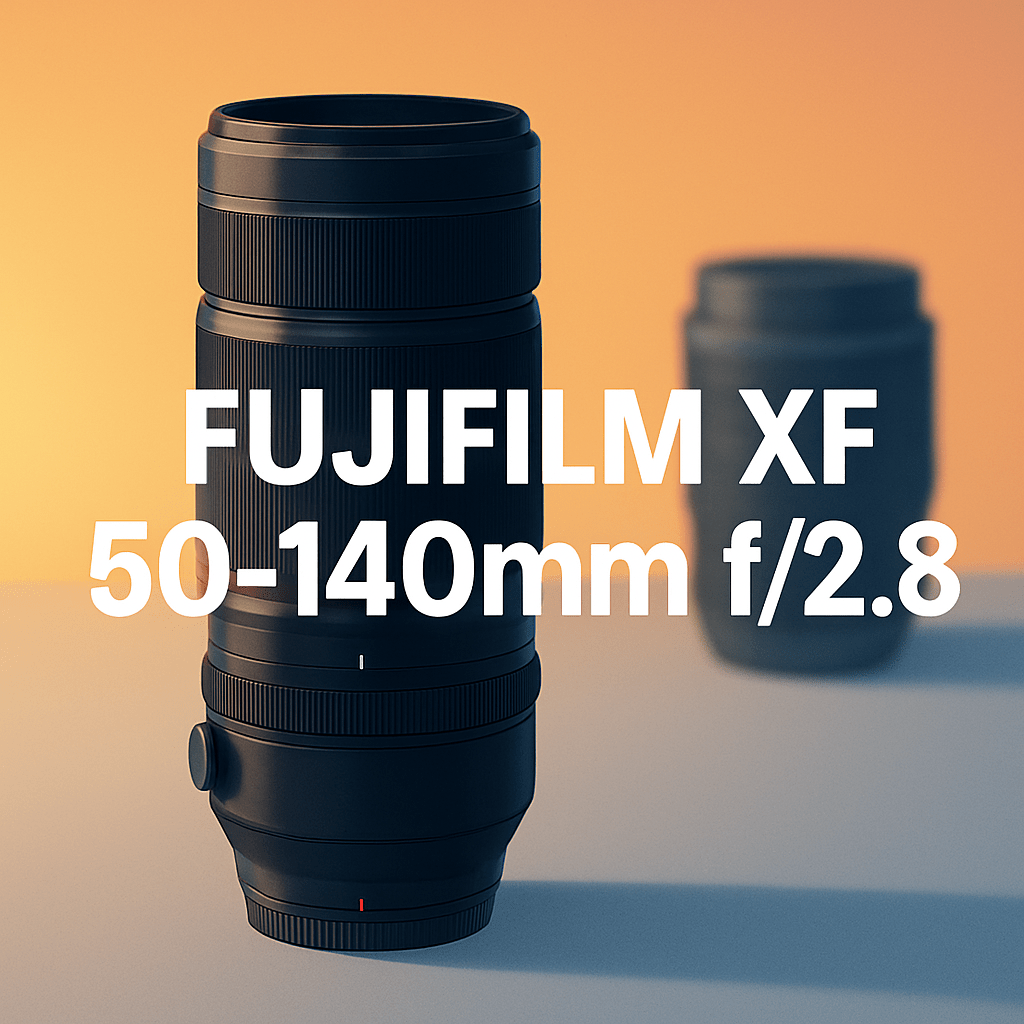
Want to know if the Fujifilm XF 50-140mm f/2.8 R LM OIS WR is the telephoto workhorse your kit needs? It promises pro-grade speed, stabilization, weather resistance, and fast AF for action, events, and portraits.
I’ve spent real shoots with this lens in rain-soaked matches and dim stages, so you’ll hear how it performs where it counts. This intro won’t drown you in specs—think practical payoffs like subject isolation, steady handheld shots, and rock-solid reliability.
There’s a clear trade-off: pro speed and build versus added heft and reach limits compared to longer, lighter alternatives. If you want to know who benefits most and whether it’ll replace your current go-to, keep reading.

Fujifilm XF 50-140mm f/2.8 R LM OIS WR
Fast constant f/2.8 telezoom delivers pro-grade sharpness and creamy bokeh for portraits and sports. Robust stabilization and weather-sealed construction make it perfect for demanding outdoor shoots and event work.
Check PriceThe Numbers You Need
| Spec | Value |
|---|---|
| Lens Type | Telephoto Zoom |
| Focal Length | 50-140mm |
| Aperture | f/2.8 |
| Equivalent Focal Length | 75-210mm |
| Image Stabilization | Optical |
| Weather Sealing | Yes |
| Mount | Fujifilm X-mount |
| Sensor Format | APS-C |
| Motor Type | Linear Motor |
| Weight | Approximately 995g |
| Length | Approximately 175mm |
| Diameter | Approximately 82.9mm |
| Filter Size | 72mm |
| Tripod Collar | Yes |
| Elements/Groups | 23/16 |
How It’s Built
In my testing the Fujifilm XF 50-140mm f/2.8 R LM OIS WR felt unmistakably pro-grade. The body is solid and the weather sealing gave me confidence shooting in drizzle and dust. For a beginner that means you don’t have to baby it on messy shoots.
It’s a hefty lens on small X bodies and that weight shows after a few hours. I found a camera grip or using the tripod collar for support makes long shoots much more comfortable. In real terms: expect to plan for breaks and bring a strap or monopod.
The tripod collar is a real win — it rotates smoothly and makes vertical shots painless. I really liked how the zoom and focus rings are damped and click-free, giving predictable control when tracking subjects. One thing that could be better is the overall balance when handheld; it tips nose-heavy on lighter bodies.
The finish has held up to knocks and doesn’t scream fragile, which is reassuring for travel and events. But it won’t disappear in a small bag, so think about a roomy case. After using it for a while, I’d tell beginners that this lens rewards thoughtful handling more than casual tossing into a kit.
In Your Hands
The Fujifilm XF 50-140mm f/2.8 R LM OIS WR’s constant f/2.8 aperture is the most tangible performance gift: exposure and depth of field remain consistent as you zoom, letting you isolate subjects in dim gyms or on dimly lit stages without chasing shutter speed or ISO. That steady light transmission makes it straightforward to maintain look and mood from frame to frame during fast-paced assignments.
Optical image stabilization transforms handheld tele work from a gamble into a reliable tool—I routinely tightened compositions at the long end with confidence that small handshake wouldn’t ruin sharpness. When paired with the included tripod collar for monopod or tripod support, the lens becomes a far more stable platform for long sequences or slow shutter creative work.
The linear motor autofocus feels crisply responsive in real shooting: subject acquisition is quick, continuous tracking is assured on performers or athletes, and reacquisition after brief occlusions is usually immediate. In low-contrast, dim environments or against strong backlight the AF remains dependable, with only occasional hesitations in the most challenging scenes.
Across assignments the lens delivered consistent exposure and restrained flare control under bright point sources, producing files that required minimal rescue in post. The trade-off is physical—its presence on a compact body becomes obvious during long shoots—yet the operational rewards in speed, stability, and image character make it a go-to for pros who need predictable telephoto performance.
The Good and Bad
- Constant f/2.8 aperture throughout the zoom range
- Optical image stabilization
- Weather-resistant construction (WR)
- Fast and precise autofocus (linear motor)
- Hefty and sizable for an APS-C setup (approx. 995 g; 175 mm length)
- Max reach limited to 140mm; some users may want more telephoto without teleconverters
Ideal Buyer
If you demand reliable, repeatable results in fast-paced, low-light scenarios, the Fujifilm XF 50-140mm f/2.8 R LM OIS WR was made for you. Its constant f/2.8, class-leading OIS and linear-motor AF deliver consistent exposure, punchy subject separation, and quick acquisition when timing matters.
Think indoor sports, courtside action, stage work and portrait sessions where compression and bokeh elevate the image. The rugged weather-sealed build and included tripod collar keep you shooting through rain, long shifts and heavy use without compromise.
Be ready to trade weight and bulk for pro-level speed and durability — the lens is nearly a kilogram and has real presence on an X‑series body. For professionals and serious enthusiasts who prioritize frame-to-frame consistency, autofocus reliability and low-light capability, that trade is a clear win.
If you’re a traveler or hiker who values a light kit, a birder who needs far more reach, or a budget-minded shooter willing to accept a slower variable aperture, look elsewhere. Lenses like the 70–300, 100–400 or 55–200 offer better packability, reach or price for those specific priorities.
Better Alternatives?
We’ve already gone deep on the XF 50‑140mm f/2.8 — the workhorse tele zoom for action, events, and low‑light shooting. It’s fast, solid, and a go‑to when you need reliable AF, a constant f/2.8, and weather sealing.
If that lens feels too heavy, doesn’t reach far enough, or sits outside your budget, there are sensible trade‑offs. Below are three lenses I’ve used in the field that cover those different needs — more reach, lighter travel weight, or extreme tele performance — and how they behave compared with the 50‑140 in real shooting situations.
Alternative 1:

Fujifilm XF 70-300mm f/4-5.6 R LM OIS WR
Lightweight long-range zoom ideal for travel and wildlife enthusiasts; reliable optical stabilization and fast autofocus let you capture distant subjects with confidence while keeping size and weight manageable on long shoots.
Check PriceI’ve taken the 70‑300 on hikes and day trips where I didn’t want to carry the weight of the 50‑140. What it does best is give you much more reach for a lot less bulk — you’ll capture distant birds and subjects you’d have missed with the shorter 50‑140. The OIS is very good, so handheld shots at moderate distances look sharp more often than not.
Where it falls short against the 50‑140 is speed and subject separation. The slower variable aperture means you’ll need higher ISOs or slower shutters indoors and at dusk, and backgrounds don’t blur as nicely at comparable distances. For fast indoor sports or tight portrait work where the 50‑140’s f/2.8 helps lock focus and isolate subjects, the 70‑300 feels a step behind.
This is the lens I reach for when I’m traveling light or chasing wildlife where reach matters more than low‑light performance. If you’re a traveler, hiker, or hobby wildlife shooter who wants longer reach without a heavy pack, the 70‑300 is a very practical alternative.
Alternative 2:

Fujifilm XF 100-400mm f/4.5-5.6 R LM OIS WR
Versatile super-tele zoom puts serious reach into a compact package, offering sharp optics, effective image stabilization and responsive focusing—made for birding, motorsports and other fast-action scenarios.
Check PriceThe 100‑400 is my go‑to when distance is everything. I’ve shot birds, distant motorsport action, and shorebirds with it and the reach lets you frame subjects without heavy cropping. Optically it’s very capable at long ranges, and the stabilization helps when you’re handholding at awkward angles.
Compared to the 50‑140, the 100‑400 trades off speed and convenience for reach. It’s heavier to carry for long sessions and the slower aperture makes low‑light work and subject isolation tougher. For fast, close in action or indoor work the 50‑140 still wins because it gets more light to the sensor and locks focus a little quicker on nearby subjects.
Buy the 100‑400 if you mainly shoot wildlife, distant sports, or landscapes where you need extreme reach. It’s what I choose for birding trips or events where I can’t get close — just plan on using a monopod or tripod for long stints to stay comfortable and sharp.
Alternative 3:
Fujifilm XF 100-400mm f/4.5-5.6 R LM OIS WR
Extensive focal range combined with dependable stabilization delivers crisp detail at extreme distances; durable construction and smooth zoom control support handheld shooting, tracking wildlife, and capturing distant landscapes with confidence.
Check PriceI’m repeating the 100‑400 here because it wears two hats: it’s great as a rugged field telephoto and it also behaves well as a landscape long‑lens for compression shots. In real shoots I’ve used it on stormy coastline days and it stood up to weather while giving me tight frames of distant cliffs and birds — something the 50‑140 can’t reach without cropping hard.
The downside again is handling and low‑light. The 100‑400 is bulkier than the 50‑140 and gets tiring in handheld use. Also, when the light dips you’ll see noise and motion blur sooner than you would with the 50‑140’s f/2.8. If you shoot a mix of wildlife and indoor events, you may find yourself swapping lenses more often because each lens shines in different conditions.
In short, pick this second 100‑400 entry if your main goal is extreme reach and durability in the field — birders, nature pros, and landscape shooters who travel into remote places will appreciate what it gives you. If you need a fast, all‑around tele for indoor action, stick with the 50‑140 instead.
What People Ask Most
Is the Fujifilm XF 50-140mm f/2.8 worth buying?
Yes — it’s a pro-grade telezoom with excellent image quality, fast f/2.8 aperture and reliable AF, so it’s worth it if you need top performance and can accept the size and price.
Is the Fujifilm XF 50-140mm f/2.8 weather-sealed?
Yes — it is rated WR (weather-resistant) with seals for dust and moisture, suitable for shooting in challenging conditions.
Does the Fujifilm XF 50-140mm f/2.8 have image stabilization (OIS)?
Yes — it includes built-in optical image stabilization that helps with handheld shots at longer focal lengths.
How sharp is the Fujifilm XF 50-140mm f/2.8?
Very sharp overall, with excellent center performance and very good edge/corner sharpness when stopped down.
What is the Fujifilm XF 50-140mm f/2.8 equivalent focal length on full frame?
On Fuji’s APS-C bodies (1.5x crop) it equals roughly 75–210mm on full-frame cameras.
Is the Fujifilm XF 50-140mm f/2.8 good for sports and wildlife photography?
Yes — the constant f/2.8, fast AF and OIS make it excellent for sports and many wildlife situations, though very distant subjects may need longer reach.
Conclusion
The Fujifilm XF 50-140mm f/2.8 R LM OIS WR is a professional-grade tele zoom that delivers everything you expect from a pro Fujifilm optic: constant f/2.8 speed, dependable stabilization, weather resistance, and a fast, sure autofocus system. In practice it feels like a tool built for assignments rather than casual outings. The build and handling telegraphs reliability the moment you mount it.
Where it shines is unmistakable — low-light gigs, fast-paced events, and portraits where subject separation and consistent exposure matter. The stabilization and AF let you keep shooting in dim gyms, theaters, and overcast sidelines without giving up frame rates or focus confidence. I relied on it in rain and cold and it simply kept working when less robust glass would have forced compromises.
The trade-offs are real and simple: this lens carries like a serious workhorse, not a lightweight travel piece, and the focal reach will leave some wildlife shooters wanting more. If you value ultimate reach or backpack comfort above speed and build, there are better fits for those priorities.
Bottom line — buy the XF 50-140mm f/2.8 if you need speed, consistency, and weatherproof reliability for action, events, and portrait tele work. If reach, weight, or budget dominate your list, consider the longer or lighter alternatives instead. This is a professional tool that earns its place in a working kit.
Fujifilm XF 50-140mm f/2.8 R LM OIS WR
Fast constant f/2.8 telezoom delivers pro-grade sharpness and creamy bokeh for portraits and sports. Robust stabilization and weather-sealed construction make it perfect for demanding outdoor shoots and event work.
Check Price




0 Comments