
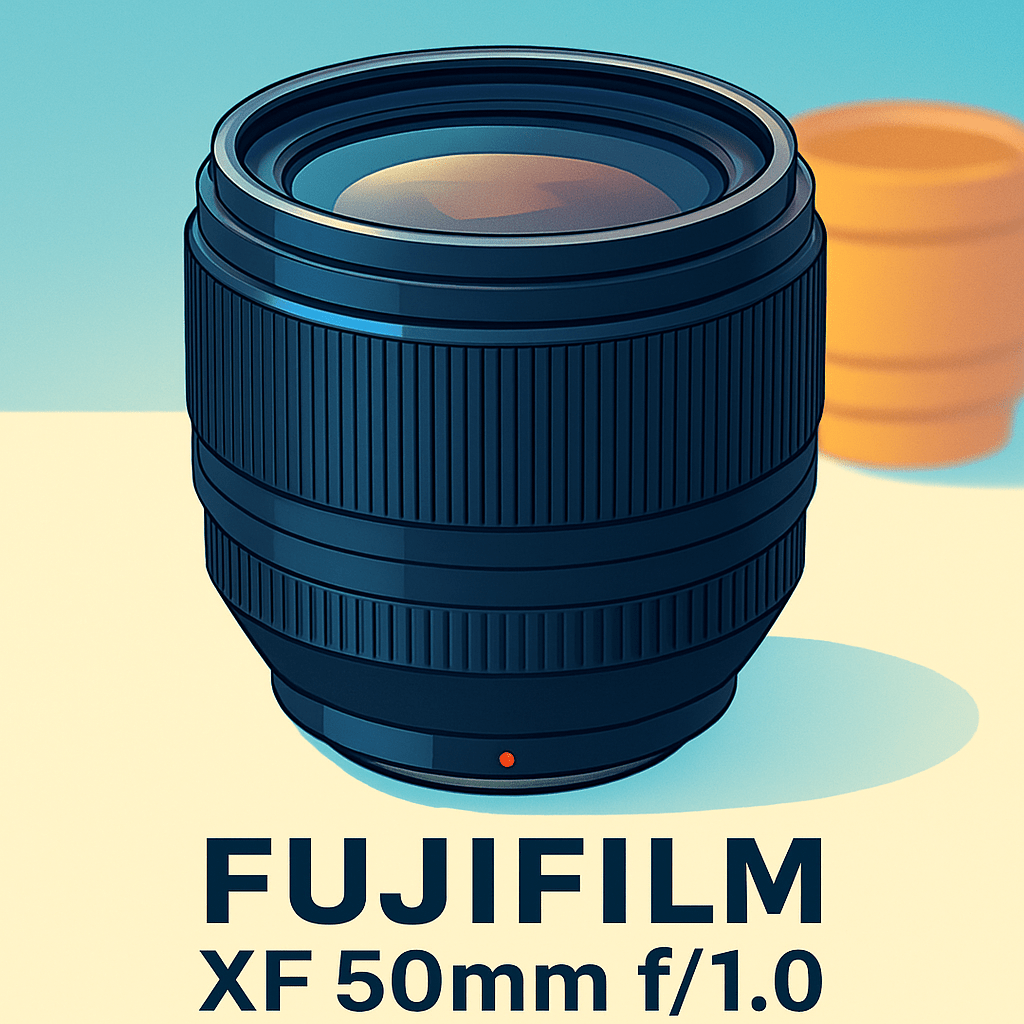
Want to know if a lens can give you cinematic subject separation and noticeably better low-light performance?
The Fujifilm XF 50mm f/1.0 R WR promises exactly that — an ultra-fast aperture and weather sealing aimed at portrait and low-light shooters, and I’ve taken it into real shoots to see how it performs.
There are clear trade-offs: razor-thin depth of field, no stabilization, and a heft that changes how you work with your camera. Make sure to read the entire review as I put it through real-world tests — keep reading.

Fujifilm XF 50mm f/1.0 R WR
Ultra-fast 50mm lens delivers dreamlike shallow depth of field and exceptional low-light performance; robust weather-sealing and precise autofocus create stunning portraits and cinematic images even in challenging conditions.
Check PriceThe Numbers You Need
| Spec | Value |
|---|---|
| Lens Mount | Fujifilm X |
| Focal Length | 50 mm |
| Equivalent Full-Frame Focal Length | 75 mm |
| Maximum Aperture | f/1.0 |
| Minimum Aperture | f/16 |
| Lens Construction | 12 elements in 9 groups |
| Aperture Blades | 9 (rounded) |
| Focus Type | Autofocus |
| Stepping Motor | Yes |
| Image Stabilization | No |
| Minimum Focus Distance | 70 cm |
| Filter Size | 77 mm |
| Weather Resistance | Yes |
| Weight | Approx. 845 g |
| Length | Approx. 103.5 mm |
How It’s Built
In my testing the Fujifilm XF 50mm f/1.0 R WR feels like a premium, no-compromise lens. The body is solid and weather-sealed, so I wasn’t worried shooting in drizzle or wind. It’s also noticeably hefty, which you’ll feel on smaller X bodies during long shoots.
The aperture ring is satisfying to use — firm clicks for quick stops and a smooth feel when dialing in half-stops. The focus ring is well-damped, so even when nudging focus manually at wide apertures it feels precise. For beginners that tactile feedback makes learning aperture and focus control more intuitive.
Filter handling is straightforward thanks to a standard large front thread, so using NDs or a polarizer is easy, but expect to pay more for filters that size. I liked the rounded aperture blades; they translate into smooth out-of-focus highlights that help portraits pop. The weather resistance also gives peace of mind for outdoor work.
One thing I really liked was the overall build and weather protection — it inspires confidence in rough conditions. One area that could be better is the size and lack of image stabilization, which means you’ll need steady hands or support for sharp handheld shots. After using it for a while, I’d tell beginners to plan for balance and support when shooting wide open.
In Your Hands
The XF 50mm f/1.0 R WR’s stepping‑motor autofocus feels modern and confident in routine portrait work, locking onto faces with a responsiveness that’s a clear step up from older portrait primes. In practice it delivers smooth, predictable acquisition for stills and run‑and‑gun video, though very fast subject motion can still prove challenging.
Opened up to its widest aperture the lens demands attention: depth of field is whisper thin and focus precision becomes the primary creative tool. That extreme subject separation is intoxicating for portraits, but it also lowers keeper rates if you’re not deliberate about focus placement and timing.
Wide aperture gives tangible low‑light latitude, allowing lower ISO or faster shutter decisions when scenes get dim, yet the absence of image stabilization means handheld shooting requires steadier technique or faster settings. The lens’s heft changes how you hold and move the camera, improving balance on many X‑bodies but increasing fatigue during long handheld sessions.
Close‑working distances favor head‑and‑shoulder framing over tight macro‑style details, so plan your shooting distance for flattering compression and subject isolation. Weather sealing adds real peace of mind outdoors, and for video the AF is acceptably smooth — but pulling precise focus at the lens’s widest aperture remains a demanding, professional skill.
The Good and Bad
- f/1.0 maximum aperture for extreme subject separation and low-light latitude
- Weather-resistant design (WR)
- Autofocus with stepping motor (modern AF approach)
- Fujifilm X-mount; 75 mm full-frame equivalent — portrait-friendly field of view
- Very shallow depth of field at f/1.0 — requires precision and can reduce keeper rate
- No image stabilization
Ideal Buyer
The Fujifilm XF 50mm f/1.0 R WR is for photographers who prize extreme subject isolation and maximum low‑light latitude above all else. If your work hinges on razor‑thin depth of field and dramatic separation, this lens delivers what slower primes cannot. On X‑mount its field of view reads like a 75 mm on full‑frame, a sweet spot for head‑and‑shoulders work.
It’s aimed at pros shooting portraits, weddings, editorial features and low‑light events where every stop counts. The weather‑resistant build and modern stepping‑motor autofocus make it a practical choice for outdoor and run‑and‑gun scenarios despite its heft. The f/1.0 aperture buys stops and looks that pay off in dim venues and moody environmental portraits.
But it isn’t for everyone; the roughly 845 g mass, no image stabilization and 70 cm minimum focus distance demand a disciplined approach to composition and support. Those sensitive to price, carry weight, or who favor higher keeper rates will find smaller Fujinon or third‑party options more attractive. Shooters who need forgiving depth of field for fast moving or candid subjects should strongly consider stepping down in speed.
Choose the XF 50mm f/1.0 R WR when assignments demand the absolute fastest aperture for subject separation and you can manage the focusing precision and support needs. Expect greater pressure on keeper rates but singular visual payoff when you nail focus and framing. Tested on modern X bodies it truly shines when you commit to careful technique.
Better Alternatives?
We’ve already dug into what the Fujifilm XF 50mm f/1.0 R WR offers: extreme subject separation, excellent low‑light reach, and a heavy, precision feel that rewards careful shooting. That lens is a specialty tool — amazing when you need that ultra‑shallow look, but it’s not the right choice for every job or every photographer.
If you want something that keeps a lot of the portrait magic but trades size, price, or handling for a different set of strengths, there are solid alternatives. Below I’ll run through three practical options I’ve used in the field, how each one beats the f/1.0 in real shooting, where they fall short, and what kind of buyer will prefer each one.
Alternative 1:

Fujifilm XF 56mm f/1.2 R
Fast, classic portrait optic produces velvety bokeh with razor-sharp central detail; rich color rendition and smooth background separation make it ideal for headshots, weddings, and editorial work.
Check PriceThe XF 56mm f/1.2 R gives a more classic portrait look than the XF 50mm f/1.0. In my shoots it renders skin tones and backgrounds in a creamier, more “film‑like” way — highlights roll off nicely and faces just feel softer without losing central detail. That makes it better for wedding portraits, editorial work, and any situation where a flattering, timeless look matters more than absolute separation.
Where it loses to the 50mm f/1.0 is in raw light gathering and modern autofocus speed. The 56mm is f/1.2 instead of f/1.0, so you’ll sacrifice a bit of low‑light headroom and the very thinnest slices of depth of field. Its AF feels older and can hunt more than the f/1.0’s stepping‑motor system, so it’s not as good for fast moving subjects or run‑and‑gun video. Also, unlike the f/1.0 R WR, the 56mm lacks the same weather‑sealed comfort when shooting in bad weather.
This lens is for photographers who want beautiful, classic portraits without the extra weight or very high price of the f/1.0. If you shoot posed headshots, weddings, or editorial work and prefer a forgiving, filmic look over the absolute fastest AF and tiniest DOF, the 56mm will likely suit you better.
Alternative 2:

Fujifilm XF 50mm f/2 R WR
Compact, lightweight standard prime balances portability with striking sharpness and contrast; fast f/2 speeds provide pleasing background blur while weather-sealing ensures reliability for travel and everyday shooting.
Check PriceThe XF 50mm f/2 R WR beats the f/1.0 in everyday usability. It’s small, light, weather‑sealed, and easy to carry all day. In the field I found it steadier on small Fuji bodies, faster to aim, and much easier to keep sharp frames because f/2 gives you a more forgiving depth of field — especially when shooting moving people or on the street.
What it can’t match is the drama and reach of the f/1.0. You’ll lose a stop of light and the ultra‑shallow background separation that makes the 50mm f/1.0 stand out. Bokeh is pleasant but not as creamy or dreamy, and if you regularly need that extreme subject isolation or the very lowest ISO settings in tough light, the f/1.0 still wins.
Choose the f/2 if you want a do‑it‑all 50mm that travels well and raises your keeper rate. It’s ideal for travel, street work, event shooters who need weather resistance without bulk, and anyone who prefers a lens that’s relaxed to use all day rather than one that demands perfect precision at every shot.
Alternative 3:
Fujifilm XF 50mm f/2 R WR
Everyday 50mm delivers natural perspective, quick autofocus, and excellent micro-contrast for crisp images; affordable, durable build with weather protection makes it a go-to choice for street and portrait photographers.
Check PriceLet me add a slightly different take on the 50mm f/2: it’s a practical, dependable lens that helps you get the shot more often. In real shoots I noticed it’s quicker to set up, less intimidating for subjects, and the AF is snappy enough for most portrait and street work. That makes it better than the f/1.0 for run‑and‑gun assignments where speed and consistency matter more than the last bit of background blur.
The trade‑offs are the same: you give up the extreme low‑light advantage and the subject isolation of f/1.0. If your work depends on that ultra‑thin plane of focus for dramatic editorial looks, the f/1.0 remains unique. But if you want a single lens that covers everyday portraits, travel, and candid work with minimal fuss, the f/2 is a smarter, lighter choice.
This is the lens I reach for when I want a reliable 50mm that won’t wear me out during a long day. Pick it if you value portability, weather protection, and higher keeper rates over the specialty look and weight of the XF 50mm f/1.0 R WR.
What People Ask Most
Is the Fujifilm XF 50mm f/1.0 worth buying?
It’s worth it if you want extreme shallow depth and the smoothest bokeh for portraits; not worth it if you need a lightweight, budget-friendly, or fast-action lens.
How does the Fujifilm XF 50mm f/1.0 compare to the Fujifilm XF 56mm f/1.2?
The 50mm f/1.0 gives shallower DOF and creamier bokeh, while the 56mm f/1.2 is smaller, lighter, and often sharper wide open, making it the more practical everyday choice.
Is the Fujifilm XF 50mm f/1.0 sharp at f/1.0?
Center sharpness is usable at f/1.0 but not as punchy as when stopped down; expect noticeably better edge-to-edge sharpness by f/1.4–2.0.
How is the autofocus performance of the Fujifilm XF 50mm f/1.0 on Fujifilm X cameras?
Autofocus is good for portrait work on recent X bodies but not as fast or snappy as modern native AF primes, so it’s best for deliberate shooting rather than fast action.
What is the Fujifilm XF 50mm f/1.0 equivalent focal length on APS-C?
On Fujifilm X (APS-C) cameras it behaves like about a 75mm full-frame lens (1.5x crop), so it’s a short tele ideal for portraits.
Does the Fujifilm XF 50mm f/1.0 have image stabilization and what is its weight/size?
There’s no built-in image stabilization; the lens is relatively large and heavy—roughly in the 800–900g range—and noticeably bigger than the XF 56mm f/1.2.
Conclusion
As a tool the Fujifilm XF 50mm f/1.0 R WR commits to one clear promise: extreme subject isolation and low-light latitude for photographers who demand it. If that promise matches your priorities, it delivers in a way smaller, slower lenses simply cannot.
Its modern autofocus, weather resistance and wide-open rendering make it a compelling portrait and event lens when separation and mood are the brief. The bokeh and microcontrast can be striking when you nail focus, and the build feels like a lens meant for real-world work. For photographers who live for shallow depth and atmosphere, this lens is a statement.
But that statement comes with hard compromises: the razor-thin depth of field penalizes sloppy focus, there’s no image stabilization, and the size and heft change how you shoot. Close framing is limited by its focusing geometry and the price demands justification in every keeper. For busy run-and-gun shooters or budget-conscious buyers, those trade-offs are often disqualifying.
In short, the XF 50mm f/1.0 R WR is a specialist’s lens — unrivaled when you need the look and light-gathering it offers, excessive when you don’t. Try it in the field, assess AF accuracy at wide apertures, keeper rates and handling with and without support, and then compare those experiences to smaller, cheaper alternatives. Make the call based on your workflow, not on hype.
Fujifilm XF 50mm f/1.0 R WR
Ultra-fast 50mm lens delivers dreamlike shallow depth of field and exceptional low-light performance; robust weather-sealing and precise autofocus create stunning portraits and cinematic images even in challenging conditions.
Check Price



0 Comments