
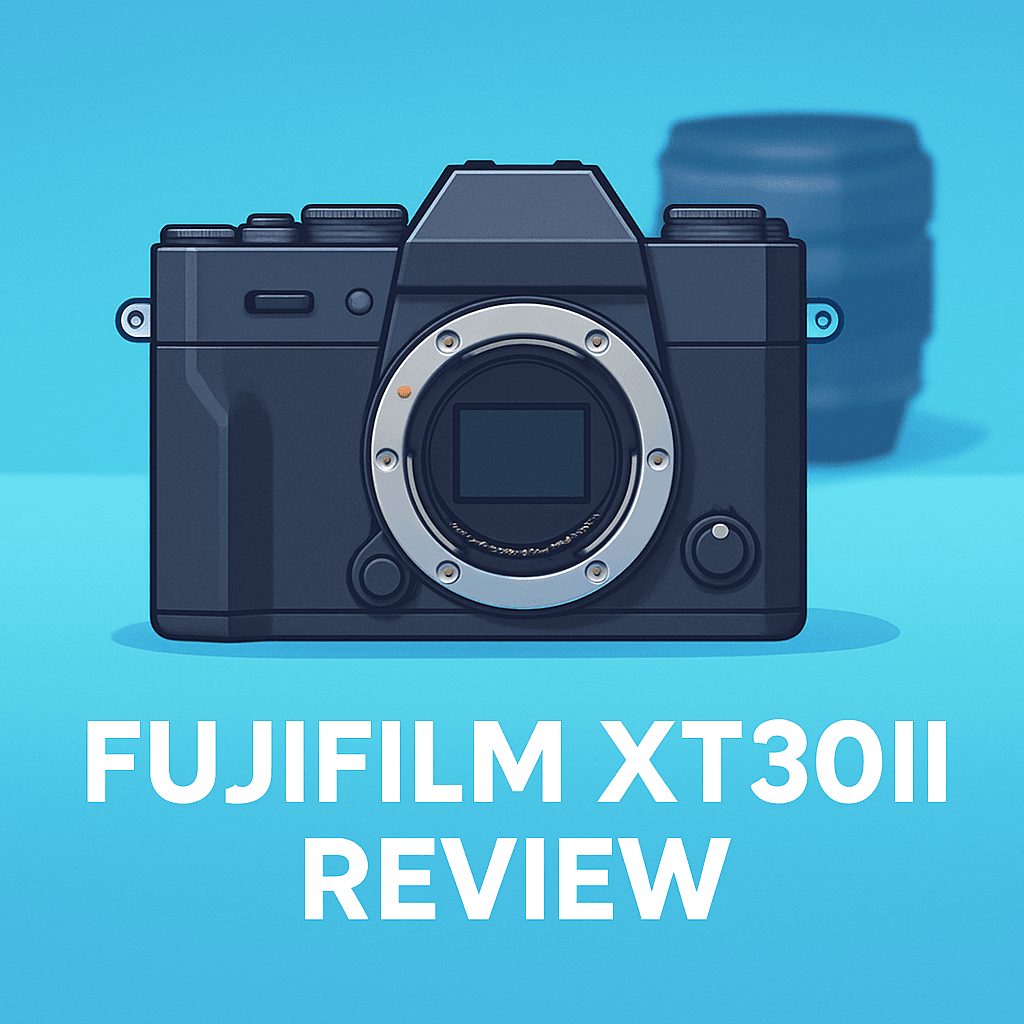
Looking for a fujifilm xt30ii review to know if it’ll upgrade your images without weighing down your kit?
You’re not alone; most photographers want pro-quality results from a compact body.
This compact Fuji mirrorless promises beloved color, fast autofocus, and usable 4K video for real-world shoots.
It’s built for tactile controls and great straight-out-of-camera JPEGs.
You’ll get excellent image quality, responsive AF, and quick burst shooting.
Tradeoffs include no in-body stabilization and 4K capped at 30p.
Travelers, street shooters, and hybrid creators who prize portability and Fuji’s film simulations will like this camera.
If you rely on handheld low-light video, you’ll want to plan for stabilization.
I’ve field-tested the Fujifilm X-T30 II on real shoots and compared it to a couple of rivals.
Make sure to read the entire review — keep reading.

Fujifilm X-T30 II Camera
Compact mirrorless offering a 26.1MP X-Trans IV sensor, stunning color science and film simulations, lightning-fast autofocus and 4K video capture—perfect for creatives seeking premium image quality in a lightweight, tactile body.
Check PriceThe Numbers You Need
| Spec | Value |
|---|---|
| Sensor | 26.1 MP APS-C X-Trans CMOS 4 |
| ISO range | 160–12800 (expandable to 80–51200) |
| Autofocus points | 425-point hybrid AF system |
| Continuous shooting speed | Up to 8 fps (mechanical shutter); up to 30 fps (electronic shutter) |
| Video resolution | 4K UHD up to 30 fps |
| Viewfinder | 0.39-inch OLED EVF with 2.36 million dots |
| LCD Screen | 3.0-inch 1.04 million dots tilting touchscreen |
| In-body image stabilization | No |
| Lens mount | Fujifilm X mount |
| Dimensions | Approx. 118.4 x 82.8 x 46.8 mm |
| Weight | Approx. 378 g (including battery and memory card) |
| Built-in flash | Yes |
| Connectivity | Wi‑Fi and Bluetooth |
| Storage media | SD/SDHC/SDXC (UHS-I compatible) |
| Battery life | Approx. 380 shots per charge (CIPA standard) |
How It’s Built
In my testing the Fujifilm X-T30 II Camera felt like a proper travel buddy — light in the bag and easy to tuck away. It has that classic Fuji feel where the body stays out of the way and lets you focus on making pictures. For anyone new to mirrorless, this means you can shoot all day without neck strain or a hulking rig slowing you down.
The electronic viewfinder is surprisingly clear and makes composing in bright light painless. The tilting touchscreen is responsive and great for low or high angles, so you can try creative shots without lying on the ground. For beginners, the touch controls make focus and playback fast and intuitive.
I liked that the camera uses the popular X mount, so you can pick lenses that match your style as you grow. The little built‑in flash is handy for a quick fill when you forgot a reflector. Connecting over Wi‑Fi and Bluetooth was straightforward in the field, and transfers worked well enough for sharing quick previews.
One thing I really liked was the overall handling and quick access to controls; it helped me shoot more confidently. One thing that could be better is the lack of in‑body stabilization, which means you’ll rely on steady hands, lenses with stabilization, or a tripod in low light. After using it for a while I found it ideal for street and travel work, but plan your lens choices and support if you want smoother handheld video or slower shutter shots.
In Your Hands
The Fujifilm X-T30 II’s autofocus is quick to find faces and subjects in everyday shooting, delivering confident locks for portraits and street work. Transitions between targets are generally smooth, though the system performs best with clear contrast and predictable subject motion.
When scenes heat up the camera’s shutter options let you chase decisive moments with a responsive cadence; the electronic mode is ideal for short, rapid bursts while the mechanical option gives a more familiar feel. In practice your hit rate depends on subject predictability and shutter choice, and the viewfinder preview makes it easy to assess sequences on the fly.
Battery life easily covers a full day of mixed stills and video for most outings, but extended burst runs or long clips will shorten that window. You can stretch endurance by dimming the EVF/screen, disabling wireless when not needed, and moderating constant live‑view use.
Pairing with the mobile app is straightforward and dependable, making remote triggering and quick transfers practical on location. The camera writes to common SD cards, so picking cards optimized for sustained shooting helps keep buffer clears and file transfers predictable during busy shoots.
Without in‑body stabilization handheld low‑light work and panning will often benefit from stabilized lenses, faster shutter speeds, or a support for steady footage. For travelers and street shooters who value agility, the X‑T30 II rewards thoughtful technique and lens choice with consistently pleasing results.
The Good and Bad
- 26.1MP APS-C X-Trans CMOS 4 sensor with X-Processor 4
- 425-point hybrid AF system
- 4K UHD video up to 30 fps
- Compact and lightweight body; travel-friendly
- No in-body image stabilization
- 4K limited to 30 fps (no higher frame-rate 4K)
Ideal Buyer
If you prize portability without surrendering image quality, the Fujifilm X-T30 II Camera fits neatly into that groove. Its compact APS-C body and tactile controls make it a natural choice when packing light matters. You get serious resolution and Fujifilm processing in a palmable package.
Shooters who crave beautiful straight-out-of-camera color will appreciate Fuji’s film simulations and JPEG pipeline. Wedding second shooters, street photographers, and travel shooters will like how reliably pleasing tones render. It’s a camera that encourages delivering images fast.
Enthusiasts chasing fleeting moments will welcome the fast electronic shutter bursts and responsive AF system. Be mindful that there’s no in-body stabilization, so plan for stabilized lenses or faster shutter speeds in low light. For action on the move, technique and lens choice matter as much as frame rates.
Hybrid creators who need solid 4K30 and dependable autofocus will find a lot to like here, especially if gimbals or OIS lenses are already in your kit. The tilting touchscreen and EVF make composition flexible for run-and-gun shooting. If you’re comfortable adding modest support for video, the X-T30 II punches above its weight.
Travelers, street shooters, and anyone who values a small, stylish camera body will enjoy carrying this all day. Built-in flash, Wi‑Fi/Bluetooth transfers, and a responsive EVF keep it practical for varied assignments. If you want Fuji color with minimal bulk, this camera is a smart compromise.
Better Alternatives?
We’ve looked closely at the Fujifilm X-T30 II — its great colors, compact size, and fast shooting are clear strengths. But no camera is perfect for every job, and some shooters want different strengths like stronger tracking, a flip-out screen for vlogging, or a different lens path. Here are a few real-world alternatives I’ve used that make sense if you’re thinking beyond the X-T30 II.
I’ll hit what each one does better and where it falls short compared to the X-T30 II, and who I’d recommend each camera to. I’ve shot weddings, street work, travel and video with these bodies, so these notes are based on actual use, not just specs.
Alternative 1:

Sony Alpha a6400 Camera
Versatile APS-C mirrorless built for speedy real-time autofocus, crisp 24MP stills, and clean 4K video; a tilting LCD and solid battery life make it ideal for travel, vlogging, and fast-action work.
Check PriceThe Sony a6400 shines where fast, reliable autofocus matters in real shooting. In my experience tracking kids, dogs, or fast-moving street subjects the a6400 locks on and holds better than the X-T30 II more often — the real-time eye and subject tracking are simply tougher in chaotic scenes. If you shoot action or lots of moving subjects, you’ll feel the difference in usable frames.
Where it loses to the X-T30 II is in color and handling. Sony’s straight-out-of-camera JPEGs are cleaner but less characterful than Fuji’s film sims; if you love Fuji color and want minimal grading, the X-T30 II still wins. Also, the a6400’s menus and button layout felt less intuitive to me than Fuji’s physical dials — fiddlier when you need quick changes on a shoot.
Who should pick the a6400? If you’re a vlogger who likes the flip-up screen, a run-and-gun shooter who needs rock-solid AF on moving subjects, or someone who wants the huge Sony E-lens selection, this one will serve you well. If you care more about Fuji colors or want in-body stabilization, look elsewhere.
Alternative 2:

Canon EOS R10 Camera
High-performance APS-C model with a 24MP sensor and DIGIC X processing, delivering rapid burst shooting, reliable subject tracking and detailed 4K footage—great for enthusiasts stepping up to interchangeable-lens systems.
Check PriceThe Canon R10 impressed me with its autofocus feel and handling for hybrid work. Its subject and eye AF are very confident in both stills and video, and the fully articulating screen makes framing for video or selfies effortless—something I missed when switching back to the X-T30 II. For fast action or vlogging, the R10 often beats the X-T30 II in practical use.
On the downside, the R10 doesn’t match the X-T30 II’s film-simulation look straight from the camera. Canon’s JPEGs are pleasant, especially for skin tones, but they’re a different flavor. Also, like the X-T30 II it lacks in-body stabilization, so handheld low-light video still needs stabilized lenses or a gimbal. The RF-S lens line is growing, but I found times I wanted a specific lens and had fewer cheap third-party choices than Sony’s ecosystem.
Pick the R10 if you want Canon’s autofocus confidence, a flip-out screen for content, and a camera that’s easy to use right away. It’s a good choice for vloggers, family photographers who need reliable AF, and shooters who prefer Canon color and ergonomics over Fuji’s dials and look.
Alternative 3:
Canon EOS R10 Camera
User-friendly, compact body combining fast autofocus, excellent image quality and customizable controls; paired with extensive lens options it's a flexible solution for content creators, travel photographers and everyday shooters.
Check PriceViewed from a different angle, the R10 is also a very user-friendly step-up camera for people moving from phones or older DSLRs. In day-to-day shooting I liked how quickly I could get good shots with auto modes, but still have room to tweak controls when I wanted more creative control—something the X-T30 II also offers, but with a more manual-feel approach. The R10 balances automatic help with manual options nicely.
Compared to the X-T30 II, the R10’s body feels slightly more modern and grip-forward, which helped during long shoots for me. However, you lose Fuji’s tactile exposure dials and that classic shooting feel. If you prize a simple, hand-holdable design and easy-to-navigate menus, you’ll find the R10 more approachable; if you love Fuji’s physical controls and film look, you might miss them.
This version of the R10 suits travel shooters, everyday content creators, and anyone who wants a compact camera that’s friendly out of the box but still grows with you. If you want Fuji color or need IBIS, consider sticking with Fuji or looking at bodies that add stabilization. Otherwise, the R10 is a very solid all-around alternative.
What People Ask Most
Is the Fujifilm X-T30 II worth buying?
Yes—it’s a great compact camera for photographers who want excellent stills, Fuji colors and tactile controls, but skip it if you need IBIS or top-tier video features.
What are the differences between the Fujifilm X-T30 II and the X-T30?
The X-T30 II is mostly an incremental update with improved processing, touchscreen responsiveness and firmware tweaks, while the sensor and core AF system remain largely the same.
How is the image quality of the Fujifilm X-T30 II?
Image quality is excellent for an APS-C camera—sharp 26MP files, strong dynamic range and the signature Fuji film simulations and color straight out of camera.
Is the Fujifilm X-T30 II good for video?
It’s fine for casual and run‑and‑gun projects with internal 4K/30p, but it lacks 4K/60, internal 10‑bit recording and advanced cooling for heavy video work.
How is the autofocus performance on the Fujifilm X-T30 II?
AF is fast and reliable for stills with useful face and eye detection, though it can struggle more than some competitors when tracking very fast action.
What are the pros and cons of the Fujifilm X-T30 II?
Pros: compact body, superb JPEGs/film sims and great still image quality; cons: no in‑body stabilization, modest battery life and limited pro video features.
Conclusion
The Fujifilm X-T30 II Camera is a compact, travel-ready mirrorless that delivers the Fuji color and tactile shooting experience many photographers crave. It pairs strong still-image character with a responsive autofocus and high-speed burst capability, plus usable 4K video for run-and-gun work. It’s a camera that rewards deliberate shooting and quick reflexes.
Its film simulations and JPEG pipeline make pleasing straight-out-of-camera results feel effortless, while the EVF and tilting touchscreen keep shooting efficient in the field. Handling is compact but competent, and the small form factor truly shines for street and travel photography. Controls feel intuitive for photographers who like tactile dials.
But it is not without compromises; the lack of in-body stabilization and the 4K frame-rate ceiling mean you’ll need stabilized lenses or support to get the steadiest footage and low-light handheld stills. UHS-I card compatibility and a modest buffer also temper expectations for sustained action or long video takes. For video shooters a gimbal becomes more of a necessity than an option.
If you prioritize portability, classic Fuji color and responsive handling over built-in stabilization, this camera punches above its size and represents strong value for its intended audience. In short, this fujifilm xt30ii review concludes the X-T30 II Camera is recommended for travelers, street shooters and enthusiasts who will work around its limits rather than be defined by them.
Fujifilm X-T30 II Camera
Compact mirrorless offering a 26.1MP X-Trans IV sensor, stunning color science and film simulations, lightning-fast autofocus and 4K video capture—perfect for creatives seeking premium image quality in a lightweight, tactile body.
Check Price


0 Comments